
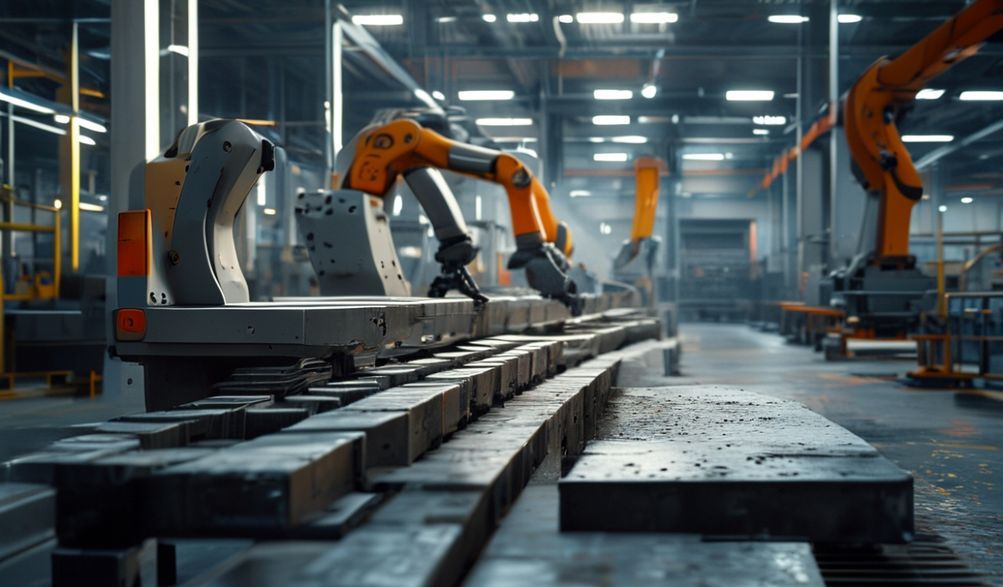
Your Guide to China’s Leading Blocks Making Machines Manufacturers: Quality, Innovation & Global Supply
Entwodiksyon
The global construction landscape is being reshaped. From urban high-rises to rural infrastructure, the demand for consistent, high-quality building materials is insatiable. At the heart of this demand are concrete blocks, paving stones, and interlocking bricks—versatile, durable, and sustainable materials that form the skeleton of modern development.
To meet this demand efficiently, the industry is undergoing a massive shift toward automation and precision manufacturing. And there is one nation that stands as the undisputed epicenter of this transformation: China.
Today, China has solidified its position as the world’s premier manufacturing hub for blocks making machines. It offers an unparalleled ecosystem that combines cutting-edge technology, immense production scale, rigorous quality control, and exceptional value. For business owners, construction firms, and ambitious entrepreneurs worldwide, sourcing from a reputable China blocks making machines manufacturer is not just an option; it’s a strategic move toward greater profitability and competitiveness.
This comprehensive guide is designed to be your roadmap. We will navigate the vibrant landscape of Chinese manufacturing, demystify the selection process, and equip you with the knowledge to identify a partner that delivers on the promises of quality, innovation, and unwavering reliability for your project’s long-term success.
Why Source Blocks Making Machines from China?
Choosing to import heavy machinery is a significant decision. Understanding the fundamental advantages of the Chinese market is key to making an informed choice. Here’s why global buyers consistently turn to China.
Echèl Manifakti San Parèy ak Gwoup Endistriyèl
China’s strength lies in its concentrated, specialized industrial ecosystems. Key provinces like Fujian, Shandong, and Guangdong have developed world-class clusters dedicated to construction machinery.
- These regions host complete supply chains, from foundries and precision machining workshops to hydraulic system assemblers and electronic control panel producers.
- This concentration creates a powerful network of expertise, reduces component logistics costs, and fosters intense competition that drives innovation and efficiency.
- For you, this means access to manufacturers who can source high-quality parts locally, respond quickly to production needs, and offer more competitive pricing due to streamlined operations.
Technological Advancement and R&D Investment
The stereotype of Chinese manufacturing as purely low-cost is obsolete. Leading manufacturers are now at the forefront of technological innovation.
- Significant investments in R&D have led to the widespread integration of Programmable Logic Controller (PLC) systems for precise, automated operation.
- Internet of Things (IoT) capabilities are becoming standard, allowing for remote monitoring of machine performance, predictive maintenance alerts, and production data analytics.
- Focus on efikasite enèjik has resulted in machines with optimized hydraulic circuits and vibration systems that reduce power consumption without compromising output or pressure force.
Cost-Effectiveness Without Compromising Core Quality
The economic advantage is undeniable, but it’s rooted in efficiency, not corner-cutting.
- Ekonomi echèl: Massive production volumes allow manufacturers to reduce per-unit costs.
- Mètris nan Chèn Apwovizyònman: Integrated local supply chains for steel, electronics, and hydraulics keep material costs manageable.
- Spectrum of Choice: The market offers everything from robust, value-oriented semi-automatic machines to top-tier, fully automated lines. This allows you to find the perfect balance between upfront investment and required performance, all while maintaining core durability and functionality.
Proven Global Deployment and Adaptability
Chinese-made block machines are not confined to the domestic market. They are engineered for the world.
- You will find them operating efficiently in the extreme heat of the Middle East, the variable climates of Africa, and the regulated markets of Europe and North America.
- Reputable manufacturers design machines to meet various international standards, such as CE (for Europe) and ISO certifications, ensuring safety and quality benchmarks are met.
- They offer customization for local power supplies (e.g., 415V/50Hz or 460V/60Hz), safety regulations, and specific raw material inputs like fly ash or local aggregates.
Key Machine Types Offered by Top Manufacturers
The diversity of equipment available ensures there is a solution for every business model, from a small paving stone enterprise to a large-scale concrete products plant.
Machin Konplètman Otomatik pou Fè Blòk
These are the powerhouses of high-volume production, designed for minimal manual intervention and maximum output.
- Capability:Kapab pwodui10,000 to over 30,000 standard blocks per 8-hour shift.
- Karakteristik Kle yo: Fully integrated systems that handle batching, mixing, molding, curing (in accelerated curing chambers), and pallet handling automatically.
- Pi Bon Pou: Large-scale construction projects, established block yards supplying regional markets, and businesses focused on maximizing output with a small labor force.
Semi-Automatic and Mobile Block Machines
This category offers the perfect balance between automation and affordability, providing significant efficiency gains over manual methods.
- Operasyon: Core processes like compaction and vibration are automated, but tasks like feeding raw material or removing finished blocks may involve an operator.
- Machin Blòk Mobil: Often smaller, movable units ideal for on-site production of bricks and blocks, eliminating transport costs for finished products.
- Pi Bon Pou: Small to medium-sized businesses, startups, specialized product producers, and construction companies needing on-site production flexibility.
Specialized Machines for Diverse Products
Beyond standard hollow blocks, top manufacturers offer machines engineered for specific, high-value products.
- Hollow & Solid Block Machines: The industry workhorses, with mold changes allowing for various sizes and void percentages.
- Paving Stone & Curbstone Machines: Feature multi-layer color feeders and high-precision molds for producing decorative, high-strength paving slabs and durable roadside curbs.
- Machin pou fè brik ki anbloke: Produce bricks that lock together without mortar, widely used for slope protection, retaining walls, and eco-friendly landscaping.
Complementary Equipment and Complete Plants
For a turnkey solution, manufacturers can supply an entire production ecosystem.
- Miksè ak Plant Batching Konkrè: Ensure consistent, homogenous raw material for the block machine.
- Block Stackers & Pallet Return Systems: Automate the handling and storage of cured blocks, dramatically reducing labor and damage.
- Color Feeders & Splitters: Add decorative surfaces to paving stones or split blocks to create a rustic finish.
- Complete Plant Design: Leading manufacturers can design, manufacture, and commission your entire production line from raw material intake to finished product storage.
How to Identify a Reputable Manufacturer in China
With countless suppliers online, separating the credible partners from the rest requires a structured approach. Focus on these four pillars.
Verifying Manufacturing Expertise and Experience
A long track record is a strong indicator of stability and accumulated knowledge.
- Factory Audits: Insist on a live video factory tour. Look for organized production floors, modern welding and machining equipment, and quality control checkpoints.
- Souviyans Konpayi an Research how long the company has been operating. Manufacturers with 15-20+ years of experience have likely navigated market cycles and continuously improved their designs.
- Patent Portfolio: Check if the company holds patents for specific machine components or processes. This is a tangible sign of Eksperyans and genuine innovation, not just assembly.
Assessing Technical Specifications and Innovation
The devil is in the details. Scrutinize the technical proposal beyond the glossy brochure.
- Eleman Debaz: Ask about the brand of critical parts. Do they use reputable hydraulic systems from Bosch Rexroth or Kawasaki? Are the PLCs from Siemens or Mitsubishi? High-quality components are the backbone of reliability.
- Performance Metrics: Compare press force (measured in tons), cycle time (seconds per block), and vibration frequency. These numbers directly relate to block density, production speed, and final product strength.
- Customization Willingness: A supplier with deep Ekspètiz will ask detailed questions about your raw materials and desired products and offer tailored solutions, not just a standard catalog model.
Evaluating Quality Control and Certifications
Formal certifications and internal processes are non-negotiable for building Fyabite.
- ISO 9001 Certification: This international standard for Quality Management Systems indicates a commitment to consistent processes and continuous improvement.
- In-House QC: Inquire about their testing procedures. Are frames stress-relieved? Are hydraulic systems pressure-tested? Are electrical systems run for a burn-in period?
- Third-Party Inspection: Reputable manufacturers are transparent and will accommodate a pre-shipment inspection by a third-party agency like SGS or Bureau Veritas upon the buyer’s request.
Analyzing After-Sales Service and Global Support
The relationship begins after the machine is shipped. Robust support is the hallmark of an Otorite partner.
- Warranty Terms: Look for comprehensive warranties (typically 12-18 months) that cover both parts and workmanship. Understand what is excluded.
- Sipò Teknik: Ensure they provide English-speaking technical support accessible via phone, WhatsApp, or email. Ask about their typical response time.
- Documentation & Training: They should supply clear, illustrated operation and maintenance manuals, parts catalogs, and instructional videos.
- Spare Parts Policy: Confirm the availability of a spare parts inventory and their process for shipping critical components urgently.
Critical Considerations Before Purchasing
Before initiating contact with suppliers, solidify your own requirements and logistics plan.
Defini Egzijans Pwodiksyon Ou
Clarity here prevents you from overbuying or underinvesting.
- Kapasite Pwodiksyon: Calculate your daily or monthly block needs, considering future growth. Don’t just buy for today’s demand.
- Pòtfolyo Pwodwi: Precisely list the types, sizes, and specifications of blocks you need to produce.
- Matyè Premye: Analyze the characteristics of your available cement, aggregates, and potential additives (like fly ash). Share this data with manufacturers for machine configuration advice.
Total Cost of Ownership (TCO) Analysis
The machine price is just the first cost. A smart buyer budgets for the full lifecycle.
- Direct Costs: Machine price, shipping, insurance, import duties, and taxes.
- Enstalasyon ak Komisyon: Costs for the manufacturer’s engineers to travel, install, and calibrate the machine.
- Depans Operasyonèl: Electrical power consumption, routine maintenance supplies, and labor.
- Long-Term Costs: Budget for spare parts and potential component replacements over a 5-10 year period.
Navigating Logistics, Shipping, and Customs
Understanding the shipping process reduces risk and unexpected charges.
- Incoterms: Know the difference. FOB (Lib sou Bato) means you own the goods and are responsible for costs once they’re loaded on the ship in China. CIF (Pri, Asirans, ak Fret) includes shipping to your nearest port. FOB often offers more control and cost savings.
- Freight Forwarder: Partner with a reliable freight forwarder experienced in handling heavy machinery. They will handle documentation, customs clearance, and final delivery.
- Anbalaj: Ensure the manufacturer uses export-grade, steel-framed wooden crates to protect the machine during ocean transit.
The Importance of Sample Production and Testing
This is your most powerful quality assurance tool.
- Live Video Test: Request a video call where the manufacturer uses your exact block specifications (or very similar ones) to run their machine. Observe the process, the finished block’s appearance, and its immediate demolded strength.
- Raw Material Testing: If possible, send a sample of your local raw materials to the factory. Having them produce test blocks with your materials can reveal potential compatibility issues early.
Common Pitfalls to Avoid When Sourcing from China
Awareness of these common mistakes can save you significant time, money, and frustration.
Choosing Based on Price Alone
The cheapest offer is almost always the most expensive in the long run.
- Depans Kache: Inferior machines suffer from frequent breakdowns, leading to massive production downtime, expensive emergency repairs, and shorter overall lifespan.
- Quality Compromise: Low-cost machines often use substandard steel, generic hydraulics, and poorly calibrated controls, resulting in inconsistent block quality and high rejection rates.
Overlooking Communication and Contract Clarity
Assume nothing. Every detail must be documented.
- Detailed Contract: The contract must include finalized technical specifications, payment schedule, delivery timeline, warranty terms, and penalties for delays.
- Clear Communication: Ensure your main point of contact is technically proficient. Use diagrams, videos, and detailed emails to confirm understanding. Miscommunication is a primary source of disputes.
Inadequate Planning for Installation and Training
The machine’s arrival is not the finish line.
- Foundation Preparation: The factory will provide foundation drawings. This concrete base must be poured, cured, and leveled well before the machine arrives.
- Technician Dispatch: Coordinate the visa, travel, and accommodation for the installation engineers in advance.
- Operator Training: Plan for your key operators to be fully available during commissioning for hands-on training. Document the training process.
FAQ Section
Q1: What is the typical lead time for a blocks making machine from China?
A: Lead times vary significantly. Standard semi-automatic models may ship in 20-45 days. For complex, fully automated production lines or heavily customized machines, expect 60-90 days for manufacturing, testing, and preparation.
Q2: Do Chinese manufacturers provide installation and commissioning services overseas?
A: Yes, reputable manufacturers always do. They will send 1-2 engineers to your site for installation, mechanical and electrical commissioning, and thorough operator training. The duration (usually 1-3 weeks) and costs are typically outlined in the sales contract.
Q3: How can I verify the quality if I can’t visit the factory in person?
A: You have several options: 1) Request a comprehensive live video tour and machine test. 2) Ask for contact information for 3-5 previous customers in your region or a similar climate. 3) For significant orders, hire a third-party inspection company to conduct a pre-shipment inspection (PSI).
Q4: What are the standard payment terms?
A: The most common secure terms are: 30% deposit via T/T (bank transfer), 60% against copy of shipping documentsak10% retained until after successful installation and commissioning. Letters of Credit (L/C) are also a secure, widely accepted method.
Q5: Are the machines compatible with our local voltage and safety standards?
A: Professional manufacturers will configure the machine’s electrical system to your local standard (e.g., 415V/3Phase/50Hz or 480V/3Phase/60Hz). They can also provide necessary documentation and modifications to help meet local safety regulations, often supplying CE-marked machines as a baseline.
Konklizyon
Chwazi bonChina blocks making machines manufacturer is a pivotal strategic decision with long-lasting implications for your operational efficiency, product quality, and bottom-line profitability. It is an investment that should pay dividends for a decade or more.
The path to a successful partnership is built on diligent research and a focus on long-term value over short-term savings. By prioritizing manufacturers with demonstrable Eksperyans in engineering durable machinery, proven Ekspètiz in automation and production processes, Otorite established through a global track record of client success, and Fyabite built on transparent communication, quality certifications, and reliable after-sales support, you significantly mitigate risk.
Begin your journey by engaging with manufacturers who proactively demonstrate their capabilities, ask insightful questions about your needs, and present themselves as true partners in your business growth. With the right Chinese manufacturing partner, you are not just purchasing a machine; you are acquiring a foundation for future success.
<