
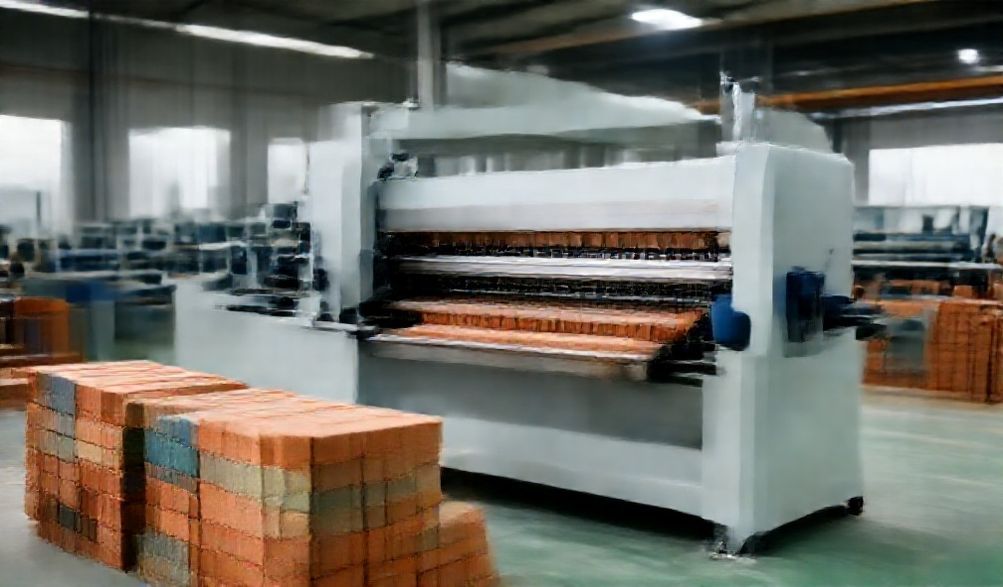
Gid Komplè ou pou Jwenn Yon Founisè Machin pou Fè Brik Piti nan Lachin ki Fyab
Entwodiksyon
Endistri konstriksyon mondyal la pwospere sou efikasite ak pri abòdab. Soti nan konstwi kay nan ekonomi emèjant rive nan pave chemen nan devlopman nan zòn banlye, demann pou materyèl konstriksyon serye ak pri abòdab se inivèsèl. Nan nwayo demann sa a, gen yon ekipman kle: ti machin pou fè brik. Lè li rive sou jwenn machin sa yo, gen yon peyi ki domine teren fabrikasyon an—se Lachin.
Sepandan, pou yon achtè ki gen plizyè milye kilomèt lwen, navige nan vas ekosistèm endistriyèl Lachin ka santi tankou yon travay ki pè. Mache a satire ak founisè, platfòm sou entènèt yo bay lis dè milye opsyon, ak istwa sou varyete kalite, pann nan kominikasyon, ak kochma lojistik yo komen. Ki jan ou fè distenksyon ant manifakti ki gen bon repitasyon ak komèsan ki pase rapid? Ki jan ou asire w ke w ap envesti nan yon machin ki ap dire, epi pa sèlman youn ki gen pi ba pri etikèt?
Gid sa a se solisyon ou. Bati sou ane nan obsèvasyon endistri ak ekspètiz teknik, resous definitif sa a bay yon kad ki klè epi ki aksyonab pou evalye ak chwazi bon founisè Chinwa a. Nou depase konparezon pri debaz yo pou nou konsantre sou poto yo nan yon patenarya siksè:kalite san konpwomi, fyab pwouve, ak valè total alontèm.Konsidere sa a kout wout fiable ou pou pran yon desizyon acha an konfyans.
Poukisa ou ta dwe achte ti machin pou fè brik nan peyi Lachin?
Chwazi achte machin ou nan peyi Lachin pa senpleman pou jwenn opsyon ki pi bon mache; se yon desizyon estratejik ki gen avantaj mondyal konkè. Konprann avantaj sa yo ede ou fè rechèch ou byen epi fikse atant reyalis sou sa mache a ka ofri.
Pri Efikasite ak Pri Konpetitif
Avantaj ki pi evidan an se pri. Manifaktirè Chinwa yo benefisye de ekonomi echèl san parèy, chèn ekipman konsantre pou materyo premye tankou asye ak konpozan idwolik, ak teknik pwodiksyon avanse ak efikas.
- Sa vle di yon pi ba envestisman inisyal pou ou konpare ak lè w ap apwovizyone nan Ewòp oswa Amerik di Nò.
- Retoun sou envestisman siperyè a (ROI) vle di biznis ou a ka rive nan pwofite pi vit, yon faktè enpòtan pou startups ak antrepriz ti a mwayen yo.
- Mache konpetitif la vle di ou kapab jwenn yon machin ki adapte ak yon bidjè presi, soti nan modèl debaz manuel rive nan sistèm otomatize avanse.
Echèl ak Varyete Nan Fabrikasyon
Ekosistèm fabrikasyon Lachin la vaste epi espesyalize. Ou pa limite a yon oubyen de kalite machin.
- Si w bezwen yon machin poubrik tè, siman, oswa sannFounisè Chinwa yo gen modèl dedye.
- ranje a soti nan senppese manyèlpou pwojè kominotè yoplant ki pwodui anpil, konplètman otomatikpou pwodiksyon komèsyal.
- Ou ka jwennmodèl estasyonèpou anviwònman faktori oswablòk mobilpou konstriksyon sou sit, elimine depans transpò materyèl yo.
- Varyete sa a asire ou ke ou ka jwenn ekipman ki adapte ak disponibilite materyo bril ou yo, echèl pwojè ou a, ak kontrent bidjè ou yo.
Evolisyon Inovasyon ak Teknoloji
Estereyotip la ki di ke fabrikasyon Chinwa a se sèlman pou kopi bon mache a depase. Founisè prensipal yo ap envesti anpil nan rechèch ak devlopman.
- Machin modèn yo genyenenergy-efficient hydraulic and vibration systems.
- There is a strong focus on improving dirabilite through better metallurgy and the use of internationally recognized component brands.
- Innovation in semi-automatic and fully automatic control systems has made these productive machines more accessible and user-friendly than ever before.
- This commitment to technological progress means you can access advanced, reliable technology at a fraction of the traditional cost.
Critical Factors When Evaluating a Supplier (Beyond Price)
Fixing your gaze solely on the price tag is the fastest route to a poor investment. A reliable supplier is defined by a suite of other, more critical factors that guarantee the machine’s performance and your peace of mind.
Manufacturing Expertise and Experience
Look for a supplier with deep roots in the industry.
- A proven track record of 10+ years is a strong initial filter. It indicates stability and accumulated knowledge.
- Prefer suppliers who are actual manufacturers (with their own factory) over pure trading companies. Manufacturers have direct control over quality and production timelines.
- Inquire about their in-house R&D and engineering team. A supplier that designs and iterates its own machines is more likely to understand and solve technical challenges.
Quality Control Processes and Certifications
Certifications are your first objective checkpoint. They signal a commitment to standardized processes.
- ISO 9001: Indicates a certified quality management system.
- Sètenifikasyon CE: Shows the machine meets EU health, safety, and environmental standards, a sign of robust design.
- SGS or Other Third-Party Inspection Reports: Provide independent verification of machine quality and specification compliance.
- Critical Component Sourcing: Ask about the brands used for key parts. Do they use reputable hydraulic systems (like Parker or Yuken), PLCs (like Siemens or Mitsubishi), and high-grade, hardened steel for molds? This is where true quality is built.
Production Capacity and Lead Times
A supplier’s capability must match your needs.
- Clearly communicate your required order quantity and desired delivery date.
- A professional supplier will provide a realistic production schedule and not promise impossibly fast lead times just to secure an order.
- Assess if they have the capacity to handle potential future repeat or larger orders as your business grows.
Communication and Professionalism
Smooth communication is the bedrock of international trade. Evaluate this from the first contact.
- Responsiveness: Do they reply to emails or messages within a reasonable business timeframe?
- English Proficiency: Is their technical and sales staff able to communicate clearly about specifications, avoiding dangerous misunderstandings?
- Sipò Teknik: Can they answer detailed questions about machine operation, maintenance, and troubleshooting? Their pre-sales knowledge is a good indicator of their post-sales support capability.
A Step-by-Step Supplier Vetting Process
Arm yourself with a systematic approach. This process turns an overwhelming task into a manageable, evidence-based decision.
Stage 1: In-Depth Online Research & Shortlisting
- Using B2B Platforms (Alibaba, Made-in-China):
- Go beyond the glossy photos. Scrutinize the “Transaction History”ak“Customer Reviews.” Look for detailed, photo-backed feedback from buyers in regions similar to yours.
- Check the supplier’s “Gold Supplier” status and years on the platform. Longer tenure generally correlates with reliability.
- Be wary of profiles with perfect 5-star ratings and few transactions—they may be manipulated.
- The Supplier’s Own Website:
- A professional, well-structured website with detailed technical documentation, company history, and clear contact information is a major trust signal.
- It shows investment in their brand and a channel for direct, platform-fee-free communication.
Stage 2: Direct Engagement and Technical Inquiry
Now, contact your shortlisted suppliers (3-5 is ideal). Your initial inquiry should be detailed to gauge their expertise.
- Kesyon Kle Pou Mande:
- Can you provide a detailed specification sheet for [Model XYZ]?
- What customization options are available (e.g., mold changes, logo printing)?
- What is the exact warranty period and what does it cover? Is it for parts only, or includes labor?
- What after-sales support do you provide? (Manuals, video guides, remote assistance, on-site engineer dispatch?)
- Can you supply a list of spare parts I should keep in stock?
- Requesting Documentation: Ask for a formal, itemized quotation (Proforma Invoice), their company brochure, and copies of relevant quality certificates.
Stage 3: Due Diligence and Verification
This is the most crucial step to avoid scams and ensure quality.
- Factory Verification: Always request a live video tour of the factory via WhatsApp or Zoom. Ask to see the production floor, assembly line, quality testing, and their warehouse. This confirms they are a real manufacturer.
- Referans Kliyan: Ask for contact information for 2-3 previous clients in your country or region. A confident supplier will provide these. Reach out and ask about their experience with machine performance and after-sales service.
- Payment Security: Utilize platform-based Trade Assurance programs (like Alibaba’s) whenever possible. They offer payment protection and mediation services. For larger orders, a Letter of Credit (LC) provides security for both parties.
Understanding Machine Types and Making the Right Choice
Matching the machine type to your project is essential for success. Here’s a breakdown of the common small brick making machines from China.
Small Manual & Semi-Automatic Brick Machines
- Ideal Pou: Entrepreneurs, startups, community projects, low-volume production, and areas with low labor costs.
- Avantaj: Very low initial cost, simple operation and maintenance, low power consumption, easy to move.
- Desavantaj: High labor intensity, lower output, consistency of bricks depends heavily on operator skill.
Machin Blòk Mobil
- Ideal Pou: On-site construction projects (building houses, compounds), producing bricks directly where they are needed.
- Avantaj: Eliminates cost of transporting finished bricks, can use locally sourced soil/sand, highly versatile.
- Desavantaj: Output is generally lower than stationary plants, requires a prepared, level site for operation.
Fully Automatic Small Brick Making Plants
- Ideal Pou: Established businesses aiming for medium to high-volume production (e.g., 10,000+ bricks per day).
- Avantaj: Extremely high output with minimal labor (often just 1-3 operators), consistent and high-quality brick production, can integrate with mixers and stackers.
- Desavantaj: Significant initial investment, requires stable power supply, more complex maintenance.
Key Technical Specifications to Compare
When reviewing quotes, compare these specs directly:
* Kapasite Pwodiksyon: Measured in bricks per hour (or per 8-hour shift). Ensure you compare the same brick size and type.
* Egzijans Pouvwa: Voltage (e.g., 380V/3 phase or 220V) and total power consumption (KW).
* Presyon (Tonaj): The molding pressure of the machine. Higher tonnage generally produces denser, stronger bricks.
* Nivo Otomatizasyon: Manual, semi-auto (auto feeding or stacking), or full-auto (from mixing to stacking).
* Versatilite Mwazi: How quickly and cheaply can molds be changed to produce different brick types (solid, hollow, paving, etc.)?
Navigating Logistics, Payment, and After-Sales Support
The final hurdles before your machine arrives involve logistics, payment, and planning for long-term support.
Incoterms and Shipping Explained
- FOB (Free On Board): You pay for the machine loaded on the ship at the Chinese port. You are responsible for and control the main shipping cost and freight forwarder. Offers more control and potential cost savings.
- CIF (Pri, Asirans, ak Fret): The supplier arranges and pays for shipping and insurance to a port in your country. Simpler for you, but you pay a premium and have less control over the shipping process.
- Advice: For first-time buyers, CIF can be simpler. For larger orders or repeat business, using your own freight forwarder under FOB terms is often more cost-effective and transparent.
Secure Payment Methods
- T/T (Telegraphic Transfer): A direct bank transfer. Common for deposits (e.g., 30% upfront) and balance payments. Fast but offers little buyer protection. Only use with verified, highly trusted suppliers.
- L/C (Letter of Credit): A bank-guaranteed payment. The bank pays the supplier once shipping documents are presented. Secure for both parties but involves bank fees and is more complex.
- Platform Trade Assurance: The recommended method for most transactions. You pay the platform, which releases funds to the supplier after you confirm satisfactory delivery.
The Non-Negotiable: After-Sales Service & Warranty
This is where great suppliers are separated from the rest.
- Garanti: A comprehensive warranty should be 12-24 months for core components (hydraulic system, electrical motors, PLC). Get the exact terms in writing on the contract.
- Support Materials: Ensure they provide clear English operation manuals, installation guides, electrical diagrams, and instructional videos.
- Pye De Rechanj: Clarify their policy. Do they keep a stock of common spare parts? What are the lead times for ordering replacements? Purchasing an initial spare parts kit (seals, filters, etc.) is highly advisable.
Kesyon yo poze souvan (FAQ)
Q1: What is the typical price range for a small brick making machine from China?
A: Prices vary dramatically based on type and automation. A small manual machine can start around $2,000 – $5,000, semi-automatic models range from $8,000 – $20,000, and fully automatic small plants can cost $25,000 to $60,000+. Always request a detailed quote based on your specific needs.
Q2: How can I verify the quality without visiting the factory in person?
A: A multi-step approach is key: 1) Insist on a live video factory tour, 2) Hire a third-party inspection company (like SGS, BV) for a pre-shipment inspection, and 3) Request a sample of bricks produced by the exact machine model you are considering.
Q3: What are the hidden costs I should budget for?
A: Beyond the machine price, budget for: International shipping and insurance, import duties and taxes in your country, agent/clearance fees, foundation preparation for the machine, electrical setup, and an initial inventory of essential spare parts.
Q4: Do suppliers provide installation and training?
A: Most provide detailed manuals and video guides for self-installation. For an additional cost, many reputable suppliers will dispatch a technical engineer to your site for installation, commissioning, and operator training. For complex automatic plants, this service is highly recommended.
Q5: How long is the standard warranty, and what does it usually cover?
A:Yon garanti estanda se tipikman1 year for the whole machine and 2 years for the core hydraulic system. It usually covers defects in material and workmanship under normal use, meaning they will supply replacement parts. It rarely covers labor for installation or repairs at your site, or damage from improper operation. Clarify all terms in your contract.
Konklizyon
Finding the right China small brick making machine supplier is not a simple purchase; it’s a strategic partnership that forms the foundation of your business. By shifting focus from the lowest price to a balanced assessment of manufacturing expertise, verifiable quality, and robust after-sales support, you de-risk your investment.
Use this guide as your actionable checklist. Invest the time in thorough due diligence, prioritize clear and professional communication at every stage, and choose a partner whose actions demonstrate true Eksperyans, Ekspètiz, Otorite, ak Dignite de konfyans (E-E-A-T).
The right machine, sourced from the right partner, is more than a piece of equipment—it’s a cornerstone asset that will drive productivity, profitability, and growth for your construction business for years to come.
<