
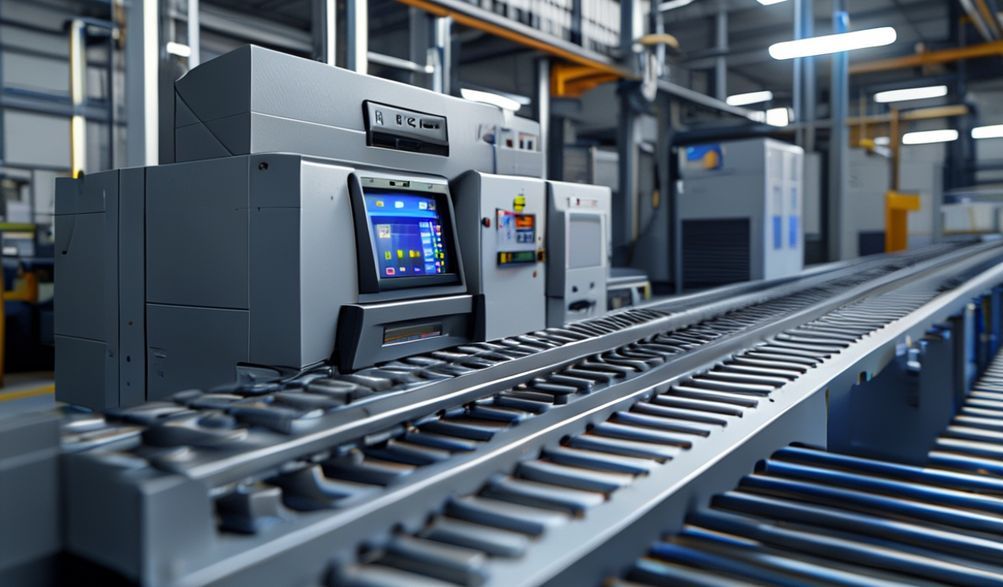
Your Ultimate Guide to Finding Reliable Hollow Brick Machine Suppliers in 2026
Entwodiksyon
The global construction landscape is shifting. With an ever-increasing focus on sustainability, cost-efficiency, and rapid project timelines, hollow bricks have emerged as a cornerstone material for modern building projects. From residential complexes to large-scale infrastructure, the demand for these lightweight, insulating, and material-efficient blocks is soaring. But behind every perfect brick is a machine that made it—and the supplier who stands behind it.
For business owners, construction entrepreneurs, and plant managers, this presents a critical challenge. Sourcing a hollow brick machine isn’t just a purchase; it’s a long-term partnership that can make or break your profitability. The market is vast, with options ranging from suspiciously cheap online listings to premium European engineering. The risks are real: machines that fail within months, crippling downtime due to a lack of spare parts, and suppliers who vanish after the sale, leaving you with a costly paperweight.
This guide is your strategic blueprint. We’re cutting through the noise to provide you with a professional, step-by-step framework for identifying, vetting, and partnering with the best hollow brick machine suppliers. Compiled from industry insights, technical benchmarks, and the hard-won experience of seasoned buyers, this resource is designed to transform your sourcing process from a gamble into a confident, data-driven investment.
Understanding Hollow Brick Machines and Their Market
Before you start evaluating suppliers, you need a firm grasp of the product and its ecosystem. This foundational knowledge is what separates an informed buyer from a vulnerable one.
What is a Hollow Brick Machine and How Does It Work?
At its core, a hollow brick machine automates the process of creating hollow concrete blocks. It transforms raw materials—typically a mixture of cement, sand, stone dust, and water—into precisely shaped, high-strength bricks with hollow cavities.
The basic working principle involves three key stages:
1. Melanj: Raw materials are fed into a mixer to achieve a homogeneous, semi-dry concrete consistency.
2. Moulaj & Konpakte The mixture is transferred into a mold box. Through high-pressure vibration and compaction (hydraulic or mechanical), the material is densely packed into the desired shape.
3. Curing & Output: The freshly formed block is ejected onto a pallet. It then undergoes a curing process (often steam-cured for faster strength gain) before being ready for use.
Machines vary dramatically in sophistication:
* Manuel/Semi-Otomatik: Lower output, significant labor required for feeding and block removal. A low-capital starting point.
* Otomatik Konplè: Computer-controlled, with automatic batching, molding, stacking, and pallet return. High output with minimal labor.
* Estasyonè kont Mobil: Stationary plants are for fixed-site production. Mobile machines can be towed to different construction sites.
Key Benefits of Using Hollow Bricks in Modern Construction
Konprannpoukisa hollow bricks are in demand underscores the importance of your machine investment:
* Izolasyon Tèmik ak Akoustik: The hollow cores create air pockets that provide excellent insulation, reducing heating and cooling costs and noise transmission.
* Structural Efficiency & Reduced Weight: They are lighter than solid blocks, decreasing the dead load on a building’s foundation and structure, leading to potential savings in steel and concrete.
* Eparg Materyèl ak Kout: Using less raw material per block reduces both material costs and environmental footprint.
* Vitès Konstriksyon: Their larger size and lighter weight allow for faster laying, accelerating project timelines.
* Green Building Compliance: They contribute directly to points in green building certification systems like LEED or BREEAM due to their resource efficiency.
Global Market Overview for Hollow Brick Machinery
The supplier landscape is international, with each region carving out a specific niche:
* China: The global manufacturing hub, offering the widest spectrum from basic to highly advanced automatic machines. Known for competitive pricing and scalability.
* Germany/Italy: Synonymous with high-end, precision-engineered, fully automated production lines. Leaders in innovation, energy efficiency, and smart factory integration.
* India & Turkey: Strong players offering robust, often mechanically simpler machines well-suited to regional raw materials and market conditions. Excellent value in the mid-range segment.
Current Market Trends:
* Automation & IoT: The shift towards fully automatic lines with PLC controls and IoT sensors for remote monitoring and predictive maintenance.
* Efikasite enèji: Machines designed with variable frequency drives (VFDs) and optimized hydraulic systems to slash power consumption.
* Vèsatilite: Growing demand for multi-purpose machines that can produce a wide array of block, paver, and curbstone designs with quick mold changes.
Core Criteria for Evaluating Hollow Brick Machine Suppliers
This is your evaluation checklist. Use these pillars to score and compare every supplier you encounter.
Technical Expertise and Manufacturing Capability
A supplier’s internal capabilities are the best predictor of machine longevity.
* In-House R&D & Engineering: Do they design their own machines? A dedicated engineering team indicates innovation and the ability to solve unique problems or offer customization.
* Quality of Core Components: Ask specifically about:
* Kalite Asye: For the frame and mold. High-tensile steel resists deformation.
* Sistèm Idwolik: Brand reputation (e.g., Bosch Rexroth, Yuken) versus generic. Quality here dictates pressure stability and reliability.
* Electrical & Control Panels: Are they using reputable brands like Siemens or Schneider?
* Sètifikasyon yo:ChècheISO 9001 (Quality Management) as a baseline. Sètenifikasyon CE is crucial for the European market, indicating compliance with EU safety, health, and environmental standards.
Machine Quality, Performance, and Specifications
Move beyond brochure claims to tangible, verifiable specs.
* Kapasite Pwodiksyon: Don’t just look at “bricks per hour.” Ask for the tan sik (seconds per cycle) and the bricks per cycle. Calculate based on an 8- or 24-hour operational day for a realistic output figure.
* Brick Specification Range: What are the minimum and maximum brick sizes (length, width, height) the machine can produce? How quickly can molds be changed?
* Egzijans Pouvwa: Detailed power consumption (kW) for the mixer, vibrator, hydraulic system, and conveyor. This is a major operational cost.
* Durability Indicators: Ask about the expected lifespan of key wear parts under normal operating conditions.
After-Sales Support and Service Network
This is where reputable suppliers truly separate themselves from traders.
* Garanti: A minimum of 12 months on the entire machine is standard for quality suppliers. Scrutinize the terms—what is covered (parts, labor, shipping)?
* Sèvis Komisyon: Will they send an engineer for installation, calibration, and on-site operator training? This is often non-negotiable for automatic machines.
* Spare Parts Policy: Do they maintain a comprehensive spare parts inventory? What is their guaranteed dispatch time for critical parts? Do they provide a recommended spare parts list for initial stock?
* Sipò Teknik: Is support available via phone, email, and remote desktop? What are the service hours? Is there a local service agent or partner in your region?
Supplier Reputation and Proven Track Record
Verify, don’t just trust.
* Longevite Biznis: How many years have they been manufacturing this specific type of machinery? Experience matters.
* Client Portfolio & Case Studies: Ask for project references in a geographical region or climate similar to yours. A video of a machine running in a customer’s plant is worth a hundred brochures.
* Third-Party Verification: Check for reviews on independent B2B platforms. Can they provide contact information for 2-3 previous clients who you can speak to directly?
A Step-by-Step Guide to Vetting and Selecting a Supplier
Follow this actionable process to navigate your sourcing journey methodically.
Step 1: Define Your Precise Requirements
Clarity here prevents you from being upsold unnecessary features or buying an underpowered machine.
* Bidjè: Set a realistic range, including costs for shipping, installation, and initial spare parts.
* Required Daily/Annual Output: Base this on your market demand, not optimistic guesses.
* Nivo Otomatizasyon: How much manual labor are you prepared to manage versus automate?
* Raw Material Analysis: Have your local sand, aggregate, and cement tested. The machine must be compatible with their properties (gradation, moisture content).
Step 2: Conduct Comprehensive Market Research
Cast a wide, intelligent net.
* Primary Sources: Use B2B platforms like Alibaba.comoswaMade-in-China.com, but treat them as directories, not vetting agencies. Cross-reference with industry-specific directories and official websites found via search engines.
* Trade Shows: Attending exhibitions like BAUMA (Germany) or bC India is invaluable for seeing machines in action and meeting engineering teams face-to-face.
* Create a Long-List: Aim for 10-15 potential suppliers that appear to meet your basic criteria from Step 1.
Step 3: Deep-Dive Evaluation and Request for Quotation (RFQ)
Your RFQ is a filtering tool. Be detailed.
* What to Include in Your RFQ:
* Clear required output and brick specifications.
* Request for a complete technical data sheet.
* Ask for FOB (Free On Board) and CIF (Cost, Insurance, Freight) price breakdowns.
* Specify desired payment terms (e.g., 30% deposit, 70% before shipment).
* Ask for delivery time from order confirmation to shipment.
* Analyzing Proposals: Create a spreadsheet. Compare not just price, but every spec and term side-by-side. The cheapest quote often reveals its cost in missing features or support.
Step 4: Due Diligence and Verification
This step eliminates pretenders.
* Document Verification: Request and validate business licenses, factory registration, and all claimed certificates (ISO, CE, etc.).
* Virtual Factory Tour: Insist on a live video call tour of their manufacturing workshop, not a pre-recorded video. Ask to see the assembly floor and quality control area.
* Client Reference Check: Actually call the references provided. Ask about machine performance, downtime, and the supplier’s responsiveness to service requests.
Step 5: Final Negotiation and Contract Safeguards
Protect your investment legally.
* Key Contract Clauses:
* Payment Milestones: Tie payments to clear stages (e.g., upon order confirmation, after pre-shipment inspection, upon shipment).
* Performance Guarantee: The machine must meet the agreed-upon output and brick quality specifications after installation.
* Penalty for Delay: A daily or weekly penalty for delivery delays beyond the contracted date.
* Warranty & Service Terms: The entire after-sales agreement should be explicitly written into the contract.
Common Pitfalls to Avoid When Sourcing Machinery
Learn from the common mistakes of other buyers.
Prioritizing Lowest Price Over Total Cost of Ownership
The initial price is just the entry fee. A machine that is 30% cheaper but has 50% higher energy consumption, frequent breakdowns, and no local service will cost you far more in 2-3 years. Calculate Pri Total Posesesyon (TCO) including energy, maintenance, spare parts, and potential downtime.
Overlooking Local Support and Service Agreements
A brilliant machine is useless if you wait six weeks for a technician to fly in from another continent. Before signing, understand exactly how after-sales service will be delivered in your location. Is there a local partner? What is the guaranteed response time for critical breakdowns?
Ignoring Raw Material Compatibility Tests
A machine calibrated for fine, dry sand will struggle with coarse, moist aggregate. Industry practice shows that one of the top reasons for underperformance is material mismatch. Always request that the supplier test a sample of your local raw materials, or at minimum, provide detailed material specifications their machine is designed for.
FAQ: Your Questions About Hollow Brick Machine Suppliers Answered
Q1: What is the average price range for a hollow brick machine?
A: Prices vary enormously based on capability. A small manual/semi-automatic machine can start from $5,000 – $15,000. A robust stationary semi-automatic plant may range from $25,000 – $50,000. High-capacity, fully automatic production lines from leading global brands can easily range from $80,000 to over $300,000. Always correlate price with output, automation, and component quality.
Q2: Which country’s suppliers are considered the best for hollow brick machines?
A: There is no single “best.” It’s a spectrum:
* Germany/Italy: Best for unparalleled engineering, automation, and long-term precision (high investment).
* China: Best for a vast selection, technological competitiveness, and scalability across all budgets (requires diligent vetting).
* Turkey/India: Best for robust, value-oriented machines often well-adapted to specific regional markets and raw materials.
The “best” supplier is the one that perfectly matches your specific technical needs, budget, and support requirements.
Q3: How important is it for the supplier to provide installation and training?
A: It is critical, especially for automatic machines. Proper installation ensures the machine is level, calibrated, and integrated safely. Comprehensive training for your operators is essential for achieving the advertised production rate, ensuring safety, and performing basic maintenance. Consider it a non-negotiable part of your ROI.
Q4: Can I get a customized machine for a unique brick design?
A: Yes, most reputable manufacturers with strong R&D departments offer customization. The process typically involves:
1. Providing detailed drawings of your unique brick design.
2. The supplier engineering a custom mold (incurring a one-time mold cost).
3. Potentially adjusting machine parameters (vibration, pressure) to suit the new design.
Expect higher costs and longer lead times for custom projects.
Q5: What are the key spare parts I should keep in stock?
A: Based on common feedback from plant operators, you should initially stock:
* Pye yo mete Mixer blades, conveyor belts, vibration motor bearings.
* Konpozan Idwolik: Seals, O-rings, filters.
* Mold Components: Liner plates, wear plates for the mold box.
* Elektrik: Common sensors and relays.
Always ask your supplier for their Recommended Spare Parts List (RSPL) tailored to your specific model and expected usage.
Konklizyon
Choosing a hollow brick machine supplier is a strategic decision that will impact your business for a decade or more. It transcends a simple transaction; it’s the foundation of your production capability. As this guide has outlined, the path to a successful partnership is built on diligent evaluation of technical expertise, machine quality, iron-clad after-sales support, and verifiable reputation—not just the allure of the lowest price.
Trust the process of verification. Demand evidence in the form of certificates, client videos, and live factory tours. Let data and documented performance be your guide over marketing promises.
Ready to start your search? Go back to the Core Criteria in Section 2 and transform it into your own supplier evaluation scorecard.
Have a specific question about a machine model or a supplier you’re considering? Share your scenario in the comments below for further, tailored insights.
For a deeper dive into calculating your potential production costs and ROI, explore our detailed guide: [The Complete Business Plan for a Hollow Brick Manufacturing Plant].
<