
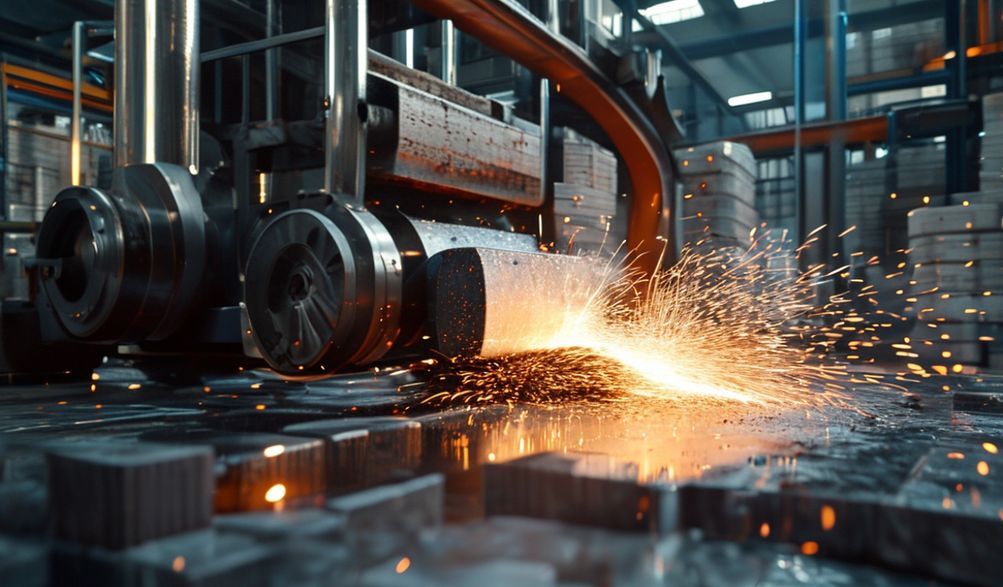
Revolutionizing Construction: The Ultimate Guide to Hydraulic Brick Machines from FUDA Block Making Factory
Pengantar
The global construction industry stands at a critical crossroads. With rising populations and rapid urbanization, the demand for durable, affordable, and sustainable building materials has never been higher. Yet, for decades, the backbone of construction—the humble brick—has often been produced using methods plagued by inefficiency, inconsistency, and significant environmental impact.
Traditional brick-making is a story of immense labor, unpredictable quality, and substantial material waste. Manual molding and even older mechanical vibratory machines struggle to deliver the uniform strength and precision required for modern, resilient structures. This gap between demand and production capability creates bottlenecks, increases project costs, and compromises building integrity.
Enter the hydraulic brick machine—a paradigm shift in construction material manufacturing. This technology represents the fusion of raw power and precise engineering, offering a scalable, efficient, and superior alternative. Leading this industrial revolution is the FUDA Block Making Factory, a name synonymous with robust engineering, innovation, and unwavering reliability in block production machinery.
This guide is built on a foundation of deep industry expertise, mechanical engineering principles, and FUDA’s decades of hands-on manufacturing experience. Our goal is to serve as your comprehensive, trustworthy resource—whether you are a contractor looking to streamline your supply chain, a business owner investing in a block-making venture, or a project manager specifying materials. We will demystify the technology, detail its unparalleled advantages, and illustrate why partnering with an authoritative manufacturer like FUDA is the most critical decision you will make.
Let’s explore how the hydraulic brick machinedariPabrik pembuatan blok FUDA is reshaping landscapes, one perfectly formed block at a time.
What is a Hydraulic Brick Machine? The Core Technology Explained
At its heart, a hydraulic brick machine is a press. But it’s a press of extraordinary capability, using fluid power to achieve what brute force or vibration alone cannot. It automates the process of compacting raw material—typically a mix of cement, sand, aggregate, and often industrial by-products—into dense, high-strength bricks and blocks.
The Principle of Hydraulic Compression
The core differentiator lies in its method of compaction.
- Vibratory machines rely on high-frequency shaking to settle material into a mold. This can leave voids, create inconsistent density, and often requires a higher cement ratio to achieve strength.
- Hydraulic machines apply static, immense pressure through a hydraulic ram. This pressure is measured in tons (e.g., 200 tons, 500 tons) and is applied steadily and uniformly across the entire surface of the material.
This controlled, omnidirectional compression forces out air pockets, aligns particles, and creates a molecular-level bond that results in a product with far higher dry compressive strength, superior dimensional accuracy, and a denser, less permeable finish. It’s the difference between loosely packing sand in a bucket and applying a massive, even weight to it.
Key Components of a Modern Hydraulic Brick Machine
Memahami anatomi mesin mengungkap kecanggihannya:
- Unit Tenaga Hidrolik: The “heart” of the system. It consists of an electric motor, hydraulic pump, oil reservoir, valves, and actuators. It generates and regulates the high-pressure fluid flow that powers the entire operation.
- Mold/Die System: The “personality” of the machine. Made from high-grade, hardened alloy steel at FUDA, these precision-engineered molds define the block’s shape, size, and surface texture. They are interchangeable, allowing one machine to produce multiple products.
- Panel Kontrol (PLC): The “brain.” Modern FUDA machines feature Programmable Logic Controller (PLC) systems. This allows for automated cycle control, pressure setting, production counting, and fault diagnosis, ensuring repeatable quality with minimal operator intervention.
- Feeding and Material Handling System: This can range from a manual hopper to a fully automated conveyor and batching system. It ensures a consistent volume of raw material is delivered to the mold for each cycle.
Jenis-Jenis Bata dan Blok yang Diproduksi
The versatility is staggering. A single hydraulic machine from FUDA can be configured to produce:
* Blok Beton Padat & Berongga:Untuk dinding penahan beban dan partisi.
* Batu Paving & Blok Interlock: For durable, attractive driveways and landscaping.
* Curbs, Grass Pavers, and Retaining Wall Blocks: For civil and infrastructure projects.
* Bentuk Khusus: Custom designs for architectural features.
Why Choose a Hydraulic System? Advantages Over Other Methods
Choosing a hydraulic brick machine isn’t just buying equipment; it’s investing in a superior production methodology. Here’s a comparative analysis based on industry experience.
Unmatched Product Quality and Strength
- Kekuatan Tekan yang Lebih Tinggi: Hydraulic pressure routinely produces blocks with strengths exceeding 10-15 MPa or more, often surpassing local building code requirements with ease. This translates to safer, longer-lasting buildings.
- Excellent Dimensional Accuracy: Each block is a near-perfect replica of the last, ensuring straight walls, minimal mortar use, and faster bricklaying.
- Smoother Finish & Sharp Edges: The high pressure creates a dense surface, reducing chipping and producing a more aesthetically pleasing block right off the pallet.
Remarkable Efficiency and Output
- Waktu Siklus Lebih Cepat: While a vibratory machine may need seconds of shaking, a hydraulic press achieves compaction in a matter of moments. A FUDA fully automatic model can produce thousands of blocks per shift.
- High Degree of Automation: From feeding to pressing to palletizing, the process can be streamlined, drastically reducing labor costs and human error.
- Keluaran yang Konsisten: The machine does not tire. Output and quality remain constant from the first hour to the last.
Material Versatility and Cost Savings
This is a game-changer for profitability and sustainability.
* Ability to Use Industrial By-Products: Hydraulic machines excel at compacting fly ash, slag, quarry dust, and even recycled construction aggregate. These materials are often low-cost or free, dramatically reducing raw material expenses.
* Lower Cement Content: The efficient compaction means you can often achieve target strength with less cement, the most expensive component in the mix.
* Minimal Waste: Precise feeding and molding result in near-zero material spillage or rejected sub-standard blocks.
Durability and Lower Long-Term Maintenance
- Konstruksi Kokoh: Hydraulic systems, when built with quality components like FUDA uses, are incredibly durable. The pressing action is less jarring on the machine’s frame than constant vibration.
- Pengurangan Keausan pada Cetakan: The static pressure causes less abrasive wear on the precision mold surfaces compared to the constant friction of vibratory methods, extending mold life significantly.
Inside the FUDA Block Making Factory: A Legacy of Engineering Excellence
When you invest in a FUDA machine, you are buying into a philosophy built on decades of refinement. Our factory is not just a production facility; it’s a center of innovation for block-making technology.
Our Manufacturing Philosophy and Quality Control
Our process is governed by a simple principle: over-engineer for reliability.
* Fokus R&D: We continuously test new hydraulic circuits, material mixes, and control systems to improve efficiency and output.
* Bahan Berkualitas Tinggi: From the structural steel in the frame to the specially formulated seals in the hydraulic cylinders, we source components for longevity. Our molds are CNC-machined from hardened steel for a lifespan measured in millions of cycles.
* Pengujian Ketat: Every machine undergoes a full production cycle test before leaving our factory. We test pressure limits, control sequences, and safety interlocks to ensure it arrives on your site ready for productive work.
The FUDA Machine Range: Models to Fit Every Need
We offer solutions, not just products. Our range scales with your ambition:
* Semi-Automatic Models: Ideal for starting a business or medium-scale projects. Operator feeds material, machine handles pressing and ejection. High quality with manageable investment.
* Pabrik Stasioner Sepenuhnya Otomatis: For high-volume production. Feature automatic batching, mixing, conveying, pressing, and stacking. Controlled by a central PLC, they represent the pinnacle of efficiency.
* Mesin Blok Seluler: Bring the factory to the site. Perfect for large infrastructure projects where transporting blocks is costly.
Beyond the Machine: FUDA’s Comprehensive Support
Our relationship begins when you place an order, not ends.
* Detailed Training: We provide on-site training for your operators and maintenance staff on machine operation, routine servicing, and basic troubleshooting.
* Installation Guidance: Our engineers provide foundation drawings and remote or on-site support during installation and commissioning.
* Complete Documentation: You receive clear maintenance manuals, hydraulic schematics, and parts lists.
* Global After-Sales & Spare Parts: We maintain an inventory of critical spare parts and offer responsive technical support to minimize your downtime.
Key Considerations Before Investing in Your Hydraulic Brick Machine
An informed investment is a successful one. Let our experience guide your planning.
Menilai Kebutuhan Produksi Anda
Tanyakan pada dirimu sendiri:
* What is my primary product? (Solid blocks, pavers, etc.)
* What is my target daily/monthly output? Be realistic about current needs and future growth.
* What is the available workforce and skill level? This will guide your choice between semi- and fully-automatic models.
* What raw materials are locally and affordably available?
Understanding Total Cost of Ownership
Look beyond the sticker price:
* Investasi Awal: Includes machine cost, shipping, import duties, and installation.
* Biaya Operasional: Electrical power consumption, labor, raw materials, and routine maintenance supplies.
* ROI Calculation: Factor in your production volume, block selling price, and operational costs. A FUDA sales engineer can help you model this. A more efficient, reliable machine often pays for itself faster through higher output and lower waste.
Site Preparation and Infrastructure Needs
Prepare your site for success:
* Ruang Angkasa: Adequate floor space for the machine, raw material storage, curing area, and finished block storage.
* Foundation: A level, reinforced concrete foundation is crucial to absorb machine vibrations and ensure stability.
* Sumber Daya Listrik: Ensure you have the correct voltage and phase (e.g., 380V 3-phase) with sufficient amperage.
* Raw Material Storage: Covered areas for cement and aggregates to control moisture content.
The Importance of Supplier Credibility (E-E-A-T Focus)
This is paramount. Your supplier is a long-term partner.
* Verify Certifications: Look for ISO quality management certifications, CE marks for export, and other industry-relevant approvals.
* Visit the Factory (Virtually or In-Person): A reputable manufacturer like FUDA is transparent. We welcome factory inspections to see our processes firsthand.
* Check Client References: Ask for contact information for past clients in a similar region or business. Speak to them about machine performance and after-sales service.
* Review Warranty Terms: Understand exactly what is covered, for how long, and the process for claiming support.
Optimizing Your Operation: Tips for Maximum Productivity
Raw Material Preparation Best Practices
Consistent input = consistent output.
* Aggregate Size: Keep it under 5mm for standard blocks. Well-graded sand and aggregate improve compaction.
* Kandungan Kelembaban: This is critical. Aim for a semi-dry mix (typically 5-10% water). Too dry, and the block won’t bind; too wet, and it will deform after ejection. The “hand-squeeze” test (mix forms a ball that holds shape but crumbles when poked) is a good starting point.
* Cement Ratio: Start with standard ratios (e.g., 1:6 cement to aggregate for non-load-bearing) and adjust based on strength tests and material type.
Routine Maintenance Checklist for Longevity
A little care prevents major downtime.
* Harian: Check hydraulic oil level and for leaks. Clean the mold, hopper, and feed system. Lubricate all guide rods and moving parts as per manual.
* Mingguan: Inspect hydraulic hoses for wear. Check electrical connections for tightness. Clean the oil filter.
* Bulanan: Test safety devices. Have a technician check system pressure calibration. Inspect mold for wear or damage.
Pemecahan Masalah Umum
- Low Brick Strength: Likely causes are incorrect moisture content, insufficient compaction pressure, or wrong cement ratio. Check and adjust.
- Bricks Sticking in Mold: Mold may need cleaning or a light application of approved mold release agent. Check for wear on mold liners.
- Hydraulic System Overheating: Check oil level and cleanliness. Ensure the oil cooler (if equipped) is functioning and the system is not over-pressurized.
Frequently Asked Questions (FAQ) About Hydraulic Brick Machines & FUDA
Q1: What is the typical lead time for a FUDA hydraulic brick machine?
A: Lead time varies by model and customization. Standard semi-automatic models can ship within 15-30 days after order confirmation. Larger, fully automatic plants may require 45-60 days for production and testing. We provide a firm timeline upon order.
Q2: Can your machines use 100% fly ash or other eco-friendly materials?
A: Absolutely. Our hydraulic machines are exceptionally well-suited for fly ash-based blocks (like CLC or Fal-G bricks). We can provide specific mix design recommendations and, if needed, customize machine parameters to optimize performance for your chosen eco-friendly materials.
Q3: How does the brick strength from a hydraulic machine compare to traditional fired clay bricks?
A: Hydraulically pressed cement blocks typically have a higher compressive strength than many common fired clay bricks. They are also more uniform, more resistant to water absorption, and do not require kiln firing, saving energy and reducing emissions.
Q4: What training does FUDA provide for machine operators?
A: We provide comprehensive on-site training covering safe operation, daily procedures, routine maintenance, and basic troubleshooting. Training is conducted by our experienced engineers until your team is confident and self-sufficient.
Q5: What is the warranty period, and how do I access spare parts?
A: FUDA offers a standard 12-month warranty on the entire machine, covering manufacturing defects. Critical wear parts like seals may have different terms, all detailed in your contract. Spare parts can be ordered directly through your sales contact, and we prioritize shipping to minimize your downtime.
Q6: Can you provide a layout design for a complete block production plant?
A: Yes. As a full-service provider, our engineering team can provide a recommended factory layout based on your chosen machine model, production goals, and site dimensions. This includes placement for mixing, production, curing, and storage areas.
Kesimpulan
The journey from raw material to resilient structure is being redefined. Hydraulic brick making technology stands as a testament to efficiency, quality, and sustainability in modern construction. It offers a clear path to reducing costs, improving building integrity, and leveraging locally available, often eco-friendly materials.
Choosing this technology, however, is only half the decision. The true value is unlocked by partnering with a manufacturer whose expertise, authoritativeness, and trustworthiness are as robust as the machines they build. FUDA Block Making Factory embodies these principles. Our legacy is built not just on selling machines, but on fostering successful block-making businesses and contributing to built environments worldwide.
As the industry evolves with trends in automation, IoT-enabled monitoring, and green construction, FUDA remains committed to innovation at the forefront. We are your partner in building the future, literally and figuratively.
Ready to transform your construction project or business? Take the next step with confidence. Contact the FUDA engineering team today for a personalized consultation tailored to your specific needs. Download our detailed technical catalogs, or schedule a virtual tour of our manufacturing facility to see the quality and scale of our operation firsthand. Let’s build something remarkable together.
<