
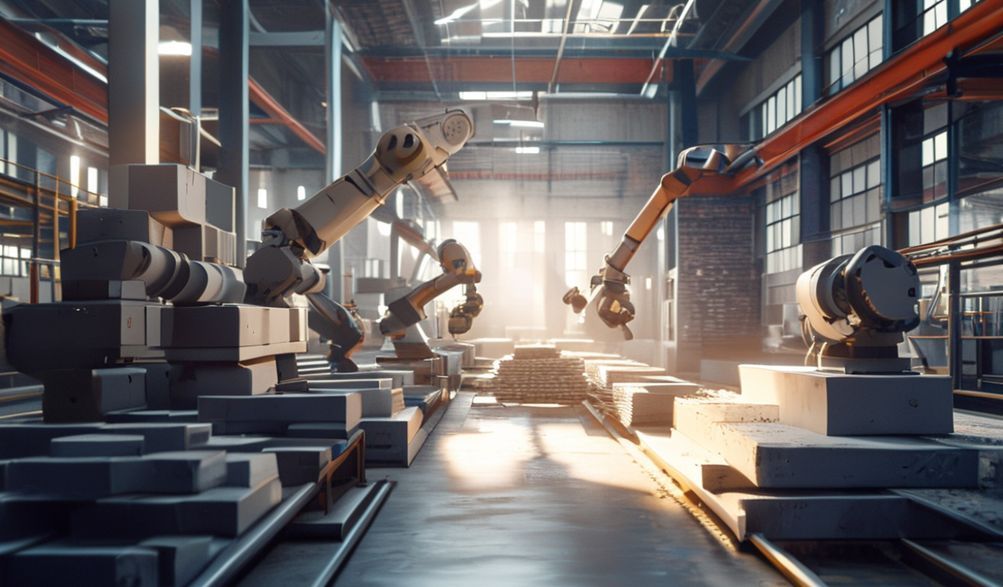
The Ultimate Guide to Block Making Machines: Inside the FUDA Brick Making Factory
Pengantar
In the world of construction and industrial manufacturing, the quest for reliable, high-quality machinery is constant. The foundation of countless buildings, roads, and infrastructure projects begins not with a groundbreaking ceremony, but within the controlled, powerful environment of a block making factory. For business owners, project managers, and entrepreneurs, choosing the right equipment is a critical decision that affects productivity, cost, and long-term success.
This comprehensive guide serves as your definitive resource on industrial block making machines. We will go beyond basic specifications to explore the core technology, the sophisticated production workflow of a leading manufacturer like the FUDA brick making factory, and the crucial factors that separate a good investment from a great one. Whether you’re scaling a construction business or launching a block production venture, understanding the machinery at the heart of modern building is your first step toward building something lasting.
Apa itu Mesin Pembuat Blok? Teknologi Inti Dijelaskan
At its essence, a block making machine is a device that automates and intensifies the age-old process of creating masonry units. It transforms loose, raw materials into dense, uniform, and structurally sound blocks through a combination of force, vibration, and precision.
Prinsip Dasar: Dari Bahan Baku Menjadi Blok Padat
The core process is a marvel of industrial engineering, typically following these key stages:
- Mencampur: Raw materials like cement, aggregates (sand, gravel), fly ash, and water are combined in precise ratios to form a homogeneous mix. Consistency here is paramount for final block strength.
- Pembentukan: The wet mix is fed into a mold cavity. This mold defines the block’s shape—whether it’s a standard hollow block, a solid brick, or a specialized paving slab.
- Pemadatan dan Getaran: This is the heart of the process. The machine applies immense hydraulic pressure and high-frequency vibration to the mix within the mold. This action removes air pockets, consolidates the material, and creates a dense, compact block.
- Menyembuhkan: The freshly formed (or “green”) block is then carefully demolded and moved to a curing area. Here, under controlled temperature and humidity (often using steam curing chambers), the cement hydrates, allowing the block to gain its full structural strength over a defined period.
Types of Block Making Machines: Finding the Right Fit
Selecting a machine depends entirely on your output goals, budget, and labor availability.
-
Berdasarkan Tingkat Otomasi:
- Mesin Manual: Operated primarily by hand, with lever-based compaction. Suitable for very small-scale, low-budget projects. Output is low and labor-intensive.
- Mesin Semi-Otomatis: Automate the critical compaction and vibration processes but may require manual feeding of mix or removal of blocks. Offer a excellent balance of output and cost for small to medium businesses.
- Mesin Sepenuhnya Otomatis: The pinnacle of efficiency. These computer-controlled systems handle feeding, mixing, molding, compaction, block ejection, and stacking with minimal human intervention. Ideal for large-scale production plants.
-
Berdasarkan Mobilitas:
- Tanaman Stasioner: High-output machines fixed in a factory setting. They are the core of operations like the FUDA brick making factory, designed for continuous, large-volume production.
- Mesin Blok Seluler: Smaller units that can be towed to a construction site. They produce blocks directly where they are needed, saving on transportation costs for large projects.
-
Berdasarkan Output Produk:
- Machines are often designed for specific product lines, though many are versatile. Key types include:
- Mesin Pembuat Batako
- Solid Brick Making Machines
- Paving Slab and Interlocking Brick Machines
- Curbstone and Landscape Block Machines
- Machines are often designed for specific product lines, though many are versatile. Key types include:
Inside a Modern Brick Making Factory: The FUDA Workflow
A reputable factory is more than an assembly line; it’s a symphony of precision engineering, material science, and rigorous quality control. Let’s walk through the standard workflow in a modern facility.
Step-by-Step Production Process at FUDA
- Raw Material Inspection and Batching: The process begins long before the machine starts. Incoming materials like cement, sand, and aggregates are tested for consistency and quality. They are then precisely batched by weight using automated systems to ensure the exact mix ratio for every batch.
- Automated Mixing and Feeding: The batched materials are conveyed to a high-efficiency mixer. Here, they are blended with water to achieve the perfect consistency. This homogenous mix is then automatically fed to the block making machine’s hopper, ensuring a non-stop supply.
- High-Pressure Molding and Vibration: The mix is distributed into the mold box. The machine’s hydraulic system then exerts tons of pressure, while simultaneous high-frequency vibration compacts the material. This dual action is what gives FUDA-grade blocks their exceptional density and low water absorption.
- Curing and Drying: The delicate green blocks are automatically transferred onto curing pallets. They enter a controlled curing chamber, often using low-pressure steam. This accelerated curing process allows the blocks to achieve over 70% of their ultimate strength within 24 hours, compared to weeks in ambient air.
- Palletizing and Storage: Once cured, the blocks are automatically stacked onto wooden pallets or in cube formations by robotic stackers. They are then moved to a storage yard for final air drying and strength gain before being wrapped and prepared for shipment.
Quality Control and Assurance Protocols
Trust is built on consistency. A top-tier factory embeds quality control at every stage.
- In-Process Testing: Operators and automated systems continuously check block dimensions, weight, and appearance right off the production line.
- Final Product Testing: Samples from each production batch are sent to an on-site lab. They undergo destructive testing to measure kekuatan tekan (the key metric for load-bearing capacity), water absorptiondankepadatan. These results are logged and traceable.
- Sertifikasi: Adherence to international standards like ASTM (American Society for Testing and Materials) or ISO (International Organization for Standardization) is not just a badge; it’s a commitment to a globally recognized benchmark of quality and safety.
Key Features of a High-Quality Block Making Machine
When evaluating a machine, look beyond the brochure. These are the non-negotiable features that define durability and performance.
Durability and Construction
- Robust Steel Frame: The chassis must be fabricated from heavy-duty steel to withstand years of constant vibration and high-pressure cycles without warping.
- High-Wear Resistant Molds: Molds are the heart of the product. They should be made from specially hardened steel or alloys with chrome plating to resist abrasion and maintain precise block dimensions over thousands of cycles.
- Reliable Hydraulic System: Look for branded, industrial-grade hydraulic pumps, valves, and cylinders. A sealed system with proper filtration prevents leaks and ensures consistent, powerful compaction.
Production Capacity and Efficiency
- Siklus per Jam: This defines the machine’s speed. A faster cycle time means higher output.
- Blok per Siklus: How many blocks are produced with each press? A machine might produce 4, 6, 10, or more blocks simultaneously.
- Overall Output: This is the bottom line. For example, a fully automatic model might be rated for 6,000-8,000 standard hollow blocks in an 8-hour shift. Automation directly reduces labor costs and human error.
Versatility and Customization
- Quick-Change Mold Systems: The ability to switch between producing hollow blocks, solid bricks, and pavers by changing the mold box allows you to respond to market demand without investing in multiple machines.
- Adjustable Settings: Controls for vibration frequency, pressure intensity, and feed volume let you fine-tune the machine for different raw material recipes (e.g., using more fly ash) to optimize cost and performance.
Why Choose a Reputable Manufacturer Like FUDA?
The manufacturer is your long-term partner. Their reputation is your insurance policy.
The Importance of Engineering Expertise and R&D
A factory like FUDA invests in continuous research and development. This means machines are not just assembled from catalog parts, but engineered as integrated systems. An in-house engineering team is crucial for innovating new features, improving energy efficiency, and providing expert troubleshooting support specific to their equipment.
Comprehensive After-Sales Support
This is where premium manufacturers truly differentiate themselves.
* Ketersediaan Suku Cadang: A guaranteed inventory of wear parts (mold liners, vibration motors, seals) prevents months of costly downtime.
* Technical Training: They provide thorough training for your machine operators and maintenance staff, either at their factory or on your site.
* Installation & Commissioning Supervision: Sending engineers to oversee the setup ensures your plant starts correctly and efficiently.
* Long-Term Maintenance Support: Access to technical manuals, service schedules, and remote diagnostic help extends the machine’s lifespan.
Proven Track Record and Client Portfolio
Longevity in the market is a key indicator of reliability. A reputable manufacturer will have a portfolio of successful installations, potentially across multiple countries. Don’t hesitate to ask for case studies or references from clients with similar operational scales to yours.
Critical Factors Before You Invest
Arm yourself with information. Due diligence is the most important step in the procurement process.
Menilai Persyaratan Proyek Anda
- Output Needs: Calculate the average number of blocks you need per day or month based on your project pipeline or sales forecasts. Overbuying leads to idle capital; underbuying cripples your operations.
- Site Audit: Evaluate your available space (for the machine, raw material storage, curing area, and block storage), power supply (voltage and amperage requirements), and access to consistent, quality raw materials.
Analisis Total Biaya Kepemilikan
The machine’s price tag is just the beginning. A smart analysis includes:
* Installation & Foundation Costs: Including civil works and electrical hookups.
* Konsumsi Energi: Fully automatic machines are powerful; understand the kWh cost.
* Biaya Tenaga Kerja: A semi-automatic machine may require 4-6 workers, while a fully automatic line might only need 2-3.
* Pemeliharaan & Suku Cadang: Budget for annual maintenance and wear parts.
* Pengembalian Investasi (ROI): For a business, project your revenue per block, subtract all operational costs, and calculate how long it will take for the machine to pay for itself.
The Site Visit and Factory Audit
If possible, always visit the factory. Touring a facility like FUDA allows you to:
* Witness the build quality and welding on machines firsthand.
* Observe the production workflow and quality control labs.
* Assess the organization and professionalism of the operation.
* Pertanyaan Kunci yang Perlu Diajukan: “Can I see your testing lab reports?” “What is your lead time on key spare parts?” “Can you connect me with a client in my region?”
Pertanyaan yang Sering Diajukan (FAQ)
Q: What is the average production capacity of a standard automatic block making machine from a factory like FUDA?
A: Capacities vary by model, but a typical mid-range to high-end fully automatic machine can produce between 4,000 to 15,000 standard blocks in an 8-hour shift. Specific output depends on block type, size, and the machine’s cycle speed.
Q: How long does it take to install and commission a new block making plant?
A: With proper site preparation (foundation, power), the physical installation of the machine by factory engineers typically takes 1-3 weeks. Full commissioning, including calibration, trial runs, and operator training, can bring the total timeline to 4-6 weeks before full-scale production begins.
Q: Can one machine produce different types of blocks and bricks?
A: Yes, versatility is a standard feature of modern machines. By purchasing and switching out the mold box, the same primary machine can usually produce hollow blocks, solid bricks, paving stones, and more. Confirm the specific mold compatibility and changeover process with the manufacturer.
Q: What kind of after-sales support should I expect from a reputable manufacturer?
A: Expect a clear warranty (often 12-18 months), detailed operation and maintenance manuals, a readily available catalog of spare parts, provision for comprehensive operator training, and access to technical support via phone, email, or video call for troubleshooting.
Q: Are the blocks produced strong enough for load-bearing construction?
A: Absolutely. Blocks manufactured on industrial machines under proper calibration and curing protocols, especially from a quality-focused factory, far exceed standard building code requirements. They routinely achieve compressive strengths suitable for multi-story load-bearing walls in residential and commercial construction.
Kesimpulan
Choosing a block making machine is a strategic decision that lays the literal and figurative foundation for your construction projects or manufacturing business. As we’ve detailed, the difference lies in the intricate engineering of the machine, the rigorous, science-backed processes of a factory like FUDA, and the invaluable peace of mind that comes with genuine after-sales support.
By thoroughly assessing your needs, analyzing the true total cost of ownership, and partnering with an authoritative, experienced manufacturer, you do more than purchase a piece of equipment. You invest in a pillar of productivity and quality that will drive your success for years to come. We recommend beginning your journey with detailed inquiries to established factories, armed with the knowledge from this guide.
Biografi Penulis: Our industrial machinery insights are compiled through collaboration with seasoned engineers and industry analysts with decades of experience in construction equipment manufacturing and procurement. We are committed to providing accurate, trustworthy information to guide your investment decisions.
<