
The Ultimate Guide to Cement Block Making Machines in Pakistan (2026)
Pengantar
Pakistan’s construction sector is not just growing; it’s booming. With an annual demand for over 50 million tons of cement and massive infrastructure projects like dams, highways, and housing schemes underway, the backbone of this expansion is a humble yet critical component: the concrete block. However, the traditional method of manual block production—prone to inconsistency, labor-intensive, and painfully slow—is struggling to keep pace with modern demands for quality, speed, and scale.
This gap between demand and manual capability presents a significant challenge for builders, contractors, and aspiring entrepreneurs. The solution? Mechanization. A cement block making machine in Pakistan is no longer a luxury for large corporations; it has become an essential, cost-effective tool for anyone serious about construction quality, project timelines, and business profitability.
This comprehensive guide is designed to be your definitive resource. Built on deep industry knowledge, technical analysis, and current market insights, our goal is to provide you with the expertise needed to navigate the market confidently. Whether you’re a contractor looking to streamline your operations or an entrepreneur eyeing the lucrative block supply business, understanding the nuances of selecting, operating, and maintaining the right mesin pembuat blok semen is your first step toward success.
Memahami Mesin Pembuat Blok Semen
Apa itu Mesin Pembuat Blok Semen?
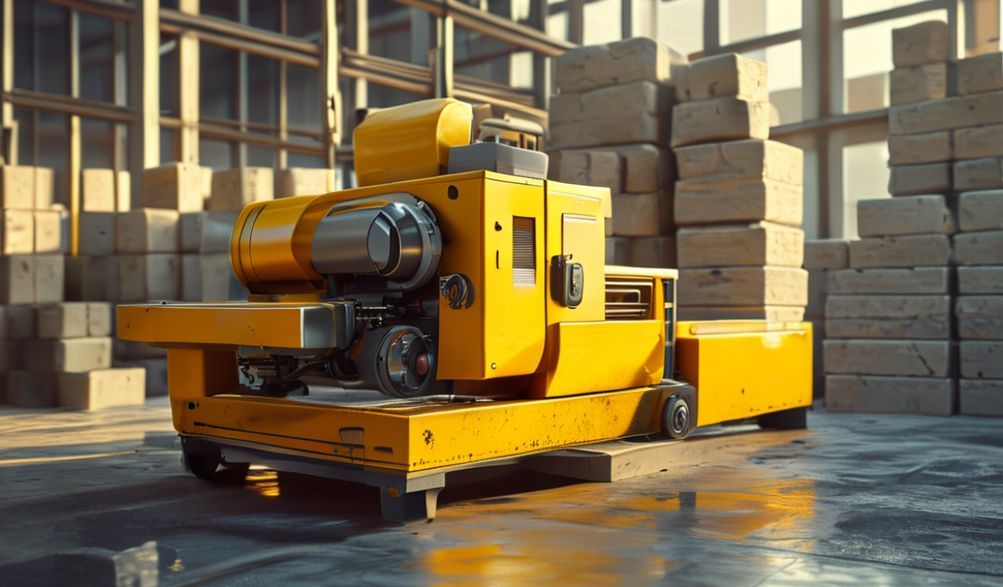
At its core, a cement block making machine is a device that automates the process of forming concrete blocks. It works on the principle of compacting a prepared mixture of cement, sand, and aggregate (crush) into a mold using vibration and, in more advanced models, hydraulic pressure. This process ensures high density and uniform strength, which are critical for structural integrity.
These versatile machines can produce a wide array of block types, catering to diverse construction needs:
* Bata Ringan: The most common, used for load-bearing and non-load-bearing walls. Their hollow cores reduce weight and improve insulation.
* Balok Padat: Used for foundations, pavements, and areas requiring maximum strength and stability.
* Blok Paving (Interlocking & Non-Interlocking): For driveways, walkways, and parking areas, known for durability and aesthetic appeal.
* Blok Khusus: Including kerbstones, grass blocks, and designer blocks for architectural finishes.
Why Invest in a Block Making Machine in Pakistan?
Investing in a block making machine is a strategic decision with multifaceted benefits:
- Economic Benefits: The most immediate impact is on your bottom line. Automation drastically reduces labor costs—one machine can replace 10-15 manual laborers. Material efficiency improves as the machine uses an optimal mix with less waste. Faster production cycles mean quicker project completion, allowing you to take on more work.
- Quality Advantages: Consistency is king in construction. Machine-made blocks have uniform dimensions (e.g., precise 9″x4″x3″ sizes), density, and compressive strength (measured in PSI or MPa). This uniformity ensures straight walls, reduces mortar usage, and guarantees the structural strength specified by engineers, a standard nearly impossible to achieve manually.
- Peluang Bisnis: Beyond personal use, a block machine is a viable business venture. With consistent housing shortages and ongoing development, the demand for quality blocks is perennial. Setting up a small block supply plant can cater to local builders, creating a steady revenue stream.
Types of Cement Block Making Machines Available in Pakistan
The Pakistani market offers a spectrum of machines, from basic to highly advanced, to suit different scales of operation and investment.
Mesin Pembuat Blok Manual
These are the most basic, hand-operated presses. An operator fills the mold by hand and uses a lever mechanism to compact the mix before ejecting the block.
- Kelebihan: Extremely low initial cost, requires no electricity, simple to understand.
- Kekurangan: Highly labor-intensive, very low output (80-150 blocks per day), inconsistent quality dependent on operator skill. Ideal only for tiny, occasional projects or as a minimal-cost startup test.
Mesin Pembuat Blok Semi-Otomatis
This category strikes the perfect balance for small to medium enterprises (SMEs) and is immensely popular in Pakistan. The machine handles the core compaction and vibration, but an operator assists with feeding raw material and removing finished blocks. A common and efficient type in this category is the mesin blok peletakan telur, which produces blocks directly on the ground or a pallet, “laying” them like eggs as it moves.
- Kelebihan: Significant boost in output (300-800 blocks per hour), good consistency, manageable power requirements (single or three-phase electricity), and a reasonable price point.
- Kekurangan: Still requires 2-3 operators, output is limited by manual feeding and removal speed.
Mesin Pembuat Blok Sepenuhnya Otomatis
These are complete production lines. They feature automatic material batching, mixing, block molding, curing, and stacking via conveyor belts and robotic arms, often controlled by a PLC (Programmable Logic Controller).
- Kelebihan: Very high output (1,000 to 10,000+ blocks per 8-hour shift), minimal labor (1-2 supervisors), exceptional consistency and quality, and high efficiency.
- Kekurangan: High capital investment, requires a large, dedicated space, consistent and powerful electricity supply, and sophisticated maintenance. Best for large block manufacturing plants and major construction firms.
Mesin Blok Bergerak vs. Mesin Blok Stasioner
- Mesin Blok Seluler: Mounted on a trailer, these can be towed directly to a construction site. They are perfect for large projects (like building a housing colony) where producing blocks on-site eliminates transport costs and block damage.
- Mesin Blok Stasioner: Set up in a fixed location, like a factory or yard. They are the standard for block supply businesses and offer more stability and potential for integration with other stationary equipment like pan mixers.
Key Features to Consider Before Buying in Pakistan
Choosing the right machine requires careful evaluation of several technical and practical factors.
Kapasitas Produksi (Blok Per Jam)
Don’t just buy the biggest machine. Assess your actual need:
* For Personal Construction: A semi-automatic machine with a 300-500 blocks/hour capacity is often sufficient.
* For a Startup Business: Aim for 700-1200 blocks/hour to meet initial market demand and allow for growth.
* For Large-Scale Supply: Fully automatic plants with 2000+ blocks/hour capacity are necessary.
Block Size and Mold Options
Versatility is key. Ensure the supplier offers a variety of standard mold sizes (4″, 5″, 6″, 8″ hollow blocks, paving block molds) and confirm that additional molds can be purchased later. The quality of the mold steel determines the block’s finish and the mold’s lifespan.
Persyaratan Daya
Pakistan’s power landscape demands careful consideration:
* Model Listrik: Common for semi-automatic machines. Check if you have reliable single-phase or three-phase connection.
* Model Diesel: Crucial for areas with frequent load-shedding or for mobile on-site operations. They offer independence from the grid but have higher fuel costs.
* Hybrid Models (Electric/Diesel): Offer the flexibility to switch between power sources, providing a valuable backup.
Kualitas dan Daya Tahan Bangunan
A machine is a long-term asset. Inspect:
* Bingkai: It should be made of heavy-duty, welded steel, not light-gauge metal.
* Sistem Getaran: Look for high-frequency external vibrator motors mounted on a sturdy vibrator table. This is the heart of block density.
* Hydraulic System (for automatic models): Check the brand and quality of pumps and cylinders.
* Jamur: Hardened, chromium-plated steel molds resist wear and provide a smooth block finish.
After-Sales Service and Parts Availability
This is arguably the most critical factor for a cement block making machine in Pakistan. A machine without support is a liability.
* Insist on a Clear Warranty: Typically 1 year on the machine and 6 months on wear parts like molds.
* Verify Local Support: Choose a supplier with a strong service network in major hubs like Lahore, Karachi, Rawalpindi/Islamabad, and Faisalabad. Can they dispatch a technician within 48 hours?
* Spare Parts Inventory: Ask if they stock common spare parts (vibrator motors, springs, belts) to minimize your downtime.
Top Manufacturers and Suppliers in Pakistan
Local Pakistani Manufacturers
The local manufacturing sector has grown impressively. Companies in Gujranwala, Lahore, and Karachi now produce robust machines that are well-adapted to local conditions and raw materials.
* Manfaat: Generally more affordable, spare parts are cheaper and readily available, and communication and service response are faster due to no language or import barriers.
Imported Machines (Chinese, European, etc.)
- Mesin-mesin Cina: Dominate the import market due to competitive pricing. Quality varies widely—from excellent to substandard. Thorough due diligence is essential.
- Mesin-Mesin Eropa Brands from Germany, Italy, or the Netherlands are known for top-tier engineering, automation, and durability but come at a premium price.
How to Choose a Reputable Supplier
Industry practice shows that cutting corners on supplier selection leads to long-term problems.
1. Check Credentials: How long have they been in business? Ask for their physical address and visit if possible.
2. Minta Referensi: A confident supplier will provide contact details of previous clients, especially those with machines running for 2+ years.
3. Demand a Live Demonstration: Never buy based on a video or brochure alone. See the machine run, produce blocks, and measure the output quality.
4. Scrutinize the Service Contract: Get all promises regarding installation, training, warranty, and service response times in writing.
5. Trust Your Instincts: If a deal seems “too good to be true,” it usually is. Prioritize a supplier’s reputation for honesty and support over the absolute lowest price.
Cost Analysis and Investment Guide
Price Range of Machines in Pakistan (Estimated 2026)
Prices fluctuate with steel prices and currency exchange rates. Use these as guidelines:
* Manual Block Machine: PKR 80,000 – PKR 200,000
* Semi-Automatic Block Machine: PKR 500,000 – PKR 2,500,000 (depending on capacity and automation level).
* Fully Automatic Block Machine: PKR 3,000,000 – PKR 15,000,000+.
Calculating Return on Investment (ROI)
A simple framework for a business plan:
1. Fixed Cost: Machine price + installation.
2. Variable Cost per Block: (Cement + Sand + Crush) + Labor + Electricity/Diesel.
3. Selling Price: Research the current market rate for blocks in your area (e.g., a 6″ hollow block may sell for PKR 55-65).
4. Profit per Block: Selling Price – Variable Cost.
5. Break-Even Point: Divide Fixed Cost by Profit per Block. This gives you the number of blocks to sell to recover your machine investment. A semi-automatic machine often sees ROI within 12-18 months with consistent operation.
Government Policies and Support
Keep an eye on initiatives by the State Bank of Pakistan (SBP) and SMEDA (Small and Medium Enterprises Development Authority) that may offer concessional financing or training for SME setups in the manufacturing sector, which can include block making plants.
Operational Guide and Maintenance Tips
Raw Material Preparation (Mix Design)
The quality of the block is determined here. A standard, strong mix ratio is 1:3:6 (1 part cement, 3 parts fine sand, 6 parts coarse sand/crush). Use clean, silt-free materials. Water should be added to achieve a “semi-dry” mix—it should hold its shape when squeezed in your fist but crumble when poked.
Step-by-Step Operating Process
- Mencampur: Use a mechanical pan mixer for consistency. Mix dry materials first, then add water gradually.
- Pemberian Makan: Pour the mix into the machine’s hopper.
- Pembentukan & Pemadatan: The machine fills the mold and applies vibration for 5-15 seconds.
- Pengusiran: The freshly formed (green) block is ejected onto a pallet or the ground.
- Menyembuhkan: This is critical. Keep blocks moist under a plastic sheet or by sprinkling water for at least 7 days. They gain nearly 70% of their strength in this period. Avoid direct sunlight initially.
Essential Maintenance for Longevity
Preventive maintenance prevents costly breakdowns.
* Harian: Clean all concrete residue from the mold, table, and hopper. Check for loose bolts and nuts.
* Mingguan: Lubricate all moving parts (guide rods, bearings) as per the manual. Inspect vibrator motors for unusual noise or heat.
* Bulanan: Check the tension of drive belts (if any). Inspect the hydraulic oil level and filter (in automatic machines). Thoroughly inspect molds for wear or damage.
Pertanyaan yang Sering Diajukan (FAQ)
Q1: What is the average price of a cement block making machine in Pakistan?
As outlined above, prices range from under PKR 200,000 for manual machines to several million for fully automatic plants. The popular semi-automatic segment typically falls between PKR 800,000 to PKR 1.8 million.
Q2: How many blocks can a semi-automatic machine produce in an 8-hour shift?
A standard semi-automatic machine rated at 500 blocks per hour can produce approximately 3,500-4,000 blocks in an 8-hour shift, accounting for operator breaks and material loading time.
Q3: What is the difference between a “fly ash” and a “concrete” block making machine?
The core machine is often the same. The difference is in the raw material. “Fly ash block machines” use fly ash (a waste product from coal plants) as a partial replacement for cement, making blocks lighter and more eco-friendly. “Concrete block machines” use the traditional cement-sand-crush mix. Many modern machines in Pakistan can handle both mix designs with minor adjustments.
Q4: Can I get training on how to operate the machine?
A: Absolutely. Any reputable supplier will provide comprehensive hands-on training at the time of installation for you and your operators, covering machine operation, mix design, basic troubleshooting, and safety procedures. This is a non-negotiable part of the purchase.
Q5: What is the typical warranty period, and what does it cover?
A: A standard warranty is 12 months on the main machine frame and motor, and 6 months on wear parts like molds and vibrators. The critical trust signal is a clear, written warranty document that specifies what is covered, what is considered “wear and tear,” and the process for claiming service.
Q6: Are there any recommended brands for block machines in Pakistan?
While we avoid undue promotion, industry recognition points to established local manufacturers from Gujranwala and Lahore with multi-decade histories, as well as certain reliable Chinese brands that have maintained a consistent service presence in Pakistan for years. The supplier’s reputation is more important than the brand name alone.
Kesimpulan
Memilih yang tepatcement block making machine in Pakistan is a pivotal decision that hinges on a clear understanding of your needs, a meticulous evaluation of machine features, and, most importantly, partnering with a credible supplier. Prioritizing build quality, local after-sales support, and a clear service contract will protect your investment far more than seeking the absolute lowest price.
This guide has equipped you with the knowledge to view this purchase not just as buying equipment, but as making a strategic investment in the quality, efficiency, and profitability of your construction projects or business venture. The Pakistani construction market is ripe with opportunity, and the right machine places you firmly at its forefront.
Call to Action: Take the next step with confidence. Define your production goals and budget. Use this guide to prepare a checklist of questions. Contact 3-4 shortlisted suppliers, request live demonstrations, and compare their proposals side-by-side. Your ideal mesin pembuat blok semen is out there, ready to build the future, block by perfect block.
<