
1. Prinsip Operasional dan Posisi Pasar
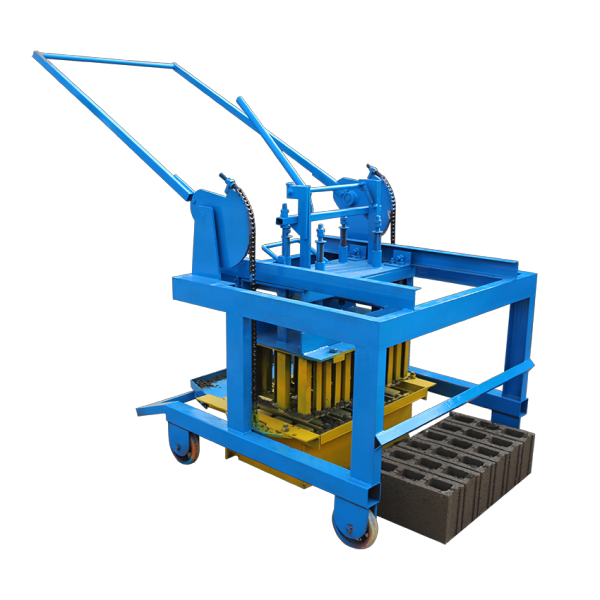
Penunjukan "peletak telur" merujuk pada metode spesifik produksi dan penempatan blok. Berbeda dengan mesin stasioner yang memproduksi blok pada posisi tetap, mesin peletak telur memiliki kereta cetakan bergerak yang berpindah di atas permukaan produksi yang telah disiapkan. Setelah pemadatan, mesin menempatkan (atau "meletakkan") blok yang baru terbentuk langsung ke tanah atau alas perawatan sebelum bergerak maju untuk membuat blok berikutnya secara berurutan. Hal ini menciptakan barisan blok yang terorganisir yang mengeras di tempatnya, menghilangkan kebutuhan akan palet, sistem konveyor, atau penanganan blok manual segera setelah produksi.
Ketika ditenagai oleh mesin diesel, mesin-mesin ini memperoleh kemandirian operasional penuh dari jaringan listrik. Kombinasi peletakan blok bergerak dan tenaga diesel ini menciptakan kelas mesin yang sangat serbaguna, diposisikan untuk:
- Situs konstruksi terpencil tanpa koneksi listrik yang mapan.
- Wilayah dengan pemadaman listrik yang sering atau pasokan listrik yang tidak stabil.
- Operasi produksi seluler yang berpindah-pindah antara berbagai lokasi proyek
- Pasar di mana bahan bakar diesel lebih ekonomis atau lebih mudah diakses daripada listrik yang andal
- Medium-scale production operations requiring output between manual methods and fully automated plants
2. Technical Specifications and Design Features
2.1. Diesel Power System Configuration
The diesel engine represents the core power source and requires careful specification:
- Engine Power Rating: Typically ranging from 10HP to 25HP, providing sufficient torque for both the hydraulic compression system and mobility functions
- Fuel Efficiency: Modern direct-injection diesel engines offer improved fuel consumption, with average usage between 1.5-3 liters per hour depending on production intensity
- Emissions Compliance: Varying standards apply based on destination markets, with Tier 2/Tier 3 engines being common for industrial applications
- Power Transmission: Mechanical or hydrostatic systems that transfer engine power to both the hydraulic system for compression and the mobility system for machine movement
2.2. Production Mechanism and Output Capacity
- Waktu Siklus: Production cycles typically range from 15-30 seconds per block, depending on block size and machine design
- Kapasitas Output Harian: Under optimal conditions, these machines can produce between 2,000 and 5,000 standard blocks (400x200x200mm) per 8-hour shift
- Varietas Blok Most models accommodate interchangeable molds for producing solid blocks, hollow blocks, paving stones, and interlocking blocks
- Sistem Kompresi: Hydraulic systems generating 15-40 tons of pressure, sufficient for producing high-density blocks meeting structural requirements
2.3. Mobility and Operational Design
- Chassis Design: Robust steel frame mounted on wheels or tracks, designed to move smoothly over production surfaces
- Steering Mechanism: Manual or assisted steering systems allowing precise alignment during block laying sequences
- Sistem Getaran: Many models incorporate vibration during compaction to enhance block density and surface finish
- Operator Interface: Simplified controls designed for single-operator management of both production and mobility functions
3. Comparative Advantages in Target Markets
3.1. Infrastructure Independence
The diesel-powered operation eliminates dependency on electrical infrastructure, making these machines particularly valuable in:
- Developing regions with limited grid coverage
- Disaster recovery operations where infrastructure is damaged
- Temporary production setups for specific construction projects
- Agricultural areas where electricity may be available only intermittently
3.2. Operational Flexibility and Reduced Handling
The egg layer mechanism provides distinct logistical advantages:
- Elimination of Pallet Costs: No requirement for wooden or steel pallets, reducing consumable expenses
- Reduced Labor Requirements: Minimal handling between production and curing stages
- Space Optimization: Blocks cure in organized rows, maximizing ground space utilization
- Production Continuity: No downtime for pallet changing or block transfer operations
3.3. Economic Advantages for End-Users
- Investasi Modal Lebih Rendah: Compared to fully automated stationary plants with similar output
- Reduced Operating Costs: Elimination of pallet systems and simplified material handling
- Faster Setup Time: Can begin production within hours of reaching a site
- Adaptabilitas: Easy to transport between sites as project requirements change
4. Quality and Performance Considerations
4.1. Block Quality Parameters
Modern diesel egg layer machines can produce blocks meeting international quality standards:
- Kekuatan Tekan: Typically achieving 3-7 MPa for unstabilized blocks, and 7-15 MPa for stabilized blocks (with 3-8% cement content)
- Akurasi Dimensi: Consistent block dimensions with variation typically less than ±2mm
- Finishing Permukaan: Smooth surfaces requiring minimal plastering in finished construction
- Kepadatan: Properly compacted blocks achieve densities between 1,800-2,200 kg/m³
4.2. Machine Durability and Maintenance
- Integritas Struktural: Heavy-duty steel construction with reinforced stress points
- Kualitas Komponen: Industrial-grade hydraulic components designed for continuous operation
- Maintenance Accessibility: Designed for easy access to routine service points
- Wear Part Management: Strategic use of hardened steel in high-wear areas like molds and compaction surfaces
5. Sourcing and Distribution Considerations
5.1. Manufacturer Evaluation Criteria
When sourcing diesel egg layer machines for distribution, consider:
- Keahlian Teknik: Manufacturers with specific experience in mobile block making equipment
- Testing Protocols: Comprehensive factory testing of both production and mobility functions
- Component Sourcing: Use of recognized quality components for engines, hydraulic systems, and bearings
- Adaptabilitas: Willingness to customize machines for specific market requirements or regulations
5.2. Market-Specific Adaptations
Successful distribution often requires market-specific adaptations:
- Pertimbangan Iklim: Special seals and materials for tropical or arid environments
- Fuel Quality Compatibility: Engine adjustments for markets with variable diesel quality
- Local Standards Compliance: Adjustments to meet regional construction material specifications
- Operator Training Materials: Documentation and training adapted to local languages and skill levels
5.3. Commercial Strategy for Distributors
- Product Positioning: Emphasizing infrastructure independence and operational flexibility
- Demonstration Strategy: Mobile demonstration units that can visit potential client sites
- Dukungan Purna Jual: Developing local service capabilities for maintenance and repairs
- Business Modeling: Providing clients with comprehensive production cost analysis and ROI calculations
6. Operational Best Practices and Support
6.1. Site Preparation Requirements
- Surface Preparation: Level, compacted production surface with proper drainage
- Penanganan Material: Organized areas for raw material storage and mixing
- Curing Management: Procedures for proper block curing without pallet systems
- Weather Protection: Strategies for protecting freshly laid blocks from rain or excessive sun
6.2. Maintenance Protocols
- Daily Procedures: Engine checks, hydraulic system inspection, mold cleaning
- Pemeliharaan Preventif: Regular fluid changes, filter replacements, and system inspections
- Seasonal Maintenance: Special procedures for storage or preparation after idle periods
- Troubleshooting: Common issues related to block quality, machine movement, or hydraulic performance
6.3. Operator Training Requirements
- Basic Operation: Machine controls, production sequencing, and mobility management
- Kontrol Kualitas: Monitoring block density, dimensional accuracy, and surface finish
- Routine Maintenance: Daily inspection procedures and basic maintenance tasks
- Safety Protocols: Safe operation practices specific to mobile machinery with hydraulic systems
Kesimpulan
Diesel-powered egg layer brick making machines occupy a vital niche in the global construction equipment market, offering a unique combination of mobility, infrastructure independence, and cost-effective production capabilities. For distributors and procurement specialists, these machines represent more than just another equipment category—they provide a solution specifically designed for challenging operating environments and flexible production requirements.
The successful distribution of these machines requires a deep understanding of both their technical capabilities and their practical applications in diverse market conditions. By focusing on quality manufacturing, comprehensive support systems, and targeted market education, distributors can build sustainable business relationships with clients who value operational flexibility, reduced infrastructure dependency, and economic block production.
As construction markets continue to expand into regions with limited infrastructure, and as contractors increasingly seek flexible production solutions, diesel egg layer machines are positioned for continued growth. Distributors who develop expertise in this equipment category will be well-positioned to serve these evolving market needs while building profitable, long-term business relationships in the building materials sector.
FAQ
Q1: What is the typical fuel consumption of a diesel egg layer machine during operation?
A: Fuel consumption varies based on engine size and production intensity, but most machines consume between 1.5-3 liters of diesel per hour under normal operating conditions. Larger machines operating at maximum capacity may consume up to 4 liters per hour. Actual consumption depends on factors like block density settings, production speed, and machine design.
Q2: How many operators are required to run this type of machine efficiently?
A: Typically, a diesel egg layer machine can be operated by 2-3 persons: one trained operator to manage the machine controls and production process, and 1-2 assistants for material handling (feeding the hopper, preparing the mix) and managing the laid blocks. This represents a significant labor advantage compared to manual production methods.
Q3: What types of blocks can be produced with these machines?
A: With interchangeable molds, these machines can typically produce solid blocks, hollow blocks (varying cavity percentages), paving stones, interlocking blocks for landscaping, and sometimes specialized shapes like curb stones. The specific capabilities depend on the machine model and available mold designs.
Q4: How does the block quality compare to stationary plant production?
A: Modern diesel egg layer machines can produce blocks meeting the same quality standards as stationary plants for compressive strength and dimensional accuracy. The key difference is production volume rather than quality. Properly operated and maintained, these machines produce blocks suitable for load-bearing construction in residential and commercial buildings.
Q5: What surface preparation is required for the block laying area?
A: The production surface should be level, well-compacted, and properly drained. A simple compacted soil surface is often sufficient, though some operations use a thin layer of sand for easier block collection. The surface must be smooth enough to allow machine movement but firm enough to support the weight of curing blocks without deformation.
Q6: What is the learning curve for operators new to this equipment?
A: For operators familiar with basic machinery, proficiency can typically be achieved within 1-2 weeks of training and practice. Key learning areas include machine controls, maintenance procedures, quality monitoring, and efficient production sequencing. Most manufacturers provide comprehensive operational training as part of the machine purchase.
Q7: Can these machines be converted to electric power if needed?
A: Some models are designed with conversion capabilities, allowing replacement of the diesel engine with an electric motor when operating in locations with reliable power. However, this requires specific design features from the manufacturer and is not universally available. Dual-power models represent a premium product category with enhanced flexibility.
