
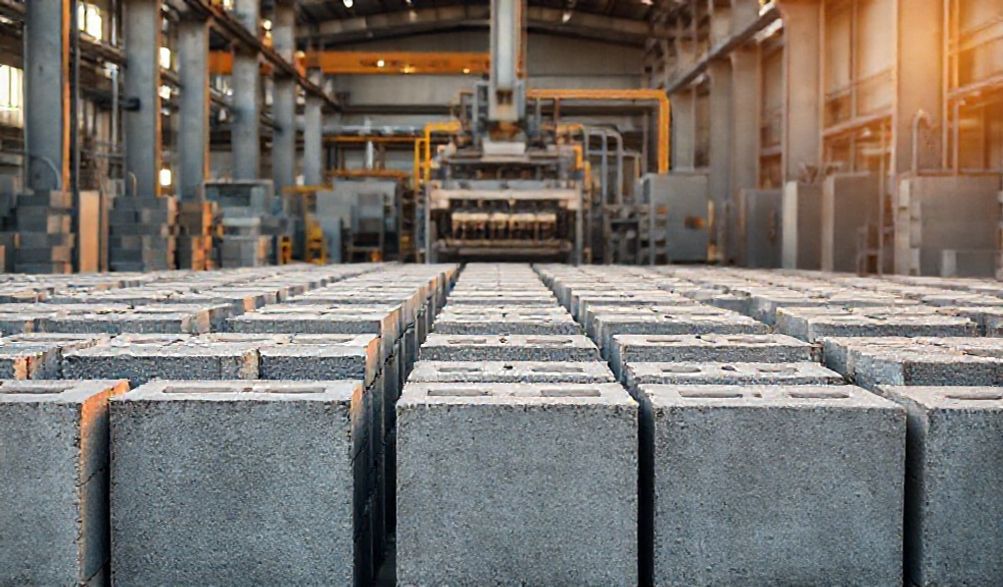
Panduan Lengkap untuk Memulai dan Mengoperasikan Pabrik Blok Beton
Pengantar
Anda berada di sini karena Anda melihat lebih dari sekadar balok abu-abu. Anda melihat potensi, stabilitas, dan peluang untuk membangun bisnis yang, secara harfiah, membangun segalanya. Baik Anda seorang pengusaha yang mencari usaha manufaktur, profesional konstruksi yang mengincar integrasi vertikal, atau investor yang mencari industri esensial, pabrik blok beton mewakili peluang yang mendasar.
Blok beton adalah pahlawan tak dikenal dalam konstruksi modern. Dari dinding proyek perumahan terjangkau hingga infrastruktur kota yang luas, unit modular ini sangat penting. Memulai bisnis manufaktur blok adalah usaha yang signifikan—memerlukan modal besar, kompleks secara operasional, dan kompetitif. Namun, bagi mereka yang menjalankannya dengan benar, bisnis ini menawarkan perusahaan yang menguntungkan dan tangguh, melayani permintaan global yang terus bertumbuh.
Panduan ini adalah peta jalan komprehensif Anda. Kami akan melampaui teori, menyediakan cetak biru langkah demi langkah yang didasarkan pada keahlian industri, praktik operasional terbaik, dan kecerdasan bisnis nyata. Kami akan membahas segala hal mulai dari studi kelayakan awal dan pemilihan mesin hingga kontrol kualitas tingkat lanjut dan strategi pemasaran. Di pasar saat ini, kesuksesan bukan hanya tentang membuat balok; ini tentang menguasai kualitas, efisiensi, dan keberlanjutan. Mari kita mulai.
Memahami Bisnis Pembuatan Blok Beton
Sebelum menginvestasikan satu dolar pun, Anda harus memahami lanskapnya. Bisnis ini berada di persimpangan antara manufaktur dan konstruksi, dengan keberuntungannya terikat langsung pada siklus pembangunan ekonomi.
Ikhtisar Pasar dan Penggerak Permintaan
Permintaan untuk blok beton kuat dan didorong oleh tren makro jangka panjang yang kuat.
- Urbanisasi: Global population shift to cities necessitates massive residential and commercial construction, where concrete blocks are a primary building material.
- Pembangunan Infrastruktur: Government spending on roads, bridges, drainage, and public works creates consistent demand for pavers, retaining wall blocks, and hollow blocks.
- Inisiatif Perumahan Terjangkau: Concrete blocks are a cost-effective, durable, and fire-resistant solution, making them a preferred choice in public and low-cost housing projects worldwide.
Not all blocks are created equal. Understanding product mix is key:
* Bata Ringan: The most common type, used for load-bearing and non-load-bearing walls. High demand in residential construction.
* Balok Padat: Used where higher strength and density are required, like in foundations.
* Paving & Interlocking Blocks: Gaining popularity in landscaping, driveways, and commercial pavements due to durability and aesthetic appeal.
* Blok Khusus: Such as chimney blocks or corner blocks, which can offer higher margins.
Types of Concrete Block Plants: From Manual to Fully Automatic
Your production model dictates your investment, labor needs, and output. Here’s a breakdown:
-
Tanaman Stasioner vs. Tanaman Bergerak:
- Tanaman Stasioner: Fixed installations with dedicated production, curing, and storage areas. Suitable for medium to large-scale production supplying a regional market.
- Mesin Pembuat Blok Seluler: Compact, trailer-mounted machines that can be moved to different job sites. Ideal for producing blocks directly for a specific, large project, reducing transport costs.
-
Production Scale & Automation:
- Small-Scale/Manual Plants: Often use a simple, manually-operated block making machine. Labor-intensive, low output (500-1000 blocks/day), but with a very low entry cost.
- Semi-Automatic Plants: Machines handle molding and compression automatically, but blocks are moved for curing and stacking manually. A good balance, offering higher output (2,000-10,000 blocks/day) with moderate investment.
- Tanaman Sepenuhnya Otomatis: Computer-controlled production lines with automatic material handling, pallet feeding, curing, and stacking. High capital cost but delivers maximum output (15,000+ blocks/day), consistency, and labor efficiency.
Investment Insight: Capital can range from $50,000 for a basic manual setup to well over $1 million for a high-capacity automated line. Your choice should be dictated by a clear understanding of your target market’s size and your financial capacity.
Essential Steps to Launch Your Block Plant
This phase separates dreamers from doers. A meticulous, disciplined approach here mitigates risk and sets the stage for profitability.
Conducting a Feasibility Study and Business Plan
This is your non-negotiable first step. A feasibility study answers the core question: “Will this work in my chosen location?”
- Komponen Utama:
- Location Analysis: Proximity to target customers (builders, contractors) and raw material suppliers. Analyze transport logistics.
- Competitor Assessment: Who are they? What do they charge? What’s their product quality and market reputation?
- Sumber Bahan Baku: Identify reliable suppliers for cement, aggregates, and water. Get preliminary cost quotes.
- Financial Projections: Detailed estimates of startup costs, operating expenses, projected sales volume, and pricing.
- Calculating Viability: Use your projections to calculate Return on Investment (ROI)danpayback period. A well-researched plan is also essential for securing financing from banks or investors.
Securing Location, Licenses, and Permits
- Site Requirements:
- Size: Minimum 1-2 acres for a small plant, scaling up significantly for curing yards and raw material storage.
- Accessibility: Must accommodate heavy trucks for inbound materials and outbound block delivery.
- Utilities: Stable, high-capacity electrical connection for machinery. Reliable water source for mixing and curing.
- Kepatuhan Regulasi: Engage with local authorities early. You will likely need:
- Factory/Industrial operation license.
- Environmental clearance (for dust, water runoff).
- Building and land use permits.
- Tax registration.
Sourcing Raw Materials and Establishing Reliable Supply Chains
Your product is only as good as your inputs. Consistency is paramount.
- Primary Materials:
- Semen: The binder. Establish a relationship with a major distributor or manufacturer.
- Agregat: Sand and gravel/stone dust. Test for quality (clean, well-graded, free of organic matter).
- Air: Potable quality is best to avoid impurities affecting setting time and strength.
- Supplier Vetting: Don’t just go for the cheapest quote. Assess reliability, delivery capability, quality consistency, and their willingness to provide technical data sheets.
Selecting the Right Machinery and Equipment
This is your core capital expenditure. Choose wisely.
- Core Machinery Lineup:
- Concrete Block Making Machine: The heart of the plant. Choose based on desired block type, output capacity, and automation level.
- Mixer (Pan or Planetary): For homogenous blending of concrete. Size must match your block machine’s cycle time.
- Sistem Konveyor: Transports mixed concrete to the block machine hopper.
- Sistem Pengumpan/Sirkulasi Palet: (For automatic/semi-auto plants) Manages the pallets blocks are molded on.
- Auxiliary & Essential Equipment:
- Forklift or Block Clamp Truck: For moving racks and stacked blocks.
- Curing Racks or Systems: For organized, efficient curing.
- Testing Lab Equipment: Slump cone, cube molds, compression testing machine (or partner with a local lab).
- New vs. Used & Manufacturer Selection: While used equipment lowers initial cost, it may come with hidden maintenance issues and no warranty. Prioritize reputable manufacturers known for build quality, availability of spare parts, and after-sales service support.
Core Production Process and Quality Control
Here, theory meets practice. Mastering the production cycle and instituting rigorous QC are what will make or break your reputation.
The Concrete Block Production Cycle: Step-by-Step
- Batching: Measuring out precise proportions of cement, aggregates, and water according to the mix design.
- Mencampur: Combining materials in the mixer to achieve a uniform, workable concrete consistency.
- Pembentukan: The mixed concrete is fed into the block machine, where it’s compacted into molds under high vibration and mechanical pressure. This compaction is critical for achieving density and strength.
- Menyembuhkan: Freshly molded (green) blocks are carefully moved to a curing area. They are kept moist and at a controlled temperature for a period (usually 14-28 days) to allow the cement to fully hydrate and gain strength. Steam curing chambers can accelerate this process.
- Cubing & Storage: After curing, blocks are unstacked from pallets, assembled into cubes (e.g., on wooden pallets), and moved to the storage yard for final drying and dispatch.
Implementing Rigorous Quality Control (QC) Protocols
Quality cannot be inspected into a product; it must be built into the process.
- Key Tests for Every Batch:
- Kekuatan Tekan: The primary measure of a block’s load-bearing capacity. Test samples in a compression machine at 7 and 28 days.
- Water Absorption: Indicates density and durability. Lower absorption generally means better resistance to weathering and frost.
- Toleransi Dimensi: Blocks must be uniform in size (length, width, height) for easy, efficient laying by masons.
- Setting the Standard: Adhere to recognized standards like ASTM C90 (US) or IS 2185 (India). Document every test. An on-site QC lab, even a basic one, demonstrates your commitment.
- The Reputation Dividend: Consistent quality builds trust. It reduces callbacks, complaints, and secures repeat business from contractors who cannot afford delays or structural issues.
Optimizing Plant Efficiency and Profitability
Once you’re operational, the focus shifts to squeezing out waste and maximizing output—the path to superior margins.
Workforce Management and Training
- Essential Roles: Plant manager, machine operator, mixer operator, forklift driver, maintenance technician, QC inspector.
- Skill Development: Invest in formal training, especially on machine operation and safety. A skilled operator can optimize machine settings to reduce waste and improve block finish. Safety training is non-negotiable in a heavy industrial environment.
Maintenance Schedules for Maximum Machine Uptime
Unplanned downtime is a profit killer. Implement a Preventive Maintenance (PM) program.
- Harian: Clean machine, check oil levels, inspect vibrators and hydraulics for leaks.
- Mingguan: Tighten bolts and fasteners, inspect mold liners for wear, check conveyor belts.
- Monthly/Quarterly: Replace wear parts (like mold liners or filter elements), conduct thorough hydraulic system checks.
Cost Management and Waste Reduction Strategies
- Track Costs Diligently: Separate variable costs (cement, aggregates, power, labor) from fixed costs (loan payments, salaries, rent). Understand your cost per block.
- Waste Reduction = Direct Profit:
- Raw Material Waste: Optimize your mix design through testing. Use precise batching equipment. Collect and reuse broken or rejected green blocks (crush and add back to the mixer).
- Water Recycling: Implement a system to collect runoff water from the mixing and curing areas, treat it, and reuse it in production.
Marketing, Sales, and Building Your Brand
In a B2B industry, your brand is built on reliability, quality, and professional relationships.
Identifying Your Target Customers
- Construction Contractors & Builders: Your primary B2B clients.
- Government Tenders: For public housing, schools, and infrastructure projects.
- Retail Building Material Distributors: To reach smaller contractors and DIY markets.
- Landscape Architects & Contractors: For paving and retaining wall blocks.
Effective Marketing Strategies for a B2B Plant
- Digital Foundation: A professional, fast-loading website with clear product specs, technical data, and contact information. Optimize your Google Business Profile so local contractors can find you easily.
- Industrial Networking: Join local construction and builder associations. Attend or exhibit at regional trade shows and expos.
- Direct Sales: A knowledgeable salesperson who can visit construction sites and contractor offices is invaluable.
Building Trust Through Certification and Transparency
- Sertifikasi: Obtain relevant product quality certifications from national standards bodies. This is a powerful trust signal.
- Social Proof: Develop detailed case studies of projects that used your blocks. Collect testimonials from respected contractors. This builds immense authority and reduces the perceived risk for new clients.
Navigating Challenges and Future Trends
Anticipating challenges and adapting to trends will future-proof your business.
Common Operational Challenges and Solutions
- Seasonal Demand Fluctuations: Plan production and inventory. Offer off-season discounts or diversify into products with different demand cycles (e.g., indoor vs. outdoor blocks).
- Volatilitas Harga Bahan Baku: Build strong supplier relationships and consider forward contracts for major inputs like cement. An efficient mix design can also reduce cost sensitivity.
- Labor Skill Shortages: Cross-train your workforce and create a positive, safe work culture to retain talent.
Embracing Sustainability and Innovation
The industry is evolving. Leading the change can be a competitive advantage.
- Sustainable Materials: Incorporate industrial by-products like fly ash or slag into your mix. This can reduce cement content (lowering cost and carbon footprint) and sometimes improve final product properties.
- Value-Added Products: Explore manufacturing Insulated Concrete Forms (ICFs)atauarchitectural finish blocks which command higher margins.
- Smart Manufacturing: The future lies in IoT sensors monitoring machine health, tracking energy consumption, and optimizing production cycles in real-time for peak efficiency.
Bagian FAQ
Q: What is the minimum investment required to start a small concrete block plant?
A: For a basic, manual or very small semi-automatic setup, you can expect a minimum investment in the range of $50,000 to $150,000. This includes machinery, site preparation, and initial working capital. The cost escalates quickly with automation, higher capacity, and new (vs. used) equipment.
Q: What is the typical profit margin for a concrete block manufacturing business?
A: Net profit margins typically range from 10% to 25%. This wide range is heavily influenced by factors you control: operational efficiency, scale of production, effective cost management, and your ability to command a price premium for proven quality. Local market competition also plays a major role.
Q: How much land is needed to set up a block plant?
A: Land need is multi-faceted. A small-scale plant might operate on 1-2 acres, but this can be tight. A medium-scale operation should plan for 3-5 acres to comfortably accommodate the production shed, a large curing yard (the most space-intensive area), raw material stockpiles, and finished block storage.
Q: What are the most common quality issues in block production and how to avoid them?
A: Common issues include:
* Low Strength: Caused by incorrect water-cement ratio, poor compaction, or inadequate curing. Fix with precise batching, proper machine maintenance, and controlled curing.
* Poor Surface Finish/Chipping: Often due to worn mold liners, improper mix (too dry or too wet), or rough handling of green blocks. Regular mold inspection and operator training are key.
* Dimensional Inaccuracy: Results from worn molds or machine misalignment. Implement a strict mold measurement and replacement schedule.
Q: Is a concrete block plant business profitable in 2024?
A: The underlying demand drivers in 2024—global infrastructure needs, housing shortages, and urbanization—remain very strong, creating a favorable market. Yes, the business can be highly profitable. However, profitability is not automatic. It is the direct result of the meticulous planning, quality focus, and operational excellence detailed throughout this guide. Success will favor the prepared and efficient entrepreneur.
Kesimpulan
Launching and operating a profitable concrete block plant is a substantial endeavor that blends industrial manufacturing savvy with construction industry fundamentals. The journey rests on several key pillars: a meticulously researched plan, a strategic investment in appropriate and reliable technology, an uncompromising culture of quality control, and a proactive approach to marketing and efficiency.
While capital and labor-intensive, this business offers a rare combination: providing an essential, consumable product to one of the world’s largest and most enduring sectors. It is a business of tangible assets and tangible results.
Use this guide as your foundational blueprint. Your next critical step is to layer this knowledge with detailed local market research and consultations with equipment experts and seasoned industry professionals. With diligence and expertise, you can build more than just blocks—you can build a lasting, reputable, and profitable enterprise that stands the test of time, much like the structures your products will help create.
<