
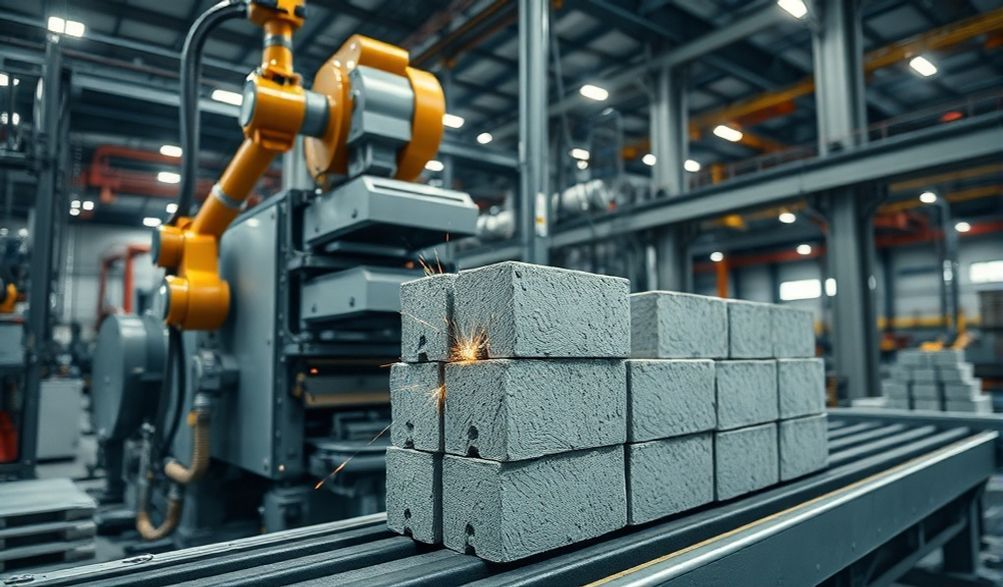
Panduan Utama untuk Mesin Pembuat Blok Otomatis China pada Tahun 2026
Pengantar
Dunia sedang membangun. Mulai dari urbanisasi pesat di negara-negara berkembang hingga pembaruan infrastruktur di negara maju, ledakan konstruksi global menuntut metode yang lebih cepat, lebih cerdas, dan lebih berkelanjutan. Inti dari kemajuan ini terletak pada satu bahan dasar yang sederhana: batu bata atau blok beton. Namun, metode tradisional dalam memproduksi komponen penting ini—yang bergantung pada tenaga kerja manual atau sistem semi-otomatis—semakin menjadi hambatan. Metode-metode tersebut padat karya, rentan terhadap ketidakseragaman, mahal untuk dioperasikan, dan tidak mampu memenuhi skala serta kecepatan proyek modern.
Masukkan solusi rekayasa: mesin pembuat blok otomatis penuh. Sistem canggih ini mengubah bahan baku menjadi blok bangunan presisi dan berkekuatan tinggi dengan intervensi manusia yang minimal, menawarkan efisiensi, konsistensi, dan skalabilitas yang tak tertandingi. Dan dalam hal mendapatkan teknologi transformatif ini, satu pasar menonjol karena kombinasi skala, inovasi, dan nilainya: Tiongkok.
Panduan ini berfungsi sebagai sumber daya definitif Anda tentangMesin pembuat blok otomatis Chinapasar. Tujuan kami adalah memotong kebisingan dan memberikan analisis yang ahli, tidak memihak, dan komprehensif. Dengan memanfaatkan pengalaman industri yang mendalam, wawasan langsung dari produsen, dan evaluasi teknis, kami bertujuan untuk membekali Anda dengan pengetahuan untuk membuat keputusan pembelian yang tepat, percaya diri, dan dapat dipercaya. Apakah Anda seorang kontraktor yang memperluas operasi atau investor yang memulai bisnis produksi blok, memahami lanskap ini adalah langkah kritis pertama Anda.
Apa Itu Mesin Pembuat Blok Otomatis? Penjelasan Teknologi Inti
Melebihi produksi dasar, mesin pembuat blok otomatis mewakili puncak teknik industri dalam manufaktur bahan konstruksi. Mesin-mesin ini adalah sistem terintegrasi yang dirancang untuk menjalankan seluruh siklus produksi dengan presisi dan keterulangan.
Mendefinisikan Otomasi dalam Produksi Blok
Untuk memahami otomatisasi, ada baiknya membandingkannya dengan metode lainnya:
* Panduan: Relies entirely on human labor for mixing, filling molds, compacting, and demolding. Output is very low, quality is inconsistent, and labor costs are high.
* Semi-Otomatis: Mechanizes parts of the process, like vibration or demolding, but requires significant manual intervention for feeding, mold placement, and product removal. It’s a step up but lacks integration.
* Sepenuhnya Otomatis: This is where the magic happens. The entire process is seamlessly linked and controlled by a central Programmable Logic Controller (PLC). The cycle is continuous:
1. Pemberian Pakan & Pencampuran: Raw materials (cement, sand, aggregate, fly ash) are automatically batched and mixed to a consistent homogeneity.
2. Pembentukan: The concrete mix is conveyed into molds on a pallet. High-frequency, multi-directional vibration combined with powerful hydraulic pressure compacts the material.
3. Curing/Demolding: The freshly formed blocks are ejected onto a conveyor and transported to a curing chamber (often a separate system), while the pallet returns for the next cycle.
4. Paletisasi & Penumpukan: Finished, cured blocks are automatically organized, stacked, and prepared for shipment.
Komponen Utama dan Cara Kerjanya
Memahami anatomi mesin adalah kunci untuk mengevaluasi kualitasnya:
* Sistem Batching & Pencampuran: Ensures a perfectly proportioned and uniform concrete mix, the foundation of block strength.
* Sistem Konveyor: The circulatory system, transporting raw mix to the mold and moving blocks through stages.
* Unit Tenaga Hidrolik: The machine’s “muscle.” A robust, high-pressure system provides the force for compaction and demolding. Reliability here is non-negotiable.
* Mold System & Vibration Table: The “heart.” Molds define the block shape. They are mounted on a table that uses dual-axis vibration to remove air pockets and ensure dense, strong blocks.
* Panel Kontrol PLC: The “brain.” This computer interface allows operators to set parameters, monitor every function, and diagnose issues. Modern systems feature intuitive touchscreen HMIs (Human-Machine Interfaces).
* Sistem Penanganan Palet: Automatically feeds clean, oiled pallets into the machine and cycles them after block ejection, ensuring continuous operation.
Jenis Blok yang Diproduksi
Versatility is a major advantage. A single machine, with mold changes, can typically produce:
* Batako (berbagai ketebalan)
* Blok Beton Padat
* Batu Paving & Paving Interlock
* Curbstones & Landscape Blocks
* Insulated Blocks
* Special-shaped bricks for decoration
(Visual aid suggestion: A diagram showing the flow from raw material to finished, stacked blocks, with callouts to each major component.)
Why Source from China? Analyzing the Market Advantages
Sourcing heavy machinery from overseas is a significant decision. China’s dominance in this sector is not accidental; it’s built on tangible, strategic advantages that deliver real value to global buyers.
Scale and Manufacturing Expertise
China’s industrial ecosystem is unparalleled. The concentration of manufacturers in hubs like Quanzhou, Guangzhou, and Shanghai creates a mature, competitive supply chain for steel, hydraulics, electronics, and foundries. This decades-long specialization means:
* Pengetahuan Teknis yang Mendalam: Engineers and technicians have accumulated vast, practical experience in block machine design and refinement.
* Efisiensi Rantai Pasok: Easy access to components reduces manufacturing lead times and costs.
* Rekam Jejak Terbukti: Thousands of machines exported worldwide provide a massive database of real-world performance across different climates and raw materials.
Technological Innovation and R&D
The outdated stereotype of Chinese manufacturing as purely imitative is obsolete. Leading manufacturers are heavily invested in R&D.
* They integrate top-tier international components (Siemens PLCs, Rexroth hydraulics, Schneider electrics) with in-house software development for smarter control systems.
* Innovations focus on energy efficiency, IoT connectivity for remote monitoring, and advanced vibration algorithms for superior block density.
* The competitive market drives continuous improvement in user interface design and automation logic.
Cost-Effectiveness Without Compromising Core Quality
This is the most cited advantage, but it requires nuance. The cost benefit stems from:
* Skala Ekonomi: Massive production volumes spread fixed costs.
* Rantai Pasokan Terintegrasi: Lower costs for raw materials and components.
* Fierce Market Competition: Drives value.
However, the market has tiers. A $40,000 machine and a $120,000 machine from China will differ vastly in component quality, durability, and support. The value proposition is getting a higher specification machine for a given budget, not simply finding the cheapest option.
Customization and Adaptability
Chinese manufacturers are exceptionally responsive to specific market needs. This adaptability is a key differentiator:
* Kustomisasi Cetakan: They can design and fabricate molds for unique block sizes or profiles required by local building codes.
* Fleksibilitas Bahan Baku: Machines can be engineered to optimize performance with locally available materials, whether it’s specific types of fly ash, slag, crushed aggregate, or sand.
* Output Configuration: Production lines can be scaled or configured to prioritize specific block types based on your business model.
Critical Features to Evaluate in a Chinese Automatic Machine
This is your technical checklist. Focusing on these features will separate market-leading machines from inadequate ones.
Kapasitas Produksi (Output per Jam/Hari)
Don’t just look at the headline “theoretical” number. Capacity is usually stated in blocks per 8-hour shift (e.g., 10,000-30,000 pieces).
* Pertanyaan Kunci: Is this based on a standard 400x200x200mm hollow block? Output drops for thicker, denser blocks.
* Practical vs. Theoretical: Account for routine stoppages (mold changes, maintenance). A reliable machine achieving 85-90% of its theoretical output is excellent.
* Match to Demand: Model your business growth. Buying a machine at 100% of your current need leaves no room for expansion and strains the equipment.
Degree of Automation & Control System
The control system is your primary interface and the guardian of consistency.
* Basic PLC vs. Advanced HMI: A simple PLC with buttons is functional. A color touchscreen HMI with graphical workflows, recipe storage, and real-time diagnostics is far superior for operation and troubleshooting.
* Remote Monitoring: Top-tier machines now offer optional IoT modules, allowing manufacturers or your technicians to monitor performance, receive fault alerts, and even perform basic diagnostics remotely—a huge benefit for minimizing downtime.
* Fault Diagnosis: The system should clearly identify issues (e.g., “Hydraulic Pressure Low – Station 3,” “Pallet Feed Jammed”).
Hydraulic System & Vibration Technology
This duo determines your block’s structural integrity.
* Hidrolika: Look for branded, reliable pumps and valves. The system must deliver stable, high pressure (often 21-31 MPa) for consistent compaction. Ask about hydraulic oil cooling systems for sustained operation in hot climates.
* Getaran: The best systems use a dual-axis (vertical and horizontal) eccentric vibration mechanism. This ensures the concrete mix is distributed evenly into every corner of the mold, eliminating weak spots and producing blocks with high compressive strength and a perfect finish.
Build Quality & Durability Components
This is where upfront cost savings can lead to long-term pain.
* Bingkai & Struktur: The main frame should be made from high-grade, thick steel plate, welded and stress-relieved to handle constant vibration without fatigue.
* Jamur: The wearing parts. Insist on molds made from high-chromium alloy steel, heat-treated for hardness. Cheap mild steel molds will deform rapidly, ruining block dimensions.
* Brand-Name Components: The use of international brands for critical parts (hydraulics, PLCs, motors, bearings) is a strong trust signal. It ensures reliability and simplifies future repairs.
Energy Efficiency & After-Sales Support Structure
The true cost of ownership.
* Efisiensi Energi: Inquire about the total connected power load (KW). Machines with variable-frequency drives (VFDs) on motors can significantly reduce electricity consumption.
* Dukungan Purna Jual: This is non-negotiable. A comprehensive package must include:
* Pengawasan Pemasangan: An engineer sent to your site for assembly and commissioning.
* Pelatihan Komprehensif: For both operators and maintenance staff.
* Parts Warranty: A clear warranty (e.g., 12 months) for defective parts.
* Dukungan Teknis: Access to remote support via phone/ video and a commitment to respond within a defined time (e.g., 24 hours).
* Ketersediaan Suku Cadang: A clear process for ordering and shipping spare parts, with an initial recommended spare parts kit.
Navigating the Selection Process: A Step-by-Step Buyer’s Guide
Follow this actionable framework to navigate your procurement journey methodically and mitigate risk.
Step 1: Define Your Project Requirements
Create a detailed internal document. This becomes your Request for Quotation (RFQ) foundation.
* Jenis & Ukuran Blok: List all products you intend to make, with detailed dimensions.
* Required Daily Output: In units, for your primary product.
* Bahan Baku yang Tersedia: Provide specifications of your local cement, aggregate, and potential additives (fly ash).
* Factory Space & Layout: Include floor plan dimensions, ceiling height, and door access.
* Available Utilities: Electrical power (Voltage, Phase), water supply, and compressed air.
* Budget Range: Be realistic, including a contingency for shipping, duties, and installation.
Step 2: Research and Shortlist Reputable Manufacturers
Due diligence starts online but must go much deeper.
* Verify Business Credentials: Request the company’s business license and check for relevant certifications like ISO 9001 (Quality Management).
* Manufacturer vs. Trading Company: Use video calls to insist on a live factory tour. Trading companies have no factory floor. Dealing directly with the manufacturer improves communication, cost, and support.
* Check History: How long have they been in business? A company with 15+ years of history has likely navigated many technical challenges.
Step 3: Due Diligence: Factory Audit and Reference Checks
This is your most powerful risk mitigation tool.
* Audit Pabrik: If an in-person visit isn’t feasible, demand a comprehensive live video tour. Look for organization, quality of work in progress, and testing procedures.
* Referensi Klien: Ask for contact information for 3-5 clients in countries with similar conditions to yours (climate, raw materials). Actually call them. Ask about machine performance, reliability, and most importantly, the quality of after-sales support.
Step 4: Understanding Quotations and Logistics
A quotation should be transparent. Ensure it includes:
* Clear Price Terms: Understand Incoterms.
* FOB (Free On Board): You pay for the machine loaded on the ship; you handle shipping and insurance.
* CIF (Cost, Insurance, Freight): They deliver it to your nearest port; you handle customs and inland transport.
* Detailed Scope of Supply: A line-item list of everything included: the main machine, standard molds, spare parts kit, tools, etc.
* Hidden Costs Checklist:
* Non-standard molds
* Extra spare parts
* Sea freight & insurance (if FOB)
* Import duties & taxes in your country
* Inland transportation from your port to site
* Costs for the installation engineer’s travel and board
Common Pitfalls and How to Avoid Them
Learning from others’ mistakes is the smartest strategy.
Overlooking Local Technical Support
Pitfall: Assuming the machine will run flawlessly and any issue can be solved via email.
Avoidance: Before signing the contract, agree in writing on the after-sales service protocol. How quickly will they respond? Is there a local agent or partner in your region? What is the process for emergency parts shipment?
Prioritizing Price Over Total Lifecycle Cost
Pitfall: Choosing the lowest bidder.
Avoidance: Calculate TCO (Total Cost of Ownership). A cheaper machine may have higher energy consumption, require frequent part replacements, and suffer more downtime, erasing any initial savings within the first two years.
Misunderstanding Machine Specifications
Pitfall: Confusing “theoretical” output with sustainable, practical output.
Avoidance: In your RFQ, ask for a “practical production estimate” based on an 8-hour shift including one mold change and routine checks. Also, understand that the block making machine is just one part of the system; curing time (often 24-48 hours) dictates your total factory throughput.
Inadequate Raw Material Preparation
Pitfall: Investing in a high-tech machine but feeding it poorly prepared materials.
Avoidance: Your raw material (aggregate) must be consistently sized and clean. Invest in proper screening and washing equipment if necessary. The moisture content of the sand is critical; a good batching system will account for this, but consistency is key.
Pertanyaan yang Sering Diajukan (FAQ)
Q1: What is the average price range for a quality automatic block making machine from China?
A: Providing a single average is misleading due to high configuration variance. A entry-level, fully automatic machine might start around $50,000 – $70,000. A mid-range, robust system with good automation typically falls in the $90,000 – $150,000 range. Large, high-output, highly customized plants can exceed $200,000+. The final price depends on output capacity, automation level, component brands, and included accessories (molds, spare parts).
Q2: How do I ensure the machine meets international safety and quality standards?
A: Reputable manufacturers will have their machines evaluated by independent third-party inspection agencies like SGS, BV, atau TÜV. Request to see the Sertifikasi CE (for the European market) or other relevant compliance reports. This certification covers electrical safety, noise levels, and mechanical safety. Always verify these documents are specific to the machine model you are purchasing.
Q3: What is the typical lead time from order to installation?
A: After finalizing technical details and payment, standard machine production typically takes 30 to 60 days. Shipping via sea freight can add 20-45 days depending on the destination port. Customs clearance and inland transport vary by country. Total timeline from order to machine on your floor is often 3 to 4 months. Always confirm this schedule in your contract.
Q4: Can the machine run on locally available spare parts, or am I dependent on the supplier?
A: For standard components (bearings, seals, standard hydraulic hoses/fittings, common sensors), a good supplier will provide a cross-reference list to international brands (like SKF, Parker) available locally. For proprietary parts (custom mold liners, specialized castings, control board), you will need to source from the manufacturer. A reputable supplier will keep stock of these and ship them promptly.
Q5: What kind of training is provided for our operators and maintenance staff?
A: A proper training package is essential and should include: 1.) On-site Training: During installation and commissioning, their engineer will train your team on operation, daily maintenance, and basic troubleshooting over several days. 2.) Comprehensive Manuals: Provided in your language, including electrical diagrams, hydraulic schematics, and parts lists. 3.) Video Support: Many now provide operational and maintenance video guides. Clarify the duration and depth of training in your purchase agreement.
Kesimpulan
China’s automatic block making machine industry presents a compelling proposition for the global market: a powerful synergy of advanced technology, unparalleled manufacturing scale, and significant cost-effectiveness. As we look towards 2026, the trajectory is clear—towards greater automation, smarter connectivity, and more sustainable production processes.
However, as this guide has underscored, success in sourcing from this market hinges entirely on informed and diligent selection. The lowest price is rarely the best value. Your focus must be on the manufacturer’s proven reputation, the transparency and robustness of the machine’s specifications, and—above all—the strength and clarity of the after-sales support structure.
Use this guide as your strategic framework. Let it empower you to ask the right questions, demand the necessary verifications, and build a partnership with a supplier that views your success as their own. Your logical next step is to formalize your Project Requirement Sheet and begin discussions with a shortlist of vetted, credible manufacturers. By doing so, you’re not just buying a Mesin pembuat blok otomatis China; you’re investing in the foundational technology for your construction business’s growth and resilience for years to come.
<