Spesifikasi Teknis Mesin Produksi Batako Semen-Pasir
Produksi bata semen-pasir memerlukan pertimbangan teknik khusus yang berbeda dari mesin blok beton standar, terutama karena karakteristik material campuran dan sifat produk akhir yang diinginkan.
1. Sinergi Ilmu Material dan Desain Mesin
Produksi batu bata semen-pasir berkualitas tinggi bergantung pada pemahaman yang tepat tentang campuran material dan peran mesin dalam konsolidasinya.
- Profil Mix:Campuran tipikal terdiri dari proporsi tinggi pasir halus bergradasi baik (seringkali 85-92%) yang direkatkan oleh persentase semen yang lebih rendah (8-15%). Campuran ini memiliki agregat kasar minimal hingga tidak ada, menghasilkan material yang lebih halus, lebih kohesif, namun kurang mudah mengalir dibandingkan beton standar. Karakteristik ini secara langsung mempengaruhi desain mesin, terutama pada tahap pengumpanan dan pemadatan.
- Dirancang untuk Agregat Halus:Mesin harus dilengkapi dengan sistem pengumpan yang mencegah segregasi material halus. Pengumpan ulir atau hopper yang dirancang khusus dengan pengaduk umum digunakan untuk menjaga homogenitas campuran. Sistem pemadatan harus sangat efektif, karena kekuatan bata berasal hampir seluruhnya dari pemadatan partikel pasir dan ikatannya dengan pasta semen, bukan dari saling kunci batu kasar.
2. Tipologi Mesin Inti dan Prinsip Operasionalnya
Mesin-mesin dalam kategori ini dikelompokkan berdasarkan tingkat otomatisasi dan metodologi pemadatan utamanya.
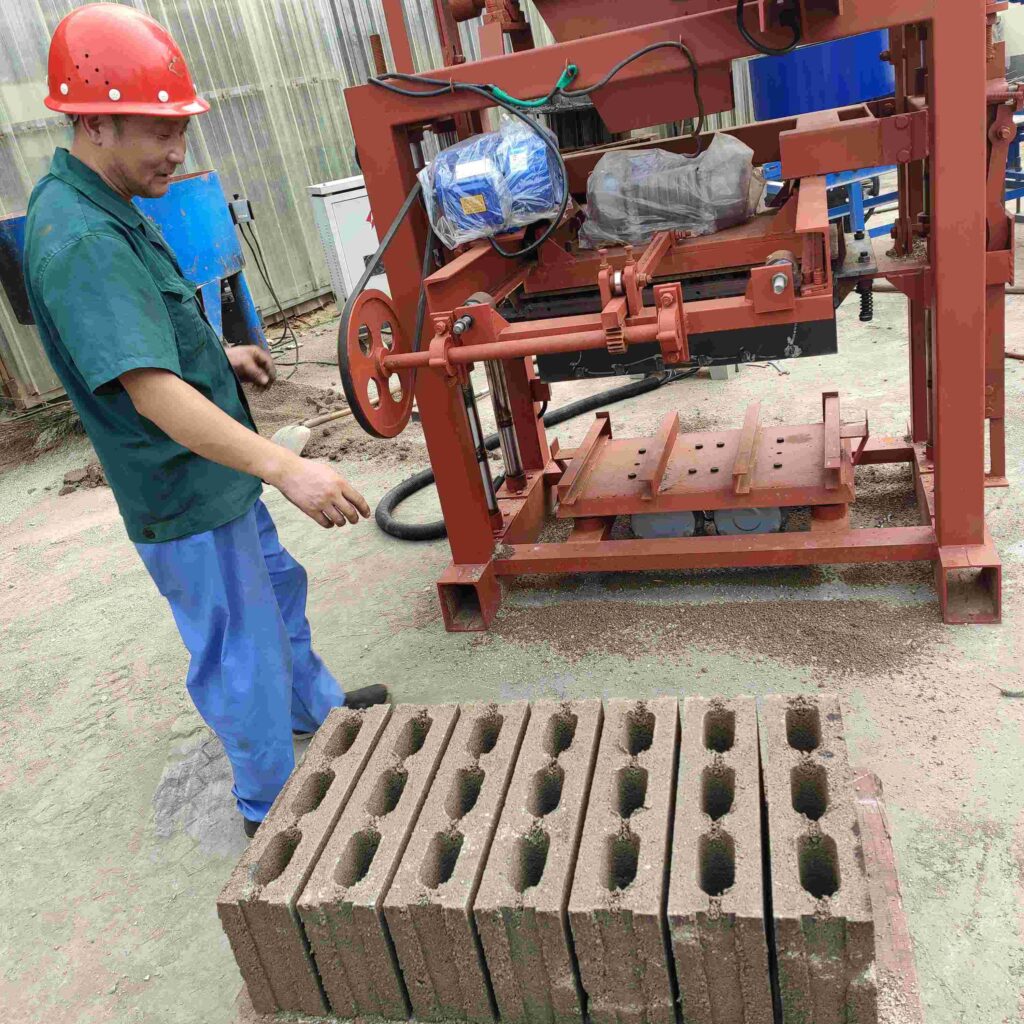
- Mesin Tekan Lever Mekanis (Manual/Semi-Otomatis):
- Prinsip:Gunakan sistem tuas majemuk atau cam yang digerakkan roda gila untuk menghasilkan tekanan mekanis tinggi pada campuran yang terkandung dalam cetakan baja. Getaran minimal atau tidak ada.
- Hasil Produk:Menghasilkan bata dengan kepadatan yang sangat tinggi dan seragam melalui tekanan statis. Bata ini memiliki penyelesaian yang halus dan presisi, serta kekuatan awal yang tinggi, cocok untuk penanganan segera.
- Biaya & Aplikasi:Investasi awal yang lebih rendah. Ideal untuk bengkel skala kecil, memproduksi bata untuk proyek perumahan lokal, lansekap, dan dinding partisi interior.
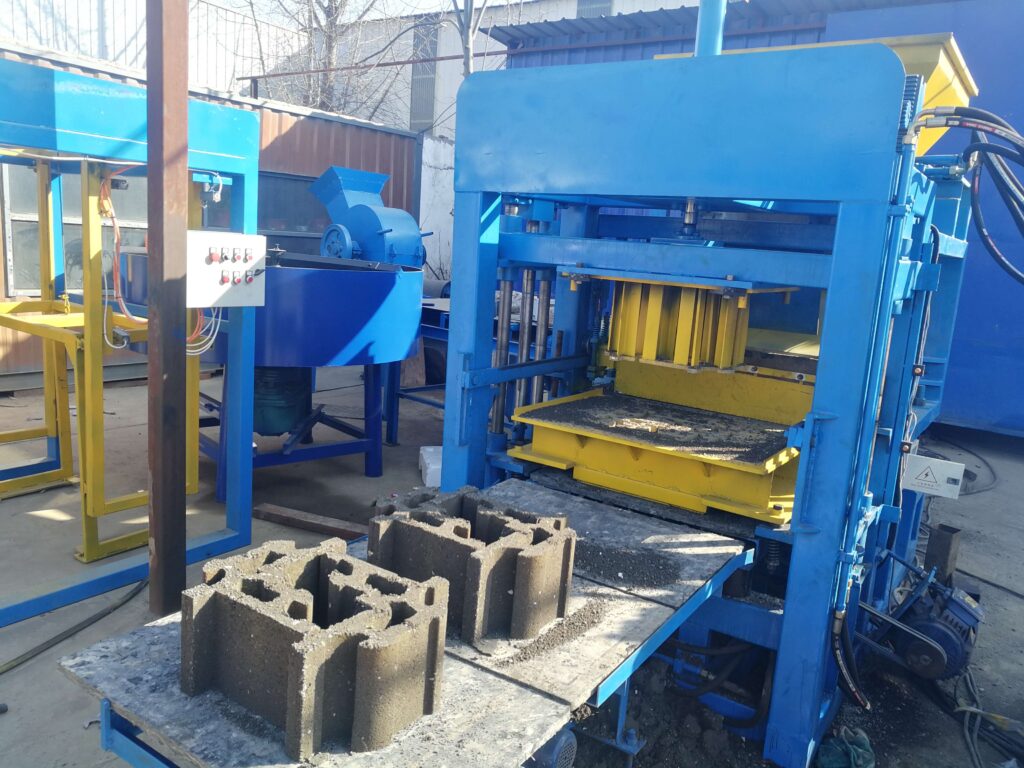
- Mesin Press Hidrolik (Semi hingga Sepenuhnya Otomatis):
- Prinsip:Gunakan silinder hidrolik untuk menerapkan tekanan yang dikalibrasi dan dapat diprogram (biasanya berkisar antara 20 hingga 100 ton) pada campuran semen-pasir. Ini dapat dikombinasikan dengan getaran frekuensi tinggi singkat untuk membantu pengendapan partikel sebelum penekanan akhir.
- Hasil Produk:Memungkinkan kontrol luar biasa atas kepadatan bata dan toleransi dimensi. Mampu menghasilkan bata dengan warna dan tekstur yang konsisten, serta bentuk khusus seperti bata saling mengunci untuk konstruksi tumpuk kering.
- Biaya & Aplikasi:Investasi menengah hingga tinggi. Pilihan utama untuk bisnis pembuatan bata khusus yang memasok pengembangan perumahan perkotaan dan proyek komersial di mana konsistensi estetika dihargai.
- Sistem "Penelur" Seluler:
- Prinsip:Unit mandiri yang mencetak bata dan menempatkannya langsung di atas pelat tanah yang telah disiapkan untuk pengawetan. Sering menggunakan kombinasi getaran dan penumbukan untuk pemadatan.
- Hasil Produk:Efisien untuk memproduksi volume besar bata standar di lokasi. Proses pengawetan disederhanakan, karena bata tetap berada di tempatnya.
- Biaya & Aplikasi:Dihargai untuk proyek-proyek skala besar dan linier (misalnya, pengembangan kawasan permukiman) atau di daerah terpencil, mengurangi logistik transportasi bata. Mewakili solusi pabrik bergerak.
Dinamika Pasar dan Posisi Strategis
Pasar bata semen-pasir dan mesin produksinya digerakkan oleh faktor ekonomi dan regulasi yang berbeda.
1. Aplikasi Target dan Keunggulan Kompetitif
- Program Perumahan Terjangkau dan Perumahan Inti:Batu bata semen-pasir adalah bahan material pokok untuk inisiatif perumahan berskala besar yang sensitif terhadap biaya karena biaya materialnya yang lebih rendah (tanpa agregat kasar) dan kemampuannya untuk diproduksi secara lokal, bahkan di wilayah dengan sumber daya agregat yang terbatas.
- Aesthetic and Finishing Applications: The fine texture of the mix allows for the production of smooth-faced, paint-ready bricks and those with consistent pigmentation. They are favored for visible masonry in residential and commercial architecture where a clean finish is desired.
- Regulatory and Environmental Drivers: In regions with policies promoting the use of local materials or restricting the quarrying of river sand or coarse aggregates, manufactured sand (M-Sand) provides a consistent, eco-friendly alternative, making cement-sand brick machines highly relevant.
2. Financial Architecture: Cost, Value, and ROI
Understanding the investment profile requires analyzing both the machine’s price and the unique economics of the product it creates.
- Capital Expenditure (CapEx) Drivers:
- Kapasitas Tekanan: The tonnage of the press is a primary cost driver, directly correlating to the achievable brick strength (e.g., 7N/mm² vs. 15N/mm²).
- Tingkat Otomasi: A single-station, manually fed press is at the lowest cost tier. The price increases with automatic mix feeding, brick ejection, pallet handling, and PLC-controlled production cycles.
- Output Capacity & Mold Multiplicity: Machines that produce 4, 6, or 10 bricks per cycle have proportionally higher costs. Quick-change mold systems for different brick sizes (e.g., standard, jumbo) add value and cost.
- Operational Economics and Profitability:
- Biaya Bahan Baku Lebih Rendah: The primary economic advantage is the significantly lower cost of sand versus a full concrete mix with gravel. This expands the profit margin per brick or allows for more competitive pricing.
- Efisiensi Energi: Hydraulic press machines for cement-sand mixes often require less energy than high-vibration concrete block machines, as compaction is achieved more through sustained pressure than prolonged vibration.
- Sample ROI Scenario: A mid-level hydraulic press machine costing $45,000, producing 5,000 bricks per day with a raw material cost savings of $0.03 per brick over concrete blocks, can achieve a payback period of 12-18 months in a stable market, presenting a compelling case for entrepreneurs.
Conclusion: Building a Business on a Foundation of Efficiency
For the distribution channel, the cement-sand brick making machine is not merely another piece of equipment; it is a key to unlocking markets centered on affordability, sustainability, and local resource utilization. Success in this segment requires a consultative approach:
- Market Education: Clients must understand the performance characteristics and appropriate applications of cement-sand bricks versus traditional clay or concrete blocks.
- Technical Validation: Providing demonstrations and data on brick compressive strength, water absorption, and durability is crucial to overcome market preconceptions.
- Holistic Business Support: The most successful distributors will offer packages that include not just the machine, but guidance on optimal mix designs, sourcing of quality sand, basic curing protocols, and even business planning templates.
By positioning this machinery as a tool for entrepreneurial empowerment and sustainable community development, distributors can tap into a growing and socially impactful segment of the construction industry, fostering long-term client relationships and building a reputation as innovators in building material solutions.
Pertanyaan yang Sering Diajukan (FAQ)
Q1: How does the strength and durability of a cement-sand brick compare to a traditional concrete block or fired clay brick?
A: Properly manufactured cement-sand bricks can achieve compressive strengths comparable to many standard concrete blocks and are suitable for load-bearing construction in low-rise buildings. Their durability against weathering is excellent due to the dense, impermeable matrix created under high pressure. They typically offer better dimensional consistency and a smoother finish than traditional concrete blocks but have different thermal and acoustic properties than fired clay bricks.
Q2: What type of sand is required, and how critical is its quality?
A: Sand quality is paramount. It should be clean, well-graded (a mix of fine and slightly coarser particles), and free of organic material, silt, and clay. The use of manufactured sand (M-Sand) is highly recommended as it is consistent in gradation and devoid of impurities. River sand can be used if it is washed and properly graded. Poor sand quality will lead to weak, brittle bricks regardless of the machine’s quality.
Q3: Can these machines also produce blocks with hollow cores or special shapes like interlocking bricks?
A: Absolutely. With the appropriate mold, hydraulic press machines are excellent at producing hollow cement-sand blocks (which improve thermal insulation and reduce weight) and complex shapes like interlocking bricks. The static pressure of a hydraulic press cleanly forms intricate shapes without segregation, which can be a challenge in vibratory machines with fine mixes.
Q4: What is the curing process for these bricks, and is it different from concrete blocks?
A: Curing is critical and slightly more sensitive due to the higher surface-area-to-volume ratio of the fine matrix. After demolding, bricks should be kept under damp hessian cloths or plastic sheeting for at least 7 days to prevent moisture loss and ensure complete cement hydration. Water sprinkling is also effective. Proper curing dramatically increases final strength and reduces cracking.
Q5: What are the main maintenance focuses for this type of machinery?
A: Key maintenance revolves around the wear on the mold and press head due to the abrasive nature of sand. Regular inspection and lubrication of the hydraulic system and guide columns are essential. For machines with feed augers, checking for wear on the auger flights is important. A preventative schedule focused on these abrasive wear points will ensure consistent product quality and machine longevity.
Q6: For a distributor, what is the best way to demonstrate the value of this machine to a potential client?
A: The most effective method is a live, data-driven demonstration. Produce bricks on-site using locally available sand. Then, have those bricks tested for compressive strength at a recognized lab (costs relatively little). Present the client with a side-by-side comparison: the test report, a calculated cost per brick (highlighting material savings), and a projected business model showing production capacity and ROI. Tangible proof of quality and profitability is the ultimate sales tool.