
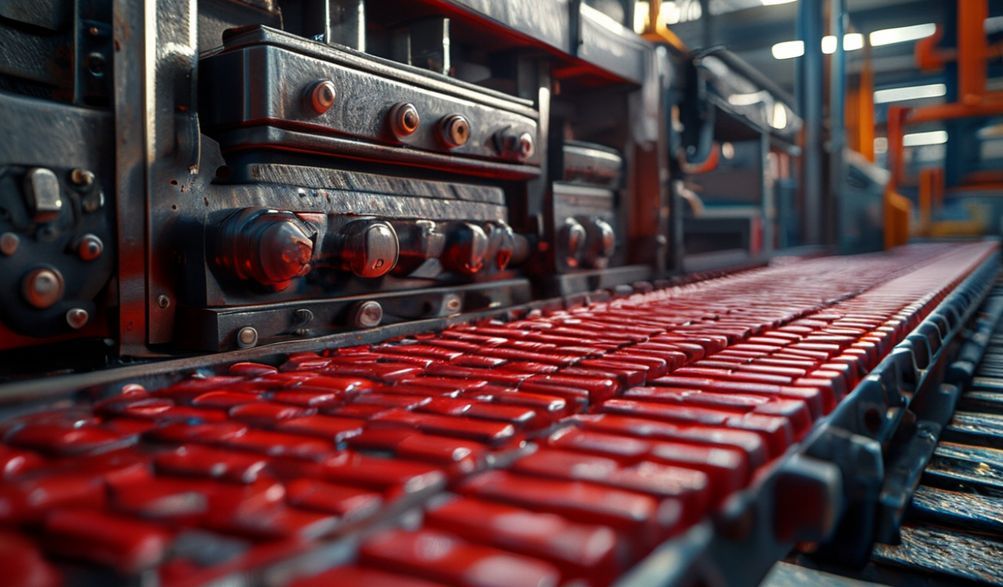
Apa yang Menentukan Rentang Harga Mesin Batu Bata di Pabrik Pembuatan Batu Bata FUDA? Panduan Pembeli 2026
Jika Anda sedang meneliti mesin pembuat bata, Anda mungkin telah menemui beragam harga yang membingungkan. Mesin press manual sederhana mungkin ditawarkan dengan harga beberapa ribu dolar, sementara lini produksi otomatis penuh bisa mencapai ratusan ribu dolar. Rentang harga mesin bata yang sangat lebar ini menjadi inti kekecewaan bagi pembeli serius: bagaimana mungkin Anda membandingkan pilihan dan memastikan Anda mendapatkan nilai sebenarnya dari investasi, terutama dari produsen mapan seperti Pabrik Pembuatan Bata FUDA?
Panduan ini memotong kebingungan. Disusun dari analisis industri, wawasan manufaktur, dan pemahaman mendalam tentang pasar produksi bata, panduan ini dirancang untuk mengungkap harga bagi para pengusaha, perusahaan konstruksi, dan pembeli industri. FUDA, sebagai pabrik mapan yang representatif, menawarkan rangkaian mesin yang harganya tidak sembarangan; harga tersebut merupakan cerminan langsung dari kemampuan teknologi, kualitas pembuatan, dan kapasitas produksi. Di akhir artikel ini, Anda akan memiliki kerangka kerja yang jelas dan dapat ditindaklanjuti untuk mengevaluasi penawaran apa pun, memahami dengan tepat apa yang Anda bayar, dan dengan percaya diri menyelaraskan anggaran Anda dengan tujuan produksi dan profitabilitas jangka panjang.
Faktor-Faktor Inti yang Mempengaruhi Harga Mesin Batu Bata
Harga mesin bata adalah gabungan dari bagian-bagiannya, baik secara harfiah maupun kiasan. Memahami faktor-faktor utama yang mendorong biaya ini adalah langkah pertama untuk melakukan pembelian yang cerdas.
1. Jenis Mesin & Tingkat Otomasi
Ini adalah penentu harga yang paling signifikan. Rentang spektrumnya beroperasi dari operasi manual murni hingga pabrik tanpa lampu.
* Mesin Manual:Dioperasikan sepenuhnya dengan tuas tangan atau mekanika sederhana. Biaya awal terendah namun biaya tenaga kerja jangka panjang tertinggi dan output terendah.
* Mesin Semi-Otomatis: Combine manual feeding or pallet placement with automated pressing and ejection. They offer a middle ground in price and output.
* Mesin Sepenuhnya Otomatis: Integrated systems that handle material feeding, molding, compaction, pallet transfer, and stacking with minimal human intervention.
The price increases steeply with automation because you are purchasing labor savings, consistency, and higher throughput. FUDA’s product lines span this entire spectrum, allowing buyers to select a starting point that matches their capital and labor realities.
2. Spesifikasi Kapasitas Produksi & Output
Capacity, measured in Bricks Per Hour (BPH) or blocks per shift, directly scales price. A machine rated for 5,000 bricks per day is in a different financial league than one built for 50,000.
* Model Numbers Tell a Story: At factories like FUDA, model numbers (e.g., QMJ4-45, QFT10-15) often encode key specs. The numbers frequently relate to production cycles per hour or the block dimensions the machine can produce, giving a quick hint to its capacity tier.
* Non-Linear Scaling: Doubling the output does not simply double the price. Higher-capacity machines require more robust frames, larger hydraulic systems, and heavier-duty components, leading to a more than proportional cost increase.
3. Key Components & Build Quality
This is where “value” is truly defined. Two machines with similar output specs can have wildly different prices based on what’s inside.
* Rangka & Struktur Baja: A heavy-duty, welded frame minimizes vibration during operation, leading to longer machine life, higher precision, and less maintenance. Cheaper machines may use lighter-gauge steel.
* Sistem Hidrolik: The heart of the machine. The brand, pump quality, valve precision, and maximum pressure are major price differentiators. A reliable, high-pressure system from a known supplier ensures consistent brick density and fewer breakdowns.
* Molds & Mixer Quality: Molds made from hardened, precision-machined steel cost more but produce sharper, more consistent bricks and last exponentially longer. Similarly, a robust, evenly-mixing planetary mixer is crucial for quality raw material preparation.
* Sistem Kontrol: A basic programmable logic controller (PLC) with push buttons is standard. Advanced systems with color touchscreen interfaces, fault diagnostics, and data logging capabilities add cost but provide easier operation and valuable production insights.
4. Customization & Special Features
Standard machines suit standard needs. Special projects require special configurations, which impact price.
* Cetakan Kustom: The single most common customization. Designing a mold for a unique interlocking pattern, a specific hollow block design, or decorative paving stones incurs engineering and machining costs.
* Add-Ons & Integration: Options like automatic pallet feeders, robotic stackers, color powder feeders, and integrated curing systems transform a standalone machine into a production line. Each add-on increases both capability and cost.
* Fleksibilitas Bahan Baku: A machine optimized solely for concrete may be less expensive than one engineered to efficiently handle fly ash, clay, soil, or a mix of materials, which may require different compression systems or mixer designs.
Navigating FUDA Brick Making Factory’s Product & Price Tiers
Let’s apply the factors above to a practical breakdown of what you can expect within different budget ranges. Note: All price ranges are indicative based on 2026 market trends and should be used as a framework for discussion, not a fixed quote.
Mesin Tingkat Pemula & Manual/Semi-Otomatis
- Kisaran Harga Khas: $3,000 – $25,000
- Target Use Case: Ideal for small-scale startups, community projects, NGOs, or businesses producing specialized, low-volume bricks where labor cost is less critical than initial investment.
- FUDA Models to Consider: Small manual presses or semi-automatic models like the QMJ series for solid blocks.
- Kelebihan & Kekurangan:
- Kelebihan: Very low capital outlay, simple operation and maintenance, easier to relocate.
- Kekurangan: High physical labor requirement, lower and less consistent output, higher cost-per-brick over time.
Mid-Range & Standard Automatic Machines
- Kisaran Harga Khas: $30,000 – $120,000
- Target Use Case: The “sweet spot” for growing block yards, medium-scale construction companies, and businesses aiming for steady commercial production with a manageable crew.
- The “Sweet Spot”: This range offers the best balance of automation, output, and affordability. It significantly reduces labor while providing reliable daily output (e.g., 10,000-30,000 bricks).
- Konfigurasi Umum: A FUDA quote in this range typically includes a robust automatic block making machine (like a QFT model), a standard set of molds, a planetary mixer, a conveyor, and basic training/technical documentation.
High-End & Fully Automated Production Lines
- Kisaran Harga Khas: $150,000 – $500,000+
- Target Use Case: Large-scale industrial plants, major government infrastructure projects, or manufacturers aiming for export-quality production with minimal manual intervention.
- Features Justifying the Cost: This isn’t just a machine; it’s a complete factory floor system. It integrates automatic batching, mixing, conveying, high-speed molding, automatic curing rack handling, and robotic stacking/packaging.
- ROI Perspective: The evaluation shifts from machine price to cost-per-brick and system uptime. The high initial investment is justified by ultra-low labor costs, exceptional consistency, and the ability to run multiple shifts profitably.
Di Balik Harga Stiker: Total Biaya Kepemilikan (TCO)
The smartest buyers look beyond the initial invoice. The true cost of a brick machine is what you pay over its entire operational life.
Initial Investment vs. Long-Term Value
A cheaper machine with inferior components can become a money pit. The Total Biaya Kepemilikan includes:
* Konsumsi Energi: Efficient hydraulic and electrical systems save on power bills.
* Maintenance Downtime: A machine that breaks down frequently halts production and revenue.
* Part Replacement Costs: Cheap, non-standard parts wear out faster and can be hard to source.
* Konsistensi Output & Limbah: A precise machine produces fewer defective bricks, saving raw material costs.
Understanding Quotes from FUDA & Other Factories
A detailed quote is a sign of a professional factory. Scrutinize it.
* What Should Be Included: FOB price, foundation drawings, electrical diagrams, a basic operational manual, one set of standard molds, and remote/online startup guidance.
* What Might Be Extra: CIF shipping costs, on-site installation and commissioning by an engineer, comprehensive hands-on training, an extended warranty package, a starter kit of critical spare parts, and custom mold design fees.
* Red Flags: Vague descriptions like “automatic brick machine,” lack of detailed technical specifications (pressure, cycle time, power requirements), and pressure for 100% payment before production or shipment.
Financing, Warranty, and After-Sales Support
This is where trust is built.
* Dukungan Purna Jual: The availability of technical support via phone, video, or email is invaluable. Ask about the factory’s typical response time.
* Syarat Garansi: A standard 12-month warranty on core parts is common. Understand exactly what is covered and what is considered “wear and tear.”
* Ketersediaan Suku Cadang: Ensure the factory stocks and can quickly ship common wear items. Long lead times for parts can cripple your operation.
* Financing: Some factories, through partners, may offer financing or leasing options to ease the capital burden.
FAQ: Your Brick Machine Price Questions Answered
Q1: What is the starting price for a basic brick making machine from a factory like FUDA?
A truly basic, small manual press can start around $3,000 – $5,000. However, “basic” is subjective. A semi-automatic machine for standard hollow blocks typically starts in the $15,000 – $25,000 range. Always define your required output and brick type first.
Q2: How much does a fully automatic interlocking brick making machine cost?
This combines two premium features. A standard fully automatic machine might start around $50,000+. Adding a custom interlocking block mold design and the necessary precision for consistent fit can push the price into the $65,000 – $90,000+ range, depending on output capacity. A detailed project consultation is essential.
Q3: Are used brick machines from FUDA a good way to save money?
Potentially, but proceed with caution.
* Kelebihan: Lower upfront cost, possibly faster delivery.
* Kekurangan: Unknown maintenance history, likely no warranty, potential obsolescence of parts, and may lack recent technological upgrades. It’s often safer for beginners to start with a new, entry-level machine with full support.
Q4: Does the price include installation and training?
This is a critical question for your quote. Typically, the base price includes foundation drawings and remote guidance for installation and startup. On-site installation and in-person training by a factory engineer is almost always an additional, valuable service with separate costs for travel, accommodation, and labor.
Q5: How can I get an accurate quote for my specific needs from FUDA?
Prepare this information to get a precise, comparable quote:
1. Output yang Diinginkan: Bricks/shift or bricks/day.
2. Brick Type/Size: Dimensions, type (solid, hollow, interlocking, paving).
3. Bahan Baku: Primary materials you will use (cement, fly ash, sand, aggregate, soil).
4. Available Space & Power: Factory floor space and your local voltage/power supply (e.g., 380V 3-phase).
Conclusion: Making an Informed Investment Decision
The wide brick machine price range at FUDA Brick Making Factory and across the industry is not a mystery—it’s a logical reflection of capacity, automation, component quality, and customization. Your goal is not to find the cheapest machine, but the one that offers the optimal nilai for your specific business equation.
As a final recommendation:
1. Prioritize Needs Over Wants: Match the machine’s capacity and features to your actual 2-3 year production targets, not a distant dream.
2. Think in Terms of TCO: Evaluate the build quality, energy efficiency, and the manufacturer’s reputation for support. This protects your investment over 5-10 years.
3. Engage Directly & Specifically: Use the framework in this guide to ask detailed, technical questions when you request a quote from FUDA or any manufacturer.
Your next step is to initiate a professional dialogue. Contact FUDA Brick Making Factory with your specific project parameters for a detailed, no-obligation quotation. Ensure the conversation covers not just price, but also delivery timelines, warranty details, spare parts availability, and after-sales service structure. Investing in brick machinery is a foundational business decision; thorough research and a partnership with a reliable factory are the cornerstones of long-term profitability and success.
<