
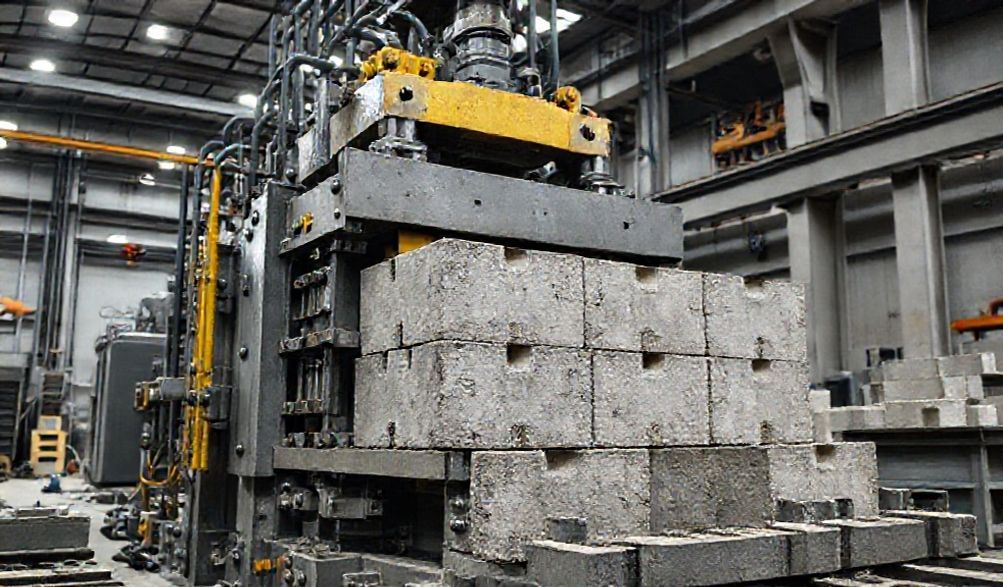
Finding Reliable Block Brick Press Machine Factories: A Spotlight on FUDA
The global construction industry runs on a simple, timeless unit: the brick. As urbanization accelerates and the demand for sustainable, durable, and cost-effective building materials soars, the machinery that produces these essential components becomes critically important. At the heart of modern construction material production are block brick press machine factories, the silent powerhouses shaping our skylines and communities.
However, for entrepreneurs, construction companies, and investors looking to establish or upgrade a brick production line, navigating the global market of machinery suppliers can be a daunting task. Buyers are often confronted with challenges such as glaring quality inconsistencies between promises and products, unclear or non-existent technical support, and the overwhelming task of vetting countless factories from afar. Making an uninformed decision can lead to significant financial loss, project delays, and operational headaches.
This comprehensive guide is designed to cut through the noise. We will dissect the key traits that define a reputable and reliable block brick press machine factory. Furthermore, we will use the well-known Pabrik mesin pembuat bata FUDA as a detailed case study, providing a tangible benchmark for comparison. Compiled from industry analysis, technical specifications, and a deep focus on manufacturer vetting, this post aims to empower you with the knowledge to make a confident, informed purchasing decision.
What Defines a Top-Tier Block Brick Press Machine Factory?
Choosing a factory is not just about buying a machine; it’s about entering a partnership. The manufacturer’s capabilities directly impact your machine’s longevity, output, and your overall return on investment. Here are the non-negotiable pillars of a top-tier factory.
Proven Manufacturing Experience and Industry Longevity
In heavy machinery, time in the industry is more than just a number—it’s a testament to resilience and accumulated knowledge.
* A factory with a decade or more of operation has likely refined its manufacturing processes, worked out design flaws, and adapted to evolving market demands.
* Longevity suggests a degree of customer satisfaction and business stability, crucial for future parts and support.
* This experience often translates into more reliable machines that have been proven in real-world conditions across various projects.
Comprehensive In-House Production Capabilities
Be wary of factories that are merely assemblers, sourcing components from disparate, often unvetted suppliers. A superior factory controls the entire production chain.
* Key In-House Departments: Look for evidence of full CNC (Computer Numerical Control) machining workshops, professional welding bays, advanced assembly lines, and dedicated painting/anti-corrosion facilities.
* Quality Control Implication: In-house production allows for stringent quality checks at every stage—from raw steel grading to the precision of hydraulic parts—ensuring consistency and accountability that an assembler cannot guarantee.
Robust R&D and Technical Innovation
The best factories don’t just manufacture; they innovate. The technology of brick making is constantly evolving towards greater efficiency and sustainability.
* A strong R&D department focuses on improving hydraulic systems for better pressure control, enhancing vibration mechanisms for denser blocks, and developing more energy-efficient electrical systems.
* Innovation also includes adapting machines to work with new, eco-friendly raw materials like fly ash, slag, or construction waste, future-proofing your investment.
* Continuous improvement in automation (PLC control systems, robotic pallet handling) is a clear sign of a forward-thinking manufacturer.
Transparent Certifications and Quality Standards
International certifications are a factory’s voluntary commitment to meeting globally recognized benchmarks for quality and safety.
* Sertifikasi CE: For the European market, this indicates the machine conforms to health, safety, and environmental protection standards.
* ISO 9001: This certification demonstrates a systematic approach to quality management in design, production, and service.
* These are not just stickers on a machine. They represent audited processes that significantly reduce the risk of receiving substandard or unsafe equipment.
Deep Dive: Evaluating the FUDA Brick Making Machine Factory
As a prominent name in the industry, FUDA serves as an excellent reference point. Let’s apply the above criteria for a factual evaluation based on its public-facing information.
Company Background and Market Position
Fujian FuDa Heavy Industry Machinery Co., Ltd. (FUDA) was established in 2005 and is headquartered in Quanzhou, Fujian Province, a key industrial region in China. The company positions itself as an integrated enterprise specializing in the research, development, manufacturing, and sale of brick and block making machinery. With a stated factory area exceeding 50,000 square meters, FUDA presents itself as a medium-to-large scale player in the market, catering to both domestic and international clients.
Product Portfolio Analysis: Block Brick Press Machines
FUDA’s product range is comprehensive, covering various levels of automation and output to suit different business scales and investment levels.
* Automatic Block Making Machines: These are their flagship models, often featuring full PLC control, automatic material feeding, block pressing, pallet feeding, and stacker systems. Output can range from 8,000 to over 30,000 standard blocks per 8-hour shift, depending on the model.
* Semi-Automatic & Manual Machines: For smaller operations or markets with lower labor costs, they offer robust semi-automatic (manual feeding, automatic pressing) and manual press machines.
* Technical Specifications Focus: Key specs to note from their offerings include high hydraulic pressure (often 21 MPa or higher) for producing high-density blocks, powerful vibration motors for effective material compaction, and versatility in producing hollow blocks, solid blocks, paving stones, and curbstones via mold changes.
Manufacturing and Quality Assurance Processes
Publicly, FUDA emphasizes its in-house manufacturing strategy. They showcase facilities for steel processing, CNC machining, and assembly. Their stated quality assurance involves:
* Raw material inspection.
* Process inspection during machining and welding.
* Pre-delivery running tests where machines are assembled and test-run before disassembly for shipping.
* This vertical integration is designed to control cost and quality, a key point for potential buyers to verify.
Jangkauan Global dan Portofolio Proyek
A significant indicator of a factory’s capability is its export footprint. FUDA highlights exports to over 50 countries across Africa, Southeast Asia, the Middle East, South America, and Eastern Europe. They provide case studies showing installations of complete brick making plants, from small standalone machines to large automated production lines. This global project portfolio serves as a proxy for experience in dealing with diverse raw materials, climates, and client requirements.
Critical Factors to Compare When Choosing a Factory
When shortlisting factories, including FUDA, a detailed, side-by-side comparison on these factors is essential.
Machine Performance & Technical Specifications Comparison
Create a comparison matrix. Do not just look at the price; scrutinize the specs that drive performance and profit.
* Maximum Pressure (MPa/ton): Higher pressure generally produces stronger, denser blocks.
* Cycle Time & Output (blocks/hour): The actual production capacity that affects your revenue.
* Power Consumption (kW): A major operational cost factor.
* Keserbagunaan: Number of block types/sizes possible with standard mold options.
* Tingkat Otomasi: PLC vs. manual controls, presence of auto-pallet feeders and stackers.
After-Sales Service: Installation, Training, and Parts Supply
This is where many factories are separated from the rest. The machine’s value is locked in its long-term operation.
* Garansi: What is covered (parts, labor)? For how long (typically 12-18 months)?
* Pemasangan & Pengoperasian: Do they provide an engineer on-site? At what cost?
* Operational Training: Will they train your staff comprehensively?
* Parts Supply: What is the guaranteed response time for spare parts? Is there an online parts catalog?
Cost Analysis: Understanding Value Beyond the Price Tag
The cheapest machine is often the most expensive in the long run.
* Evaluate the Total Biaya Kepemilikan (TCO): Initial Price + Shipping + Installation + Operational Costs (power, labor) + Estimated Maintenance & Parts over 5 years.
* A robust, slightly more expensive machine from a quality factory with lower failure rates and better fuel efficiency will likely have a lower TCO than a bargain-basement model.
Sourcing and Communication Best Practices
- Request Detailed Quotations: Insist on a proforma invoice (PI) listing every spec, accessory, and term.
- Minta Referensi: Request contact information for 2-3 previous clients in a region similar to yours.
- Arrange a Visit: If feasible, visit the factory. If not, insist on a live video tour of the workshop and see machines in production.
- Verify Credentials: Check business licenses and certifications directly.
Beyond FUDA: How to Vet Any Brick Machine Factory
Your due diligence should extend far beyond a single manufacturer’s website.
Conducting Effective Online Research and Due Diligence
- Analyze the factory website: Is it professional? Are technical details plentiful or vague?
- Use independent B2B platforms (e.g., Made-in-China, Alibaba) to see transaction history and read feedback, but be cautious of fabricated reviews.
- Search for the company name + “reviews,” “+complaint,” or “+problem” in Google to uncover any red flags.
The Power of Customer Testimonials and Case Studies
- Genuine testimonials often include specific details about the project location, machine model, and results.
- Look for case studies with photos or videos of the installed plant in operation, not just stock images. Contact those clients if possible.
Red Flags to Avoid in a Supplier
- Vague or Inconsistent Specifications in communication.
- Pressure for Full Upfront Payment before production or shipment.
- Lack of Clear Warranty Terms or avoidance of service questions.
- Unprofessional Communication or inability to answer technical questions in detail.
- No Willingness to Provide Customer References or arrange a virtual tour.
Bagian FAQ
Q1: What is the typical lead time for a block brick press machine from a Chinese factory?
Lead times vary by complexity. A standard model may take 15-30 days for production after deposit, plus 30-45 days for sea shipping. Large, fully automated lines can take 45-60 days to manufacture. Always confirm timelines in writing.
Q2: What are the key differences between automatic, semi-automatic, and manual brick press machines?
* Otomatis: PLC-controlled, with auto material feeding, pressing, and pallet handling. High output, consistent quality, higher initial cost, lower labor need.
* Semi-Otomatis: Manual material feeding and block removal, but automatic pressing cycle. Moderate output and cost, requires more labor.
* Panduan: All operations are manual. Very low output and cost, high labor intensity, suitable for very small-scale or start-up projects.
Q3: Can these machines produce different block sizes and shapes? How difficult is it to change molds?
Yes, versatility is a key feature. Machines can produce hollow blocks, solid blocks, interlocking blocks, paving stones, etc., by changing the mold. Mold changes on modern machines are designed to be relatively straightforward, often taking a trained crew 1-2 hours. Ensure your supplier provides clear mold change instructions.
Q4: What kind of after-sales support should I expect from a reputable factory like FUDA?
Expect a clear warranty (e.g., 12-18 months for core parts), provision of installation & commissioning manuals, remote guidance via video call, and a reliable spare parts supply chain. The best offer on-site engineer dispatch for installation (often at the buyer’s cost for travel and board).
Q5: What are the main factors affecting the final price of a brick making machine?
Key factors include: Tingkat Otomasi (biggest cost driver), Kapasitas Produksi (output per hour), Machine Construction (steel quality, brand of hydraulic/electrical components), Configuration (with or without pallet feeder, stacker, mixer), and Shipping & Insurance costs.
Q6: How do I ensure the machine is compatible with the raw materials available in my region?
This is critical. Provide your potential factory with detailed samples of your local raw materials (soil, sand, cement, fly ash, etc.). A reputable factory will analyze these samples (often for a fee) and recommend the optimal machine model, mix ratio, and possibly even custom modifications to ensure successful production.
Kesimpulan
Memilih yang tepatblock brick press machine factory is a strategic decision that hinges on a manufacturer’s proven expertise, robust in-house manufacturing capabilities, transparent communication, and an unwavering commitment to after-sales support. As we’ve explored, these pillars separate market leaders from unreliable suppliers.
While the Pabrik mesin pembuat bata FUDA serves as a prominent and useful example for benchmarking—demonstrating scale, a broad product portfolio, and an international footprint—it is crucial to remember that the “best” choice is highly subjective. Your ultimate decision must be rooted in your specific project requirements, production goals, budget constraints, and, most importantly, your own thorough due diligence.
We hope this guide has provided you with a trustworthy, actionable framework. Use it as a checklist. Conduct your own rigorous research. Reach out to multiple shortlisted factories with the informed questions outlined here. By doing so, you move beyond being just a buyer and become a knowledgeable partner, poised to select the ideal machinery to build the foundation of your business’s success for years to come.
Disclaimer: This article is for informational purposes based on publicly available data and industry analysis. It is not a specific endorsement. Readers are strongly advised to conduct their own detailed due diligence, request current specifications, and verify all information directly with any potential supplier before making a purchasing decision.
<