1. Mendefinisikan Sistem Otomatis Penuh: Cakupan dan Skala
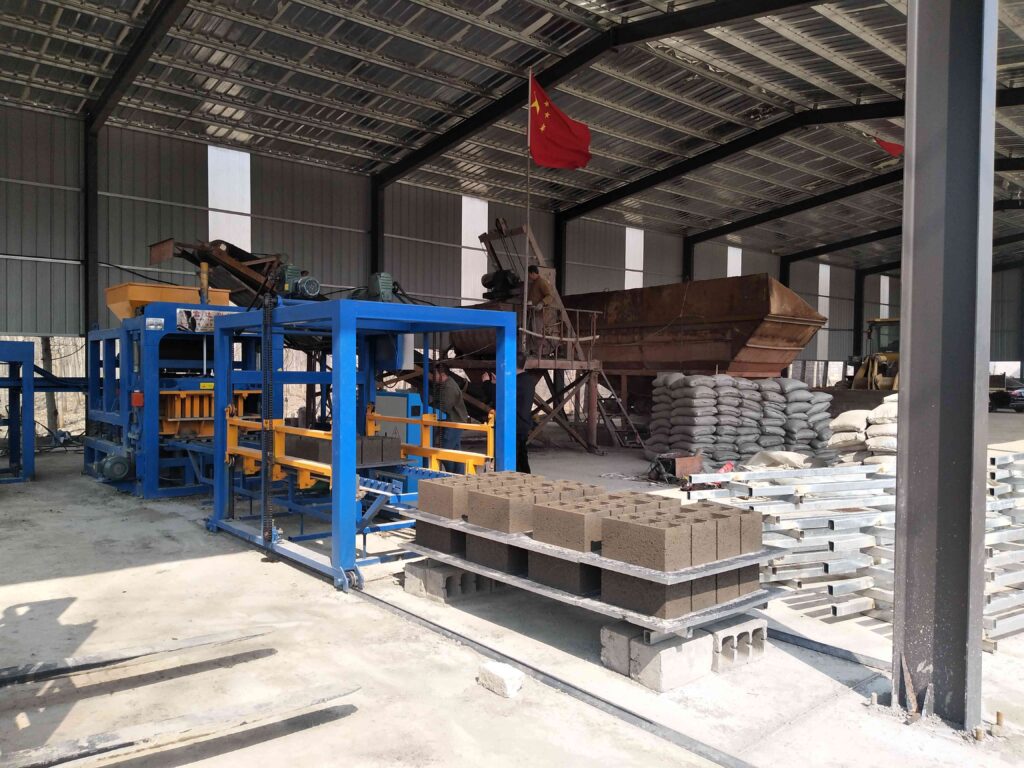
Sebuah "mesin pembuat bata fly ash sepenuhnya otomatis" adalah istilah yang keliru—sebenarnya, itu adalah pabrik produksi terintegrasi. Memahami cakupannya adalah langkah pertama dalam memahami biayanya. Berbeda dengan mesin press semi-otomatis atau manual, sistem sepenuhnya otomatis mencakup proses lengkap mulai dari penerimaan bahan baku hingga produk jadi yang ditumpuk, dengan intervensi manusia yang minimal. Komponen intinya selalu meliputi:
- Sistem Pengelompokan dan Pencampuran Otomatis:Pengumpan timbangan presisi atau hopper volumetrik untuk abu terbang, semen, pasir, dan air, yang mengalirkan bahan ke dalam pengaduk panci berkapasitas tinggi atau pengaduk planet.
- Sistem Pengangkutan Material:Belt conveyor atau elevator ember yang mentransfer campuran yang telah disiapkan ke hopper mesin cetak bata.
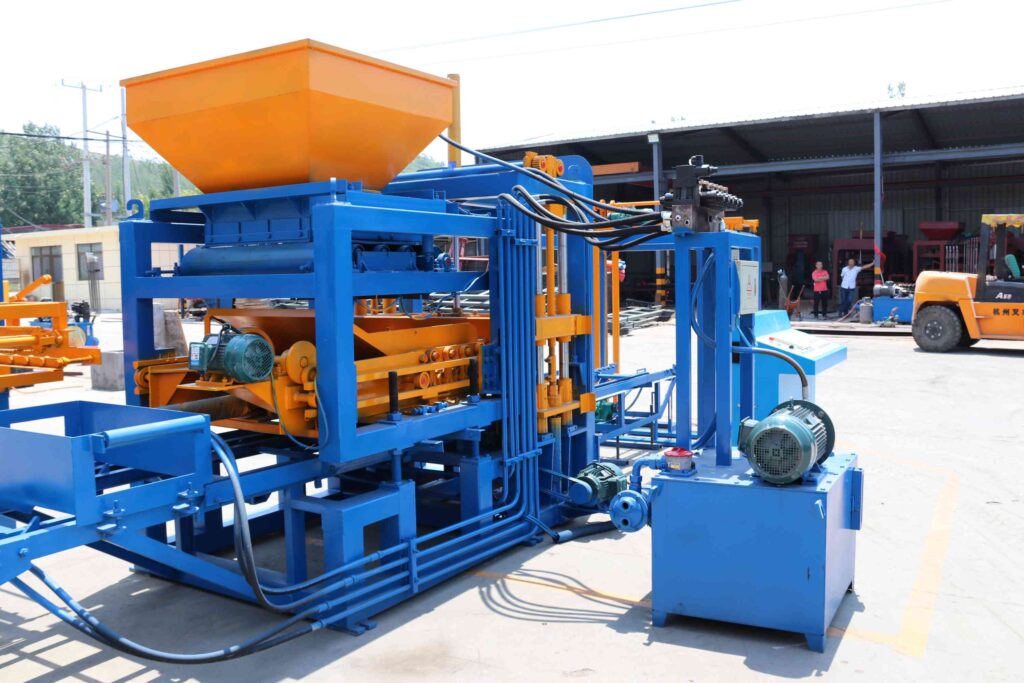
- Mesin Cetak Batu Bata Bertekanan Tinggi:Inti dari sistem ini menampilkan cetakan multi-cavity yang sepenuhnya otomatis, kompresi hidrolik berdaya tekan tinggi, dan getaran cetakan otomatis.
- Sistem Penanganan dan Penumpukan Bata:Lengan robotik, penumpuk, atau sistem paletisasi yang dengan lembut mengangkat batu bata hijau dari mesin tekan dan menyusunnya di atas palet atau rak pengawetan.
- Sistem Pengembalian dan Sirkulasi Palet:Sebuah sirkuit (sering melibatkan konveyor rantai atau forklift) yang memindahkan palet kosong kembali ke mesin press untuk siklus berikutnya.
- Pengendali Logika Terprogram (PLC) Terpusat:"Otak" yang menyinkronkan semua komponen, mengelola resep produksi, dan menyediakan data diagnostik.
Integrasi, sinkronisasi, dan keandalan subsistem-subsistem inilah yang memerintahkan harga premium.
2. Penggerak Biaya Inti: Analisis Teknik dan Komponen
Biaya produsen untuk membangun sistem semacam itu didorong oleh beberapa faktor kritis, yang secara langsung berdampak pada harga pasar.
2.1. Kapasitas Produksi dan Spesifikasi Keluaran
Ini adalah penentu harga utama. Kapasitas diukur dalam bata per shift (biasanya 8 jam) atau per jam.
- Tingkat Kapasitas Standar:
- Transmisi Otomatis Tingkat Pemula:8.000 – 15.000 bata/shift. Seringkali desain yang lebih sederhana dengan cetakan 4-6 rongga dan sirkulasi palet linier dasar.
- Sistem Kapasitas Menengah:15.000 – 25.000 bata/shift. Dilengkapi konveyor yang lebih kokoh, mesin cetak 8-10 rongga, dan penumpukan yang lebih canggih.
- Pabrik Berkapasitas Tinggi:25.000 – 40.000+ bata/shift. Menggabungkan mesin cetak berkecepatan tinggi, beberapa jalur pencampuran, dan penanganan robotik canggih. Setiap peningkatan tingkat merepresentasikan langkah signifikan dalam ukuran komponen, daya motor, dan kompleksitas kontrol, yang mengarah pada peningkatan biaya yang tidak linear.
2.2. Sistem Hidrolik dan Kompresi
Landasan kinerja.
- Tenaga Tekan:Berkisar dari 80 ton untuk sistem yang lebih kecil hingga lebih dari 300 ton untuk pabrik berkapasitas tinggi. Tonase yang lebih tinggi memastikan kepadatan dan kekuatan bata yang lebih besar, namun memerlukan silinder, pompa, dan katup yang lebih besar dan mahal.
- Kualitas Komponen Hidraulik: The choice between standard industrial hydraulics and premium, high-response, energy-efficient systems from global suppliers can create a cost variance of 30-50% for this subsystem alone. Premium systems offer faster cycle times, lower heat generation, and much greater longevity.
2.3. Automation and Control Sophistication
- Level of Integration: A system with individually started motors versus one with a fully sequenced, sensor-driven start/stop process.
- Control System Hardware: A basic PLC with a simple HMI (Human-Machine Interface) versus an industrial PC with color touchscreen, real-time production graphics, data logging, and remote monitoring capabilities.
- Robotics and Servo Drives: The use of servo motors for precise robotic palletizing versus simpler pneumatic pushers. Servo technology adds considerable cost but also offers gentler handling and higher placement accuracy.
2.4. Structural Build and Material Quality
- Frame and Fabrication: Machines designed for 20-year lifespans use heavy-duty, stress-relieved steel frames and machined mounting surfaces. Lighter fabrication reduces initial cost but compromises stability and alignment over time.
- Kualitas Cetakan: The mold is a high-wear part. Molds made from deep-hardened, chromium-alloyed tool steel can cost 3-5 times more than standard hardened steel molds but last 10-15 times longer, drastically reducing downtime and long-term operating costs.
3. The Market Price Landscape: Understanding Value Tiers
Market prices for fully automatic systems cluster into distinct value propositions.
- Economy/Entry-Level Systems ($7,000 – $12,000): Often based on standardized designs with domestic components, simpler controls, and lower production speeds. Suitable for entrepreneurs entering the automated space with constrained capital. May have higher long-term maintenance costs.
- Standard/Commercial-Grade Systems ($12,000 – $25,000): The most common tier for serious businesses. Feature reliable international components for hydraulics and electronics, robust construction, and outputs that support strong ROI. They balance performance, durability, and cost effectively. This is the core market for most distributors.
- Premium/High-Performance Systems ($25,000 – $50,000+): Engineered for maximum uptime and output. Utilize top-tier global components (e.g., Bosch Rexroth hydraulics, Siemens PLCs), feature advanced diagnostics, superior energy efficiency, and often include custom engineering for specific client needs. The value is in unparalleled productivity and lowest total cost of ownership.
4. The Total Cost of Ownership (TCO) and Justifying the Investment
For distributors, the sales conversation must shift from hargakecost of ownership.
- Konsumsi Energi: Premium systems with variable frequency drives (VFDs) and efficient hydraulics can use 20-30% less power, saving thousands annually.
- Penghematan Biaya Tenaga Kerja: A fully automatic plant may require only 3-5 personnel versus 15-20 for a similar output semi-automatic operation. This is the single largest ROI driver.
- Maintenance and Downtime Costs: Machines with better components and design have lower failure rates. The cost of one day’s unscheduled downtime for a 20,000-brick/day plant can exceed $5,000 in lost production, quickly eroding savings from a cheaper machine.
- Product Consistency and Waste Reduction: Automated systems produce bricks with minimal dimensional variation, reducing rejection rates and ensuring consistent quality that commands better market prices.
5. Strategic Procurement and Pricing for Distributors
- Landed Cost vs. Ex-Factory Price: For a $150,000 machine, sea freight, insurance, and import duties can add $25,000-$40,000. All financial planning must be based on Landed Cost.
- The “Plant and Machinery” Package: Price negotiations should encompass not just the main line but essential auxiliaries: raw material silos, curing racks or chambers, forklifts, and laboratory testing equipment. Bundling can provide better overall value.
- Warranty and Service as Value Components: A comprehensive 18-24 month warranty on the entire system, including on-site commissioning and training, has tangible value that supports a higher price point and reduces the distributor’s post-sale risk.
- Financing and ROI Modeling: Partnering with financial institutions to offer lease-to-own options or providing clients with detailed, credible ROI models (factoring in local labor rates, power costs, and brick prices) is a powerful tool to justify the capital investment.
Kesimpulan
The cost and price of a fully automatic fly ash brick making plant are reflections of a complex equation balancing engineering ambition, component quality, production ambition, and lifecycle value. For the B2B partner, success lies in becoming a consultant who can decode this equation for the end-client. It involves steering the conversation away from sticker shock towards a strategic analysis of productivity, operational efficiency, and business scalability. The most economically sound decision is rarely the cheapest machine; it is the system whose performance, reliability, and support structure most effectively lower the client’s cost per produced brick over a 5 to 10-year horizon. By mastering this narrative and sourcing plants from manufacturers whose quality aligns with this value proposition, distributors position themselves not as mere equipment vendors, but as essential architects of their clients’ industrial success in the competitive green building materials market.
FAQ
Q1: What is the typical payback period for a fully automatic plant?
A: With efficient management and good market demand, a well-selected commercial-grade system can achieve payback in 2 to 4 years. The calculation is highly sensitive to local factors: selling price of bricks, cost of raw materials (especially cement), and local wage rates. Automation drastically reduces labor, which is often the key to faster payback.
Q2: Are there significant ongoing costs beyond the purchase price?
A: Yes. Key ongoing costs include: raw material procurement, regular preventive maintenance and spare parts (wear parts like mold liners, mixing blades), skilled electrician/mechanic labor for operation and upkeep, electrical power consumption (a major cost for high-horsepower systems), and periodic recalibration of the batching system.
Q3: How much factory space and infrastructure is required?
A: A medium-capacity plant requires a minimum covered area of 5,000 – 8,000 sq. ft. for the production line and immediate curing. Additional open land (10,000-20,000 sq. ft.) is needed for extended curing and raw material storage. Infrastructure requires a robust 3-phase electrical connection (often 100-200 KVA), a reliable water source, and a level, reinforced concrete foundation.
Q4: Can the machine produce different types of blocks?
A: Yes, most systems are designed for quick mold changes. With different mold sets, the same press can produce solid blocks, hollow blocks in various cavity patterns, paving stones, and interlocking blocks. Changeover may require a few hours of downtime and recalibration.
Q5: What level of technical expertise is needed to operate and maintain such a plant?
A: Operation requires trained personnel who understand the PLC interface and basic machine sequences. Maintenance requires access to a skilled technician familiar with industrial hydraulics, pneumatics, and PLCs. Reputable manufacturers provide extensive training for both during commissioning. The distributor should factor in developing or sourcing this local technical support capability.
Q6: How do we compare quotes from different suppliers that seem technically similar?
A: Perform a detailed component audit: Compare the brands and models of the PLC, hydraulic pumps/valves, electrical motors, and sensors. Inspect the proposed steel thickness in the frame and mold. Scrutinize the warranty terms and scope of commissioning services. Finally, request contact information for existing clients with similar systems and visit them if possible to assess real-world performance and support.