
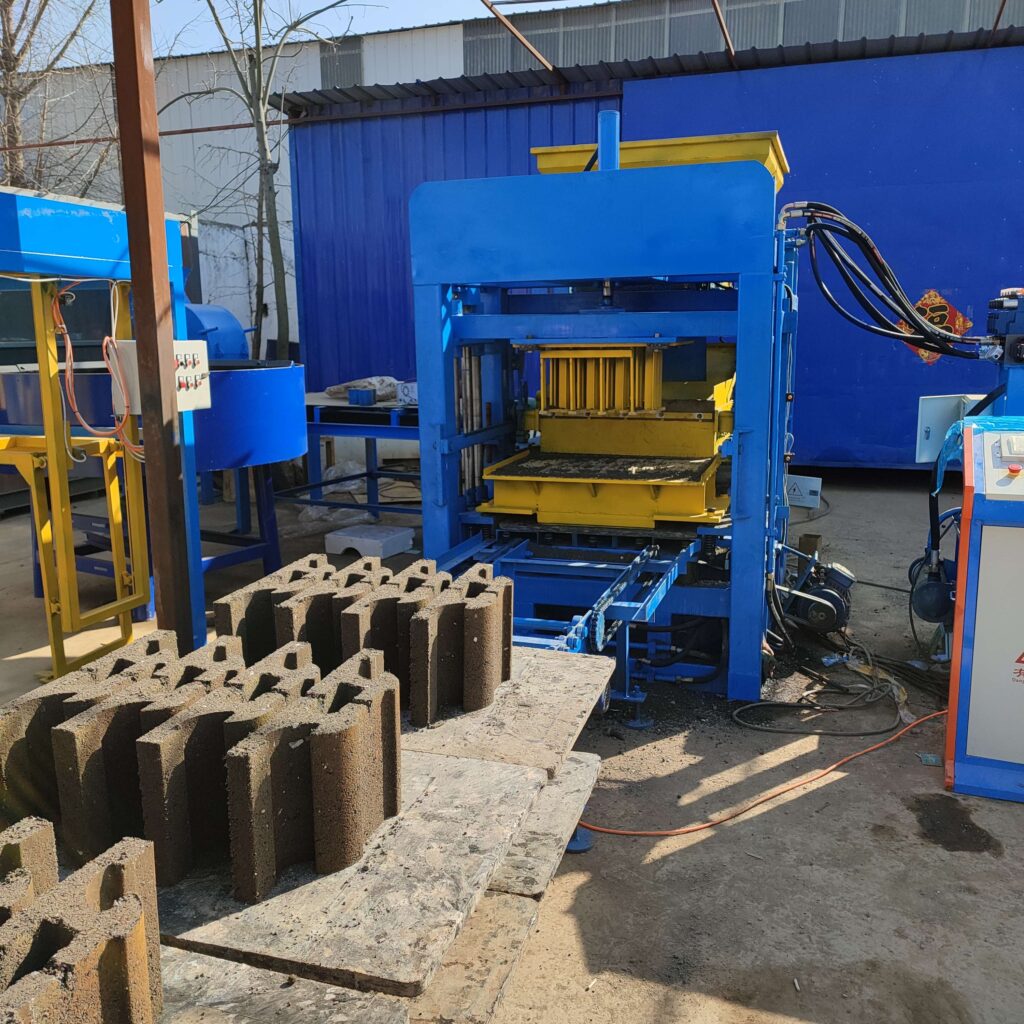
1. Prinsip-Prinsip Dasar dan Protokol Pra-Operasional
Operasi yang sukses dimulai jauh sebelum tombol start ditekan. Hal ini berakar pada persiapan, keamanan, dan verifikasi sistem.
1.1. Keselamatan sebagai Perintah Operasional Utama
Sebuah pabrik blok adalah lingkungan industri dengan bahaya yang melekat: bagian-bagian bergerak yang berat, tekanan hidrolik tinggi, dan konveyor bertenaga. Protokol standar mewajibkan:
- Perlengkapan Pelindung Diri (APD):Operator wajib mengenakan kacamata pengaman, pelindung pendengaran, sepatu bot berujung baja, dan sarung tangan yang sesuai untuk menangani bahan abrasif.
- Prosedur Lockout-Tagout (LOTO):Setiap perawatan, pergantian cetakan, atau pembersihan kemacetan memerlukan mesin untuk diisolasi secara elektrik dan diberi label untuk mencegah pengaktifan yang tidak disengaja.
- Zona Aman yang Jelas:Area yang ditetapkan di sekitar mixer, kepala mesin, dan konveyor palet harus dijaga agar bebas dari personel yang tidak berwenang selama operasi.
1.2. Daftar Periksa Pra-Mulai: Memastikan Kesiapan Sistem
Pemeriksaan sistematis dilakukan di awal setiap shift:
- Inventarisasi Material:Verifikasi tingkat agregat, semen, dan air yang memadai dalam silo dan tangki. Periksa persediaan bahan tambah kimia.
- Pemeriksaan Mesin:Periksa secara visual cetakan, kotak umpan, dan kepala kompresi untuk keausan atau sisa material dari proses sebelumnya. Periksa tingkat cairan hidrolik dan adanya tanda-tanda kebocoran.
- Sistem Palet:Pastikan persediaan palet yang bersih dan tidak rusak tersedia di konveyor pengembalian. Periksa apakah penjajaran indeks palet telah sesuai.
- Sistem Kontrol:Nyalakan antarmuka manusia-mesin (HMI) atau panel kontrol. Periksa apakah ada alarm kesalahan aktif dan tinjau parameter produksi untuk produk yang dijadwalkan.
2. Fase Satu: Pencampuran dan Pengadukan – Menciptakan Bahan Baku yang Tepat
Kualitas blok ditetapkan secara permanen pada tahap pencampuran. Operasi di sini berkaitan dengan presisi dan konsistensi.
2.1. Urutan Batching Otomatis
Operator memulai siklus batch dari stasiun kontrol. Sistem otomatis kemudian:
- Pintu gerbang terbuka.untuk mengeluarkan jumlah agregat (pasir, batu) yang telah ditimbang secara tepat dari tempat penyimpanannya ke dalam alat penimbang.
- Cement and supplementary materials (like fly ash) are pneumatically conveyed and weighed.
- The dry batch is discharged into the mixer—typically a large pan or twin-shaft mixer.
2.2. The Mixing Cycle
The operator monitors the process, which is often timed automatically:
- Dry Mixing: The mixer runs for 30-60 seconds to blend the dry materials homogeneously.
- Water and Admixture Injection: Precisely metered water and any liquid color or chemical admixtures are sprayed into the mixer. The operator may adjust water addition based on the observed moisture content of the sand (often monitored by sensors).
- Wet Mixing: The mixer continues for another 90-120 seconds. The goal is a uniform, zero-slump concrete mix where every aggregate particle is coated with cement paste. The mix should be cohesive yet crumbly—holding its form when squeezed in a hand but breaking apart easily.
3. Phase Two: The Machine Cycle – Formation Under Pressure
This is the core automated sequence where the mix is transformed into a solid block.
3.1. Mold Charging and Feed Stage
The prepared mix is conveyed to the machine’s overhead hopper.
- Thefeed box, located under the hopper, moves over the empty mold cavities.
- It deposits a controlled surplus of material into each cavity. This excess is critical to ensure complete filling after compaction.
3.2. Compaction and Vibration Stage
This is the critical transformation.
- Thevibration table beneath the mold activates, sending high-frequency, vertical oscillations through the mold and material. This causes the concrete particles to fluidize and settle densely.
- Simultaneously, the massive hydraulic compression head descends, applying hundreds of tons of pressure onto the material in the mold. The combination of vibration and pressure eliminates air voids and creates the initial “green strength.”
- The head may hold pressure for a programmed duration (1-3 seconds) to ensure consolidation.
3.3. Stripping and Ejection Stage
- The compression head retracts.
- The mold box is lifted vertically by hydraulic cylinders. As it rises, a stripper plate or the pallet itself holds the newly formed blocks in place, cleanly stripping them from the mold.
- The finished blocks, now standing on a steel pallet, are revealed.
4. Phase Three: Post-Forming Handling and Curing
The blocks are stable but fragile at this stage. Their handling and controlled curing are operational phases that finalize their properties.
4.1. Pallet Transfer and Initial Setting
- An automated mechanism transfers the loaded pallet from the machine table onto a chain conveyor or roller track.
- The pallet proceeds to a pre-curing area or directly into the curing kiln. During this transfer, the blocks must be protected from jolts or impacts.
4.2. The Low-Pressure Steam Curing Cycle
Operators manage this process via the kiln control system:
- Memuat: Pallets are racked densely in the sealed curing chamber.
- Program Initiation: A pre-set curing program is launched. A typical cycle includes:
- Rest Period (1-2 hours): Allows uniform hydration to begin.
- Temperature Ramp (2-3 hours): Steam is introduced, gradually heating the chamber to ~60-80°C (140-176°F).
- Soaking Period (8-12 hours): Temperature is held constant. The heat and humidity dramatically accelerate the cement’s chemical hydration, allowing blocks to gain over 70% of their design strength.
- Cool Down (3-5 hours): Steam is cut, and temperature is gradually reduced to near ambient to prevent thermal shock cracking.
- Unloading: Once the cycle is complete and the chamber is safe to enter, the cured blocks are removed for final processing.
5. Phase Four: Depalleting, Cubing, and Quality Control
The final operational steps prepare the product for shipment.
5.1. Depalleting
The cured blocks are fed into a depalleting machine. This device gently lifts the entire stack of blocks off the pallet. The empty pallet is then returned via conveyor to the block machine for reuse.
5.2. Cubing and Strapping
The loose blocks move to an automated cubing station.
- They are stacked in a stable, interlocking pattern (e.g., 10 per tier, 5-6 tiers high) to form a cube.
- Metal or plastic straps are automatically applied under tension around the cube, securing it for transport.
5.3. In-Process Quality Control (QC)
Operational excellence is verified through continuous QC:
- Dimensional Checks: Operators regularly sample blocks to verify height, width, and length using calipers or gauges.
- Weight and Density: Random blocks are weighed to ensure mix consistency.
- Visual Inspection: Blocks are checked for surface defects, cracking, or improper filling.
- Compressive Strength Testing: Samples from each production run are tested in a lab to confirm they meet the specified strength (e.g., ASTM C90 standards). This data is often available to distributors as proof of compliance.
Kesimpulan
Operating a block making machine is a disciplined symphony of automated processes and vigilant human oversight. It is a cycle that transforms raw, bulk materials into engineered building components through defined stages of batching, high-pressure formation, controlled curing, and precision finishing. For the distribution and procurement professional, this operational knowledge is a powerful lens. It allows you to evaluate a supplier not just on price, but on the sophistication of their processes, the rigor of their quality controls, and the reliability ingrained in their daily operations. You can speak the language of production, ask insightful questions about cycle times and curing protocols, and better understand the lead times and constraints your manufacturing partners face. Ultimately, this depth of understanding elevates your role, enabling you to build more resilient, transparent, and value-driven supply chains for the construction industry.
FAQ (Frequently Asked Questions)
Q1: What is the most common operational mistake that leads to poor-quality blocks?
A: Inconsistent or incorrect water-cement ratio in the mix is the primary culprit. Too much water weakens the final block, can cause deformation during handling, and increases shrinkage cracks. Too little water leads to poor compaction, resulting in weak, crumbly blocks with a friable surface. Skilled operators constantly monitor aggregate moisture and adjust water addition accordingly.
Q2: How long does it take for a new operator to become proficient?
A: Basic machine monitoring and routine tasks can be learned in a few weeks. However, developing true proficiency—troubleshooting jams, adjusting mixes for daily environmental changes, performing mold changeovers efficiently, and interpreting quality data—typically requires 6 to 12 months of supervised experience. The most valuable plant personnel are those who understand the “why” behind every step.
Q3: Can the machine operation be fully automated, eliminating the need for operators?
A: While modern plants are highly automated, human oversight remains critical. Operators are needed for:
- Quality Judgment: Visually inspecting blocks and the mix.
- Troubleshooting: Responding to unexpected faults or material variations.
- Setup and Changeover: Installing new molds and inputting new product parameters.
- Preventive Maintenance. The role has shifted from manual labor to that of a process technician.
Q4: How does operating a machine for solid bricks differ from one for hollow blocks?
A: The core principles are the same, but key parameters change:
- Desain Campuran: Solid brick mixes often use finer aggregates for a denser finish.
- Tekanan: Even higher pressure may be used to achieve the required density for pavers or solid masonry.
- Getaran: Different frequency/amplitude settings may be used to ensure fill without segregating the finer mix.
- Desain Cetakan: The mold cavities are, of course, solid. The stripping process must account for the greater surface area in contact with the mold walls.
Q5: As a distributor, what operational questions should I ask a potential new supplier?
A: To gauge their operational discipline, ask:
- “What is your standard QC frequency, and can I see a sample QC report?”
- “How do you monitor and control moisture in your raw aggregates?”
- “What is your protocol for managing a production run that starts to test outside of spec?”
- “What is your average cycle time for [Product X], and what is your sustainable output per 8-hour shift?”
- “How often do you perform preventive maintenance on your core compaction system?”
The answers will reveal their commitment to consistency and quality.
