
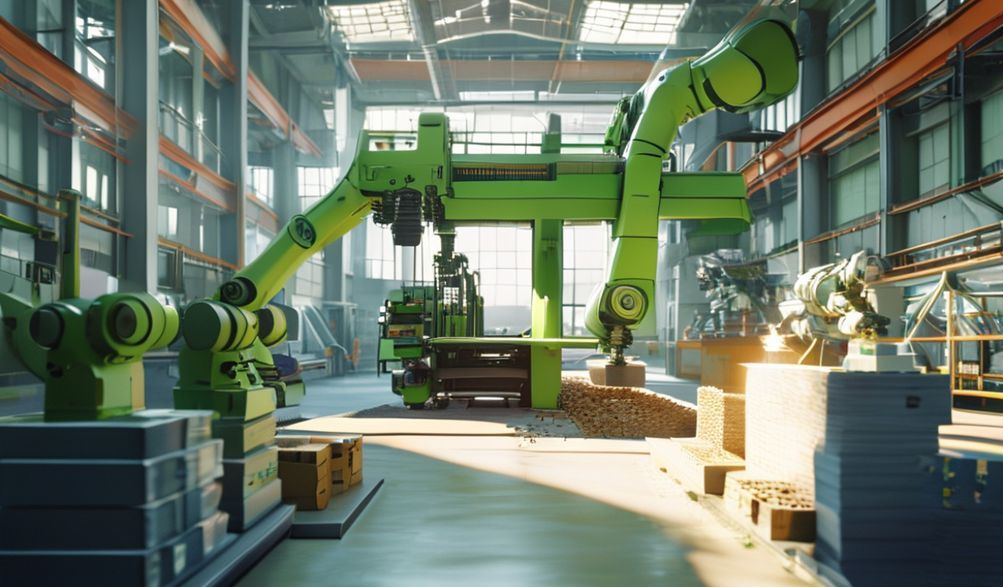
Your Ultimate Guide to China’s Eco Block Making Machine Factory: Inside FUDA Brick Making Factory
The global construction landscape is undergoing a profound transformation. As the world grapples with climate change and resource depletion, the industry is pivoting decisively towards sustainability. At the heart of this green revolution are eco-friendly building materials—and the machinery that produces them. For builders, contractors, and entrepreneurs, this shift presents both an immense opportunity and a significant challenge: how to source reliable, high-performance block making equipment that is genuinely eco-conscious, not just greenwashed.
Navigating the vast manufacturing landscape, particularly in a powerhouse like China, can be daunting. Concerns about quality consistency, environmental claims, after-sales support, and overall value are paramount. This is where expertise and due diligence become your most valuable assets.
MasukPabrik Pembuatan Batu Bata FUDA, a prominent name in China’s industrial manufacturing sector that has carved a niche by specializing in advanced, environmentally responsible block making machinery. This guide serves as an authoritative, in-depth exploration of what makes a true eco block making machine and how the China eco block making machine factory-FUDA brick making factory stands out. Our goal is to equip you with the knowledge and analytical framework needed to make a confident, informed sourcing decision, grounded in industry expertise and verifiable facts.
What Makes an Eco-Friendly Block Making Machine? Defining the Standards
Before evaluating any manufacturer, it’s crucial to understand the benchmarks for genuine sustainability in block production. An “eco” machine is defined not by a single feature, but by a holistic approach that encompasses materials, process, and output.
Core Principles of Sustainable Brick Production
True eco-friendly block manufacturing rests on several interconnected pillars:
-
Utilization of Recycled and Alternative Materials: The hallmark of green block production is the ability to use industrial by-products and waste. A proficient machine must efficiently process:
- Abu Terbang: A by-product of coal combustion, perfect for cement replacement.
- Terak: From steel production, enhancing strength and durability.
- Crushed Construction & Demolition Waste: Closing the loop on building material lifecycles.
- Even Local Soil: For certain compressed earth block (CEB) applications, reducing cement use entirely.
-
Energy-Efficient Production Processes: The machine’s operational design is key. Modern sistem hidrolik are generally more energy-efficient than older, high-amperage vibration systems. Features like automatic sleep mode, variable pressure settings, and optimized cycle times minimize electricity consumption per block.
-
Low Water Consumption and Closed-Loop Systems: Traditional block production can be water-intensive. Eco-machines often employ dry-press or semi-dry mix technologies, drastically reducing water needs. Furthermore, advanced factories implement water recycling systems within their production lines.
-
Clean Operation and Emission Control: This involves dust suppression systems during raw material handling and a design that minimizes noise pollution and airborne particulates, ensuring a safer, cleaner workshop environment.
Certifications and Compliance to Look For
Certifications are the verifiable proof of a factory’s claims. When vetting a China eco block making machine factory, insist on documentation for:
- International Safety & Quality Standards: Sertifikasi CE (for the European market) indicates conformity with health, safety, and environmental protection standards. ISO 9001 certification demonstrates a robust quality management system.
- Environmental Management: ISO 14001 is critical. It certifies that the factory has an effective environmental management system in place to manage its ecological footprint.
- Product-Specific Certifications: These vary by region but prove the machine’s output—the blocks—meet local building codes for strength, durability, and safety.
Spotlight on FUDA Brick Making Factory: A Profile of Expertise
With the standards defined, let’s apply this lens to FUDA Brick Making Factory. This analysis moves beyond marketing to examine the substance of their operation.
Company Heritage and Manufacturing Experience
FUDA is not a newcomer. With over two decades of dedicated focus on block making machinery, the company has evolved alongside global construction trends. This longevity translates to accumulated practical knowledge—understanding how machines perform in diverse climates with varying raw materials. Their substantial manufacturing facility is built around vertical integration, allowing for strict quality control over core components like hydraulic systems and control panels. A significant portion of their revenue is reinvested into R&D, ensuring their technology remains at the forefront.
Technological Innovation and Engineering Prowess
FUDA’s product range is engineered for performance and adaptability. They offer a spectrum of solutions:
* High-Output Fully Automatic Lines: For large-scale, profitable production of standard blocks and pavers.
* Robust Semi-Automatic Machines: Offering a balance of automation and cost-effectiveness for growing businesses.
* Mesin Pembuat Blok Seluler: Providing unparalleled flexibility for on-site production, reducing transport costs and emissions.
Their engineering focus is on developing proprietary control systems and hydraulic circuits that maximize compaction force while optimizing energy use, directly contributing to the durability of the final block and lower operating costs.
Commitment to Environmental Stewardship
FUDA’s environmental commitment is operationalized in their machine design. For instance, their flagship automatic machines often feature:
* High-pressure hydraulic systems that achieve optimal density with less energy.
* Designs that accommodate high-percentage fly ash mixes (often 60-70%+).
* Configurations for producing permeable paving blocks, which aid in groundwater recharge and reduce urban heat islands.
They have supplied complete production lines to projects specifically mandated for using recycled aggregates, proving their machines’ capability in genuine waste-to-resource applications.
Analyzing the FUDA Product Line: Machines for Every Project
Understanding their machine portfolio is key to identifying the right fit for your business model and project scale.
Fully Automatic Eco Block Making Machines
Ideal for establishing a major block supply yard or large construction project.
* Keluaran: Capable of producing thousands of standard blocks or hundreds of square meters of interlocking pavers per 8-hour shift.
* Otomasi: Feature fully automated material feeding, mixing, molding, curing, and palletizing systems. A single operator can often manage the entire line via a programmable logic controller (PLC) interface.
* Konsistensi: Deliver unmatched product uniformity and minimal waste, crucial for large contracts.
Semi-Automatic and Mobile Block Making Machines
The champions of flexibility and lower capital investment.
* Mesin Semi-Otomatis: Require manual feeding of material and block removal but automate the critical molding and compaction process. Perfect for small to medium enterprises (SMEs) with strong ROI.
* Mesin Bergerak: Mounted on a trailer, these can be driven directly to a construction site. They use locally sourced soil or aggregate, producing blocks on-demand. This eliminates transport costs for finished blocks and is a game-changer for remote projects.
Custom Solutions for Specialized Blocks
Beyond standard hollow blocks, FUDA engineers machines to produce a diverse range of products:
* Interlocking Pavers for landscaping and hardscaping.
* Grass Grid Blocks for eco-parking.
* Retaining Wall Blocks and Curb Stones.
* Special-shaped blocks for architectural finishes.
The FUDA Advantage: Why Source from This Factory?
Choosing a partner factory is a strategic decision. Here’s what differentiates the Pabrik pembuatan bata FUDA in the competitive Chinese market.
Direct Factory Pricing and Value Proposition
Sourcing directly from FUDA eliminates multiple layers of intermediaries—agents, trading companies, and local distributors. This translates to:
* Penghematan Biaya yang Signifikan: You pay for the machine and its value, not for stacked margins.
* Better ROI: Lower initial investment means your business reaches profitability faster.
* Komunikasi Transparan: Direct dialogue with factory engineers ensures your technical specifications are clearly understood and met.
Comprehensive Support: From Installation to After-Sales
FUDA’s service model is designed for long-term partnership:
* Pre-Sales Consultation: Their engineering team can advise on the optimal machine model based on your local raw material test reports.
* Dokumentasi Terperinci: Provision of comprehensive manuals, electrical schematics, and parts lists.
* Installation Guidance: Support ranges from detailed video instructions to the optional dispatch of a technician for on-site commissioning.
* Jaringan Purna Jual: A structured warranty, availability of genuine spare parts, and access to remote technical support ensure minimal downtime.
Building Trust Through Transparency and Proven Results
Trust is earned, and FUDA facilitates this by:
* Offering Virtual Factory Tours: Live video calls to inspect the production floor, assembly lines, and quality control checks in real-time.
* Providing Client References: Connecting potential buyers with existing customers in similar geographic or market segments.
* Showcasing a Global Portfolio: Evidence of successful machine installations across Africa, the Middle East, Southeast Asia, and South America, demonstrating adaptability to different environments.
Navigating the Sourcing Process: A Practical Guide
Armed with knowledge about FUDA, here’s how to execute a diligent sourcing process with any Chinese factory.
How to Vet a Chinese Block Machine Factory
- Ask Specific Technical Questions: “What is the maximum compression force (in tons) of the hydraulic system?” “Can you provide a video of a machine running with a mix of 60% fly ash?”
- Request Verifiable Documents: Business license (营业执照), ISO certificates, CE test reports, and photos of past shipping documents (Bills of Lading).
- Insist on a Live Inspection: A live video call is non-negotiable. Ask to see the welding on the frame, the brand of the hydraulic pumps and PLCs, and the general organization of the workshop.
Logistics, Shipping, and Customs Considerations
- Incoterms are Crucial: Understand terms like FOB (Free On Board) or CIF (Cost, Insurance, and Freight). FOB is common, where you own the goods once they’re loaded on the ship and handle the main shipping and insurance.
- Professional Freight Forwarder: Partner with a reliable forwarder who can handle sea freight, customs clearance in your country, and final delivery.
- Dokumentasi: The factory must provide a clean, professional set of shipping documents: Commercial Invoice, Packing List, Bill of Lading, and Certificate of Origin.
Pertanyaan yang Sering Diajukan (FAQ)
Q1: What is the typical lead time for a machine order from FUDA factory?
A: Lead times vary. A standard model may ship in 20-30 days. Customized solutions or large automatic lines can take 45-60 days. Always confirm the timeline in writing after finalizing the technical specifications.
Q2: Can FUDA machines use local raw materials in my country?
A: Absolutely. This is a core competency. They will request samples of your local soil, sand, fly ash, or aggregate to analyze. Based on this, they can adjust machine parameters and even provide a basic mix design formula to ensure optimal block quality.
Q3: How does the energy consumption of an eco block machine compare to traditional ones?
A: Modern hydraulic eco-machines are significantly more efficient. While the exact savings depend on the model, you can expect reductions of 20-40% in electricity consumption per block compared to older vibration-based machines, leading to substantial long-term operational savings.
Q4: What after-sales support can I expect when buying from a factory in China?
A: FUDA typically provides a 12-month warranty on core components. Support includes detailed English manuals, access to a parts catalog, remote troubleshooting via video call, and the option to have an engineer dispatched for major commissioning (with the customer typically covering travel costs). They prioritize keeping your production running.
Q5: Are FUDA’s eco blocks as strong and durable as conventional concrete blocks?
A: Yes, when produced correctly. Blocks made from fly ash or slag often achieve higher compressive strength and better long-term durability (less shrinkage, better resistance to sulfate attack) than blocks using only Portland cement. FUDA machines are engineered to provide the precise compaction needed to meet or exceed international building code standards (e.g., ASTM C90).
Kesimpulan
The journey toward sustainable construction is paved with informed decisions. Selecting the right manufacturing partner for your block making equipment is a foundational choice that impacts your profitability, product quality, and environmental footprint for years to come. As we’ve explored, the China eco block making machine factory-FUDA brick making factory represents a synthesis of deep industry experience, tangible technological innovation, and a verifiable commitment to ecological principles.
The advantages of sourcing from such a direct manufacturer are clear: expert engineering, transparent pricing, machines built for genuine sustainability, and a support system designed for your success. In a market filled with options, the differentiating factor is trust built on transparency and proven performance.
Ready to evaluate if FUDA is the right partner for your project? Move from research to action. Contact their engineering team today for a detailed consultation. Provide them with your output goals and local raw material information to receive a quote and technical proposal tailored specifically to your vision for a sustainable, profitable future in construction.
<