
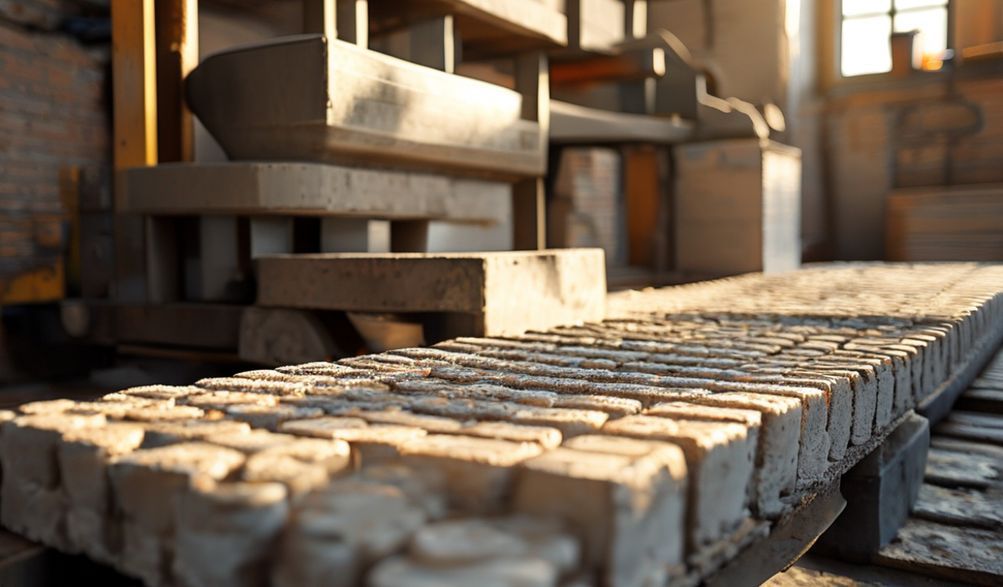
Small Cement Bricks Machine Price: A 2026 Buyer’s Guide & Cost Breakdown
Pengantar
You’re standing on a plot of land, envisioning a new building, a garden wall, or perhaps a small business venture. The idea of producing your own concrete blocks is appealing—it promises control over quality, potential cost savings, and even a new revenue stream. But a quick search for a “small cement bricks machine price” leaves you more confused than when you started. Prices range from a few hundred to tens of thousands of dollars. How do you make sense of it all without making a costly mistake?
With over 15 years of experience supplying construction machinery to startups and established businesses alike, we’ve guided hundreds of clients through this exact decision. We’ve learned that the cheapest machine can often be the most expensive investment in the long run. This guide is designed to cut through the confusion. We won’t just list prices; we’ll demystify what drives them, from automation levels to hidden costs, empowering you to make an informed investment that aligns with your project goals and budget.
In this comprehensive 2026 guide, we’ll break down the key factors influencing cost, provide realistic price ranges, and share insider tips on getting the best value for your money. Let’s build your understanding from the ground up.
What is a Small Cement Bricks Machine? Understanding Your Options
Before discussing rupees, dollars, or euros, it’s crucial to understand what you’re buying. A “small cement bricks machine” is a broad term covering equipment designed for limited-space, lower-volume production of concrete masonry units (CMUs). Your choice fundamentally dictates your workflow, labor needs, and, of course, the price.
Mesin Manual vs. Semi-Otomatis vs. Otomatis Penuh
The level of human intervention required is the primary differentiator.
- Mesin Manual: These are the most basic type. Operators manually fill the mold with concrete mix, compress it using a lever mechanism, and then demold the block by hand.
- Kelebihan: Lowest upfront cost, simple mechanics, no power requirement.
- Kekurangan: Very high labor intensity, slow output, inconsistent block quality, physically demanding.
- Mesin Semi-Otomatis: This category offers a balance. They use mechanical vibration (often from an electric motor) and hydraulic or mechanical pressure to compact the concrete. An operator typically feeds the mix and initiates the cycle, but the machine handles the compaction and often ejects the block onto a pallet.
- Kelebihan: Significant improvement in output and block consistency, reduces physical strain, good scalability for small businesses.
- Kekurangan: Higher initial cost than manual, requires a power source, more complex maintenance.
- Mesin Sepenuhnya Otomatis: These are production systems. Controlled by a Programmable Logic Controller (PLC), they automate the entire process: batching, mixing (if integrated), feeding, compacting, curing, and stacking. Labor is primarily for monitoring and maintenance.
- Kelebihan: Highest output with minimal labor, exceptional consistency, efficient use of raw materials.
- Kekurangan: Substantial upfront investment, requires significant space and stable power, complex installation and maintenance.
| Type | Labor Required | Output Capacity (Approx. per 8 hrs) | Relative Cost Index |
| :— | :— | :— | :— |
| Manual | Very High | 500 – 2,000 blocks | $ |
| Semi-Otomatis | Medium | 2,000 – 10,000 blocks | $$ – $$$ |
| Sepenuhnya Otomatis | Low | 10,000 – 30,000+ blocks | $$$$ – $$$$$ |
Common Outputs: Hollow Blocks, Solid Bricks, Pavers, and More
Machines are often categorized by their primary product. The core mechanism is similar, but the mold defines the final shape.
* Mesin Bata Ringan: The most common type, producing standard 4″, 6″, or 8″ blocks used in construction.
* Solid Brick/Block Machines: Produce denser units for heavier-duty applications.
* Mesin Paving & Blok Interlock: Specialize in producing paving stones, kerbstones, and interlocking blocks for landscaping and hardscaping.
* Mesin Serbaguna: Many semi-automatic models allow for quick mold changes, enabling one machine to produce different block types. This versatility adds to the machine’s value and can affect its price.
Key Factors That Determine Small Cement Bricks Machine Price
The price tag is a culmination of several engineering and commercial decisions. Understanding these factors turns you from a passive buyer into an informed investor.
Tingkat Otomatisasi (Faktor Biaya Terbesar)
This is the single most significant factor. The price jump between categories reflects the complexity of components, motors, hydraulics, and control systems.
* Mesin Manual: $500 – $3.000. The price varies based on build material (steel thickness) and the number of blocks produced per cycle (single or multiple).
* Mesin Semi-Otomatis: $3,000 – $25,000. This wide range covers small table-top vibrators to large, stationary hydraulic machines with conveyor feed systems. The core of a profitable small business often lies here.
* Mesin Sepenuhnya Otomatis: $25,000 – $80,000+. At this level, you are purchasing a coordinated system. Prices escalate with features like automatic pallet feeders, stackers, and integrated mixers.
The ROI Trade-Off: A higher initial investment dramatically reduces per-block labor costs and increases your production capacity, leading to faster breakeven and higher long-term profits for a steady operation.
Kapasitas Produksi (Blok Per Jam/Hari)
Closely tied to automation, but also a function of machine size and power. A machine rated for 1,000 blocks per hour will cost less than one rated for 2,500 blocks per hour, even within the same automation category. Crucial Advice: Honestly assess your market demand. Overbuying capacity ties up capital; underbuying leaves money on the table.
Machine Build Quality & Brand Reputation
Two machines may look similar but have a vast price difference due to what’s inside.
* Kelas Baja & Rangka: Heavy-duty, reinforced frames resist the constant vibration and stress, ensuring longevity.
* Sistem Hidrolik: The heart of a semi- or fully-auto machine. Reputable brand pumps and valves cost more but fail less often.
* Motor Getar: High-quality, balanced motors provide consistent compaction, leading to stronger blocks and less wear on the machine.
* Sistem Kontrol: Reliable PLCs and electrical components from known manufacturers (e.g., Siemens, Mitsubishi) reduce downtime.
A reputable brand with a decade of proven performance and verifiable customer testimonials inherently carries more value—and a higher price—than an unknown supplier. This premium often includes better R&D, standardized quality control, and crucially, the expectation of after-sales support.
Pertimbangan Biaya Tambahan
The machine’s sticker price is rarely the final cost.
1. Biaya Cetakan: Standard block molds are often included. Custom shapes (decorative pavers, special blocks) can cost $500 – $2,500+ each.
2. Shipping & Installation: Heavy machinery requires specialized freight. Shipping internationally or to remote sites can add $1,000 – $10,000+. Installation and commissioning by a technician may also be an extra fee.
3. After-Sales Service & Warranty: A comprehensive warranty (1-2 years on critical parts) and the availability of local technical support are invaluable. Factor this into the total cost of ownership.
4. Peralatan Bantu: You’ll likely need a pan or planetary mixer, a conveyor belt to feed the hopper, and a steady supply of pallets. This supporting cast is essential for efficient operation.
Realistic Price Ranges for Small Cement Bricks Machines in 2026
Based on current global market trends and projected inflation in manufacturing and logistics, here are the expected price brackets for 2026. Remember, these are for the machine unit itself, excluding many ancillary costs.
Entry-Level (Manual & Small Semi-Auto) Machines: $500 – $8,000
- Ideal Untuk: DIY enthusiasts, very small-scale personal projects, startups in regions with very low labor costs wanting to test the market.
- Yang Dapat Diharapkan: Basic but functional equipment. In the semi-auto range, you’ll find small vibrating table machines capable of producing a few hundred blocks per day. Durability can be a concern at the very lowest end.
Mid-Range (Robust Semi-Automatic) Machines: $8,000 – $35,000
- Ideal Untuk: Small to medium-sized businesses (SMBs) aiming for commercial production. This is the sweet spot for most serious entrepreneurs.
- Yang Dapat Diharapkan: Stationary machines with strong hydraulic systems, good vibration power, and the ability to use multiple molds. Features may include automatic pallet feeders and more sophisticated controls. Build quality from reputable manufacturers in this range offers excellent durability.
High-Capacity (Fully Automatic) Systems: $35,000 – $100,000+
- Ideal Untuk: Established block yards, construction companies supplying large projects, entrepreneurs targeting high-volume markets.
- Yang Dapat Diharapkan: A complete, integrated production line. This price includes advanced automation, high-speed cycling, and often touch-screen controls. Output and efficiency are maximized, justifying the significant capital expenditure for the right business model.
🔔 Note on Pricing:
The prices mentioned are estimated ranges based on global market analysis and projections. The final cost for a specific model will depend on your geographic location, the supplier’s pricing strategy, currency exchange rates, and any custom specifications or accessories you require. Always request a detailed, itemized quotation from multiple reputable suppliers.
How to Get the Best Value for Your Investment
Value isn’t about finding the lowest price; it’s about optimizing the return on your total investment.
Define Your Project Requirements Clearly
Create a checklist before you talk to any supplier:
* Daily/Weekly Block Requirement: Based on firm orders or realistic market analysis.
* Block Types Needed: List the sizes and styles (hollow, solid, paver).
* Available Space & Power: Do you have a 3-phase electrical connection? Is your workspace covered?
* Labor Availability & Skill: How many operators do you have? Do you have basic mechanical skills for maintenance?
Research and Compare Reputable Suppliers
- Look For: A verifiable company history, physical address, and customer testimonials (video testimonials are gold). Check for membership in industry associations.
- Ask For: A list of spare parts with prices and expected delivery time. Request contact information for past clients in a similar region.
- Red Flag: A supplier offering a “fully automatic” machine at a semi-automatic price. Extreme online discounts with pressure to pay upfront are often scams.
The Crucial Role of After-Sales Support
The machine will need maintenance. When a critical part fails, will you wait weeks for a shipment from overseas, or can a local technician arrive in days? Reliable after-sales support—including installation guidance, operator training, and a responsive service team—is a non-negotiable part of the machine’s value. It directly impacts your uptime and profitability.
Bagian FAQ
Q1: What is the cheapest small cement bricks machine I can buy?
A: The absolute cheapest are manual machines, often found for under $1,000. However, consider the total cost: the high physical labor and very low output may make even this “cheap” machine uneconomical for any project beyond a tiny personal one.
Q2: Can I make a profit with a small brick making machine?
A: Absolutely. Many successful small businesses start with a single semi-automatic machine. Profitability depends on your local demand for blocks, your cost of raw materials (cement, sand, aggregate), your operational efficiency, and your pricing strategy. A solid business plan is essential.
Q3: Are there any hidden costs I should know about?
A: Yes. Beyond the machine, budget for: shipping and customs duties, a strong concrete foundation for the machine, a mixer and conveyor, initial pallet purchase, spare parts inventory, routine maintenance costs, and electricity/utility costs for running the equipment.
Q4: How do I choose between a new and a used machine?
A: A new machine comes with a warranty, latest technology, and peace of mind. A used machine can offer significant savings. If considering used, it is highly recommended to have it inspected by a qualified mechanic, check its maintenance history, and ensure spare parts are still available. Used machines are best for buyers with technical expertise.
Q5: Where can I find reliable suppliers?
A: Start at industry-specific B2B platforms (like Alibaba.com, but focus on “Verified Suppliers” or “Trade Assurance”). Attend national or regional construction equipment trade shows. The best method is often seeking referrals from other builders or block manufacturers in your area.
Kesimpulan
Navigating the small cement bricks machine price landscape is about understanding that you’re not just buying a piece of metal; you’re investing in a production system. The price spectrum—from a few hundred to over a hundred thousand dollars—reflects a journey from pure manual labor to highly automated efficiency.
Our most crucial piece of advice, drawn from years of experience, is this: The best machine for you is the one that offers the optimal balance of upfront cost, productivity, and long-term reliability for your specific needs and business context. Don’t just buy a price tag; invest in a solution that will grow with you.
Ready to move from research to action? Our team of machinery consultants is here to help. [Contact us today for a personalized consultation] to discuss your project requirements and receive a detailed, no-obligation quote. For those in the planning stages, [download our free Block Production Business Planning Checklist] to ensure you cover every critical step before making your investment.
Author Bio: Johnathan Reed is a senior machinery consultant with over 15 years of experience in the construction equipment industry. He has assisted in the setup of more than 300 small and medium-sized block manufacturing units across Southeast Asia and Africa, focusing on sustainable, profitable operations. He holds certifications in mechanical engineering and lean manufacturing.
Further Reading:
* [How to Write a Business Plan for a Small Block Making Yard]
* [The Ultimate Guide to Concrete Mix Designs for Stronger Blocks]
* [Preventative Maintenance Checklist for Your Brick Making Machine]