
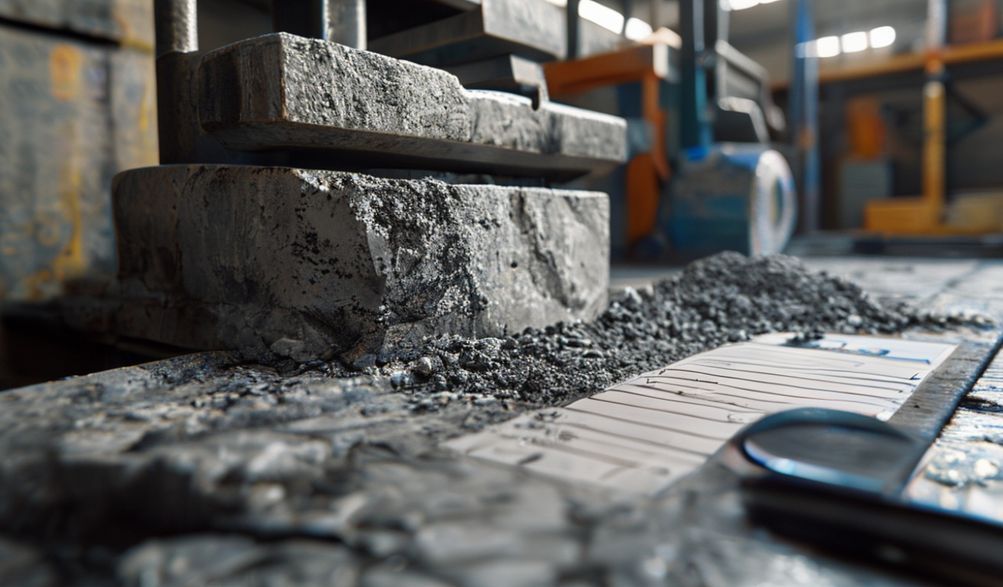
Panduan Lengkap Kode HS Bea Cukai untuk Mesin Pembuat Blok
Pengantar
Menavigasi dunia perdagangan internasional yang kompleks bisa terasa seperti teka-teki berisiko tinggi, terutama saat memindahkan mesin berat seperti peralatan pembuat blok. Inti dari teka-teki ini terletak pada sederetan angka yang sederhana namun kuat: kode Sistem Harmonisasi (HS). Bagi importir dan eksportir mesin pembuat blok, mengidentifikasi kode ini dengan benar bukan sekadar formalitas birokrasi—ini adalah fungsi bisnis kritis yang secara langsung memengaruhi laba dan keandalan rantai pasokan Anda.
Mengklasifikasikan mesin Anda secara salah dapat memicu serangkaian masalah: bea cukai tak terduga, penundaan pembebasan yang mahal, penyitaan pengiriman, dan sanksi keuangan yang berat. Kebingungan ini dapat dimengerti; dengan ribuan klasifikasi, menemukan kode yang tepat untuk "mesin pembuat blok beton dengan pengembalian palet otomatis" bisa menjadi hal yang menakutkan.
Panduan ini memotong kerumitan. Kami akan memberikan Anda panduan yang jelas, berwibawa, dan dapat ditindaklanjuti untuk mengklasifikasikan mesin pembuat blok Anda secara akurat. Tujuan kami adalah memberdayakan Anda untuk melayani kepabeanan dengan lancar, mengoptimalkan pembayaran bea, menghindari penundaan, dan memastikan peralatan vital Anda tiba di tujuan tanpa gangguan yang mahal.
Apa itu Kode HS dan Mengapa Penting untuk Mesin Pembuat Blok Anda?
Sebelum kita menyelami digit spesifik untuk mesin Anda, mari kita bangun pemahaman dasar tentang apa itu kode HS dan mengapa memastikan keakuratannya adalah hal yang mutlak.
Sistem Harmonisasi (HS) Dijelaskan
Bayangkan Sistem Harmonisasi sebagai bahasa universal perdagangan global. Ini adalah metode numerik standar, yang dikembangkan dan dikelola oleh Organisasi Kepabeanan Dunia (WCO), untuk mengklasifikasikan hampir setiap produk yang diperdagangkan melintasi batas negara.
- Standar Global:Digunakan oleh lebih dari 200 negara dan ekonomi.
- Tujuan Inti:Ini menjadi dasar untuk tarif bea cukai, statistik perdagangan internasional, dan banyak peraturan perdagangan.
- Struktur:Kode HS biasanya berupa angka 6 digit. Dua digit pertama mengidentifikasi Bab (misalnya, 84 untuk mesin), dua digit berikutnya menentukan Pos, dan dua digit terakhir merinci Sub-pos. Negara-negara kemudian menambahkan digit tambahan (biasanya 2-4) untuk spesifikasi nasional lebih lanjut, sehingga membentuk kode 8 hingga 12 digit.
Konsekuensi dari Kode HS yang Salah
Mengklasifikasikan mesin pembuat blok Anda secara salah adalah risiko yang tidak boleh diambil oleh bisnis mana pun. Dampaknya melampaui sekadar kesalahan dalam dokumen.
- Keterlambatan yang Mahal dan Biaya Penyimpanan:Bea cukai akan menahan pengiriman Anda untuk klarifikasi. Setiap hari barang tertahan di pelabuhan atau bandara akan menimbulkan biaya demurrasi dan penyimpanan, yang menggerogoti margin keuntungan Anda.
- Denda Keuangan:Membayar bea kurang dapat mengakibatkan denda yang besar, pembayaran kembali dengan bunga, dan pemeriksaan. Membayar bea berlebih berarti Anda meninggalkan uang di meja tanpa perlu.
- Risiko Hukum dan Kepatuhan:Dalam kasus yang parah, klasifikasi yang salah dapat dianggap sebagai penipuan kepabeanan, yang mengakibatkan tindakan hukum, penyitaan kiriman, dan hilangnya hak impor.
- Gangguan Rantai Pasokan:Mesin yang tertunda berarti proyek yang tertunda, pekerja yang menganggur, dan kontrak yang rusak dengan klien Anda, merusak reputasi dan pendapatan Anda.
Menentukan Kode HS yang Tepat untuk Mesin Pembuat Blok
Menemukan kode yang tepat adalah proses yang logis. Dengan memahami prinsip dan struktur HS, Anda dapat dengan yakin menentukan di mana peralatan Anda termasuk.
Mesin Klasifikasi Inti Prinsip
Proses klasifikasi diatur olehAturan Umum Penafsiran (GRIs)Untuk mesin pembuat blok, kami terutama mengandalkan:
- GRI 1: Classification is determined first by the wording of the headings and any relevant Section or Chapter notes. This means we look for the heading that most accurately describes the product.
- Function Over Form: Machinery is generally classified by its principal function. A block making machine’s core function is to shape or mold mineral materials (like concrete, cement, or clay) into blocks. This functional description is our key.
Navigating Chapter 84: Nuclear Reactors, Boilers, Machinery
Most industrial machinery, including your block making equipment, is found in Section XVI (Chapters 84 & 85) of the HS. Chapter 84 is dedicated to machinery and mechanical appliances.
Our journey to find the correct code leads us through this chapter, looking for the most specific description of our machine’s purpose.
Key Heading 8474: Machinery for Working Mineral Materials
This is the destination for block making machines. Heading 8474 is precisely defined as:
“Machinery for sorting, screening, separating, washing, crushing, grinding, mixing or kneading earth, stone, ores or other mineral substances, in solid form…; machinery for agglomerating, molding or shaping mineral products in solid form…”
The second part of this description is the perfect fit: “machinery for… molding or shaping mineral products in solid form.” Whether it’s concrete, cement, or fly ash, a block making machine performs this exact function.
Sub-Heading Analysis: 8474.80 vs. 8474.90
Within Heading 8474, we reach the critical 6-digit level. Here, the distinction is clear:
- 8474.80: This covers the machines themselves for “molding or shaping” mineral products. This is the sub-heading for complete block making machines.
- 8474.90: This is designated for parts of the machinery falling under heading 8474. This includes spare parts and accessories.
Therefore, the universal 6-digit HS code for a block making machine is 8474.80.
Common HS Code Scenarios for Block Making Machines
Let’s apply this knowledge to real-world scenarios you’re likely to encounter. This practical application builds confidence and trust in the classification.
Fully Automatic Concrete Block Making Plant
A fully integrated plant with automatic material feeding, mixing, molding, curing, and palletizing systems is still performing the core function of shaping mineral products.
- Likely Classification: 8474 80 00 (The final two zeros are common placeholders at the 8-digit level; always check your national tariff).
- Poin Utama: The complexity or automation level does not move it out of this heading. Its principal function remains “molding or shaping.”
Manual or Semi-Automatic Block Making Machine
From a simple manual press to a semi-automatic machine with a hydraulic system, the principle remains unchanged.
- Likely Classification: 8474 80 00
- Poin Utama: The heading is based on function, not the degree of automation. All block making machines that mold mineral substances belong here.
Spare Parts and Accessories (Molds, Vibrators, Control Panels)
This is a crucial distinction. The molds, hydraulic pumps, vibration motors, and electronic control panels designed specifically for your block making machine are not classified as the machine itself.
- Likely Classification: 8474 90 00 (for parts).
- Poin Utama: Always classify parts separately on your commercial invoice. Misclassifying parts as a complete machine (or vice versa) is a common and costly error.
Mobile Block Making Machines on a Trailer
This scenario introduces potential complexity. While the unit is mobile, classification typically hinges on the essential character of the goods.
- Guidance: If the block making machine is a self-contained unit merely mounted on a trailer for transport, its primary function (block making) prevails. It should still be classified under 8474 80 00. However, if it’s a specially designed, integrated vehicle where the mobility is a core feature, consultation with a customs broker is essential, as Chapter 87 (Vehicles) may be considered.
How to Verify and Confirm Your HS Code: A Step-by-Step Process
While 8474 80 00 is your authoritative starting point, due diligence is required. Follow this process to verify and secure your classification.
1. Consult Your National Customs Tariff
The first six digits (8474.80) are global. You must confirm the full, nationally specific code (often 8-10 digits).
- Action: Visit the official website of your destination country’s customs authority.
- USA: U.S. International Trade Commission (USITC) Harmonized Tariff Schedule.
- UK: HM Revenue & Customs (HMRC) Trade Tariff.
- India: Central Board of Indirect Taxes and Customs (CBIC).
- EU: TARIC database.
- Metode: Use “8474 80 00” as your search term in the online tariff database.
2. Use Detailed Product Descriptions
Never simply list “block making machine” on your commercial invoice. Provide a precise technical description for your customs broker or customs authority.
- Include:
- Primary Function: e.g., “For molding concrete into hollow blocks.”
- Operation Type: e.g., “Fully automatic, hydraulic press with vibration.”
- Capacity: e.g., “Production output of 2,000 blocks per hour.”
- Material Processed: e.g., “Processes concrete mix, cement, and similar mineral substances.”
3. Seek a Binding Ruling (The Most Authoritative Step)
For high-value shipments or frequent trade, this is the gold standard for eliminating risk.
- What it is: A Binding Tariff Information (BTI)atauCustoms Ruling is a legally binding decision issued by your national customs authority on the correct classification of your specific product.
- Prosesnya: You submit a detailed application (with product literature, photos, and description) to customs. They review and issue a ruling number valid for several years.
- The Benefit: It provides absolute certainty. If customs later disputes your classification, you are protected by the ruling. It is the strongest step you can take to ensure compliance.
Partnering for Success: Working with Customs Brokers and Freight Forwarders
Even with this guide, international trade regulations are complex and ever-changing. Partnering with experts is a sign of prudent business management, not a lack of knowledge.
The Role of a Licensed Customs Broker
A licensed customs broker is your advocate and expert in the customs clearance process.
- Keahlian: They are trained and tested on classification rules, tariff schedules, and regulatory updates.
- Risk Mitigation: They can prepare your documentation, submit entries, and handle any queries or disputes with customs on your behalf.
- Efisiensi: They navigate the system daily, preventing delays and ensuring smooth clearance.
Providing Your Broker with the Right Information
To get the best from your broker, equip them with comprehensive information:
- Commercial Invoice (with your proposed HS code and detailed description).
- Detailed Packing List.
- Technical Manuals, Brochures, or Datasheets.
- Clear Photographs of the Machine.
- A Statement of the Machine’s Intended Use.
Pertanyaan yang Sering Diajukan (FAQ)
What is the most common HS code for a block making machine?
The most widely applicable HS code for a complete block making machine is 8474 80 00. This covers machines that mold or shape mineral substances like concrete or cement.
Does the HS code change for clay or fly ash block machines?
Typically, no. The heading 8474 is defined for working with “earth, stone, ores or other mineral substances.” Both clay and fly ash (a mineral by-product) fall within this broad definition. Therefore, subheading 8474 80 remains correct.
Are HS codes the same in every country?
Thefirst six digits are universal. However, almost every country adds additional digits (usually 2-4) for more granular national statistical or duty purposes. You must always confirm the full 8, 10, or 12-digit code with your destination country’s specific tariff schedule.
Who is legally responsible for the correct HS code?
Theimporter of record (the entity listed on the customs declaration) bears the ultimate legal and financial responsibility for accurate classification and duty payment. The responsibility can also fall on the exporter depending on the agreed Incoterms® rules (e.g., DDP – Delivered Duty Paid).
What should I do if I’ve been using the wrong HS code?
Do not ignore it. Consult a licensed customs broker or trade attorney immediately. They can advise you on a voluntary disclosure process with customs authorities. Proactively correcting an error can significantly reduce potential penalties and demonstrate good faith, helping you avoid more severe consequences.
Kesimpulan
Successfully navigating the customs landscape for your block making machinery hinges on one critical task: accurate HS code classification. As we’ve established, the universal starting point is 8474 80 00 for the complete machinesdan8474 90 00 for their parts and accessories.
Mastering this process protects your business from financial loss, legal risk, and operational disruption. Remember the key steps: start with the functional description, consult your national tariff, document everything meticulously, and for the highest level of assurance, seek a binding ruling from customs authorities.
While this guide provides a robust framework and expert insight, the dynamic nature of international trade makes a partnership with a licensed customs professional one of the smartest investments you can make. By combining your product knowledge with their regulatory expertise, you can ensure your block making machines—the backbone of construction projects worldwide—move across borders efficiently, compliantly, and cost-effectively.
Disclaimer: This blog post is for informational and educational purposes only. It does not constitute legal, financial, or professional customs advice. The classification of goods is complex and subject to interpretation by national authorities. Readers are strongly advised to consult with a licensed customs broker, trade attorney, or their national customs authority for binding decisions and advice pertaining to their specific shipments and circumstances.
<