
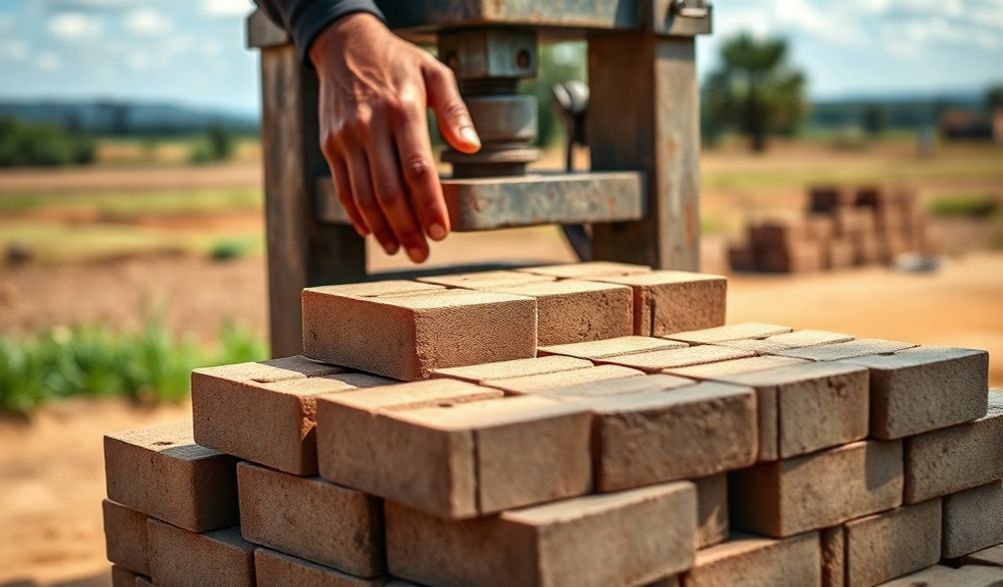
The Complete Guide to Manual Brick Making Machines in Uganda (2024)
Pengantar
Uganda’s skyline and rural landscapes are transforming. With an annual urban growth rate of over 5% and a continuous push for rural infrastructure development, the demand for affordable, quality building materials has never been higher. Yet, for countless small-scale builders, aspiring entrepreneurs, and community groups, this construction boom presents a familiar dilemma: traditional hand-molded bricks are inconsistent and laborious, while modern automated machinery carries a prohibitive price tag.
This gap between need and accessibility is where manual brick making machines shine. These ingenious, human-powered devices are more than just tools; they are engines of local empowerment, offering a practical and profitable solution rooted in Ugandan realities. This guide is built on a deep analysis of the local market, conversations with fabricators in Kampala and beyond, and an understanding of the unique opportunities and challenges within Uganda’s construction sector.
This comprehensive guide will explore the tangible benefits, various types, realistic costs, and key suppliers of manual brick making machines in Uganda. Whether you’re looking to build your own home, start a business, or undertake a community project, this resource aims to provide the foundational knowledge you need to make a confident and informed investment.
Why Choose a Manual Brick Making Machine in Uganda?
In a market sensitive to capital outlay and operational costs, manual brick making machines offer a compelling value proposition perfectly aligned with local needs.
Unbeatable Affordability and Low Investment Risk
For the vast majority of Ugandans, the initial investment is the most significant barrier to entry.
* Modal Awal yang Rendah: A quality manual brick press can cost between UGX 1.5 million to UGX 5 million, a fraction of the price of motorized or fully automated plants, which can run into tens or hundreds of millions.
* Biaya Operasional yang Dapat Diabaikan: These machines require no electricity, diesel, or complex engine maintenance. Your primary “fuel” is human effort, making them immune to grid outages and fuel price volatility. This dramatically lowers the break-even point for any venture.
Empowerment and Job Creation
This technology is inherently democratizing. It aligns perfectly with national goals for youth employment and economic inclusion.
* Entrepreneurship Catalyst: A single machine can form the core of a small business. Youth groups, women’s cooperatives (like those supported by various NGOs across Uganda), and individual artisans can produce and sell bricks directly to their communities.
* Skill Development: Operating and maintaining the machine builds valuable technical and business skills, fostering economic resilience at a grassroots level.
Consistent, High-Quality Bricks for Sturdy Construction
The inconsistency of traditional sun-dried, hand-molded bricks is a major weakness in construction.
* Uniformity is Key: Manual machines apply consistent pressure, producing bricks or blocks that are identical in size, shape, and density. This uniformity leads to:
* Straighter, stronger walls.
* Less mortar usage (especially with interlocking types).
* Improved structural integrity and safety of buildings.
* Kekuatan Terkendali: By precisely mixing soil with a stabilizer like cement, you can reliably produce Stabilized Soil Blocks (SSBs) with compressive strengths suitable for permanent housing, as endorsed by the Ministry of Works and Housing guidelines.
Mobility and Suitability for Rural Areas
Uganda’s development is not confined to cities. Manual machines are ideal for rural contexts.
* Portabilitas: Most units can be loaded onto a pickup truck or even transported by boda-boda with disassembly, enabling on-site production.
* Off-Grid Operation: They unlock brick production in areas with unreliable or no electricity, putting construction material manufacturing directly in the hands of remote communities for schools, clinics, and homes.
Types of Manual Brick Making Machines Available in Uganda
Understanding the different technologies available is crucial to matching the machine to your project.
Manual Interlocking Brick Presses (e.g., Makiga, Hydraform-style)
These lever-operated presses compress a mixture of damp soil and a small percentage of cement to form interlocking blocks.
* The Interlocking Advantage: The blocks have grooves and tongues that lock together vertically and horizontally.
* Mortar Reduction: Can reduce mortar use by over 50%, saving significant cost.
* Konstruksi Lebih Cepat: Easier alignment leads to quicker wall raising.
* Improved Stability: The interlock provides better resistance to lateral forces.
* Terbaik Untuk: Producing Stabilized Soil Blocks (SSBs). Ideal for residential housing, perimeter walls, and community buildings. Brands like Makiga Engineering (from Kenya) are well-known in the region.
Manual Concrete Block/Brick Molds (Stationary and Mobile)
These are the most common types found with local fabricators in Kampala, Jinja, and Mbarara.
* “Egg-Layer” or Mobile Machines: The operator fills a mold on the machine, then the machine is lifted and moved (“lays an egg”), leaving the block to cure on the ground. It then cycles to the next spot.
* Output Variety: Can be configured to produce hollow blocks (for lighter weight and insulation), solid blocks, and paving slabs.
* Proses: Requires a well-mixed concrete blend (cement, sand, aggregate). Strength is high but material cost is also higher than SSBs.
Manual Clay Brick Extruders and Molds
This technology modernizes traditional clay brick firing.
* Fungsi: A manual extruder forces prepared clay through a die to form a continuous column, which is then cut into individual bricks before sun-drying and kiln-firing.
* Manfaat: Produces bricks of a much more consistent size and shape than hand-molding, improving the quality of fired bricks.
* Pertimbangan: Requires a good source of clay and access to a kiln for firing.
Choosing the Right Type for Your Project
Use this simple matrix to guide your decision:
| Factor | Interlocking Press | Concrete Block Mold | Clay Extruder |
| :— | :— | :— | :— |
| Primary Material | Local Soil + 5-10% Cement | Cement, Sand, Aggregate | Clay |
| Best Project Scale | Small to Medium | Small to Large | Medium (if kiln available) |
| Key Benefit | Low material cost, mortar saving | High, proven strength | Traditional look, good consistency |
| Ideal Untuk | Affordable housing, DIY projects | Commercial buildings, rental units | Projects requiring fired brick aesthetic |
Key Considerations Before Buying in Uganda
A successful investment requires more than just choosing a machine. It demands local knowledge.
Assessing Your Local Soil Quality
For SSB production, your soil is your main ingredient. Its suitability is non-negotiable.
* The Test is Essential: Do not guess. Simple soil tests can determine the clay, silt, and sand composition. The right mix is needed for proper compaction and strength.
* Where to Get Help:
* Local Universities: Makerere University’s Department of Agricultural Engineering or Civil Engineering can often provide guidance.
* The Ministry of Water and Environment (MWE) has soil data and resources.
* Some reputable suppliers offer basic soil testing as part of their service.
* Stabilisasi: Unsuitable soil can often be “corrected” by adding a stabilizer (typically 5-10% Ordinary Portland Cement) to achieve the required strength.
Production Capacity & Labor Requirements
Set realistic expectations for output.
* Daily Output: A well-organized 3-4 person team using a manual interlocking press can produce 300-500 blocks in an 8-hour day. A concrete block mold operation might produce 150-250 blocks due to the heavier mix and curing process.
* Team Structure: You need people for:
* Material preparation (sieving soil, mixing).
* Operating the press/mold.
* Handling and curing the green blocks.
* Quality control and site management.
Total Cost of Ownership: Beyond the Sticker Price
Budget for all expenses to avoid surprises:
1. Machine Price: UGX 1.5M – UGX 5M+.
2. Transportation: Cost to deliver to your site.
3. Bahan Baku: Cement (a major cost), soil, sand, aggregate.
4. Tenaga Kerja: Wages for your production team.
5. Site Prep: A level, sheltered area for production and curing.
6. Area Penyembuhan: Space and materials (plastic sheeting, water) for proper block curing.
Where to Buy: Suppliers, Dealers, and Local Fabricators
This is where deep local knowledge matters most.
* International Dealers: Companies distributing brands like Makiga have a presence in Kampala. They offer tested designs but may have higher prices and longer lead times for spare parts.
* The Local Fabricator Ecosystem – Your Best Bet: Across Uganda, skilled metal workshops have mastered the fabrication of these machines. This is a critical advantage for the Ugandan buyer.
* Affordability: Locally fabricated machines are typically 20-40% cheaper.
* Kustomisasi: They can modify designs to suit your specific needs.
* Spare Parts & Support: Getting a replacement part is a quick trip to the workshop, not an international order. This drastically reduces downtime.
* Verifying Credibility: Ask for references from past clients, inspect the weld quality and materials used, and explicitly discuss after-sales service and warranty.
Step-by-Step: Operating & Maintaining Your Machine
Proper operation ensures quality bricks and a long machine life.
Site Setup and Raw Material Preparation
- Choose a flat, shaded area near your raw materials.
- For SSBs: Sieve soil to remove stones and organic matter. Mix soil with the correct percentage of cement (e.g., 8%) while slightly damp. The “ball test” (a handful of mix should hold its shape when squeezed) is a good field check.
- For Concrete Blocks: Use a consistent mix ratio (e.g., 1:3:5 for cement:sand:aggregate for hollow blocks) and mix thoroughly.
The Brick Production Cycle
- Isi: Place the mixed material into the machine’s mold chamber.
- Kompres: Apply steady, firm pressure using the lever. For interlocking presses, this compresses the block to its final density.
- Keluarkan: Release the block onto a pallet or level, prepared ground.
- Repeat: Move the machine (if mobile) and repeat the process.
Proper Curing and Storage for Maximum Strength
Curing is not drying; it is a chemical process essential for strength.
* Keep Blocks Moist: For at least 7-14 days, blocks must be kept damp. Cover them with plastic sheeting or wet sacks, and water them regularly. Uganda’s sunny climate makes this step crucial—rapid drying causes weak, brittle blocks.
* Handle with Care: Fresh blocks are fragile. Do not move them for at least 48 hours.
* Storage: After curing, store them under cover off the ground.
Essential Maintenance Tips for Longevity
- Harian: Clean all parts of dried concrete or soil after use. Lubricate all moving pins, hinges, and bearings with used engine oil.
- Mingguan: Check for loose bolts and nuts. Inspect the mold for wear or damage.
- Musiman: During the rainy season, ensure the machine is stored undercover to prevent rust.
Success Stories and Applications in Uganda
The proof of this technology is visible across the country.
Building Affordable, Durable Homes
Countless homeowners are using manual presses to build their own houses incrementally. By producing SSBs on-site, they slash material costs by up to 40% compared to fired bricks, making homeownership more attainable.
Community Projects: Schools, Clinics, and Water Tanks
Organizations like the Good Earth Trust have championed interlocking SSB technology for community-led projects. Villages collectively produce blocks to construct rainwater harvesting tanks, school classrooms, and health centre latrines, building assets and technical capacity simultaneously.
Entrepreneurial Ventures: Starting a Brick Supply Business
The business model is straightforward:
* Investasi: Machine, raw materials for first batch, labor.
* Produksi: Target 400 blocks/day.
* Pricing: Sell interlocking SSBs at UGX 800 – UGX 1,200 per block (market dependent).
* Break-Even: With disciplined operation, many small ventures report covering their initial machine investment within 4-8 months of steady sales.
Bagian FAQ
Q1: What is the price range for a good manual brick making machine in Uganda?
Prices vary by type and source. Expect UGX 1.5 million to UGX 3.5 million for a locally fabricated interlocking press or concrete block mold. Branded imports may start from UGX 4 million.
Q2: Can I use the soil from my land to make bricks? How do I know if it’s suitable?
You likely can, but it must be tested. The simple “sedimentation jar test” gives a basic composition. For a guaranteed result, seek a professional test from a local technician or institution to determine the needed cement percentage.
Q3: How many bricks can I make in a day with a manual machine?
A dedicated 3-4 person team can produce 300-500 interlocking soil blocks or 150-250 concrete blocks per day, accounting for mixing, production, and handling time.
Q4: What is the difference between interlocking blocks and regular concrete blocks?
Interlocking blocks (often SSBs) lock together with minimal mortar and are made primarily from soil. Regular concrete blocks (hollow/solid) require full mortar bedding and are made from cement, sand, and aggregate. Interlocking blocks are cheaper material-wise; concrete blocks are typically stronger.
Q5: Where can I get training on using and maintaining these machines in Uganda?
Many local fabricators offer basic training upon purchase. NGOs like Good Earth Trust occasionally run workshops. Also, inquire with the Uganda Water and Sanitation Network (UWASNET) or local vocational training institutes for related construction technology programs.
Q6: Are bricks made with manual machines strong enough for multi-story buildings?
For single-story buildings, properly made SSBs and concrete blocks are more than adequate. For multi-story buildings (2+ stories), the mix design, block quality, and engineering must be precise. Consult a qualified structural engineer. Generally, high-strength concrete blocks are used for load-bearing walls in such cases.
Kesimpulan
Manual brick making machines represent more than just a piece of equipment; they embody a practical, sustainable, and empowering approach to meeting Uganda’s construction needs. They bridge the gap between ambition and affordability, putting the power of production directly into the hands of individuals and communities.
The path forward is clear. Begin by carefully assessing your specific project goals, testing your soil, and creating a realistic budget that includes all ownership costs. Then, engage with the vibrant network of local Ugandan fabricators—their expertise, affordable pricing, and accessible after-sales support are invaluable national assets. This guide, rooted in the realities of the Ugandan context, is designed to help you navigate this process with confidence.
Have you used a manual brick making machine in Uganda? Share your experiences or questions in the comments below. Ready to take the next step? We recommend contacting several local fabricators for consultations and live demonstrations to see which machine best fits your vision.
<