
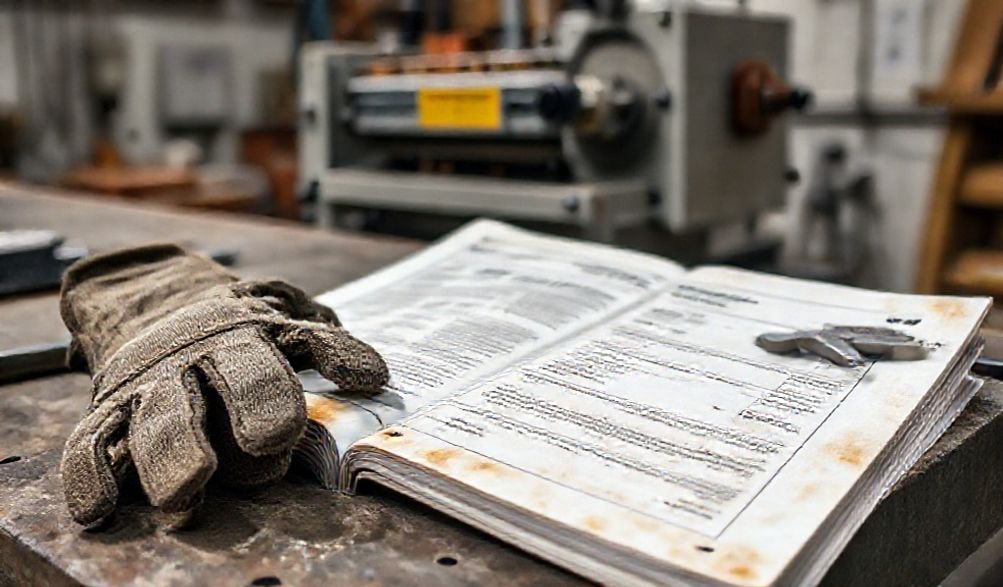
Panduan Lengkap Manual Mesin Bata Interlock: Pemasangan, Pengoperasian & Perawatan
Pengantar
Apakah Anda menatap mesin bata interlock baru Anda, dengan manual di tangan, merasakan ketakutan? Atau mungkin mesin Anda tidak berkinerja optimal, dan jawaban di buku panduan terasa samar dan tidak membantu? Anda tidak sendirian. Dalam pengalaman kami selama bertahun-tahun di bidang ini, kami menemukan bahwa manual resmi adalah alat yang paling kritis—namun juga paling sering disalahpahami atau diabaikan—untuk setiap operasi.
Dokumen ini bukan sekadar upaya terakhir untuk pemecahan masalah; ini adalah cetak biru dasar untuk produktivitas, keamanan, dan pengembalian investasi finansial Anda. Panduan komprehensif ini berfungsi sebagai penerjemah ahli dan pendamping Anda. Kami akan menguraikan istilah teknis menjadi langkah-langkah yang dapat ditindaklanjuti, memberikan tips teruji di lapangan yang sering kali tidak disebutkan, dan membekali Anda dengan pengetahuan untuk beralih dari operasi dasar ke penguasaan sejati. Baik Anda sedang membuka kotak mesin pertama Anda atau seorang profesional berpengalaman yang bertujuan mengoptimalkan hasil dan meminimalkan waktu henti, anggaplah ini sebagai suplemen penting untuk panduan resmi.Panduan Mesin Bata Saling Mengunci.
Mengapa Manual Mesin Anda Tidak Bisa Ditawar untuk Kesuksesan
Sebelum kita menyelami rincian setiap bagian, penting untuk menempatkan peran manual ini dengan tepat. Memandangnya sekadar sebagai referensi adalah kesalahan yang mahal harganya. Dalam segala hal, manual ini adalah kitab operasional Anda, dan instruksinya tidak bisa ditawar demi kelangsungan bisnis yang berkelanjutan.
Keselamatan Pertama: Melindungi Tim dan Investasi Anda
Bagian keselamatan bukanlah sebuah saran; itu adalah perintah. Mengabaikannya membawa konsekuensi yang serius.
* Protokol Kritis: Your manual details essential procedures like Lockout/Tagout (LOTO) for maintenance, which prevents accidental energization. It explicitly lists required Personal Protective Equipment (PPE)—such as safety glasses, gloves, and steel-toe boots—for a reason.
* The Stakes: Overlooking these protocols can lead to catastrophic outcomes, from crush injuries and electrical shocks to long-term hearing damage from unmitigated noise. Beyond human cost, such incidents often cause irreversible damage to expensive hydraulic and electrical components, leading to massive, unplanned capital expenditure.
Maximizing Machine Lifespan and Performance
Every procedure in the manual is engineered to balance performance with component longevity.
* Preventing Wear: Proper startup sequences allow hydraulic oil to warm and circulate. Correct compaction settings prevent excessive stress on the vibrator motors and frame. Following these steps isn’t pedantic; it’s what prevents a minor $50 seal failure from becoming a $2,000 hydraulic pump catastrophe.
* Kontrol Kualitas: Consistent, high-quality bricks are a direct function of following the manual. The specified vibration duration, pressure settings, and material ratios are calibrated to achieve optimal density and interlock strength. Deviating from these to “speed things up” invariably leads to brittle, out-of-spec bricks that fail in the field, damaging your reputation.
Warranty and Liability: Your Legal Safeguard
The manual is also a legal document that protects you.
* Warranty Validity: Manufacturers require proof of adherence to scheduled maintenance and proper operation as outlined in the manual to honor warranty claims. A failed component can be denied coverage if your maintenance logs don’t align with their prescribed schedule.
* Due Diligence: In the unfortunate event of a workplace accident, regulatory bodies will first ask for the manual and your training records. Demonstrating systematic training based on the manufacturer’s guidelines is your primary defense against liability, showing you exercised due care.
Decoding Your Manual: A Section-by-Section Breakdown
While manuals vary by manufacturer, they generally follow a universal structure. Understanding this layout helps you find information quickly under pressure.
1. Specifications & Identification
This seems basic but is vitally important.
* Locating Model & Serial Numbers: These are typically on a metal plate affixed to the machine frame. Record them in a secure digital file and on a physical copy of your manual.
* Mengapa Ini Penting: These numbers are the absolute key to ordering the correct spare parts. A “Model X-300 hydraulic cylinder” from 2020 might have a different internal seal kit than a “Model X-300” from 2023. The serial number gives the manufacturer exact build details.
2. Installation & Commissioning
A proper foundation is not a recommendation; it’s a requirement for performance.
* Step-by-Step Guidance: The manual provides concrete specs for the foundation’s compressive strength, leveling tolerances (often within 1-2mm across the base), and requirements for electrical grounding and hydraulic hose routing.
* Expert Tip – Common Mistake: The most frequent field error we see is an inadequate or unlevel foundation. This causes frame twist, leading to uneven wear on molds and vibrators, and ultimately, bricks that won’t interlock properly. Do not skip or cheapen this step.
3. Detailed Operating Procedures
This is the core of your daily work. Don’t just read it—internalize it.
* Persiapan Bahan: It specifies the exact soil-cement ratio, aggregate size, and moisture content (usually between 8-12%). Too wet, and bricks slump; too dry, and they lack strength.
* Calibration: This section teaches you how to adjust vibration time and pressure to achieve the specified brick density (often measured in kg/cm³). Perfect calibration is the difference between a premium product and scrap.
4. Routine & Preventive Maintenance Schedule
This chart is the heartbeat of your machine’s long-term health.
* Interpreting the Chart: Tasks are broken into intervals:
* Harian: Cleaning the mold, checking hydraulic fluid levels, inspecting for loose bolts.
* Mingguan: Greasing all nipples, checking belt tensions, cleaning air filters.
* Bulanan: Inspecting hydraulic hoses for wear, verifying electrical connections.
* Annually: Changing hydraulic oil and filters, comprehensive system check.
* The Golden Rule: Adherence to this schedule is predictive maintenance. It finds problems when they are small and cheap to fix.
5. Troubleshooting & Fault Diagnosis
Use this section methodically, not randomly.
* Using the Flowchart: Start at the top with the observed symptom (e.g., “Brick not ejecting”). Follow the yes/no questions logically. It systematically isolates the cause, whether it’s material-related, hydraulic, electrical, or mechanical.
* Operator Error vs. Mechanical Failure: The chart often leads you first to operator checks (e.g., “Is moisture content correct?”). This solves a majority of issues without touching a tool. Only after eliminating these should you proceed to component checks.
Expert Tips Beyond the Manual Page
Here is the practical, hands-on wisdom gained from thousands of production hours—knowledge that complements your manual.
Raw Material Mastery for Perfect Bricks
The manual gives you a target; these tests help you hit it consistently.
* The “Hand Squeeze” Test: Take a handful of your mixed material and squeeze it firmly. It should form a ball that holds its shape without cracking and leave only slight moisture on your palm. If it crumbles, it’s too dry. If it leaves your hand wet, it’s too wet.
* Climate Adjustments: In very hot, dry climates, you may need to slightly increase water content to account for rapid evaporation. The manual’s specs are a perfect lab condition; you must adapt to your field conditions while staying within functional limits.
Daily Startup and Shutdown Checklists
Create a one-page, laminated checklist from the manual’s procedures. This prevents skipped steps during busy or distracted mornings.
Sample Daily Startup Checklist:
* [ ] Conduct visual inspection for leaks, loose parts, or damage.
* [ ] Check hydraulic oil level (sight glass).
* [ ] Ensure mold and compaction head are clean and free of hardened material.
* [ ] Lubricate mold sides with recommended release agent.
* [ ] Run machine empty for 2-3 minutes to circulate oil and listen for unusual noises.
* [ ] Test one brick with waste material to verify operation before full production.
Visual and Auditory Cues for Machine Health
Learn to “listen” and “see” your machine’s state.
* The Sound of Health: A well-tuned machine has a consistent, rhythmic hum from the vibrators and a solid thud from the hydraulic compression. A new, high-pitched whine could indicate a hydraulic pump cavitating (often due to low oil or a clogged filter). A grinding noise suggests a bearing failure.
* Visual Wear Indicators: Regularly examine the mold cavity. Early signs of wear appear as a polished, shiny surface on the leading edges. Check hydraulic cylinders for scoring or pitting. Catching these early allows for planned replacement, not catastrophic failure.
Essential Maintenance Logs and Record-Keeping
If the manual is the law, your maintenance log is the proof you followed it. This discipline separates amateur operations from professional ones.
Creating Your Digital or Physical Maintenance Log
A simple log is incredibly powerful. Track:
* Date & Machine Hours
* Service Performed (e.g., “Changed hydraulic filter”)
* Parts Replaced (include part numbers from the manual)
* Operator Notes (e.g., “Noticed minor seepage from main cylinder, will monitor”)
* Next Service Due
This log provides a history for diagnosing recurring issues and is your warranty documentation.
Tracking Brick Output and Quality for Continuous Improvement
Correlate your maintenance actions with production data.
* Create a simple weekly log tracking:
* Total bricks produced.
* Reject rate (broken, out-of-spec bricks).
* Downtime incidents and causes.
* Over time, you’ll see patterns. For example, you may find that cleaning the vibrator mounts every 200 hours, instead of the manual’s recommended 250, reduces your reject rate by 0.5%. This data-driven approach lets you optimize the manual’s guidelines for your specific operation.
Sourcing Parts and Getting Professional Support
Using Your Manual for Accurate Parts Identification
Never guess a part number. Your manual contains Parts Explosion Diagrams.
* These illustrated diagrams show every component in an assembly, each with a numbered callout.
* The accompanying list matches the number to the official part number and description.
* Always reference this diagram when ordering. Saying “I need a seal for the main cylinder” leads to errors. Saying “I need Part # X-7A-8893, the piston seal for the main compression cylinder” gets you the right part immediately.
When to Call a Technician vs. DIY Repair
Use the manual’s scope and your own skill to decide.
* DIY Repairs: Tasks explicitly outlined in the manual, such as replacing a filter, changing oil, or swapping out a standard hose fitting. These require common tools and pose minimal safety risk if LOTO procedures are followed.
* Call a Certified Technician: For any issue involving:
* Major hydraulic valve or pump disassembly.
* Electrical control panel and PLC troubleshooting.
* Structural welding or frame realignment.
* Any problem where the troubleshooting flowchart ends with “Contact authorized service.”
The manual defines the boundary. Straying beyond it risks personal injury, further machine damage, and voided warranties.
Bagian FAQ
Q1: I’ve lost my interlocking brick machine manual. What should I do?
A: Your first and most trustworthy step is to contact the manufacturer directly. Provide them with your machine’s model and serial number. Many manufacturers now host digital libraries on their official websites where you can download a PDF version. Be cautious of sourcing manuals from third-party sites, as they may be outdated, for a different model variant, or contain inaccurate translations that compromise safety.
Q2: The manual is in a language I don’t understand. Are there translation options?
A: First, check the “Resources” or “Downloads” section of the manufacturer’s global website for alternative language versions. If one is not available, investing in a professional technical translation service is highly recommended for critical documents like this. Crucially, do not rely on free, automated web translators for safety warnings or technical specifications, as nuances can be lost, leading to dangerous misunderstandings.
Q3: Can I modify my machine for higher output if I’m experienced?
A: Any modification not explicitly approved by the manufacturer and detailed in an official supplement voids the machine’s warranty and may violate safety certifications. It can create unforeseen stress points, leading to structural failure, and often disrupts the calibrated balance of vibration and pressure, resulting in poor-quality bricks. For modification inquiries, always consult the manufacturer’s engineering department or a certified industrial engineer.
Q4: How often should I completely replace the mold, not just maintain it?
A: Replacement is based on wear, not just time. Your manual provides critical wear tolerances (e.g., “mold cavity must not exceed X mm oversize”). Use precision calipers to measure the mold’s internal dimensions regularly. Replacement is necessary when wear exceeds these tolerances, which will manifest as bricks that are undersized and have a loose interlock. High-production sites using abrasive soils will replace molds more frequently than low-volume operations.
Kesimpulan
Your Panduan Mesin Bata Saling Mengunci is the cornerstone of a professional, safe, and profitable operation. It is a dynamic tool for education, a legal safeguard, and the definitive guide to your machine’s engineering. By moving beyond simply owning it to actively mastering its contents—supplemented with the disciplined record-keeping and expert insights shared here—you elevate your operation from basic functionality to optimized excellence.
Treat your manual with the respect it deserves. Keep it accessible, annotate it with your own learnings, and let it guide your daily practice. This commitment is the defining trait of an operator who prioritizes longevity, quality, and safety above all else. Start today: open your manual to the preventive maintenance schedule, review the next service due, and commit to completing it on time. Your machine—and your bottom line—will thank you for years to come.
<