
The Ultimate Guide to Hydraulic Press Clay Brick Machines: Efficiency, Process & Selection
Pengantar
The global construction industry is in a constant state of evolution, driven by an insatiable demand for durable, sustainable, and cost-effective building materials. Amidst this landscape, the humble brick remains a cornerstone. However, the methods for producing it have undergone a revolutionary shift, moving from labor-intensive, inconsistent manual processes to precision-engineered, high-output industrial operations. At the heart of this modern manufacturing revolution is a single, powerful piece of equipment: the hydraulic press clay brick machine.
This guide serves as a comprehensive, expert resource for entrepreneurs launching a brick-making venture, construction companies seeking to vertically integrate, or manufacturers aiming to upgrade their production lines. Our purpose is to demystify the technology, stripping away marketing jargon to provide a clear, authoritative, and practical examination of hydraulic press brick machines. We synthesize deep industry knowledge, technical specifications, and operational best practices to empower you with the information needed to make a confident, informed investment decision.
By focusing on education over promotion, we will explore not just the “how,” but the “why”—explaining the engineering principles that make this technology so effective. You will learn about the production process from raw material to finished product, the tangible benefits that justify the investment, the critical specifications to evaluate, and the essential maintenance practices that ensure longevity. Let’s begin by understanding the machine itself.
What is a Hydraulic Press Clay Brick Machine?
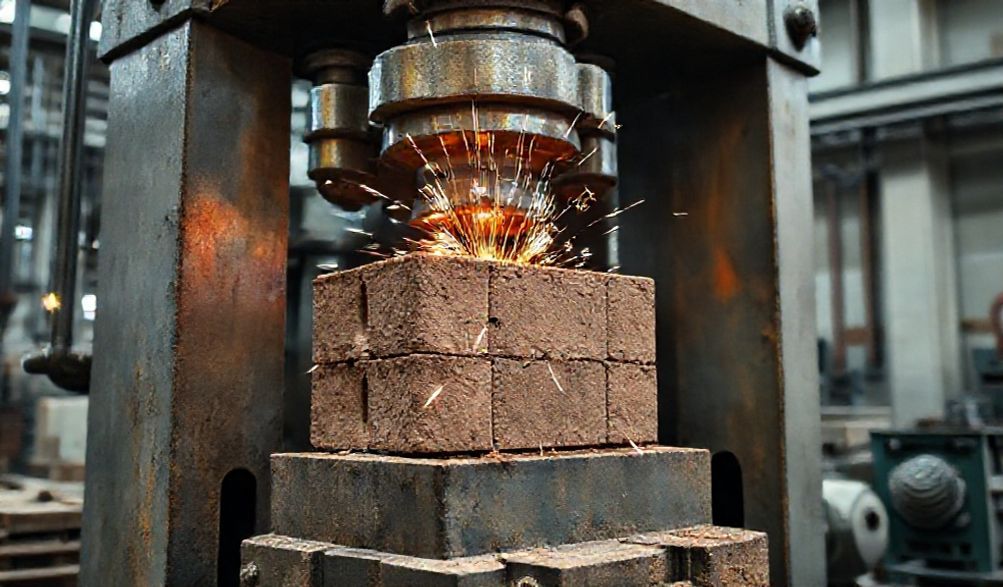
A hydraulic press clay brick machine is an industrial device designed to transform prepared clay or soil-based mixtures into dense, high-strength bricks through the application of immense, controlled hydraulic pressure. Unlike traditional extrusion or manual molding, this process is a static compaction method. Think of it as a highly sophisticated, programmable stamp. The machine takes a precisely measured amount of raw material and subjects it to concentrated force within a confined mold cavity, resulting in a brick of exceptional uniformity and structural integrity.
The core working principle is elegantly simple, leveraging Pascal’s law: pressure applied to a confined fluid is transmitted undiminished in every direction. In practice:
1. An electric motor drives a hydraulic pump, creating fluid pressure.
2. This pressure is directed to a hydraulic cylinder.
3. The cylinder’s piston extends, transferring this force to a press head.
4. The press head descends into a mold filled with raw material, compacting it with tremendous, consistent force (measured in tons).
5. After a brief holding period to allow for stress relaxation, the press retracts, and the finished “green” brick is ejected.
Komponen Utama dan Fungsinya
Understanding the major components demystifies the machine’s operation:
- Unit Tenaga Hidrolik: The heart of the system. It consists of the reservoir (holding the hydraulic oil), the pump (creating flow and pressure), valves (controlling direction and pressure), and actuators (cylinders that convert fluid power into linear motion). Its quality directly determines the machine’s reliability and force consistency.
- Bingkai Utama & Kepala Tekan: The robust, welded steel skeleton that withstands the immense pressing forces without deformation. The press head is the component that directly contacts and compresses the material within the mold.
- Mold or Die Cavity: The precision-engineered component that defines the brick’s shape, size, and surface texture. Molds are interchangeable, allowing one machine to produce different brick types (solid, hollow, interlocking, pavers). They are typically made from high-grade, hardened steel for durability.
- Sistem Kontrol: The brain of the operation. It ranges from simple manual levers to Programmable Logic Controller (PLC)-based panels with touchscreen interfaces. Automation levels dictate the operator’s role:
- Panduan: Operator controls each cycle step.
- Semi-Otomatis: Operator feeds material, but the press cycle is automated.
- Sepenuhnya Otomatis: Integrated material feeding and brick handling systems allow for continuous, operator-light production.
- Feeding and Ejection System: This can be a simple manual hopper or an automated conveyor and volumetric feeder that ensures each mold cavity receives an identical amount of material. The ejection system pushes the compacted brick out of the mold onto a pallet or conveyor for transport to the drying area.
Advantages of Using a Hydraulic Press for Brick Making
The shift to hydraulic press technology is driven by a compelling array of benefits that impact product quality, operational efficiency, and long-term economics.
Superior Product Quality
The high-pressure static compaction yields bricks with characteristics often unattainable by other methods.
- High Compression Strength and Density: Hydraulic presses can apply forces from 80 to over 400 tons, producing bricks with compressive strengths that can exceed 20 MPa (N/mm²), suitable for load-bearing construction and meeting standards like ASTM C62.
- Excellent Dimensional Accuracy and Uniformity: Because each brick is formed in an identical, rigid steel mold under the same pressure, dimensional variation is minimal. This leads to faster, neater bricklaying with less mortar usage.
- Low Water Absorption Rate: The high density leaves fewer interconnected pores, resulting in absorption rates often below 12%. This improves frost resistance, durability in harsh weather, and overall longevity of the structure.
- Smooth Surface Finish: The mold imparts a clean, sharp finish directly, often eliminating the need for secondary finishing or coating.
Enhanced Production Efficiency
- Tingkat Output Tinggi: A standard semi-automatic machine can produce 1,000 to 3,000 bricks per 8-hour shift. Fully automated lines can exceed 10,000 bricks per shift with minimal labor.
- Consistent Quality Reduces Waste: The repeatability of the process drastically lowers the rate of rejects and sub-standard bricks, maximizing raw material yield.
- Faster Curing Times: “Green” bricks from a hydraulic press have a lower initial moisture content (typically 8-12%) compared to extrusion bricks, significantly reducing the time and energy required for drying before firing or curing.
Economic & Operational Benefits
- Ketergantungan Tenaga Kerja yang Lebih Rendah: Automation reduces the number of skilled workers required per thousand bricks produced, mitigating labor cost and availability challenges.
- Efisiensi Energi: Modern hydraulic systems with variable displacement pumps only use the energy needed for the pressing cycle, unlike constantly running extruder motors.
- Long-Term Durability: Built from heavy-duty steel with fewer wearing parts than extrusion augers, a well-maintained hydraulic press offers a service life of 15-20 years or more.
- Versatilitas Bahan Baku: While optimized for clay, these machines can effectively process fly ash (an eco-friendly industrial byproduct), cement-stabilized soil, and other granular mixes, allowing for local material sourcing and cost savings.
The Brick Production Process: From Raw Clay to Finished Brick
A hydraulic press is the centerpiece of a broader production line. Understanding the full workflow is key to successful implementation.
Step 1: Raw Material Preparation
Quality begins here. Raw clay or soil is first crushed (if lumpy) and screened to remove stones and oversized particles. It is then mixed with a controlled amount of water (and any additives like sand or cement) in a pug mill or mixer until a homogeneous, plastic consistency with optimal moisture content (usually 8-12%) is achieved.
Step 2: Feeding the Mix
The prepared mix is transported (manually or via conveyor) to the machine’s feed hopper. In automated setups, a volumetric feeder ensures a consistent, precise amount of material is delivered to the mold cavity for each cycle.
Step 3: The Hydraulic Pressing Cycle
This is the core transformation.
* Isian: The mold cavity is filled with the precise volume of material.
* Kompresi: The press head descends, applying the full tonnage force for a pre-set duration (e.g., 2-5 seconds).
* Holding/Dwell Time: The pressure is maintained momentarily to allow internal stresses to equalize and prevent spring-back.
* Pengusiran: The press head retracts, and an ejection plate pushes the solid, formed green brick out of the mold.
Step 4: Green Brick Handling and Curing
The fragile green bricks are carefully transferred onto drying racks or pallets. They are then air-dried for several days to further reduce moisture. For unburnt (cement-stabilized) bricks, this is followed by a water-curing period. For burnt clay bricks, they proceed to a kiln for firing.
Step 5: Final Product Testing and Storage
Sample bricks are tested for compressive strength, water absorption, and dimensional tolerance to ensure they meet the required standards. Approved bricks are then packaged and stored for dispatch.
How to Choose the Right Hydraulic Clay Brick Machine
Selecting a machine is a significant capital decision. A methodical, requirement-driven approach is essential.
Menilai Kebutuhan Produksi Anda
- Output yang Diproyeksikan: Be realistic about your daily and annual brick needs. Factor in market demand and growth. A machine operating at 80% of its capacity is more efficient than one constantly overworked or underutilized.
- Desired Brick Type and Size: Define your primary product. Will you make standard solid bricks, hollow blocks for insulation, or interlocking bricks for dry-stack construction? Each requires specific mold designs and sometimes different pressure profiles.
- Raw Material Characteristics: Have your primary clay or soil tested. Its plasticity, shrinkage, and particle size distribution will influence the optimal moisture content and required pressing force.
Critical Machine Specifications to Evaluate
- Pressing Force (Tonnage): This is the most critical spec. Higher tonnage (e.g., 150-250 tons) produces stronger, denser bricks from harder materials. For softer clays or non-load-bearing bricks, lower tonnage (80-120 tons) may suffice.
- Tingkat Otomasi: Balance your budget with labor costs and desired output. Semi-automatic machines offer a great balance of control and productivity for most small-to-medium operations.
- Persyaratan Daya: Ensure your facility can supply the required voltage and amperage (e.g., 3-phase, 380V, 15-30 kW is common). Calculate the energy cost per brick as part of your ROI analysis.
- Mold Customization and Changeover: Verify that the manufacturer can supply and customize molds for your specific brick design. Ask about the time and tooling required to switch molds if you plan to produce multiple products.
Manufacturer & Supplier Due Diligence
The machine is only part of the equation; the supplier partnership is the other.
- Technical Support & Training: Inquire about installation supervision, comprehensive operator training, and the availability of troubleshooting support (remote and on-site).
- Reputation and Experience: Research the manufacturer’s history. How long have they been building these machines? Can they provide a list of client references, preferably in a similar region or with similar materials?
- Layanan Purna Jual: Understand the warranty terms, spare parts availability, and lead times for critical components. A visit to an existing, long-running installation can be invaluable.
Maintenance and Safety Best Practices
Proactive maintenance is non-negotiable for safety, longevity, and consistent product quality.
Routine Maintenance Checklist
- Harian: Check hydraulic oil levels and for leaks. Clean the mold, press head, and feed system of residual material. Inspect safety guards and interlocks.
- Mingguan: Check and tighten all bolts and fittings. Inspect hydraulic hoses for wear. Clean or check air filters on the power pack.
- Monthly/Oil Change Intervals: Sample and test hydraulic oil for contamination. Change oil and filters as per the manufacturer’s schedule (typically every 2000-3000 operating hours). Thoroughly lubricate all moving parts.
Ensuring Operational Safety
- Safety Guards and Interlocks: Never operate a machine with missing or disabled safety guards. These prevent access to the pressing zone during operation. Ensure all electrical and mechanical interlocks are functional.
- Pelatihan Operator: Operators must be thoroughly trained not just on controls, but on hazard recognition, emergency stop procedures, and basic troubleshooting.
- Lockout/Tagout (LOTO): A strict LOTO procedure must be followed during any maintenance, cleaning, or mold changeover. This physically isolates the machine from its energy sources to prevent accidental startup.
Pertanyaan yang Sering Diajukan (FAQ)
Q1: What is the typical production capacity of a standard hydraulic brick press?
A: Capacity varies widely. A manual/semi-automatic machine might produce 800-1,500 bricks per 8-hour shift. A robust semi-automatic model can achieve 2,000-4,000. Fully automatic lines with multiple cavities and automated handling can produce 8,000-15,000+ bricks per shift. The key variables are cycle time, degree of automation, and operator efficiency.
Q2: Can this machine use only clay, or are other materials possible?
A: Hydraulic presses are highly versatile. While ideal for clay, they are extensively used for fly ash bricks (an eco-friendly alternative), cement-stabilized soil blocks (CSEB), and even mixtures with crushed construction waste. The material must be granular and capable of being compacted; the mix formula and moisture content will need adjustment for non-clay materials.
Q3: What is the difference between a hydraulic press and an extrusion brick machine?
A: The core difference is the forming process. An extruder forces a continuous column of wet clay through a die under pressure, which is then cut into bricks. It’s a continuous process suited for high-volume production of softer clay. A hydraulic press uses static, high-pressure compaction in a closed mold. It generally produces stronger, denser, more dimensionally accurate bricks from a wider range of materials, but often at a slightly lower raw output rate than large extruders.
Q4: How much space and what foundation is required for installation?
A: A semi-automatic machine typically requires a covered area of about 50-100 sq. meters for the machine, raw material storage, and green brick staging. The machine itself needs a solid, level concrete foundation (often 300mm thick) to absorb vibration. You will also need access to 3-phase electrical power and, in some cases, compressed air for controls.
Q5: What is the expected lifespan of a well-maintained hydraulic brick machine?
A: With proper operation, routine maintenance, and timely replacement of wear parts (like seals and mold liners), the core structure of a quality hydraulic brick press can last 15 to 25 years. The hydraulic components and electrical systems may require overhauls or upgrades within that period. The lifespan is directly proportional to the care it receives.
Kesimpulan
The hydraulic press clay brick machine represents a significant leap forward in building material manufacturing, merging robust engineering with precise process control. It is a technology that directly addresses the modern demands for strength, consistency, and sustainable production. While the initial investment requires careful consideration, the long-term return—measured in superior product quality, reduced operational waste, lower labor dependency, and machine durability—is compelling.
Your journey should not end here. Informed procurement is your best strategy for success. Consult with multiple reputable manufacturers, request detailed technical specifications and quotations, and, if feasible, arrange to see a machine in operation. Prioritize suppliers who offer comprehensive technical support and training, as this partnership will be crucial to ensuring the long-term productivity and profitability of your brick-making project. By choosing the right technology and partner, you are not just buying a machine; you are investing in the foundation for a more efficient and resilient construction future.
<