
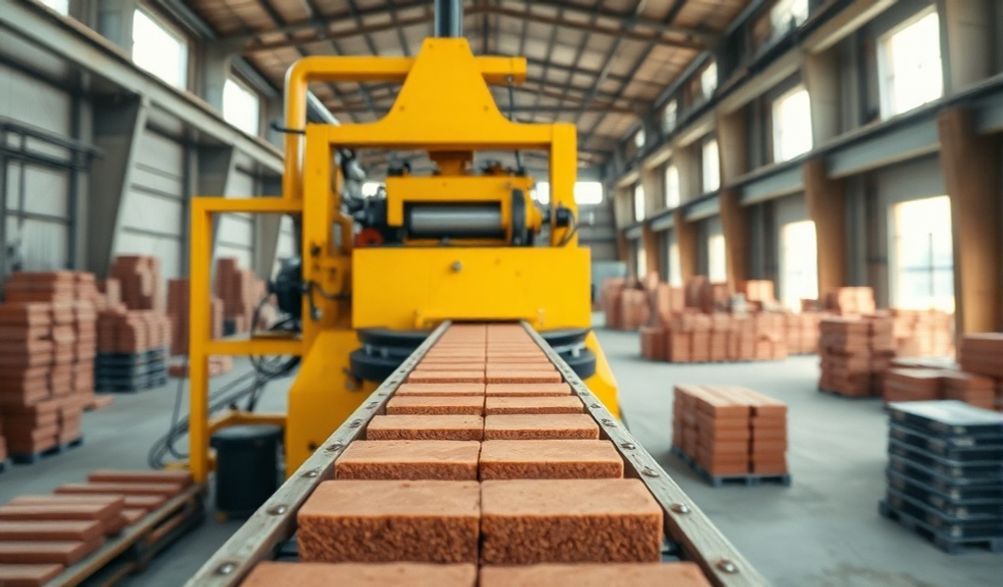
The Ultimate Guide to the FUDA Brick Making Machine: Efficiency, Quality, and Factory Solutions
In the world of construction and manufacturing, few challenges are as persistent as the demand for high-quality, consistent bricks. Project managers face tight deadlines, business owners grapple with rising labor costs, and procurement specialists hunt for equipment that won’t compromise on durability or output. The core pain point is universal: how to produce superior bricks at scale without incurring prohibitive costs or operational headaches.
Enter the specialized engineering of the FUDA brick making factory. More than just a manufacturer, FUDA has established itself as a provider of integrated industrial solutions, where robust machinery meets practical, real-world production needs. This guide serves as a comprehensive, expert analysis crafted for decision-makers. We’ll dissect the technical prowess, factory-level integration, and strategic value of the FUDA brickmaking machine, empowering you with the knowledge to make a confident investment.
You will learn about FUDA’s engineering philosophy, explore their diverse machine portfolio, understand the blueprint for a complete factory solution, and gain critical insights into selecting the right equipment for your operational and financial goals.
Understanding FUDA: Expertise in Brick Machinery Manufacturing
Before evaluating a single machine, it’s crucial to understand the manufacturer behind it. The longevity, philosophy, and standards of a company directly translate into the reliability and performance of its equipment on your factory floor.
Company Heritage and Industry Authority
FUDA is not a newcomer to the heavy machinery sector. With years of focused specialization in brick and block production technology, the company has built a reputation on a foundation of consistent performance and innovation. This heritage is a key marker of trust.
- Global Footprint: FUDA machinery operates in diverse markets worldwide, from large-scale infrastructure projects in developing regions to specialized block yards in established economies. This global presence underscores its adaptability to different materials, standards, and operational scales.
- Standar Manufaktur: Adherence to international manufacturing and quality control standards is non-negotiable. FUDA’s commitment to certified production processes ensures that every brickmaking machine that leaves the factory meets stringent criteria for safety, performance, and durability.
- Spesialisasi: Unlike general machinery suppliers, FUDA’s focused expertise in brick production allows for deeper R&D and more nuanced problem-solving, directly benefiting the end-user through more efficient and purpose-built designs.
Core Philosophy: Engineering for Real-World Factories
FUDA’s approach transcends theoretical engineering. Their core philosophy is built on practical, hands-on experience with what makes a factory profitable and sustainable.
- Durability as a Default: Factory environments are tough. Machines are subject to constant vibration, abrasive materials, and continuous cycles. FUDA designs for this reality, using reinforced frames, high-grade steels, and wear-resistant components to maximize uptime and lifespan.
- Kemudahan Perawatan: A machine that is difficult or costly to maintain is a liability. FUDA engineers prioritize accessibility. Common wear parts are designed for quick replacement, hydraulic and electrical systems are laid out logically, and comprehensive manuals are provided. This design intelligence reduces downtime and keeps your operation running smoothly.
- Adaptability to Materials: The modern brick factory doesn’t rely on just clay. FUDA machines are engineered to handle a spectrum of raw materials, including concrete, fly ash, cement, and industrial by-products. This flexibility allows factory owners to capitalize on locally available, cost-effective materials without sacrificing output quality.
Exploring the FUDA Brick Making Machine Portfolio
FUDA’s strength lies in offering a spectrum of solutions, ensuring there is a machine that aligns with your production volume, automation level, and budget. Let’s break down the primary categories.
Automatic Brick Making Machines: Peak Efficiency for High Volume
For operations where output, consistency, and labor efficiency are paramount, FUDA’s automatic lines represent the pinnacle of brick production technology.
- Output Berkecepatan Tinggi: These systems are engineered for volume, capable of producing thousands of bricks, blocks, or pavers per hour. They transform raw material into finished, stacked products with minimal human intervention.
- Kontrol Cerdas: At the heart of these systems are Programmable Logic Controller (PLC) panels. Operators can set and monitor parameters like compaction pressure, cycle time, and water content, ensuring batch-to-batch consistency.
- Fully Integrated Automation: From automated material feeding and precise mixing to molding, curing, and palletizing, the entire process is streamlined. This significantly reduces manual labor, minimizes human error, and optimizes the production floor space.
Kasus Penggunaan Ideal: Large-scale brick plants supplying major construction projects, block manufacturing factories serving regional markets, and entrepreneurs aiming for maximum production capacity from the outset.
Semi-Automatic & Manual Press Machines: Flexibility for Diverse Needs
Not every operation requires or can justify a fully automated line. FUDA’s semi-automatic and manual machines offer a compelling balance of performance, control, and affordability.
- Efektivitas Biaya: The initial capital investment is significantly lower, making these machines an excellent entry point for startups or a strategic addition for expanding product lines.
- Fleksibilitas Operasional: These machines often require more operator involvement for tasks like feeding molds or removing finished products. This allows for greater control over small, customized batches or specialized brick types.
- Lower Power & Space Requirements: They are generally less complex, consuming less energy and requiring a smaller footprint, which can be a major advantage for medium-scale or space-constrained operations.
Kasus Penggunaan Ideal: Medium-scale local builders, businesses producing specialty or interlocking paving bricks, start-ups testing the market, and factories that need a flexible secondary production line.
Key Machine Models and Technical Specifications
To demonstrate tangible expertise, here is a simplified comparison of flagship models that exemplify FUDA’s range. This table provides a snapshot to anchor your research.
| Model Name | Type | Output Capacity (Approx.) | Power Requirement | Key Features & Best For |
| :— | :— | :— | :— | :— |
| FUDA-QT10 | Fully Automatic | 8,000-12,000 blocks/shift | 45-55 kW | High-production mesin blok beton. PLC control, automatic pallet feeder. Ideal for standard hollow/solid blocks. |
| FUDA-FLY6 | Semi-Automatic | 2,500-3,500 bricks/hour | 15-18 kW | Versatile mesin bata abu terbang. Hydraulic system, interchangeable molds. Perfect for eco-friendly brick production. |
| FUDA-JKY60 | Fully Automatic | 18,000-25,000 bricks/hour | 75-90 kW | High-speed clay brick machine. Vacuum extruder, automatic cutter. Designed for large-scale clay brick and roofing tile plants. |
Note: Specifications are model-dependent. Always consult with the FUDA factory for the exact technical sheet based on your raw material and product specifications.
The Integrated FUDA Brick Making Factory Solution
Purchasing a brickmaking machine is just one step. The true transformation comes from integrating that machine into a seamless, efficient production system. This is where FUDA’s value as a solutions provider shines.
Beyond the Machine: A Complete Production Line
A standalone press is ineffective without the ecosystem that supports it. FUDA provides or seamlessly integrates all ancillary equipment for a turnkey operation:
- Persiapan Bahan Baku: Crushers, screens, and feeders to ensure consistent aggregate size.
- Mixing Technology: Twin-shaft or pan mixers that achieve a homogeneous blend of cement, aggregate, and water.
- Penanganan Material: Belt conveyors and bucket elevators to move material between stages without manual labor.
- Curing Systems: Steam curing rooms or automated stacking systems that ensure bricks gain optimal strength.
- Paletisasi & Penyimpanan: Equipment to neatly stack and transport finished products for storage or shipment.
Factory Layout and Workflow Optimization
An efficient layout is the silent partner to a powerful machine. Proper design minimizes travel distance for materials, reduces handling, and creates a logical, safe workflow.
- Linear Flow: The ideal layout follows a linear path: Raw Material Storage -> Processing/Mixing -> Molding (the brickmaking machine) -> Curing -> Stacking/Storage. This minimizes cross-traffic and bottlenecks.
- Space for Curing: Ample, organized space for bricks to cure is critical. FUDA’s expertise can help plan this area based on your production speed and curing method (natural or accelerated).
- ROI Maximization: A well-planned factory ensures the brickmaking machine is never waiting for material or space, directly maximizing your return on investment by achieving its full designed output.
Ensuring Quality from Raw Material to Finished Brick
Quality isn’t accidental; it’s engineered into every step. FUDA systems provide the control needed to produce bricks that meet or exceed ASTM, ISO, or local standards.
- Kontrol Proses: Precise control over the water-to-cement ratio, mixing time, and most critically, compaction pressure (measured in tons or MPa) is what determines the final brick’s density and compressive strength.
- Consistency is Key: Automated systems eliminate the variability of manual processes. Every brick from a FUDA line has nearly identical dimensions, weight, and strength, which is essential for modern construction.
- Final Product Integrity: The result is a brick with high structural integrity, low water absorption, and excellent durability—qualities that builders demand and that enhance your brand’s reputation in the market.
Critical Factors for Investment: A Buyer’s Guide
Armed with technical knowledge, the final step is a clear-eyed assessment of your own needs. This buyer’s guide frames the critical questions to ask.
Assessing Your Needs: Output, Product Type, and Budget
Begin with an internal audit:
* Output Target: How many bricks/blocks do you need to produce per day or month to meet market demand and business goals?
* Campuran Produk: Will you produce standard hollow blocks, solid bricks, paving stones, or specialty shapes? Different products may require different molds or machine capabilities.
* Anggaran Tersedia: Be realistic about your total investment capacity, not just for the machine but for the full setup (foundation, power, auxiliary equipment).
Total Cost of Ownership: Purchase Price, Operation, and Maintenance
The sticker price is only the beginning. The true cost includes:
* Biaya Operasional: Electrical power consumption, water usage, and labor costs for the line.
* Pemeliharaan & Suku Cadang: Budget for routine maintenance and a stock of common wear parts (molds, seals, hydraulic filters). FUDA’s durability inherently lowers these long-term costs.
* Nilai Jangka Panjang: A slightly higher initial investment in a robust, efficient FUDA machine often results in far lower costs per brick produced over a 10-15 year lifespan, thanks to higher output and lower downtime.
After-Sales Support and Training: The Pillars of Trust
This is where manufacturer trustworthiness is proven. Reliable support is not a luxury; it’s a necessity for your business continuity.
* Pemasangan & Pengoperasian: Does FUDA provide on-site engineers to supervise installation and ensure the machine runs perfectly from day one?
* Pelatihan Komprehensif: Will your operators and maintenance staff receive thorough training on operation, daily checks, troubleshooting, and safety protocols?
* Jaringan Layanan: What is the response time for technical assistance? How readily available are genuine spare parts? A strong global service network is a hallmark of a committed partner like the FUDA brick making factory.
Pertanyaan yang Sering Diajukan (FAQ)
Q1: What is the average production output of a standard FUDA automatic brick making machine?
Output varies significantly by model and product type. A standard automatic block machine (like the QT series) can produce 5,000 to 15,000 standard blocks in an 8-hour shift. High-speed clay brick lines can exceed 20,000 units per hour. The exact figure depends on block size, material, and cycle time settings.
Q2: Can a FUDA machine produce different types of bricks on the same line?
Yes, with the use of interchangeable molds. Many FUDA machines are designed to allow operators to switch molds to produce hollow blocks, solid bricks, paving stones, or even curbstones. The changeover process time varies between automatic and semi-automatic models.
Q3: What are the primary raw materials used, and are material recipes provided?
FUDA machines are versatile and can process cement, sand, aggregate, stone powder, fly ash, slag, and clay. The FUDA factory provides foundational material ratio guidelines and works with clients to fine-tune recipes based on their locally available materials to achieve the desired brick strength and quality.
Q4: How does FUDA ensure machine durability, and what is the typical lifespan?
Durability is engineered through the use of high-strength steel for frames, hardened and chromed components for high-wear areas, and premium bearings and hydraulics. With a proper maintenance schedule (as outlined in the manual), a FUDA brickmaking machine can have a productive lifespan of 15 years or more.
Q5: What kind of training and technical support does FUDA offer after purchase?
FUDA typically provides detailed operation manuals, instructional videos, and on-site training during installation and commissioning. They also offer remote technical support via phone or video call and have a network of service engineers. Availability of local service agents should be confirmed for your region.
Q6: What are the key advantages of a complete FUDA factory solution?
The key advantages are seamless compatibility (all equipment is designed to work together), single-point accountability (one supplier for all support and service), optimized performance (the line is engineered for maximum efficiency), and faster project completion (simplified procurement and installation).
Kesimpulan
Selecting a brickmaking machine is a strategic decision that impacts your production capacity, product quality, and bottom line for years to come. It’s an investment in the very foundation of your business. As we’ve explored, the FUDA brick making factory distinguishes itself by offering more than just hardware; it provides integrated solutions grounded in practical engineering, durability, and comprehensive support.
A successful brick manufacturing operation rests on three pillars: reliable equipment that minimizes downtime, intelligent factory design that maximizes workflow, and unwavering manufacturer support that ensures long-term success. FUDA’s expertise is purpose-built to deliver on all three fronts.
Ready to transform your brick production capability? Move from research to action. The next step is to engage directly with FUDA’s technical team. Contact them to discuss your specific project requirements, request detailed catalogs for the machines that match your needs, and ask for case studies or references from projects similar to yours. Let them provide a customized quotation that outlines your path to a more efficient and profitable future.
<