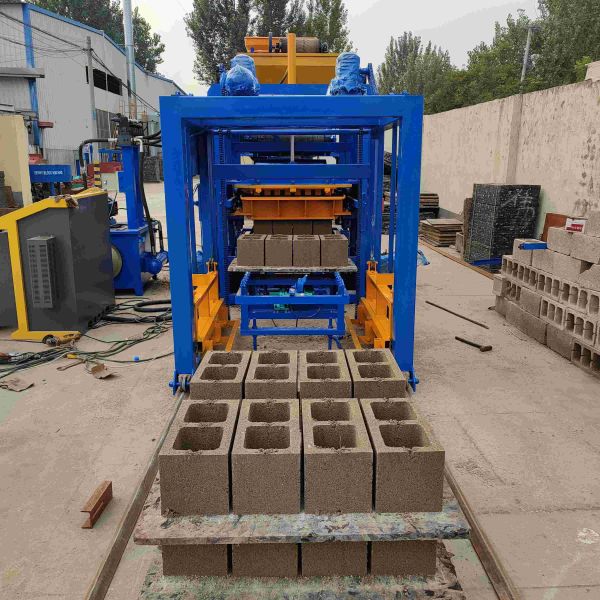
Teknologi Pembuatan Bata Abu Terbang
Pengantar
Dalam lanskap material konstruksi berkelanjutan yang terus berkembang, mesin pembuat bata fly ash telah muncul sebagai teknologi kunci, mewakili perpaduan antara kepedulian lingkungan, efisiensi ekonomi, dan inovasi industri. Bagi distributor, dealer, dan spesialis pengadaan, memahami kategori peralatan spesifik ini sangat penting untuk memenuhi permintaan pasar yang terus tumbuh akan solusi bangunan ramah lingkungan. Berbeda dengan mesin konvensional yang hanya berfokus pada agregat, mesin bata fly ash dirancang untuk memanfaatkan produk sampingan industri—abu batu bara hasil pembakaran yang dihaluskan—sebagai bahan baku utama.
Definisi Dasar dan Ilmu Material Inti
Sebuah mesin bata abu terbang adalah alat press industri khusus yang dirancang untuk memproduksi blok bangunan berkualitas tinggi menggunakan abu terbang sebagai bahan utama, biasanya dikombinasikan dengan persentase lebih kecil dari kapur, gipsum, semen, dan air. Operasinya didasarkan pada reaksi pozzolanik, suatu proses kimia yang berbeda dari pengikatan hidrolik murni pada beton biasa.
- Reaksi Pozzolanik: Mesin Kimia
- Prinsip ilmiah yang mendasarinya adalah reaksi antara abu terbang—material silika dan alumina—dengan kapur (kalsium hidroksida) di hadapan kelembapan. Reaksi ini membentuk kalsium silikat hidrat (C-S-H) dan kalsium aluminat hidrat yang stabil, yang merupakan gel pengikat yang sama ditemukan dalam semen Portland. Proses ini, dikenal sebagai reaksi pozzolanik, memberikan bata kekuatan struktural dan daya tahan seiring waktu. Peran mesin adalah menciptakan kondisi fisik optimal (kepadatan, kontak partikel yang erat) agar reaksi ini berlangsung efisien.
- Fly Ash sebagai Komponen Peningkat Kinerja
- Fly ash bukan sekadar bahan pengisi; morfologi partikelnya yang berbentuk bola meningkatkan kemampuan kerja dan kepadatan campuran, sehingga memungkinkan kebutuhan air yang lebih rendah. Kehalusan abu tersebut berkontribusi pada pembentukan struktur mikro yang padat di dalam bata, menghasilkan permeabilitas rendah, kekuatan akhir yang tinggi, serta ketahanan yang sangat baik terhadap serangan sulfat dan reaksi alkali-silika. Mesin harus dikalibrasi secara tepat untuk memanfaatkan sifat-sifat material yang melekat ini.
- Perbedaan dengan Proses Tradisional Tanah Liat Bakar dan Beton
- Teknologi ini menyimpang dari dua jalur yang mapan: teknologi ini menghilangkan proses pembakaran batu bata tanah liat yang membutuhkan banyak energi dan secara signifikan mengurangi kandungan semen Portland dibandingkan dengan blok beton standar. Batu bata tersebut diawetkan melalui uap atau kabut air pada suhu tinggi (sekitar 60-80°C) untuk mempercepat reaksi pozzolanik, bukan melalui hidrasi lingkungan atau pembakaran kiln. Proses pengawetan seperti "autoklaf" atau dipercepat ini merupakan pembeda utama dalam siklus produksi.
Perancangan Sistem dan Mekanika Operasional
Mesin batu bata fly ash dirancang untuk menangani karakteristik spesifik material halus dan bubuk serta memfasilitasi proses perawatan yang diperlukan. Sistem ini sering kali merupakan jalur yang terpadu, menggabungkan beberapa tahapan.
- Penanganan Bahan Baku dan Penimbangan Presisi
- Karena sifat fly ash yang halus dan berdebu, sistem ini memerlukan penanganan material tertutup atau semi-tertutup. Hal ini mencakup silo untuk fly ash dan bubuk lainnya (kapur, semen), sering kali dengan konveyor ulir atau sistem transfer pneumatik untuk meminimalkan emisi debu. Penimbangan presisi atau pencampuran volumetrik sangat penting, karena keseimbangan kimia antara fly ash dan kapur/semen sangat penting untuk pengembangan kekuatan yang konsisten.
- Tahap Pencampuran: Mencapai Homogenitas
- A high-intensity mixer, such as a pan mixer or a paddle mixer, is essential. It must thoroughly blend the dry powders (fly ash, lime/cement, possibly crushed bottom ash as filler) before adding a precise amount of water. The goal is to achieve a uniform, semi-dry mix with just enough moisture to initiate the pozzolanic reaction and allow for compaction, but not so much as to cause sticking or deformation.
- The Compaction Process: High-Pressure Densification
- This is the heart of the machine. A high-tonnage hydraulic press (often in the range of 80 to 300+ tons) applies immense pressure to the semi-dry mix in a steel mold. The pressure, significantly higher than that used for some conventional concrete blocks, achieves several goals:
- It compacts the fine particles to a very low void ratio, creating a dense matrix.
- It brings the reactive particles (fly ash and lime) into intimate contact.
- It forms the green brick with sufficient handling strength for transfer to curing.
Vibration is less commonly used than in aggregate-based machines, as the fine material responds best to direct static pressure.
- This is the heart of the machine. A high-tonnage hydraulic press (often in the range of 80 to 300+ tons) applies immense pressure to the semi-dry mix in a steel mold. The pressure, significantly higher than that used for some conventional concrete blocks, achieves several goals:
- The Curing System: Accelerated Strength Gain
- Post-compaction, the green bricks are not air-cured like standard concrete blocks. They are transferred to a curing chamber or stacked and covered with a curing blanket. Steam or warm water mist is applied at controlled temperatures and humidity for a period typically ranging from 18 to 24 hours. This elevated temperature curing rapidly accelerates the pozzolanic reaction, allowing the bricks to gain up to 70-80% of their final strength within a day, enabling rapid turnover and dispatch.
Product Characteristics and Market Advantages
Bricks produced from this technology possess a unique set of properties that define their market positioning.
- Superior Technical Specifications
- Kekuatan Tekan Tinggi: Can consistently exceed 10 MPa and reach up to 25 MPa, suitable for multi-story load-bearing construction.
- Penyerapan Air Rendah: Typically below 15%, and often as low as 6-8%, leading to excellent durability, reduced efflorescence, and better thermal insulation.
- Dimensional Accuracy and Smooth Finish: The fine material and high-pressure compaction yield bricks with sharp edges, uniform size, and a smooth surface that can reduce plastering costs.
- Light Weight: Compared to clay bricks of similar strength, fly ash bricks are lighter, reducing dead load on structures and easing handling.
- Compelling Economic and Environmental Propositions
- Efisiensi Biaya: The primary raw material (fly ash) is often a low-cost or negatively-priced industrial waste, substantially reducing input costs. Lower cement consumption also contributes to savings.
- Keberlanjutan Lingkungan: The process utilizes a waste product, conserving topsoil (unlike clay excavation) and reducing landfill burden. It also avoids the CO2 emissions associated with clay brick firing and significant cement production, aligning with green building certifications.
- Efisiensi Energi: The low-temperature steam curing consumes far less energy than operating a high-temperature kiln for clay bricks.
Strategic Considerations for Deployment and Investment
For distributors advising clients, several factors are crucial for successful project implementation.
- Proximity to Fly Ash Source and Quality Assurance
- The economic model hinges on reliable, consistent, and cost-effective access to fly ash, typically from a nearby thermal power plant. The chemical composition (Class F or Class C) and consistency of the ash must be verified, as variability can affect brick quality. Establishing a quality control protocol for incoming fly ash is non-negotiable.
- Machine Selection Based on Scale and Product Mix
- Machines range from semi-automatic stationary presses suitable for small to medium enterprises (SMEs) to fully automatic lines with robotic handling for large-scale production. The choice must align with target output and whether the client plans to produce standard bricks, interlocking blocks, or pavers (requiring different mold sets).
- Integration into the Circular Economy
- This technology can be positioned as a turnkey solution for power plants or industrial clusters looking to manage their fly ash output responsibly. It represents a clear case of waste-to-wealth, offering an attractive proposition for environmentally conscious investors and governments promoting sustainable industries.
Kesimpulan
The fly ash brick making machine is a sophisticated response to modern challenges of resource efficiency and sustainable construction. It is a specialized system that transforms an industrial by-product into a high-performance building material through precise engineering and controlled chemistry. For the knowledgeable distributor, this technology represents a significant opportunity to cater to a growing niche focused on green building solutions, cost-effective production, and regulatory compliance. Success in this domain requires moving beyond general equipment knowledge to a deep understanding of pozzolanic chemistry, localized material supply chains, and the specific curing infrastructure. By providing clients with holistic solutions that encompass the right machinery, technical know-how, and quality control frameworks, distributors can play a leading role in advancing sustainable construction practices while building profitable and resilient businesses for their partners.
Pertanyaan yang Sering Diajukan (FAQ)
Q1: Is a fly ash brick machine the same as a concrete block machine?
A: While they share similarities (hydraulic pressing), they are designed for fundamentally different material systems. A mesin bata abu terbang is optimized for fine, powdery mixes, employs very high pressure, and is integrated with a controlled curing system (steam/heat). A standard mesin blok beton is designed for granular aggregates, often uses vibration, and relies on ambient or simple water curing. Retrofitting one to do the other’s job effectively is usually not feasible.
Q2: What are the main quality checks for incoming fly ash?
A: Critical parameters include:
- Loss on Ignition (LOI): Measures unburned carbon content. High LOI can impair strength and increase water demand.
- Fineness: Affects reactivity and water requirement.
- Chemical Composition: Specifically the silica, alumina, and calcium oxide content, which determine its pozzolanic class and reactivity.
- Konsistensi: Batch-to-batch uniformity is vital for stable production.
Q3: Can these bricks be used for foundation and external wall construction?
A: Absolutely. High-quality fly ash bricks with low water absorption and high compressive strength (e.g., above 10-12 MPa) are perfectly suitable for load-bearing applications, including foundations, plinths, and external walls. Their durability and resistance to moisture penetration make them an excellent choice for these critical structural elements, provided they are produced to relevant national standards.
Q4: What is the typical energy consumption for the steam curing process?
A: Energy consumption varies with scale and insulation efficiency of the curing chamber. Modern, well-insulated steam curing systems can be quite efficient. The energy required to raise bricks to 60-80°C and maintain humidity is a fraction of the energy needed to fire clay bricks to over 900°C. The total energy footprint of the finished brick, including curing, is significantly lower than that of a fired clay counterpart.
Q5: How does the cost structure of a fly ash brick plant differ from a clay brick kiln?
A: The cost profiles are inverted:
- Fly Ash Plant: High initial capital in machinery and curing infrastructure, but very low variable cost for raw materials (cheap/free ash, less cement). Labor costs are moderate, and energy costs are focused on curing, not firing.
- Clay Brick Kiln: Lower initial capital for basic kilns, but very high variable costs for fuel (coal, gas), substantial cost for clay (topsoil), and often higher labor. The fly ash model offers better long-term margin stability once the capital is amortized.