
The Ultimate Guide to Block Making Equipment: Types, Costs, and How to Choose
Pengantar
In the world of construction, the humble block is a fundamental building unit. From the foundations of a family home to the walls of a sprawling commercial complex, blocks provide the essential fabric of our built environment. But behind every uniform, durable block is a critical piece of technology: block making equipment.
This machinery is the unsung hero of modern construction, transforming raw materials into precise, load-bearing components with remarkable efficiency. Whether you’re a contractor managing a large-scale development, an entrepreneur launching a block manufacturing business, or an architect specifying materials, understanding this equipment is key to controlling project timelines, budgets, and, ultimately, structural integrity.
This comprehensive guide draws on industry expertise to provide a clear, authoritative, and practical look at block making machinery. We’ll demystify the different types of equipment, break down the costs, and outline the critical factors for selection. Our goal is to equip you with the knowledge to make an informed investment that aligns perfectly with your project’s scale and ambition.
Understanding Block Making Equipment
Before diving into specifications and models, it’s crucial to grasp what this equipment does and why its quality is non-negotiable in professional construction.
What is Block Making Equipment?
At its core, block making equipment is specialized industrial machinery designed to manufacture concrete masonry units (CMUs). This includes:
- Standard concrete blocks (hollow and solid)
- Paving stones and interlocking pavers
- Kerbstones and landscaping blocks
- Specialized bricks and building units
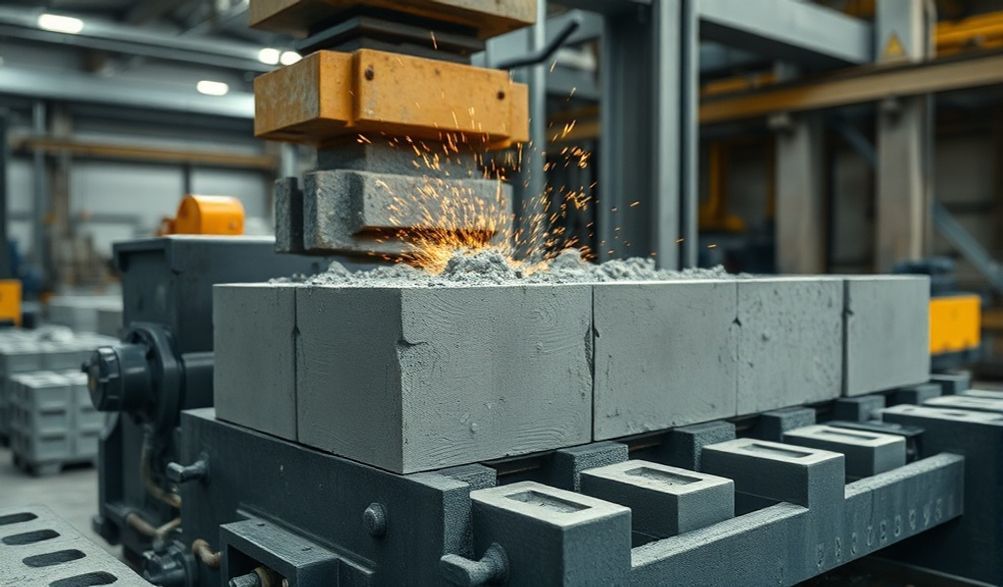
The machines work by compacting a semi-dry concrete mix—a blend of cement, aggregates (like sand or gravel), and a precise amount of water—into a steel mold under intense pressure and vibration. This process, known as vibro-compaction, creates blocks of consistent density, shape, and superior compressive strength. The two main sources of this force are sistem hidrolik (using fluid pressure) and sistem mekanis (using lever and vibration action).
The Importance of Quality Machinery in Construction
Choosing high-quality block making equipment is not just a purchase; it’s a strategic investment in your project’s success. The right machine directly influences three critical areas:
- Integritas Struktural: Superior machinery produces blocks with exact dimensional accuracy and high, uniform compressive strength. This leads to more stable walls, easier installation, and safer, longer-lasting structures.
- Efisiensi Ekonomi: Consistent block quality minimizes material waste on-site. Efficient machines also optimize production speed and reduce energy and labor costs per block, improving your overall project economics.
- Project Timelines: Reliable equipment with high output ensures a steady supply of materials, preventing costly construction delays. Automated systems can dramatically accelerate production cycles.
In short, the keahlian embedded in the machine’s design translates directly to the quality and efficiency of your build.
Types of Block Making Equipment
The market offers solutions for every need, from a small backyard project to a national infrastructure program. Your choice should be guided by your required output, level of automation, and budget.
Manual and Semi-Automatic Block Machines
These machines represent the entry point into block manufacturing, prioritizing lower capital cost over high automation.
- Ideal Untuk: Small businesses, startups, community co-ops, DIY enthusiasts, and specialized, low-volume production runs.
- Cara Kerjanya: Operators manually feed the concrete mix into the mold. The machine then provides compaction (via a lever or small hydraulic system) and vibration. The freshly formed blocks are manually removed and transported to a curing area.
- Keluaran: Typically ranges from 500 to 2,500 blocks per 8-hour shift, depending on model and crew size.
- Pertimbangan Utama: While the initial investment is lower, operational costs are labor-intensive. They offer excellent flexibility for custom blocks but require significant physical effort.
Pabrik Pembuatan Blok Sepenuhnya Otomatis
This is the pinnacle of production efficiency, designed for maximum output with minimal manual intervention.
- Ideal Untuk: Large-scale block manufacturers, industrial suppliers, and major construction firms with constant, high-volume demand.
- Cara Kerjanya: These are complete, computerized systems. They integrate automated material batching, mixing, conveying, molding, curing, and even palletizing. A single operator can often manage the entire process from a control panel.
- Keluaran: Can produce from 10,000 to over 30,000 blocks per day, depending on the plant’s configuration and cycle time.
- Pertimbangan Utama: The capital expenditure is substantial. However, this is offset by unparalleled production speed, remarkable consistency, and very low labor costs per unit, offering a strong return on investment at scale.
Mesin Pembuat Blok Seluler
These units bridge the gap between fixed-site production and the need for blocks in specific locations.
- Ideal Untuk: Large, remote construction sites (e.g., mining camps, rural housing projects), disaster relief housing, and developments where transporting finished blocks is logistically challenging or expensive.
- Keuntungan: They enable “just-in-time” production directly on-site. This eliminates long-distance transportation costs for heavy blocks, reduces breakage during transit, and allows production to perfectly match the construction pace.
- Pertimbangan Utama: They must be robust enough to withstand frequent relocation while maintaining precision. They often come in semi-automatic configurations to balance power needs with mobility.
Komponen Utama dan Cara Kerjanya
Understanding the inner workings of a block machine demonstrates kewenangan and helps you evaluate different models. Here’s how raw materials become a finished block.
The Core System: A Step-by-Step Journey
-
Feeding & Batching System: This is where precision begins. Automated weigh hoppers or volumetric batchers meticulously measure the correct proportions of cement, sand, aggregate, and water. Consistency here is vital for uniform block quality.
-
Sistem Pencampuran: The batched materials are fed into a mixer—usually a pan mixer or forced-action mixer—which blends them into a homogeneous, semi-dry concrete mix. The moisture content is critical; it must be just enough to allow compaction without making the mix sloppy.
-
Molding System (The Heart of the Machine): The mixed concrete is fed into a mold box on a vibrating table. Here, the crucial transformation happens:
- Getaran: High-frequency vibrations help the concrete mix flow into every corner of the mold and begin compaction.
- Pemadatan: A hydraulic press or mechanical head applies immense pressure (measured in tons) to the mix, squeezing out air voids and creating a dense, strong block.
- The mold is then lifted, leaving the precisely shaped “green” block on a pallet.
-
Sistem Penyembuhan: Green blocks are fragile. They are moved (manually or via conveyor) to a curing area. In advanced setups, this is a steam curing chamber (kiln), where controlled heat and humidity allow the blocks to gain over 70% of their strength within 24 hours. Proper curing is essential for durability.
-
Paletisasi & Penyimpanan: Once cured, blocks are automatically or manually stacked on pallets for easy handling, transportation, and storage before they head to the construction site.
Factors to Consider When Choosing Equipment
Making the right choice requires honest assessment and planning. This practical advice builds kepercayaan by focusing on your long-term success.
Assessing Your Production Needs & Scale
- Output yang Diproyeksikan: Be realistic. How many blocks do you need per day, month, or year? Match the machine’s capacity to your business plan or project requirements, with a little room for growth.
- Jenis & Ukuran Blok: List every product you want to make—standard 8x8x16 blocks, decorative pavers, interlocking blocks? Ensure the machine supports interchangeable molds for that variety.
- Ruang Tersedia: Don’t just consider the machine’s footprint. Account for space for raw material storage, mixing, block curing, and finished goods inventory.
Budgeting: Initial Investment vs. Operational Costs
Look beyond the sticker price. A true cost analysis includes:
- Capital Cost: The purchase price of the equipment itself.
- Operating Costs: Ongoing expenses like electricity (hydraulic systems and vibrators are power-hungry), labor, routine maintenance, and spare parts.
- Pengembalian Investasi (ROI): Calculate this by estimating your production revenue against all costs. A more expensive, efficient automatic machine may have a faster ROI than a cheaper, labor-heavy manual one at higher volumes.
Key Features for Efficiency and Durability
When comparing models, scrutinize these elements:
- Kualitas Sistem Hidraulik: Look for reputable pump and valve brands. System pressure (in tons) dictates block density and strength.
- Sistem Kontrol: A user-friendly PLC (Pengendali Logika Terprogram) with a clear touchscreen interface allows for easy operation, recipe changes, and troubleshooting.
- Kualitas Pembuatan: Inspect the frame. It should be made of heavy-duty, reinforced steel to withstand constant vibration and pressure without warping.
- Warranty & After-Sales Support: This is critical. Ensure the manufacturer or supplier offers comprehensive technical support, operator training, and readily available spare parts. Downtime is lost profit.
FAQ: Your Block Making Equipment Questions Answered
Q1: What is the average cost of a block making machine?
A: There’s no single “average” due to the wide range. Small manual machines can start from $3,000 to $15,000. Robust semi-automatic models typically range from $25,000 to $80,000. Large, fully automatic production lines can cost anywhere from $150,000 to over $500,000, depending on capacity and sophistication.
Q2: Can I produce different block types with one machine?
A: Absolutely. Most machines are sold with a standard mold, but the key feature is interchangeable mold boxes. By purchasing additional molds, a single machine can produce hundreds of different block, paver, and brick styles, making your operation highly versatile.
Q3: What is the typical lifespan of this equipment?
A: With proper maintenance, a high-quality machine from a reputable manufacturer can last 15 to 25 years. The lifespan hinges on the wear of key components like the hydraulic system, vibration motors, and mold liners, which are all replaceable.
Q4: How important is after-sales service?
A: It is one of the most critical factors in your decision. Machinery requires maintenance. A supplier with a strong local or responsive international support network ensures you can get spare parts quickly and access technical help, minimizing costly production stoppages.
Q5: What raw materials are needed, and how is mix design determined?
A: The basic formula is cement, a fine aggregate (like sand), a coarse aggregate (like crushed stone), and water. The specific mix design—the proportions of each—determines the block’s strength, weight, and surface finish. It is influenced by your local material properties and climate. For optimal results, consult with your equipment supplier or a concrete technologist to develop the right mix for your needs.
Kesimpulan
Selecting the right block making equipment is a foundational decision that carries significant weight for your construction project or manufacturing business. It requires balancing your immediate needs with long-term goals, carefully weighing initial costs against operational efficiency and potential for growth.
From the hands-on control of a manual press to the relentless, precise output of a fully automated plant, there is a machine engineered for every level of ambition. By prioritizing robust construction, energy-efficient operation, and—above all—reliable after-sales support from a trustworthy supplier, you do more than just buy a machine. You invest in a reliable partner for building a stronger, more efficient, and profitable future.
Let this guide serve as your roadmap, empowering you to navigate the market with confidence and the expertise to choose the equipment that will truly build your success.
<