
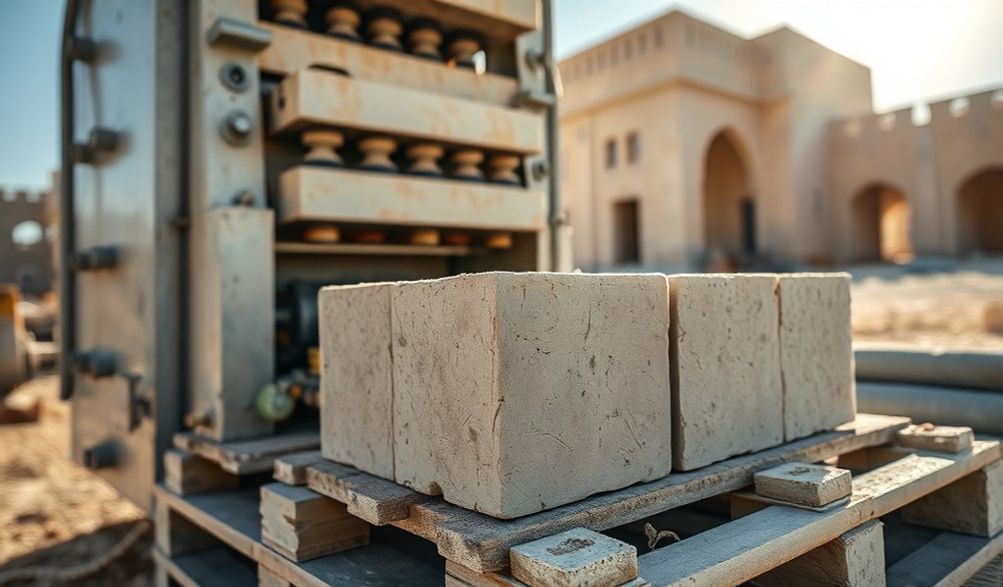
Your Complete Guide to Sourcing & Operating a Brick Making Machine in Libya
Pengantar
Libya stands at a pivotal moment. A nation rich in potential, its landscape is increasingly defined by cranes and construction sites, signaling a powerful wave of rebuilding, infrastructure renewal, and urban development. At the heart of this tangible progress is a fundamental need: a reliable, steady supply of quality building materials. For entrepreneurs, construction firms, and community leaders, this presents a critical opportunity and a pressing challenge.
The core problem is clear. Relying solely on imported bricks is fraught with logistical delays, high costs, and supply chain vulnerabilities. The solution? Establishing robust, local brick production. However, sourcing, importing, and successfully operating a brick making machine in Libya is a complex undertaking, laden with unique hurdles—from navigating customs and evaluating international suppliers to adapting to local operational conditions and ensuring a profitable return on investment.
This guide is designed to cut through that complexity. Built on a deep analysis of Libya’s construction sector, logistics landscape, and industrial realities, it provides actionable, context-specific advice. Our goal is to move beyond generic machine specifications and offer a roadmap tailored for the Libyan market, helping you make an informed, confident, and profitable investment in local manufacturing.
Understanding Libya’s Brick Manufacturing Landscape
To make a smart investment, you must first understand the market forces creating the demand. Libya’s need for bricks is not incidental; it’s driven by powerful, sustained trends.
Current Construction Demands and Material Needs
The drivers of brick demand in Libya are multifaceted and powerful:
* Post-Conflict Rebuilding: Significant efforts are underway to repair and reconstruct housing, schools, hospitals, and public buildings damaged in past conflicts. This is a primary, ongoing demand driver.
* Proyek Infrastruktur: National and municipal projects focusing on roads, utilities, and public works require vast quantities of concrete blocks and paving bricks.
* Urban Development: Population growth and economic activity are fueling new residential and commercial construction, particularly in and around major urban centers like Tripoli, Benghazi, and Misrata.
This convergence of needs creates a market where consistent, local material supply is not just convenient—it’s a competitive advantage.
Advantages of Local Brick Production in Libya
Investing in local production is a strategic business decision with clear benefits:
* Penghematan Biaya yang Signifikan: Eliminate volatile shipping fees, steep import duties, and the hidden costs of transport delays. Producing on-site or locally slashes the largest variable in material costs.
* Supply Chain Control & Speed: Your project timelines are no longer at the mercy of port congestion or international logistics. Produce exactly what you need, when you need it, dramatically accelerating construction schedules.
* Economic & Community Impact: You contribute directly to the local economy by creating jobs, developing technical skills, and keeping capital within the community. This can also foster positive relationships with local stakeholders and authorities.
* Potensi Kustomisasi: Local production allows for flexibility in brick size, strength, and composition to meet specific project requirements or regional building standards.
Types of Brick Making Machines Suitable for the Libyan Market
Choosing the right machine is about matching its capabilities to your business goals and local conditions. Here’s a breakdown of the main types suitable for Libya.
Mesin Manual & Semi-Otomatis
Ideal for entry-level entrepreneurs, community cooperatives, or specialized, low-volume production.
* Biaya:Investasi awal yang rendah.
* Tenaga Kerja: High labor requirement; output is directly tied to crew size and skill.
* Keluaran: Suitable for producing 500-2,000 bricks per day.
* Terbaik Untuk: Small workshops, producing specialty bricks (e.g., decorative), or supplementing existing construction material supply.
Mesin Pembuat Batu Bata Sepenuhnya Otomatis
The backbone of commercial brick production for medium to large-scale operations.
* Biaya: Higher capital investment, justified by output.
* Tenaga Kerja: Minimal labor needed for operation; primarily for loading raw materials and offloading finished bricks.
* Keluaran: Can produce from 8,000 to over 30,000 bricks per day, depending on the model.
* Terbaik Untuk: Dedicated brick plants supplying multiple construction sites, contractors undertaking large projects, or businesses aiming to dominate local supply.
Mesin Pembuat Bata Bergerak
A highly strategic option given Libya’s geography and project dispersal.
* Fitur Utama: Mounted on a trailer for easy relocation.
* Keuntungan: Move the production directly to the construction site, eliminating brick transport costs entirely. Perfect for remote infrastructure projects, large housing developments, or operators serving multiple regional clients.
* Pertimbangan: Typically semi-automatic or smaller automatic models.
Spesifikasi Utama Mesin yang Perlu Dipertimbangkan
Beyond type, drill into these critical specs:
* Kapasitas Produksi: Don’t just look at “bricks per hour.” Consider the machine’s sustainable daily output under local working conditions and power availability.
* Jenis-Jenis Bata: Ensure the machine can produce the blocks in demand: standard hollow blocks, solid blocks, paving bricks, and interlocking blocks for walls.
* Sumber Daya: This is crucial for Libya.
* Listrik: Cleaner and cheaper to run, but requires a very stable power supply or a substantial generator backup.
* Diesel: More independent and reliable in areas with unstable grid power, but involves higher fuel costs and maintenance.
Critical Factors for Sourcing a Machine in Libya
This is where thorough due diligence separates successful investments from costly mistakes.
Import Regulations and Customs in Libya
Navigating Libyan customs is a step you cannot afford to underestimate.
* Local Agent: Engaging a reputable Libyan clearing agent is highly recommended. They understand the latest documentation requirements, tariff codes, and procedures at ports like Tripoli, Benghazi, or Misrata.
* Dokumentasi: Be prepared with a complete set: commercial invoice, packing list, bill of lading, certificate of origin, and any manufacturer certifications (CE, ISO).
* Duties and Taxes: Budget for potential import duties and taxes. Your local agent can provide the most current estimates.
Evaluating Suppliers: Local Dealers vs. International Manufacturers
Your choice of supplier will impact your project for years.
* Local Dealers/Agents:
* Kelebihan: On-the-ground presence, potential for quicker spare parts access, and understanding of local needs.
* Kekurangan: May have limited model selection and higher markup.
* International Manufacturers:
* Kelebihan: Often lower direct cost, wider selection of models and technologies.
* Kekurangan: Risk of poor after-sales support, slow spare parts delivery, and lack of regional knowledge.
Trustworthiness Action Plan: Vet any supplier rigorously.
* Ask for and contact references from past clients in the MENA region or, ideally, Libya specifically.
* Verify business licenses and check for membership in international trade bodies.
* Insist on seeing quality certifications (CE, ISO) for the machinery.
* Get detailed, written commitments on warranty, technical support, and spare parts availability.
Logistics, Shipping, and On-Ground Delivery
Plan the journey from the factory floor to your site.
* Shipping: Machines are heavy cargo. You’ll likely need to arrange FCL (Full Container Load) or RORO (Roll-on/Roll-off) shipping. Your supplier should assist with this.
* Port Handling: Discuss who handles offloading at the Libyan port. This is often where delays and additional costs occur.
* Inland Transport: Heavy machinery requires specialized trailers and route planning. Partner with a local transport company experienced in moving industrial equipment. Consider road conditions and bridge weight limits.
Operational Setup and Best Practices in Libya
Success hinges on your operational readiness. Plan for Libyan conditions from day one.
Site Requirements and Preparation
- Ruang Angkasa: Allocate space not just for the machine, but for raw material storage, brick curing, and finished product inventory. A flat, solid, and well-drained area is essential.
- Foundation: Most automatic machines require a solid concrete foundation. Follow the manufacturer’s specifications precisely.
- Utilities: Secure your power source (grid connection with generator backup or dedicated diesel generator). Ensure a reliable water supply for mixing concrete.
Sourcing Raw Materials Locally
Your machine is only as good as the materials you feed it.
* Semen: Source from established Libyan cement plants or reliable importers. Check for consistent quality.
* Aggregates & Sand: Locate quarries and sand suppliers. Critically important: Test the sand for silt, clay, and salt content, as these can severely weaken the final bricks. Clean, coarse sand is ideal.
* Kiat: Build relationships with multiple material suppliers to avoid disruptions.
Machine Maintenance in a Challenging Environment
Libya’s dusty, arid climate demands a proactive maintenance regime.
* Harian: Clean the machine thoroughly to prevent dust and concrete buildup. Check hydraulic hoses for wear and leaks.
* Weekly/Monthly: Lubricate all moving parts as per the manual. Check and tighten bolts and electrical connections, which can vibrate loose.
* Spare Parts Strategy: Given potential import delays, create a critical spare parts inventory. Prioritize items like mold liners, hydraulic seals, and commonly worn-out sensors. Discuss this kit with your supplier.
Training Your Workforce
Do not overlook this. Proper training ensures safety, quality, and efficiency.
* Pelatihan Operator: Ensure at least 2-3 key personnel are fully trained on operation, basic troubleshooting, and daily maintenance.
* Safety Protocols: Instill strict safety practices: lockout/tagout procedures, wearing PPE, and safe material handling.
* Kontrol Kualitas: Train staff to regularly test brick strength and dimensions to maintain consistent output.
Cost Analysis and ROI for a Libyan Brick Plant
Let’s translate this into numbers. A realistic financial model is your blueprint for success.
Breakdown of Initial Investment
| Cost Component | Description & Considerations |
| :— | :— |
| Machine Cost | Price varies widely: $10,000 (manual) to $150,000+ (large automatic). |
| Shipping & Insurance | Ocean freight, insurance from origin port to Libyan port. |
| Customs & Port Fees | Duties, taxes, agent fees, and handling charges at arrival port. |
| Inland Transport | Cost to move the machine from port to your site. |
| Installation & Foundation | Civil works for the foundation and machine assembly. |
| Initial Raw Material Stock | First purchase of cement, aggregates, and sand. |
| Contingency (10-15%) | Essential for unforeseen costs. |
Operational Costs (Per Block/Brick)
To understand profitability, calculate your cost per unit.
* Bahan Baku: ~60-70% of your cost. (Cement, sand, aggregate).
* Tenaga Kerja: Wages for operators, mixers, and laborers.
* Power/Fuel: Electricity or diesel to run the machine and site equipment.
* Maintenance & Depreciation: Regular service and allocating machine cost over its lifespan.
* Contoh: Your fully-accounted cost per standard hollow block might range from 0.4 to 0.7 LYD.
Projecting Revenue and Profitability
- Market Price Research: Investigate the current selling price for bricks/blocks in your target region. Prices can vary between Tripoli, Benghazi, and southern regions.
- Gross Margin: Subtract your cost-per-block from the selling price. This is your gross profit per unit.
- Periode Pengembalian Modal: Divide your total initial investment by your estimated monthly gross profit. A well-run, medium-scale automatic plant in a high-demand area could see a payback period of 18-36 months.
Pertanyaan yang Sering Diajukan (FAQ)
Q1: What is the most reliable type of brick making machine for Libya’s climate and conditions?
A: Robustness is key. Look for machines with simple, durable designs, high-quality hydraulic systems, and protective features against dust and sand. Diesel-powered or dual-power (electric/diesel) models offer crucial reliability given power grid fluctuations. Favor manufacturers known for building equipment for harsh environments.
Q2: Can I get technical support and spare parts within Libya?
A: This must be confirmed before purchase. The most reliable path is to choose a supplier (either an international brand or a local dealer) that has a documented partnership with a technical agent in Libya or a proven, fast track record of shipping spare parts into the country. Ask for specific service level agreements.
Q3: What are the legal or regulatory requirements for setting up a brick factory in Libya?
A: Requirements can vary by municipality. You will typically need a commercial business license, industrial operation permit, and possibly environmental clearance. It is highly advisable to consult with a local business attorney or the relevant municipal industrial authority to understand all registration, zoning, and compliance obligations.
Q4: Are there government tenders or projects that prioritize locally made bricks?
A: As part of national rebuilding and economic development strategies, there is often a preference or requirement for local sourcing in government contracts. To access these opportunities, ensure your business is properly registered, network with the Ministry of Housing and Construction and local construction chambers, and actively monitor government tender portals.
Kesimpulan
Investing in a brick making machine in Libya is more than a equipment purchase; it’s a strategic commitment to participating in the nation’s reconstruction and building a sustainable, profitable business. The potential for success is significant, but it hinges on informed decision-making.
Remember, the cheapest machine is often the most expensive in the long run. Prioritize supplier reliability, realistic logistics planning, and a deep understanding of your local operational environment. By combining a quality machine with sound business practices adapted to Libya’s unique context, you can build a venture that is both financially rewarding and foundational to your community’s growth.
Ready to move forward with confidence? For a personalized assessment of your project requirements and a curated shortlist of vetted international suppliers with proven experience in the Libyan market, contact our specialist team today. Let’s build a solid foundation for your success.
<