
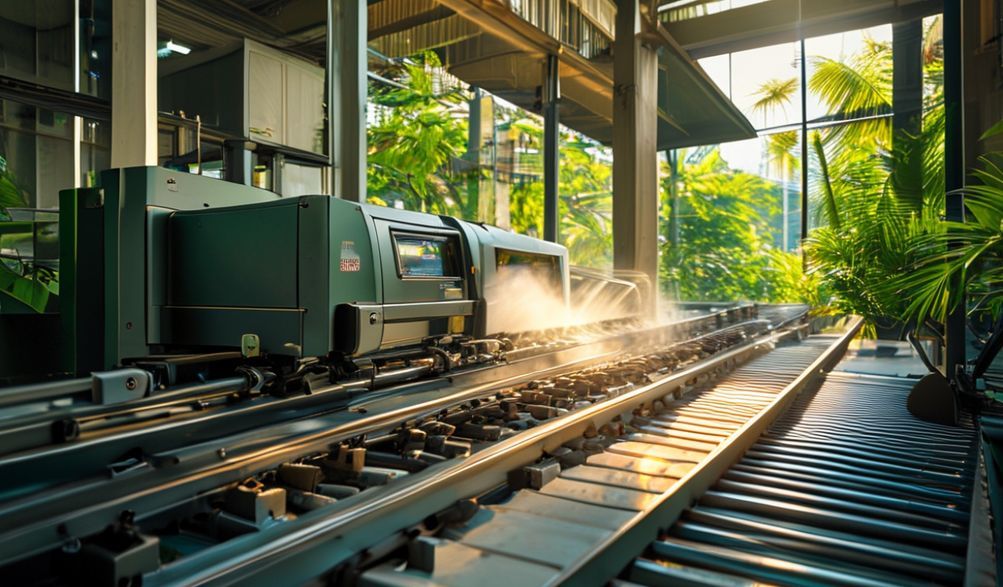
Your Ultimate Guide to Brick Machines in Malaysia: Why Choose FUDA Block Making Factory?
For over two decades, construction professionals and entrepreneurs across Malaysia have faced a critical decision: selecting the right brick and block making machinery. This choice impacts project timelines, material quality, and long-term profitability. As a leading industrial machinery specialist with direct experience in the Malaysian construction landscape, I’ve seen how the right partnership with a manufacturer like Pabrik Pembuatan Blok FUDA can transform operations.
This comprehensive guide cuts through the marketing noise. We’ll analyze the technical specifications, real-world performance, and economic factors you must consider. My goal is to provide the expert insight needed to make an informed, strategic investment in Malaysia’s competitive building materials market.
Understanding Brick and Block Making Machinery: Core Technologies
Before evaluating suppliers, it’s crucial to understand the engineering behind modern brick machines. This knowledge empowers you to ask the right questions and assess a manufacturer’s true capability.
How Modern Brick Machines Work: From Raw Material to Finished Block
Today’s block makers are marvels of industrial automation, designed for consistency and efficiency. The process, while sophisticated, follows a logical sequence:
- Pemberian Pakan & Pencampuran: Raw materials—typically cement, sand, aggregate, and water—are precisely batched and fed into a mixer. Advanced systems allow for accurate ratio control, which is fundamental to block strength.
- Pembentukan: The mixed concrete is conveyed into a mold box. Here, getaran frekuensi tinggi is applied. This critical step compacts the concrete, removing air pockets and ensuring a dense, strong block.
- Pemadatan: Simultaneously, a hydraulic press applies tremendous pressure (measured in tons) to further densify the material. The synergy of vibration and pressure is what defines a quality machine.
- Menyembuhkan: The green (freshly molded) blocks are then moved to a curing area. For high-strength, rapid production, steam curing chambers are often used, allowing blocks to gain strength in hours instead of weeks.
The entire process is governed by a Pengendali Logika Terprogram (PLC), making operations repeatable and reducing human error.
Types of Machines: Matching the Machine to Your Project Scale
Choosing the wrong type of machine is a costly mistake. Your selection should be dictated by your production volume, budget, and labor availability.
- Mesin Manual & Semi-Otomatis: These are ideal for small-scale projects, community initiatives, or startups with limited capital. They require more manual labor for feeding and block removal but offer a low entry cost.
- Mesin Pembuat Blok Sepenuhnya Otomatis: This is the heart of commercial production. Models like the FUDA QT4-15 or QT6-15 integrate material handling, mixing, molding, and stacking into one seamless line. They are designed for high-volume output with minimal manual intervention, offering the best long-term ROI for serious businesses.
- Mesin Blok Seluler: These portable units enable on-site production, eliminating transport costs for large projects. They are perfect for remote housing developments or large infrastructure sites.
- Mesin Spesialis: Beyond standard hollow blocks, the market demands variety. Look for machines that can produce:
- Batu paving
- Pembatas trotoar
- Balok padat
- Interlocking bricks (ideal for sustainable, mortar-less construction)
Why FUDA Block Making Factory Stands Out in the Malaysian Market
In a crowded marketplace, FUDA has carved a reputation for reliability. Here’s how they translate engineering excellence into practical benefits for Malaysian operators.
Proven Engineering and Manufacturing Expertise
FUDA isn’t just an assembler; it’s a manufacturer with deep roots in engineering. With a focus on continuous Penelitian dan Pengembangan (Litbang), they refine hydraulic systems and vibration technology for maximum durability and efficiency. Their manufacturing standards adhere to stringent international quality benchmarks, which is crucial for ensuring machine longevity under demanding production schedules. This commitment to core engineering translates directly to fewer breakdowns and higher uptime for your business.
Product Range and Technical Specifications for Malaysian Needs
FUDA’s catalog is built to match market demands. Popular models for Malaysia are designed with key local factors in mind:
- Daya Tahan: Components are selected to withstand high humidity and continuous operation.
- Efisiensi Energi: Optimized hydraulic and electrical systems reduce power consumption—a major operational cost.
- Kapasitas Output: Models are clearly rated (e.g., blocks per hour). For instance, a fully automatic line can produce thousands of blocks per shift, enabling you to scale operations predictably.
The key is matching a model like the QT4-15 to your specific output goals, ensuring you don’t under-invest or over-capitalize.
Adaptability to Local Materials and Construction Standards
This is where FUDA truly shines for the Malaysian context. A machine must work with what’s available locally.
- Fleksibilitas Material: FUDA machines are engineered to process blends of locally available aggregates, river sand, quarry dust, and industrial by-products like abu terbang. Using quarry dust or fly ash isn’t just possible; it’s encouraged, as it can reduce material costs and produce excellent quality blocks.
- Compliance Focus: The machine’s ability to deliver consistent pressure and vibration is what allows you to produce blocks that meet Malaysian Standard MS 7.6 for concrete masonry units. Consistent density and correct curing lead to reliable compressive strength, passing lab tests from certified bodies like SIRIM.
Critical Factors for Choosing a Brick Machine Supplier in Malaysia
Your relationship with the supplier is as important as the machine itself. Here are the non-negotiable factors to scrutinize, drawn from hard-won industry experience.
Total Cost of Ownership: Melampaui Harga Awal
The purchase price is just the first line item. Smart buyers analyze the full financial picture:
- Investasi Awal: Machine cost, shipping, import duties, and installation.
- Biaya Operasional: Electrical power consumption, labor, and raw materials.
- Maintenance & Parts: Cost and frequency of routine maintenance. Price and availability of wear parts like mold liners, mixer blades, and hydraulic seals.
- Kerangka ROI: Calculate: (Value of Annual Block Production) / (Total Annual Costs). A robust, efficient machine may have a higher upfront cost but a faster payback period due to lower downtime and higher output.
Dukungan Pasca Penjualan: Faktor Penentu Kesuksesan
A machine without support is a future headache. This is the most common pitfall.
- Local Presence: Does the supplier have a technical team or authorized agent di Malaysia (e.g., in Selangor, Johor, or Penang)? Proximity is critical for quick service.
- Spare Parts Inventory: Are common spare parts stocked locally? Waiting weeks for a part from overseas can shut down your entire operation.
- Pelatihan: Comprehensive, hands-on training for your operators on machine use, basic troubleshooting, and safety is essential. It should be standard, not an expensive extra.
Site Planning and Installation Requirements
Proper installation prevents a lifetime of operational issues. Before ordering, ensure you have:
- Ruang Angkasa: Adequate floor space for the machine, raw material storage, block curing, and finished product yard.
- Foundation: A strong, level concrete foundation as specified by the manufacturer to absorb machine vibrations.
- Utilities: Stable and sufficient electrical power supply (voltage and amperage), reliable water access, and proper drainage.
- Logistics: A clear plan for unloading and moving the machine to its final position. Confirm door sizes and access routes.
Case Study: Implementing a FUDA Machine in a Malaysian Operation
Client Profile: A mid-sized construction contractor in Johor Bahru, specializing in landed housing developments.
Challenge: The company was frustrated by fluctuating quality and costs from external brick suppliers. Delays in brick delivery were stalling project timelines, eroding profit margins, and compromising control over their own builds.
Solution: After a thorough evaluation of total cost and local support, they invested in a FUDA QT4-15 fully automatic block making machine. The decision was based on its proven output, adaptability to local quarry dust, and the supplier’s commitment to on-site training.
Process & Results:
* The machine was installed on a prepared foundation within their existing yard.
* FUDA engineers conducted a 5-day training program for the contractor’s team.
* Within two weeks, they were producing blocks for their own projects.
Quantifiable Outcomes:
* Kapasitas Produksi: Achieved on-site production of over 4,500 standard blocks per 8-hour shift.
* Pengurangan Biaya: Material cost per block decreased by approximately 22% by optimizing mixes with local quarry dust.
* Kontrol Kualitas: Block consistency improved dramatically, leading to faster bricklaying and less waste on-site.
* Periode Pengembalian Modal: The initial investment was recovered in under 14 months through savings and selling surplus blocks to other local builders.
Frequently Asked Questions (FAQ) About Brick Machines in Malaysia
Q1: What is the average production output of a standard automatic brick machine?
A: Output varies significantly by model. A standard fully automatic machine like the FUDA QT4-15 can produce approximately 4,000-5,000 standard hollow blocks (400x200x200mm) in an 8-hour shift. Higher-capacity models like the QT6-15 can produce even more.
Q2: Can these machines use Malaysia’s abundant fly ash or quarry dust?
A: Yes, absolutely. This is a major advantage. Reputable manufacturers like FUDA design their mixing and vibration systems to handle these materials effectively. Many successful Malaysian operators use cost-effective blends of cement, sand, and quarry dust or fly ash, which also supports sustainable construction practices.
Q3: What kind of after-sales service can I expect from a supplier like FUDA?
A: A trustworthy supplier should provide a complete package: professional installation and commissioning, thorough operator training, detailed manuals, and a clear warranty. Most critically, verify they have a local service partner in Malaysia who can provide prompt technical support and maintain a stock of essential spare parts.
Q4: How do I ensure the bricks produced meet Malaysian construction standards?
A: Quality is a process. Start with consistent, calibrated raw materials and a properly maintained machine. Implement correct curing (often steam curing). The definitive step is to regularly send sample blocks from your production to an accredited laboratory like SIRIM QAS International for compressive strength and water absorption tests to verify compliance with MS standards.
Q5: Is operating a brick machine complex? What training is needed?
A: Modern machines with PLC controls are designed for user-friendly operation. However, effective and safe production requires training. A good supplier will train your staff on material batching, daily operation routines, basic troubleshooting, and critical safety procedures. This training is vital for productivity and machine longevity.
Kesimpulan
Investing in a brick and block making machine is a significant step toward greater autonomy, quality control, and profitability for your construction business or venture. The Malaysian market offers choices, but success hinges on partnering with a manufacturer that combines robust engineering, local market understanding, and unwavering support.
Pabrik Pembuatan Blok FUDA represents this synergy, offering machinery built for performance and adaptability. As you move forward, prioritize total cost of ownership and local service capability over the lowest sticker price.
We recommend contacting a reputable local distributor for a detailed consultation. Discuss your specific production goals, request a live demonstration or video of a machine in action, and receive a tailored proposal. Make your next build with confidence, backed by the right machinery.
<