
Your Ultimate Guide to Buying a Cinder Block Machine for Sale (2026)
Pengantar
In an era defined by rapid urbanization and a global focus on resilient infrastructure, the demand for affordable, durable, and versatile construction materials has never been higher. Cinder blocks, a cornerstone of modern construction, meet this need head-on, offering strength, fire resistance, and cost-effectiveness for everything from simple garden walls to multi-story buildings.
But what if you could cut out the middleman and control your supply chain? For businesses and ambitious builders, producing cinder blocks in-house isn’t just a cost-saving measure—it’s a strategic game-changer. It promises independence from market price fluctuations, ensures consistent quality, and can unlock significant new revenue streams.
Yet, the path to procuring the right equipment is fraught with challenges. The initial capital outlay can be daunting, and the market is saturated with options ranging from rudimentary manual presses to fully automated production lines. Choosing incorrectly can lead to crippling downtime, subpar product quality, and a poor return on investment.
This guide is your definitive resource for navigating the complex market of cinder block machines. We will demystify the different types of machines, break down the critical features you must consider, provide transparent cost expectations, and outline a framework for making a purchase decision that aligns with your specific project scope or business ambitions. Our insights are synthesized from in-depth industry research, analysis of manufacturer specifications, and practical knowledge of heavy equipment procurement, ensuring you receive authoritative, actionable advice.
Understanding Cinder Block Machines: Types and Applications
Apa itu Mesin Blok Cinder?
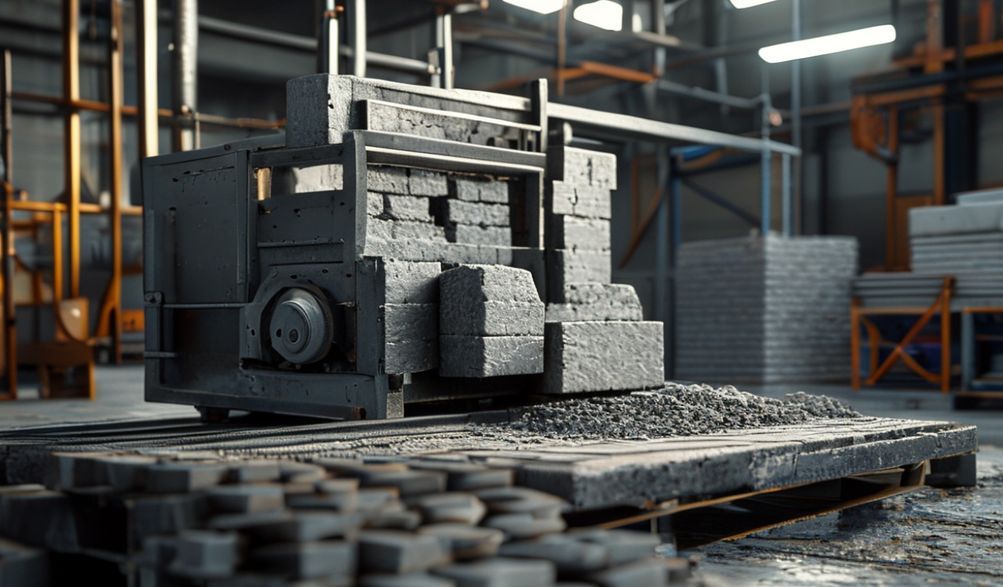
At its core, a cinder block machine is a specialized piece of equipment designed to transform raw materials—primarily cement, aggregates (like sand or fly ash), and water—into precisely formed, high-density cinder blocks (often called concrete masonry units or CMUs).
The process, while varying in automation, follows a consistent sequence:
1. Batching & Pencampuran: Raw materials are measured and mixed into a homogeneous, semi-dry concrete.
2. Pembentukan: The mixture is fed into a mold cavity on the machine.
3. Pemadatan & Getaran: The machine applies immense pressure and high-frequency vibration. This critical step removes air pockets and compacts the material, giving the block its structural integrity and smooth finish.
4. Pelepasan Cetakan & Pengerasan: The freshly formed block is ejected onto a pallet or the ground to begin the curing process, where it gains strength over time.
Mesin Manual vs. Semi-Otomatis vs. Otomatis Penuh
Your choice here is the single biggest determinant of your output, labor needs, and budget.
-
Manual Cinder Block Machines
- Deskripsi: Operated entirely by human labor. The operator manually fills the mold, engages a lever or mechanism to compress the block, and then removes the finished product.
- Kelebihan:
- Biaya Terendah:Titik masuk paling terjangkau.
- Portabilitas: Often lightweight and requires no external power.
- Kesederhanaan:Mudah dipahami, dioperasikan, dan dipelihara.
- Kekurangan:
- Padat Karya:Produksi berjalan lambat dan menuntut secara fisik.
- Rendah Keluaran: Suitable for a few hundred blocks per day at most.
- Kualitas Tidak Konsisten: Heavily dependent on operator skill and consistency.
-
Semi-Automatic Cinder Block Machines
- Deskripsi: These machines automate the core compression and vibration processes. An operator typically feeds the raw mix and may initiate the cycle, but the machine handles the molding and compaction.
- Kelebihan:
- Balance of Cost & Output: Offers a significant productivity boost over manual machines without the price tag of full automation.
- Konsistensi yang Ditingkatkan: Machine-controlled vibration ensures more uniform block density and strength.
- Tenaga Kerja yang Dikurangi: One operator can manage the machine efficiently.
- Kekurangan:
- Operator Dependent: Still requires consistent manual feeding and oversight.
- Mid-Range Investment: More expensive than manual options.
-
Fully Automatic Cinder Block Machines
- Deskripsi: These are complete production systems. They automatically handle batching, mixing, conveying, molding, compaction, stacking, and sometimes even pallet handling with minimal human intervention, often controlled by a Programmable Logic Controller (PLC).
- Kelebihan:
- Output Volume Tinggi: Can produce thousands of blocks per shift.
- Konsistensi yang Luar Biasa: Delivers identical block quality every time.
- Minimal Labor: Requires only a few personnel for monitoring and maintenance.
- Kekurangan:
- High Initial Investment: The most expensive option by a significant margin.
- Complex Setup: Requires professional installation, a large, stable foundation, and reliable utilities.
- Higher Maintenance Needs: Sophisticated components require skilled technicians.
Key Applications: Who Needs a Cinder Block Machine?
This technology serves a diverse range of users:
* Perusahaan Konstruksi & Kontraktor: For large projects, producing blocks on-site slashes material costs, eliminates transport delays, and ensures a just-in-time supply.
* Block Making Startups & SMEs: Entrepreneurs can build a business supplying local builders, hardware stores, and construction sites, filling a vital niche in the building materials market.
* Proyek Infrastruktur Skala Besar: Entities building dams, roads, or large retaining walls can achieve massive cost savings by producing the vast quantities of blocks needed on location.
* Serious DIYers & Landowners: Individuals with large properties looking to build workshops, boundary walls, or extensive landscaping features can achieve professional results at a fraction of the retail material cost.
Faktor-Faktor Penting yang Perlu Dipertimbangkan Sebelum Membeli
Assessing Your Production Needs & Output Capacity
Begin with a brutally honest assessment of your requirements. Ask yourself:
* What is the scale of my immediate project? How many blocks are needed?
* If for business: What are my sales projections for Year 1 and Year 3?
* How many blocks do I need to produce per day or per 8-hour shift?
Output capacity is the primary driver of cost. A machine rated for 1,000 blocks per day is fundamentally different—and priced differently—from one rated for 10,000. Align your machine’s capacity with your peak, not just your average, demand to avoid bottlenecks.
Block Types, Sizes, and Mold Customization
Not all blocks are created equal. Ensure the machine you choose can produce the blocks your market demands.
* Ukuran Standar: The classic 8″x8″x16″ hollow block is the industry workhorse, but many other sizes (e.g., 4″, 6″, 12″ widths) are common.
* Jenis Blok Beyond standard hollow blocks, you may need solid blocks, interlocking blocks for dry-stack walls, or specialty shapes like chimney blocks or paving stones.
* Versatilitas Cetakan: The ability to quickly change molds is key. Investigate:
* Does the manufacturer offer a catalog of standard molds?
* Can they produce custom molds for unique designs?
* What is the cost and lead time for additional molds?
Power Source: Electric, Diesel, or Hydraulic?
Your operating environment dictates the best choice.
* Listrik: The most common for semi- and fully-automatic machines. They are cleaner, quieter, and generally have lower operating costs where grid power is stable and affordable.
* Diesel: Essential for sites without reliable electricity. Offers high torque and mobility but comes with fuel costs, exhaust fumes, and higher noise levels.
* Hidrolik Often part of the system’s press mechanism. Provides immense, smooth pressure. The power to drive the hydraulic pump can be either electric or diesel.
Key Machine Features & Build Quality
Look beyond the sales brochure. The devil is in the engineering details.
* Bingkai & Struktur: The frame must be constructed from heavy-duty, reinforced steel plate. A flimsy frame will flex under load, leading to misalignment, poor block quality, and premature failure.
* Sistem Getaran: This is the heart of the machine. Look for high-power, industrial-grade vibration motors mounted on a robust vibration table. Multiple vibrators are often better than one. This system is non-negotiable for producing dense, strong blocks.
* Sistem Kontrol: From simple push-buttons on a semi-automatic machine to a touch-screen PLC on a fully automatic line, the controls should be intuitive, accessible, and protected from dust and moisture.
* After-Sales Support (The Deal-Breaker): A machine is a long-term investment. Prioritize suppliers who offer:
* A clear, comprehensive warranty.
* Readily available spare parts inventory.
* Accessible technical support, preferably with local service engineers or detailed manuals and video guides.
Navigating the Market: Costs and Where to Buy
Price Range Breakdown: What to Expect
Prices are estimates and vary widely by region, brand, and specifications.
- Mesin Manual: $1,000 – $5,000 USD. Ideal for micro-production or testing a business concept.
- Mesin Semi-Otomatis: $8,000 – $50,000+ USD. The broad range reflects differences in output capacity, level of automation (e.g., auto-feeder), and build quality.
- Mesin Sepenuhnya Otomatis: $50,000 – $300,000+ USD. Price scales with output, degree of automation (e.g., robotic palletizers), and brand prestige.
Factors causing variation: Country of manufacture (machines from established German or US brands often command a premium over those from emerging manufacturing hubs), customization, and shipping costs.
New vs. Used Cinder Block Machines
-
New Machines:
- Kelebihan: Full warranty, latest technology and efficiency, reliability, and direct factory support. You start with a known, predictable maintenance clock.
- Pertimbangan: Higher upfront capital requirement.
-
Used Machines:
- Kelebihan: Lower initial purchase price.
- Major Risks: “As-is” condition often means no warranty. Hidden wear in critical components (vibration motors, hydraulic cylinders) can lead to immediate, costly repairs. Obsolete models may have unavailable parts.
- Inspection Checklist: If you proceed, inspect for: cracks in the frame, wear on mold liners, functionality of all vibrators and hydraulics, condition of the electrical panel, and always request maintenance logs. Consider hiring a local mechanic to inspect it with you.
Reputable Sources and Suppliers
- Direct from Manufacturers: Buying factory-direct can offer the best technical support and customization options. Research their history, ask for a list of client references, and verify their physical address.
- Authorized Distributors & Dealers: Established dealers provide local inventory, demonstration facilities, and often quicker service response. Ensure their authorization is current.
- Online Industrial Marketplaces (Alibaba, Thomasnet, etc.):
- Tips: Look for suppliers with “Gold” status, long tenure on the platform, and positive transaction history. Always use the platform’s secure payment methods, not direct wire transfers.
- Critical Caution: Be extremely wary of prices dramatically lower than the market average. Request detailed videos of the machine in operation, not just stock photos. The adage “if it seems too good to be true, it probably is” was written for this marketplace.
Maximizing Your Investment: Operation and Best Practices
Setting Up for Success: Site and Utility Requirements
Proper setup prevents countless future problems.
* Ruang Angkasa: You need dedicated areas for: the machine, raw material storage (covered), mixing, and most importantly, menyembuhkan. Curing requires a large, level area where blocks can sit undisturbed, kept moist, for 7-28 days.
* Foundation: Automatic machines require a solid, level concrete foundation as per the manufacturer’s specs to ensure stability and proper operation.
* Utilities: Confirm power supply (voltage, phase, amperage) and access to clean water for mixing.
Raw Material Sourcing and Mix Design
The best machine cannot compensate for poor materials.
* Agregat: Use clean, well-graded sand, gravel, or fly ash. Consistency in aggregate size and quality is key to predictable block strength.
* Desain Campuran: The ratio of cement to aggregate to water is critical. A common starting mix is 1 part cement to 6-7 parts aggregate by volume, but this must be optimized for your local materials and machine. Consider consulting a concrete technician.
Essential Maintenance for Longevity
Treat maintenance as a non-negotiable production task.
* Harian: Clean excess concrete from molds, the vibration table, and the feed hopper. Check for loose bolts or nuts.
* Mingguan: Lubricate all moving parts as per the manual. Inspect mold liners for wear.
* Bulanan: Check hydraulic fluid levels and cleanliness. Inspect electrical connections for tightness. Test the vibration motors for abnormal noise or heat.
Pertanyaan yang Sering Diajukan (FAQ)
Q1: What is the average production capacity of a small cinder block machine?
A: A small semi-automatic machine typically produces between 1,000 to 3,000 blocks per 8-hour shift, depending on the model and operator efficiency. Manual machines produce far less, often 300-800 blocks per day.
Q2: Can one machine produce different types of blocks?
A: Yes, this is a standard feature. The key is changing the mold. When purchasing, verify the cost, availability, and changeover process for additional molds for the different block types you plan to make.
Q3: How much space do I need to operate a block-making machine?
A: For a small commercial operation, a minimum of 5,000 to 10,000 square feet is recommended. This accounts for the machine pad, material storage, mixing station, and, crucially, the extensive curing area where blocks need to sit for weeks.
Q4: What is the most important factor in producing strong cinder blocks?
A: Three factors are equally critical: 1) A high-quality machine with powerful, effective vibration to compact the mix, 2) A correct and consistent raw material mix design, and 3) Proper curing—keeping the newly formed blocks moist for an extended period to allow full strength development.
Q5: Are there financing options available for these machines?
A: Yes. Many reputable manufacturers and their authorized dealers offer financing or equipment leasing plans. Banks that specialize in commercial or industrial loans are also a potential source. Always compare terms and interest rates.
Kesimpulan
Navigating the purchase of a cinder block machine is a significant decision that moves from understanding your core production needs, through the technical landscape of machine types and features, and finally to the practicalities of cost and supplier vetting. This guide has provided the roadmap for that journey.
The final, most crucial recommendation is this: align your investment with your long-term vision and realistic operational capacity. The allure of a low upfront cost is strong, but prioritizing robust build quality, key performance features like a powerful vibration system, and—above all—a supplier with a sterling reputation for after-sales support will pay dividends in reliability, product quality, and total cost of ownership for years to come.
We trust this comprehensive resource has equipped you with the knowledge to proceed confidently. Use this information as your foundation. The logical next step is to contact multiple shortlisted, reputable suppliers, request detailed and itemized quotations, and insist on speaking to current customers about their experience. With diligent research and a focus on value over mere price, you are well-positioned to make an investment that will lay a solid foundation for your construction projects or business growth for years to come.
<