
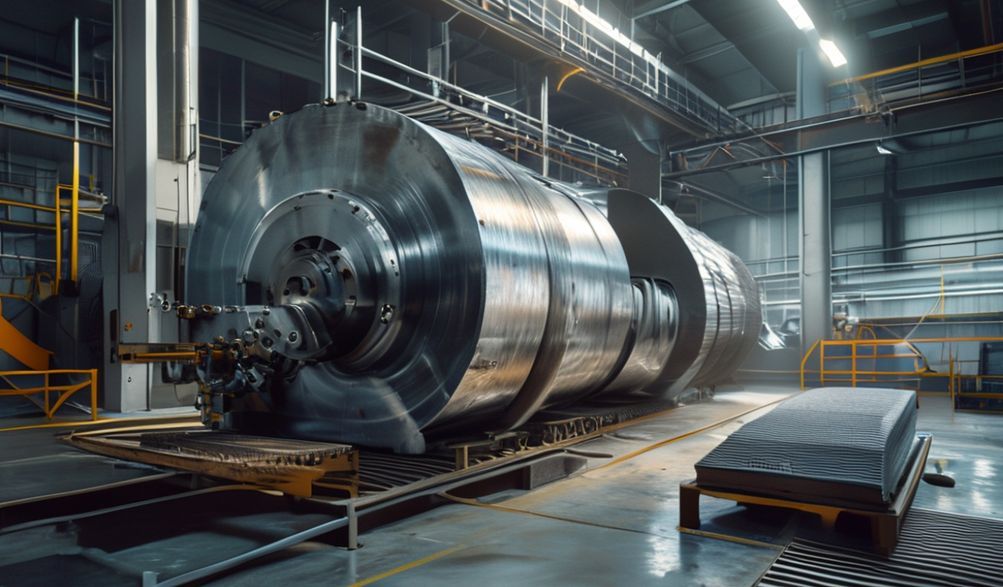
Panduan Utama Anda untuk Mesin Pembuat Blok Besar Bergerak yang Disesuaikan
Pengantar
Bayangkan ini: Anda baru saja mengamankan kontrak infrastruktur yang sangat penting. Proyek ini membutuhkan ribuan balok beton besar berpresisi tinggi—dinding penahan untuk pelabuhan baru, penghalang suara untuk jalan raya, atau unit khusus untuk sistem pertahanan banjir. Tekanan pun membesar. Mesin pembuat balok standar tiba, tetapi tidak dapat menangani dimensi balok yang Anda butuhkan. Sistem getarannya kesulitan dengan campuran agregat lokal yang Anda gunakan, menyebabkan titik-titik lemah. Produksi tertinggal, limbah menumpuk, dan garis waktu proyek—serta profitabilitas Anda—mulai runtuh.
Situasi berisiko tinggi ini adalah masalah umum dalam konstruksi skala besar dan produksi industri. Solusinya bukanlah mesin biasa; ini adalahmesin pembuat blok bergerak besardibangun dari dasar untuk misi spesifik Anda. Namun, keunggulan operasional sejati dan pengembalian investasi tidak terbuka melalui pembelian standar, melainkan melalui strategipenyesuaian.
Panduan definitif ini dibangun berdasarkan pengalaman industri mendalam dalam rekayasa dan penerapan mesin berat. Kami akan melampaui brosur penjualan untuk memberikan wawasan teknis dan strategis yang Anda perlukan guna membuat investasi bernilai tinggi yang terinformasi. Anda akan memahami mengapa kustomisasi sangat kritis, komponen inti apa yang dapat disesuaikan, bagaimana proses spesifikasi bekerja, dan yang terpenting, bagaimana memilih mitra manufaktur yang mampu mengubah kebutuhan unik Anda menjadi aset andal berkinerja tinggi.
Mengapa "Siap Pakai" Sering Tidak Memadai untuk Produksi Blok Besar
Membeli mesin standar untuk pekerjaan non-standar adalah kesalahan paling umum dan mahal dalam produksi blok berat. Meski praktis, model siap pakai sering kali memaksa proyek Anda menyesuaikan dengan keterbatasannya, bukan sebaliknya—mesin yang menyesuaikan dengan tuntutan proyek Anda.
Keterbatasan Mesin Standar untuk Kebutuhan Proyek yang Unik
Kesenjangan dimulai dari spesifikasi dasar. Mesin katalog dibangun untuk parameter umum yang bersifat umum.
- Dimensi & Desain Blok:Mesin standar dioptimalkan untuk ukuran balok yang umum. Jika Anda membutuhkan balok dengan panjang 2m, tinggi 1m, dan lebar 0.8m yang memiliki profil saling mengunci tertentu atau finishing bertekstur, sistem cetakan dan pengepres standar tidak akan memadai.
- Ketidaksesuaian Kapasitas Produksi:Proyek Anda mungkin memerlukan 50 blok besar per shift, tetapi mesin standar mungkin dirancang untuk 200 unit lebih kecil. Memaksakan siklus waktu lebih tinggi atau membeli beberapa mesin menciptakan ketidakefisienan.
- Ketidakfleksibelan Bahan Baku:Sistem getaran dan pemadatan mesin standar dikalibrasi untuk desain campuran "ideal". Jika pasir lokal Anda terlalu halus, agregat Anda terlalu kasar, atau Anda memasukkan produk sampingan industri, mesin yang tidak disesuaikan akan menghasilkan kepadatan tidak konsisten dan kekuatan tekan yang terganggu.
Tantangan Spesifik Lokasi yang Memerlukan Solusi yang Disesuaikan
Setiap lokasi produksi memiliki sidik jarinya sendiri. Mesin yang bekerja sempurna di satu fasilitas bisa gagal di fasilitas lain.
- Kendala Spasial:Tata letak pabrik Anda mungkin memerlukan aliran material dari kiri ke kanan, jejak mesin yang lebih kecil, atau sistem pengembalian palet yang unik. Desain standar yang kaku tidak akan dapat beradaptasi.
- Batasan Utilitas:Pasokan daya yang tersedia (tegangan, fase), tekanan air, dan kapasitas kompresor udara harus menentukan desain mesin, bukan sebaliknya.
- Environmental Factors: Operating in extreme cold requires heated oil systems and insulated enclosures. Dusty or corrosive environments demand upgraded seals and protective coatings. A standard machine lacks these integrations.
- Logistical Hurdles: If the machine must be transported to a remote site, a modular, containerized design for easier shipping and assembly becomes a critical customization.
The True Cost of Compromise: Downtime, Waste, and Scalability Issues
The initial savings of a standard machine are often illusory. The long-term operational costs tell the real story:
- Increased Downtime: Ill-fitting components break under unexpected stress. Lack of integration causes bottlenecks.
- Higher Material Waste: Inconsistent compaction leads to a higher percentage of rejected blocks, wasting costly cement and aggregate.
- Zero Scalability: A machine that barely meets today’s needs cannot adapt to future contracts requiring different block types or higher output, locking you into a cycle of inefficiency.
Core Components of a Customized Big Moving Block Making Machine
Customization is not about adding bells and whistles; it’s about re-engineering core subsystems to work in perfect harmony with your production goals. Here are the key areas where true customization occurs.
The Heart of the Machine: Custom Mold and Pallet Systems
This is the most visible aspect of customization. The mold defines your product.
- Size & Geometry: Engineered to produce your exact block dimensions, whether for colossal seawall units or intricate, architecturally specified facades.
- Surface Finish & Texture: Mold liners can be machined to impart smooth, split-face, rock-face, or branded textures directly during compaction.
- Desain Saling Mengunci: Precision-machined mold details create complex male/female interlocking systems for dry-stack stability without mortar.
- Pallet Compatibility: Pallets are customized for size, thickness (for durability under massive weight), and surface treatment to ensure perfect block release.
Vibration and Compaction Systems Engineered for Your Mix Design
This is the engineering soul of the machine. Block strength and density are born here.
- Vibration Frequency & Amplitude: These parameters are scientifically matched to your specific aggregate gradation and cement type. A fine sand mix requires a different vibration profile than a coarse aggregate mix.
- Compaction Force: Hydraulic or electromechanical pressure systems are sized to achieve the required Green Strength (handling strength out of the mold) and ultimate cured compressive strength (e.g., 30 MPa, 50 MPa).
- Vibration Table Design: A custom-sized table with strategically placed, high-frequency external vibrators or a directed hydraulic core vibrator system ensures uniform density throughout the entire massive block.
Material Handling and Batching Integration
A custom machine views raw material input as part of its function.
- Custom Hoppers & Feeders: Sized for your batch volume and designed with wear-resistant liners for your specific aggregate abrasiveness.
- Sistem Konveyor: Belt width, incline, and speed are customized to transport your mix from the batching plant to the machine hopper without segregation.
- Automated Batching Interface: The machine’s PLC can be integrated with your batching plant software for a “one-touch” production cycle, automating material calls for each block.
Control Systems and Automation Level
Customization defines how you interact with the machine, from manual oversight to data-driven management.
- Basic PLC Control: A programmable logic controller allows for sequenced, semi-automatic operation with a human-machine interface (HMI) panel.
- Otomatisasi Penuh: Robotic pallet handling, automatic mold oiling, and robotic block off-bearing and stacking.
- IoT & Data Tracking: Advanced systems offer remote monitoring, production data logging (cycle times, block counts, downtime reasons), and predictive maintenance alerts via cloud platforms.
The Step-by-Step Process for Customizing Your Machine
A successful custom machine project is a collaborative journey, not a simple transaction. Here is the proven, step-by-step process followed by industry leaders.
Phase 1: Deep-Dive Needs Analysis and Specification
This foundational phase turns your vision into a technical document. Be prepared to provide:
- Spesifikasi Blok: Detailed drawings, required compressive strength, weight, and daily/weekly production targets.
- Site & Logistics Data: Plant layout drawings, ceiling height, door sizes, utility points, and site access photos.
- Raw Material Profile: Samples or detailed analysis of your sand, aggregate, and cement.
- Operational Goals: Desired level of automation, number of operators, and future scalability considerations.
Phase 2: Collaborative Design and Engineering Review
Your manufacturer should now translate your specs into engineered solutions.
- 3D CAD Models: You should receive detailed models of the proposed machine, allowing you to visualize fit, flow, and maintenance access.
- Process Flow Diagrams (PFDs): These charts map the entire production cycle, identifying potential bottlenecks.
- Iterative Feedback: This is a collaborative review stage. Your team and the manufacturer’s engineers should discuss and refine the design before any metal is cut.
Phase 3: Manufacturing, Factory Acceptance Testing (FAT), and Documentation
With designs approved, manufacturing begins. Your involvement remains critical.
- Witnessing FAT: Insist on being present for Factory Acceptance Testing. This is where you see the assembled machine run under load, verify cycle times, and confirm it meets the agreed-upon specifications before it ships.
- Dokumentasi Komprehensif: You should receive not just a manual, but detailed electrical schematics, hydraulic diagrams, a complete parts list with OEM codes, and recommended maintenance schedules.
Phase 4: Installation, Commissioning, and Operator Training
The final phase ensures a smooth transition to production.
- On-Site Technical Support: Reputable manufacturers provide engineers to supervise installation, align the machine, and conduct commissioning—producing the first blocks with your local materials.
- Structured Operator Training: Training should cover safe daily operation, routine maintenance, basic troubleshooting, and mold changeover procedures. This knowledge transfer is vital for long-term success.
How to Vet a Manufacturer for Custom Heavy Machinery
Your choice of manufacturer is the single biggest determinant of project success. Look beyond price and evaluate these critical factors.
Evaluating Technical Expertise and Engineering Heritage
- Minta Studi Kasus Request detailed examples of past custom projects, especially those with similar block sizes or challenges to yours.
- Inquire About R&D: Do they have a dedicated engineering team? Do they hold patents for vibration systems or machine designs? This indicates innovation capability.
- Request Client References: Speak directly to past clients about their experience with the design process and machine performance.
Assessing Manufacturing Capabilities and Quality Control
- Fabrikasi In-House: Do they machine key components (like mold frames and vibration tables) themselves, or outsource them? In-house control typically means higher quality assurance.
- Sertifikasi: Look for ISO 9001 (Quality Management) certification as a baseline. Certifications for welding standards are also a positive sign.
- Component Sourcing: Do they use reputable, brand-name components for hydraulics (e.g., Bosch Rexroth), PLCs (e.g., Siemens, Allen-Bradley), and bearings? This affects longevity and serviceability.
Analyzing After-Sales Support and Global Service Network
- Spare Parts Policy: What is the guaranteed availability time for critical spare parts? Is there an online parts portal?
- Service Structure: Do they have field service technicians? Can they provide remote diagnostic support via the machine’s PLC?
- Syarat Garansi: Read the warranty carefully. It should cover a significant period and include support, not just part replacement.
The Importance of Transparent Communication and Project Management
- Dedicated Project Manager: You should have a single, knowledgeable point of contact who manages timelines and communication.
- Clear Milestones & Reporting: The process should have defined stages (Design Sign-off, FAT Date, Shipping Date) with regular updates.
- Openness About Challenges: A trustworthy partner will communicate potential delays or engineering challenges early, along with proposed solutions.
Frequently Asked Questions (FAQ) About Custom Block Making Machines
Q1: What is the typical lead time for a fully customized big moving block machine?
A: Industry practice shows a typical lead time of 4 to 7 months from finalized design to delivery. This range accounts for engineering complexity, component procurement (especially for custom hydraulics and controllers), and rigorous factory testing. Rushing this process is a false economy; thorough design and testing prevent costly problems on your site.
Q2: How much more expensive is a customized machine compared to a standard model?
A: Framing this as a “premium” is misleading; it’s an investasi. Customization can increase the initial capital outlay by 25% to 50% over a comparable standard model. However, the ROI is realized through higher uptime, perfect material yield, lower labor costs via automation, and the ability to fulfill premium contracts that an off-the-shelf machine could not. It pays for itself by being the perfect tool for your job.
Q3: Can you customize a machine we already own?
A: Yes, retrofitting and upgrading existing machines is common and can be a cost-effective strategy. Possibilities include installing a new custom mold and vibration system, upgrading the control PLC, or adding automated pallet feeders. Feasibility depends entirely on the base machine’s structural condition, age, and original design. A thorough audit by the manufacturer’s engineers is the first step.
Q4: What are the most critical maintenance aspects for a custom machine?
A: The customized components demand specific attention:
* Sistem Cetakan: Regular cleaning, inspection for wear on liners and sealing strips, and proper application of release agent.
* Sistem Getaran: Monitoring vibrator mounts for loosening and checking hydraulic pressures or motor currents against baseline readings.
* Sistem Hidrolik: Maintaining fluid cleanliness and filter changes is paramount.
The major advantage is that your custom maintenance manual will be tailored to your exact machine, making preventative care straightforward.
Q5: How do you ensure the machine will work with our local raw materials?
A: This is a core part of the engineering phase. Reputable manufacturers will request samples of your aggregates, sand, and cement for analysis. They often conduct mix design trials in their own facility or partner lab. By compacting test samples with their proposed vibration system, they can verify the achievable density and strength, and may recommend adjustments to your mix proportions (e.g., water-cement ratio, admixtures) to ensure optimal results with the machine’s configuration.
Kesimpulan
In the realm of big moving block production, customization is far from a luxury—it is a strategic imperative. It is the decisive factor that separates a mere machine that makes blocks from a high-performance production asset that drives productivity, guarantees quality, and protects your profitability on landmark projects.
Move beyond catalog shopping. Empower your team to engage in a technical dialogue with potential manufacturing partners. Approach them not just as a buyer, but as a collaborator with a clear set of challenges and specifications. The questions you ask about engineering heritage, factory testing, and after-sales support will quickly separate true engineering partners from simple equipment suppliers.
Begin by preparing your detailed project specifications. Then, start those conversations. A well-conceived, meticulously built customized big moving block making machine is more than a purchase; it is a long-term competitive cornerstone, engineered to build the future, block by massive, perfect block.
<