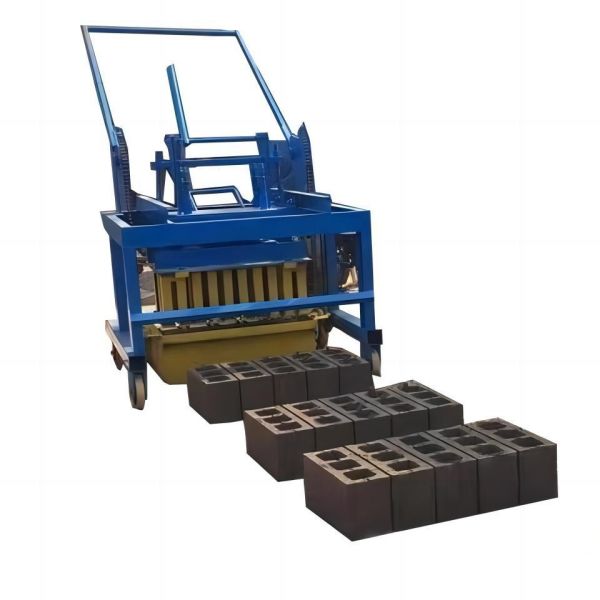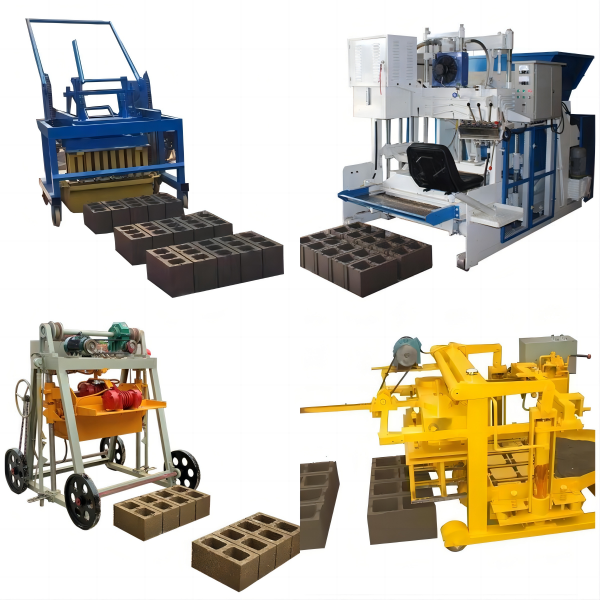
Approfondimento Tecnico: Capacità e Architettura di Sistema
Classificazioni Operative Fondamentali
È essenziale distinguere tra due tipi principali di attrezzature, sebbene spesso confusi, poiché le loro applicazioni e proposte di valore differiscono in modo significativo:
- Sistemi Semiautomatici Senza Malta (Tipo Pinza/Braccio Robotico):Questi sistemi sono progettati per unità costruttive a secco o interbloccanti che non richiedono malta in opera sul muro. Tipicamente presentano un braccio robotico o un meccanismo di presa dedicato montato su un telaio mobile o su una struttura a portale guidata da rotaie. L'unità preleva un blocco da un nastro trasportatore, applica se necessario un adesivo a letto sottile, e lo posiziona con precisione millimetrica basandosi su un piano di costruzione digitale. Il loro vantaggio principale è la velocità e la precisione nella costruzione di muri per magazzini, muri perimetrali e alcuni progetti residenziali.
- Sistemi di Dosaggio e Posa in Opera Completamente Automatizzati in Situ:Questo rappresenta l'apice dell'integrazione. Si tratta di grandi unità mobili, spesso simili a fabbriche, che combinano stoccaggio degli aggregati, miscelazione e una sofisticata testa di posa. Ricevono materie prime (sabbia, cemento, additivi), preparano la malta su richiesta e posano sia il letto di malta che il blocco in un ciclo continuo e automatizzato. Costruiscono muri tradizionali con malta a un ritmo incessante e costante, e sono tipicamente utilizzati per strutture di grandi dimensioni e ripetitive, come complessi residenziali e edifici istituzionali.
Core Subsystems and Technological Integration
The sophistication of these machines lies in their integration of multiple subsystems:
- Precision Guidance and Control Systems: This is the “brain.” Operation is governed by sophisticated software that interprets CAD or BIM models. Real-time positioning is achieved through a combination of laser trackers, total stations, and inertial measurement units (IMUs), ensuring each unit is placed in the exact programmed location in three-dimensional space.
- Material Handling and Logistics: Efficiency depends on a seamless supply chain to the machine. Integrated conveyors, automated guided vehicles (AGVs), or synchronized forklift protocols are crucial. The system’s bottleneck is often not the laying speed, but the reliability of material delivery to its pickup point.
- Adaptive End-Effector Technology: The “hand” of the machine, or end-effector, must handle various unit sizes, textures, and weights. Advanced systems use computer vision to orient irregular units, adjustable grippers for different dimensions, and precise dispensers for applying adhesives or mortar strips.
- Structural Frame and Mobility Platform: Stability is non-negotiable. Systems range from rail-guided gantries that run on prepared tracks along the wall line to self-propelled, rough-terrain tracked vehicles that can navigate a job site and reposition autonomously.
Market Analysis and Strategic Positioning
Segmentation by Capacity and Project Fit
The market is stratified to serve distinct project profiles:
- Entry-Level and Compact Systems: Targeted at small to medium-sized contractors and specialty builders. These are often simpler, semi-automated gripper systems with a lower degree of autonomy. They focus on ease of transport, quick setup, and a clear ROI on custom homes, additions, and small commercial projects. They serve as an introduction to automated masonry.
- Mid-Range Production Systems: The most competitive segment for general contractors. These systems offer a balanced blend of high output (e.g., 500-1000 units per day), advanced features like integrated mortar application, and robust construction for sustained use. They are the workhorses for townhouse developments, school buildings, and mid-rise construction.
- Heavy-Industrial and High-Rise Systems: Engineered for megaprojects. These may include tower-mounted systems or highly integrated solutions that work in concert with prefabrication. They prioritize maximum uptime, integration with project management software, and the ability to handle the logistical complexity and scale of building skyscrapers or massive industrial facilities.
The Financial Model: Understanding Cost and Value
Capital Expenditure (CapEx) and Price Determinants
The upfront price point is a function of multiple variables:
- Automation Level and Output Speed: A basic semi-automated gripper machine may have a price point equivalent to a high-end truck or piece of earthmoving equipment. A fully integrated, high-output batching and laying system can command a price comparable to a fleet of such vehicles. Speed, measured in units laid per hour, is the primary driver of cost.
- Versatility and Customization: Machines capable of handling multiple unit types (e.g., standard blocks, corner blocks, half-blocks) and switching patterns automatically carry a premium. Customization for specific regional block standards or special projects also affects price.
- Technological Package: The inclusion of advanced guidance (3D BIM integration vs. 2D laser), telematics for remote monitoring, and predictive maintenance software significantly increases the initial investment but also the long-term value.
- Durability and Support Structure: Machines built with industrial-grade components, offering extended warranty packages, and backed by a robust dealer service network understandably have a higher price tag, reflecting lower lifetime risk.
Total Cost of Ownership (TCO) and Justification
For the end-user contractor, the decision is based on TCO, not just purchase price. A persuasive TCO model must account for:
- Direct Labor Displacement: Calculate the fully burdened cost (wages, insurance, benefits) of the masons and laborers the machine replaces, projected over its operational lifespan.
- Productivity Gains and Schedule Compression: Value the revenue from completing projects 30-50% faster—enabling more projects per year and reducing overhead costs like site supervision and equipment rentals.
- Material Efficiency: Savings from near-zero waste due to precise mortar application and reduced unit breakage.
- Quality and Risk Mitigation: Quantify the reduction in rework, the improvement in structural consistency (enhancing insulation and seismic performance), and the lowering of insurance premiums due to a safer worksite.
- Residual Value: Estimate the machine’s potential resale value after a defined period, a factor often overlooked.
Conclusion: Capitalizing on a Paradigm Shift
The adoption of automated construction unit placement technology is transitioning from early adoption to early mainstream acceptance. For the supply chain—distributors, dealers, and procurement professionals—this represents a paradigm-shifting opportunity. Success requires evolving from a transactional equipment seller to a strategic productivity partner. This means:
- Product Mastery: Understanding the technical nuances between system types and their ideal applications.
- Financial Acumen: Being able to build and present a compelling, customized TCO model that justifies the capital investment to a contractor’s CFO.
- Ecosystem Thinking: Ensuring your offering includes comprehensive training, reliable service, and parts support, as downtime is the single greatest threat to the client’s ROI.
The competitive landscape for builders is being redefined. Those equipped with this technology will compete on speed, cost, and quality in ways that manual operations cannot match. By providing the tools and the business case for this transformation, forward-thinking distributors position themselves at the center of the future of construction.
Frequently Asked Questions (FAQ)
Q1: What is the typical price range for these systems? How do we begin the conversation with a cost-conscious contractor?
A: Pricing is highly variable, but broadly, entry-level semi-automated systems can start in a range comparable to premium conventional construction equipment. Mid-range production systems fall into a significantly higher bracket, akin to establishing a small, specialized fleet. Top-tier, fully integrated systems represent a major capital investment. Begin the conversation not with price, but with pain points: labor costs, schedule delays, and quality control. Then, transition to a cost-per-laid-unit analysis versus the manual method, framing the machine as a solution to their core business challenges.
Q2: How does the output of a machine compare to a skilled crew?
A: Performance varies by model, but a robust mid-range production system can consistently output between 500 to 1,200 units in an 8-hour shift, depending on block size and design complexity. This output can equal or exceed the work of a crew of 4-6 skilled masons, but with greater consistency and without fatigue. The machine also works in more weather conditions, extending the productive building season.
Q3: What are the hidden costs beyond the initial purchase?
A: A comprehensive TCO analysis must include: Operational Costs (specialized fuel/electricity, routine maintenance, wear parts like grippers); Logistics Costs (potential need for more organized material delivery, on-site power requirements); Software & Training Costs (annual software licenses, training for new operators); and Financing Costs (interest if purchased via loan or lease). Presenting this transparently builds trust.
Q4: Can these machines work with all types of standard blocks and patterns?
A: Most systems are designed for widely used standard sizes. Compatibility is a key specification. High-end machines can be programmed for multiple block types and complex patterns (e.g., corners, jambs, bond patterns) through tool head changes or software adjustments. It is crucial to verify the machine’s specifications against the most common block profiles in your target market.
Q5: What does operator training entail, and how long does it take to achieve proficiency?
A: Training is multi-phased. Basic machine operation, safety, and daily maintenance can be taught in 1-2 weeks. Achieving proficiency in troubleshooting, re-calibrating the guidance system, and optimizing workflows for different projects typically requires several months of supervised on-site experience. Manufacturers and knowledgeable distributors provide structured training programs to ensure success.
Q6: What is the typical lifespan and expected ROI period for this investment?
A: With proper maintenance, the core structural components can last for well over a decade. The electronic and software components may undergo refreshes. The ROI period is intensely project-dependent. For a contractor with a consistent pipeline of suitable work, a compelling ROI can often be demonstrated within 12 to 24 months based on labor savings, increased throughput, and reduced waste. This makes the investment highly attractive compared to many other types of capital equipment.