I. Competenze Fondamentali di Ingegneria e Ricerca & Sviluppo (R&S)
Il differenziale fondamentale risiede nel capitale intellettuale di una fabbrica e nel suo impegno verso l'innovazione, non solo nella replicazione.
A. Infrastruttura di R&S Dedicata
- Team di Ingegneria Interni:I principali produttori mantengono team solidi di ingegneri meccanici, civili e dei materiali. Ciò consente un'iterazione continua sul design delle macchine, ottimizzando i regimi di vibrazione, i circuiti idraulici e le strutture del telaio per la specifica reologia delle miscele di ceneri volanti.
- Laboratorio di Scienza dei Materiali:Un vero partner gestirà un laboratorio per test e ottimizzazione della miscela. Dovrebbe essere in grado di condurre prove con campioni della vostra cenere volante locale e degli aggregati, fornendo dati certificati sulla resistenza alla compressione, l'assorbimento d'acqua e la densità dei mattoni risultanti. Questo li trasforma da venditori di macchine a fornitori di soluzioni.
- Prototyping and Pilot Testing: The ability to build and test prototype machines or new mold designs indicates a commitment to product evolution and customization, ensuring the machinery meets specific regional market demands.
B. Technology Integration and Automation Focus
- Proprietary Control Systems: Look for suppliers developing their own PLC software interfaces. These systems allow for precise control over vibration frequency, pressure, and cycle times, which are critical for consistent brick quality when using variable fly ash grades.
- Focus on Energy-Efficient Design: Advanced manufacturers engineer machines for optimal power consumption per brick, integrating high-efficiency motors, variable frequency drives (VFDs), and regenerative hydraulic systems to minimize operational costs for the end-user.
- Smart Manufacturing Compatibility: Forward-thinking factories are designing machinery with IoT (Internet of Things) readiness, enabling potential for remote monitoring, predictive maintenance, and production data analytics—a valuable future-proofing feature.
II. Manufacturing Integrity and Scale
The factory floor is where promises are forged into steel. Its scale and discipline are direct indicators of reliability and capacity.
A. Vertical Integration and Quality Control
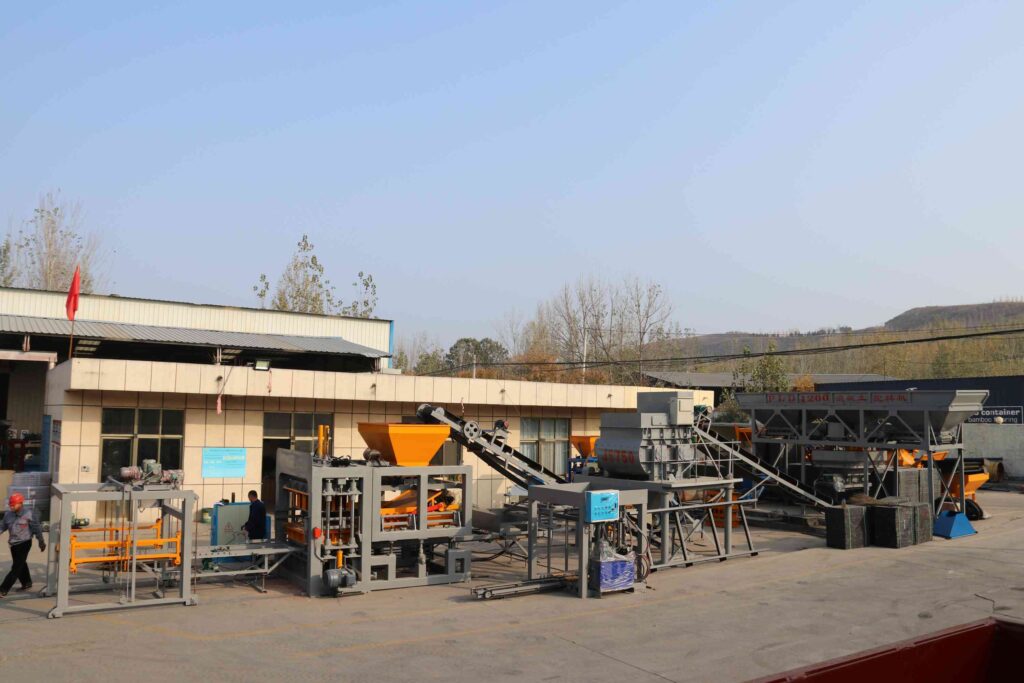
- Control Over Core Processes: Premier suppliers manage key processes like CNC machining of critical parts, fabrication of heavy-duty frames, and assembly in-house. This guarantees control over tolerances and quality at every stage, unlike assemblers who outsource major components.
- Certified Quality Management Systems: Adherence to international standards like ISO 9001:2015 is a baseline. More importantly, inspect their implementation: structured procedures for incoming material inspection, in-process quality checks (e.g., weld integrity, hydraulic pressure testing), and final performance validation for every machine.
- Use of Traceable, Premium Components: The specification of brand-identifiable, international-grade components for hydraulics, PLCs, and electrical systems is a sign of quality. It ensures reliability and simplifies future maintenance and parts sourcing for your clients.
B. Production Capacity and Export Proficiency
- Scale Indicating Stability: A large, organized production facility with multiple assembly lines indicates financial stability and the capacity to handle large orders and meet delivery deadlines consistently.
- Dedicated Export Department: Expertise in international trade is crucial. A professional export team manages documentation (commercial invoices, packing lists, certificates of origin), HS code classification, and container loading optimization efficiently, preventing costly delays at ports.
III. The Partnership Ecosystem: Services That Add Value
For a distributor, the transaction is the beginning of the relationship. The manufacturer’s support ecosystem determines long-term success.
A. Comprehensive Technical and Commercial Support
- Pre-Sales Project Consulting: A superior supplier acts as a consultant, analyzing the client’s raw materials, target market, and desired output to recommend the most appropriate machine model and plant layout, not just the most expensive one.
- Turnkey Project Capability: The ability to supply and integrate ancillary equipment (automatic batching plants, mixers, forklifts, palletizers) and provide civil layout drawings creates a seamless, one-stop-shop experience for your clients, enhancing your value proposition.
- Extensive Training Programs: Look for structured training modules that cover machine operation, routine maintenance, troubleshooting, and basic mold changing. On-site training during commissioning is essential, and advanced training at the factory for your own technicians is a hallmark of a true partner.
B. After-Sales Service Architecture
- Structured Warranty with Clear Terms: A transparent, comprehensive warranty (typically 12-18 months) covering parts and workmanship, with clear protocols for claim resolution, is mandatory.
- Global Spare Parts Logistics: Evaluate the supplier’s spare parts inventory management system and their distribution network. The availability of a localized or rapidly shippable parts inventory minimizes client downtime.
- Remote and On-Demand Support: A 24/7 remote support desk via phone or video call for immediate troubleshooting, complemented by the availability of fly-in engineer services for complex issues, provides peace of mind to you and your end-customers.
Strategic Supplier Evaluation and Relationship Management
Equipped with the knowledge of what constitutes excellence, the B2B professional must execute a disciplined evaluation and negotiation process.
I. The Due Diligence Protocol
- The Mandatory Factory Audit: A physical inspection is non-negotiable. Observe production flow, quality checkpoints, warehouse organization, and R&D facilities. Request to see testing reports for completed machines.
- In-Person Machine Testing: Insist on witnessing a performance test of a machine similar to your target model, using a fly ash mix. Assess noise levels, vibration stability, and the quality of the finished green bricks.
- Client Reference Verification: Obtain contact information for international clients in markets similar to yours. Inquire about machine performance, reliability, and the supplier’s responsiveness to service requests.
II. Negotiating for Mutual Success
- Focus on Total Value, Not Just Unit Price: Negotiate based on the package—machine quality, warranty terms, spare parts pricing, and training inclusion. A slightly higher upfront cost with superior support often yields a lower total cost of ownership.
- Define Logistics and Responsibilities Clearly: Use precise Incoterms (e.g., FOB Shanghai, CIF Durban). Clarify responsibilities for export clearance, sea freight, insurance, and import duties to avoid unexpected costs.
- Protect Intellectual Property and Market Interests: If discussing exclusivity for a region, ensure it is clearly defined in a formal agreement, covering sales, marketing, and service boundaries.
Conclusion
Selecting the right fly ash brick machine manufacturer is a defining strategic decision that influences supply chain resilience, end-client satisfaction, and long-term profitability. The premier supplier is characterized by a deep synergy of innovative engineering, uncompromising manufacturing quality, and a client-centric partnership model. For the discerning distributor, the goal is to transcend a transactional buyer-seller dynamic and cultivate a strategic alliance. By conducting rigorous due diligence, prioritizing engineering substance over superficial features, and negotiating a framework for shared success, you secure more than machinery—you secure a reliable technological partner capable of fueling your growth in the sustainable construction market for years to come. In this partnership, your success becomes intrinsically linked to their commitment to excellence.
FAQ (Frequently Asked Questions)
Q1: What are the key specifications we should compare when evaluating quotes from different manufacturers?
Move beyond basic output (bricks/hour). Demand detailed comparisons on: 1. Power of Vibration Motors (kW and frequency range), 2. Hydraulic System Pressure (tonnage or MPa) and component brands, 3. Thickness of Steel in Main Frame and Mold Tables (in mm), 4. PLC Brand and Features of the control panel, 5. Standard Warranty Duration and Coverage, and 6. Energy Consumption (kWh per standard block). These technical details reveal true quality differentials.
Q2: How can we verify the quality claims and certifications a supplier presents?
- Certifications: Request valid, numbered copies of ISO certificates and verify them on the issuing accreditation body’s website if possible.
- Test Reports: Ask for recent third-party test reports (e.g., from SGS or similar) on brick samples produced by their machine. You can also contract an independent inspection company to visit the factory during your machine’s production and testing phase.
- Component Proof: Require photos or documentation showing the branded components (hydraulic pumps, PLCs) installed on the machine during assembly.
Q3: What is a typical project timeline from order placement to installation at our client’s site?
Timelines vary but a general framework for a standard machine is: Technical Finalization & Contract (1-2 weeks) > Manufacturing & In-Factory Testing (4-6 weeks) > Sea Shipping (4-6 weeks, depending on destination) > Customs Clearance & Inland Transport (1-3 weeks) > Installation & Commissioning (1-2 weeks). For complete production lines, manufacturing and commissioning will take longer. Always build in buffer time for unforeseen delays.
Q4: What level of customization is typically possible for molds and machine output?
Reputable manufacturers offer extensive customization. This includes: 1. Custom Mold Fabrication for any brick size, shape (interlocking, textured), or design; 2. Machine Color Branding; 3. Adjustments to Production Speed; and 4. Integration with specific peripheral equipment (like unique pallet sizes or stacking systems). Customization affects lead time and cost, so it must be clearly specified in the contract.
Q5: How do leading manufacturers handle the training of our technicians and our clients’ operators?
A structured program includes: 1. Pre-Dispatch Documentation: Detailed electronic operation and maintenance manuals. 2. On-Site Training: A factory engineer supervises installation, commissions the machine, and conducts 3-5 days of hands-on training for operators and maintenance staff at the client’s site. 3. Advanced Factory Training: For distributors, some manufacturers offer periodic training sessions at their headquarters, covering advanced troubleshooting, mold maintenance, and business development, solidifying the partnership.