
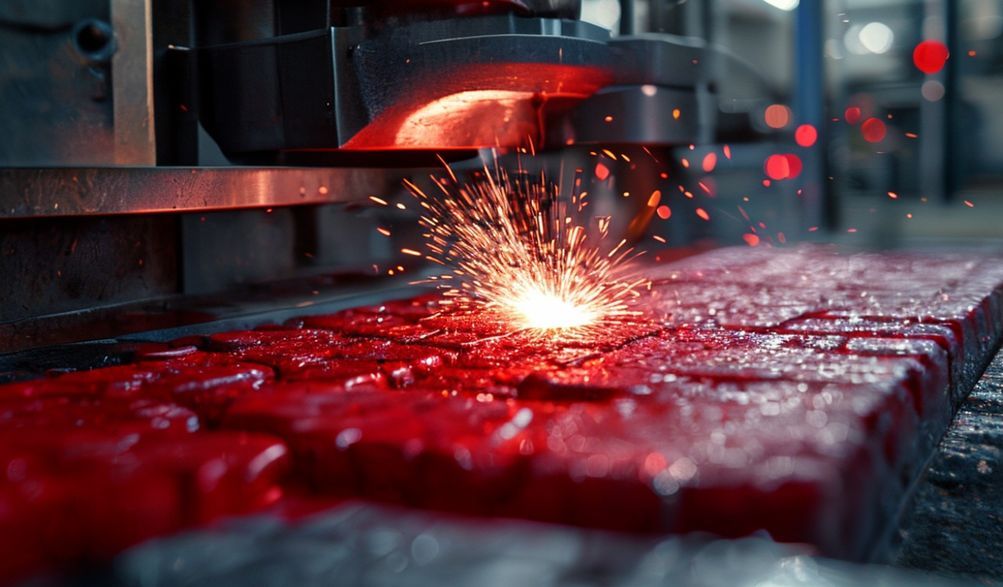
Интерлокты тротуарлық тақталарды жасау машинасын таңдау туралы жетілдірілген нұсқаулық
Кіріспе
Кез келген заманауи тұрғын үй кешенін, коммерциялық құрылысты немесе қоғамдық кеңістікті шолып қараңыз, сіз аяғыңыздың астындағы өзгерістерді байқайсыз. Берік, эстетикалық жағынан тартымды және қараусыз қажеттілігі төмен қатты ландшафттық жабындарға деген сұраныс өсуде. Бұл ландшафттық төңкерістің өзегінде қарапайым, бірақ өте дамыған интерлокты тротуар тақтасы жатыр. Бұл дәл құрылымдалған бетон блоктар жолдар, жаяу жүргіншілер жолдары, алаңдар және басқа да үй-жайлар үшін таңғажайып, берік беттер жасайды. Бірақ әдемі төселген әр шаршы метрдің артында маңызды технология жатыр: интерлокты тротуар тақтасын жасайтын машина.
Кәсіпкерлер, құрылыс фирмалары және инвесторлар үшін бұл машина жай ғана жабдық емес; бұл табысты бизнес немесе айтарлықтай бәсекелестік артықшылығына апаратын есік. Алайда, нарықтағы бағыттау – қолмен жұмыс істейтін престерден толық автоматтандырылған зауыттарға дейін – қорқынышты болуы мүмкін. Дұрыс емес таңдау өндірістік тарылулар, сапа мәселелері және шығынға ұшыраған шығындарға әкелуі мүмкін.
Бұл нұсқаулық сіздің жан-жақты қолдау кітабыңыз болады. Біз технологияны түсіндіреміз, қолжетімді машиналардың түрлерін ажыратып көрсетеміз және мақсаттарыңызға сәйкес таңдау жасауға арналған егжей-тегжейлі тұжырымдама ұсынамыз. Мұндағы түсініктемелер салалық стандарттарға, техникалық сипаттамаларға және жинақталған операциялық білімге негізделген, сіздің сенімді және іс-әрекетке бағытталған кеңес алуыңызды қамтамасыз етеді. Сіз блок өндіру бөлімін іске қосқанда да, қолданыстағы операцияларды кеңейткенде де, бұл ресурс сізге ақпаратты және тиімді шешім қабылдауға көмектесу үшін жасалған.
Интерлокинг тақтайшаларды жасау машинасы дегеніміз не?
Интерлокты тротуар тақташасын жасау машинасы - бұл бетон тротуар тақташаларын бір-біріне үйлесетін жиектермен өндіретін арнайы өндірістік жабдық. Бұл жиектер - тіреулер мен ойықтар - тақташалардың еріксіз қосылып, тұрақты, біріктірілген бет жасауға мүмкіндік береді.
Негізгі функция және шығыс
Машинаның негізгі функциясы құрғақ бетон қоспасын (цемент, құм және толықтырғыштар) жоғары қысым мен дірілдің әсерінен болат қалыпқа тығыздау болып табылады. Бұл процесс тығыз, беріктігі жоғары блокты қалыптастырады, ол кейін қатаю үшін палетке шығарылады. Шығарылатын өнімнің ерекше белгісі - бүйір жақтарындағы ілмекшелі дизайн, ол төселген кезде механикалық тұрақтылықты қамтамасыз етеді.
- The Final Product: Interlocking paver blocks.
- Негізгі қолданыстар:
- Residential: Driveways, garden paths, patios, and pool decks.
- Commercial & Municipal: Parking lots, pedestrian walkways, city squares, and road shoulders.
- Industrial: Factory floors, warehouse aisles, and port pavements where heavy loads are common.
Key Advantages of Machine-Made Interlocking Pavers
Why has machine production become the standard? The benefits are clear and significant:
- Сәйкестігі жоқ тұрақтылық пен сапа: Machines produce blocks with uniform dimensions, color, and density. This consistency is crucial for a smooth, professional installation and a level finished surface.
- Жоғары өндірістік тиімділік: Compared to manual casting or simple mold methods, a dedicated machine can produce hundreds or thousands of blocks per shift, dramatically increasing output and reducing unit cost.
- Design Flexibility: By simply changing the mold, a single machine can produce a vast array of shapes (like herringbone, basket weave, or fan patterns), sizes (from small cobbles to large format slabs), and surface textures (smooth, exposed aggregate, or tumbled).
- Superior Strength & Durability: The combination of high-pressure compaction (hydraulic or vibratory) creates a block with very low porosity and high compressive strength. This results in exceptional resistance to weathering, freeze-thaw cycles, and heavy loads, ensuring a long-lasting installation.
Types of Interlocking Paver Block Machines
Not all machines are created equal. Your choice will fundamentally shape your production capacity, labor needs, and business model. They are broadly categorized by their level of automation.
Қолмен, жартылай автоматты және толық автоматты машиналар
- Қолдан жасалған блок жасау машиналары:
- Операция: Relies entirely on human labor. A hand lever is used to compress the mix into a mold.
- Профиль: Very low initial investment, but also very low output (typically 200-500 blocks per day). It is labor-intensive and produces blocks with variable density. Suitable only for tiny, niche projects or as an entry-level proof-of-concept.
- Semi-Automatic Interlocking Paver Block Machines:
- Операция: Features an electric motor that drives a vibratory system to compact the concrete. Operators manually feed the raw material into the hopper and remove the finished blocks and pallets.
- Профиль: The sweet spot for small to medium-scale startups and businesses. It offers an excellent balance between cost, output (typically 800-2,500 blocks per 8-hour shift), and block quality. It requires a small team of 2-4 operators.
- Fully Automatic Paver Block Plants:
- Операция: A complete production system. Controlled by a Programmable Logic Controller (PLC), it automates the entire process: batching, mixing, conveying, pressing, curing, and even pallet stacking. Human intervention is primarily for monitoring and maintenance.
- Профиль: Designed for large-scale, high-volume production (10,000+ blocks per day). It represents a major capital investment but delivers the lowest cost per block due to minimal labor and maximum efficiency. Ideal for supplying large contractors or regional markets.
Stationary vs. Mobile Block Making Machines
- Стационарлық машиналар: These are set up in a fixed location, like a factory or a dedicated yard. They are typically more robust, powerful, and connected to permanent power sources. All semi-automatic and fully automatic machines are stationary.
- Ұялы машиналар: Smaller, trailer-mounted units designed to be towed to different construction sites. They are almost exclusively manual or very basic vibratory types, used for on-site production for a specific project, eliminating transport costs for blocks.
Hydraulic vs. Vibratory Press Technology
The method of compaction is a key technical differentiator affecting block strength.
- Vibratory Press: Uses high-frequency vibrations to settle and compact the concrete mix within the mold. Common in many semi-automatic machines. It produces good quality blocks suitable for most applications.
- Гидравлик пресс: Uses a hydraulic cylinder to apply a massive, controlled downward force (measured in tons) on the mix, combined with vibration. This dual action creates an extremely dense and high-strength block (often exceeding 50 MPa compressive strength). It is the technology of choice for heavy-duty industrial pavers and premium automatic plants.
Critical Factors for Choosing Your Machine
Selecting the right machine is a strategic decision. Here, practical experience is as valuable as technical specs. Ask yourself these critical questions.
Өндірістік талаптарыңызды бағалау
Begin with the end in mind. Your business plan should dictate your machine choice, not the other way around.
* What is your target daily or monthly output? Be realistic about market demand and your sales pipeline.
* What is your project scale? Are you supplying a single large development or serving a dispersed retail market?
* What is your available space and infrastructure? Do you have a factory shed with a 3-phase electrical connection, or are you starting in a open yard?
Машина сипаттамаларына тереңірек үңілу
Once you know your “why,” scrutinize the “how” with these specifications:
- Цикл уақыты: The time taken to produce one batch of blocks (from filling to ejection). A shorter cycle time means higher hourly output.
- Pressure Force (Ton): Especially critical for hydraulic machines. More tonnage generally translates to higher block density and compressive strength, essential for driveways or parking lots.
- Қалыптың көпқырлылығы: How quickly and easily can molds be changed? A system that allows for a 15-minute mold changeover encourages production flexibility. Also, check the cost and availability of different mold designs from the supplier.
- Қуат қажеттіліктері: Ensure your facility’s electrical supply (e.g., 3-phase, 415V) matches the machine’s needs. A mismatch can lead to costly upgrades or machine underperformance.
Quality of Components and Build
A machine is a long-term asset. Its durability is paramount.
* Саңырауқұлақтар: They should be made from high-chromium, hardened steel to withstand abrasion and ensure a long lifespan producing precise blocks.
* Рама және құрылым: Look for a robust, welded frame that can handle constant vibration without stress cracks.
* Hydraulic System & Vibrators: Components from reputable brands (e.g., Bosch Rexroth for hydraulics, Italian-made vibrator motors) are indicators of reliability and easier serviceability.
After-Sales Support: A Non-Negotiable
Your relationship with the supplier begins after the purchase. Reliable support is the single biggest factor in minimizing downtime.
* Орнату және іске қосу: Will they send an engineer to set up the machine and ensure it runs correctly?
* Operator Training: Comprehensive training is essential for safety, efficiency, and block quality.
* Кепілдік: Understand what is covered and for how long.
* Қосалқы бөлшектердің қолжетімділігі: Is there a local stockist or a guaranteed shipment timeline for critical spares like molds, hydraulics, or vibrators? Кеңес: Ask for a list of local customers and speak to them about their service experience.
The Business Case: Cost, ROI, and Profitability
Let’s translate technical choices into financial reality. A clear-eyed view of costs and returns builds a trustworthy business plan.
Understanding the Investment Spectrum
Prices vary wildly based on automation, capacity, and origin of manufacture. Use these ranges as a guidepost for your budgeting:
* Қол машиналары: Can start from as low as a few thousand dollars.
* Жартылай автоматты машиналар: Typically range from $15,000 to $50,000+, depending on configuration, brand, and pressure capacity.
* Толық автоматты өсімдіктер: Represent a significant investment, often ranging from $100,000 to over $500,000 for a complete turnkey line.
Calculating Operational Costs
Your running costs will directly impact profitability:
1. Шикізаттар: Cement, fine sand (properly graded), coarse aggregates (6mm-10mm), and color pigments (if producing colored pavers). This is typically 50-60% of your variable cost.
2. Еңбек Operators for semi-automatic machines; technicians and supervisors for automatic plants.
3. Power & Utilities: Electricity for the machine, mixer, and lighting.
4. Техникалық қызмет көрсету және Қосалқы бөлшектер: A recurring reserve for wear parts and routine servicing.
5. Space Rental & Overheads: Cost of the production yard or factory space.
Projecting Revenue and Return on Investment (ROI)
A simplified model illustrates the potential. Let’s assume a semi-automatic machine:
* Инвестиция: $30,000 (machine, mixer, pallets, initial molds).
* Daily Production: 1,200 blocks (1 shift).
* Selling Price (ex-factory): $2 per block (highly dependent on local market, block type, and quality).
* Production Cost per Block: ~$0.80 (materials, labor, power).
* Gross Profit per Block: $1.20.
* Daily Gross Profit: 1,200 blocks * $1.20 = $1,440.
* Monthly Gross Profit (22 days): $31,680.
In this simplified scenario, the machine cost could be recovered from gross profit in the first month or two. Негізгі тұжырым: Profitability is intensely sensitive to your operational efficiency, market price stability, and your ability to control material costs and wastage. A well-run unit can see a full ROI (including all setup costs) within 6-18 months.
Operational Best Practices and Maintenance
Knowledge of daily operations separates successful units from struggling ones. These practices are born from field experience.
Оңтайлы нәтижелер үшін шикізатты дайындау
The machine can only be as good as the mix you feed it.
* Aggregate Gradation: Use a well-graded mix of fine and coarse aggregates. This reduces voids and increases strength while saving cement.
* Cement Quality: Always use fresh, reputable-brand Portland cement (OPC 43 or 53 grade).
* Water-Cement Ratio: This is critical. The mix should be “dry”—just enough water to allow compaction but not so much that the block slumps. A common mistake is using too much water, which drastically reduces final strength.
Daily Operation and Safety Checklist
Consistency and safety are paramount.
* Startup: Check oil levels, ensure the mold and hopper are clean and dry, inspect for loose bolts.
* Операция: Feed a consistent amount of mix into the hopper each cycle. Wear mandatory safety gear: safety shoes, gloves, and ear protection (vibration machines are loud).
* Shutdown: Clean the mold, hopper, and press head thoroughly with a brush and air jet. Never leave concrete to harden on the machine.
Essential Maintenance Schedule
Preventive maintenance prevents catastrophic downtime.
* Күнделікті Clean all concrete residue. Visually inspect for wear.
* Апталық: Check hydraulic oil level and for leaks. Tighten any loose nuts and bolts on the frame and mold. Listen for changes in vibrator sound.
* Ай сайын: Grease all lubrication points. Conduct a thorough inspection of mold liners, hydraulic hoses, and electrical connections.
FAQ: Your Questions Answered
Q1: What is the production capacity of a standard semi-automatic machine?
A: A typical semi-automatic machine can produce between 800 to 2,500 blocks in an 8-hour shift. The exact number depends on the block size/thickness, operator skill, and machine cycle time. A smaller block like a 60mm thick paver will have a higher output than a 100mm thick one.
Q2: Can one machine produce different paver patterns and sizes?
A: Absolutely. This is a key advantage. By changing the mold (the steel die), you can produce different shapes and sizes. The process can take from 15 minutes to an hour, depending on the machine design. Keep in mind that each mold is an additional investment.
Q3: What is the typical lead time for setting up a paver block manufacturing unit?
A: From order placement to first production, allow 2 to 4 months. This includes machine manufacturing/shipping (4-8 weeks), site preparation (laying a solid, level foundation), arranging power connections, and undergoing operator training.
Q4: How strong are machine-made interlocking pavers compared to traditional ones?
A: Significantly stronger. Machine-made vibratory/hydraulic pavers routinely achieve compressive strengths of 35 MPa to over 50 MPa. Traditional wet-cast cement tiles or manually made blocks often struggle to reach 20 MPa. This makes machine-made pavers suitable for vehicular traffic, while traditional ones may only be for footpaths.
Q5: Where can I find reliable suppliers of interlocking paver block machines?
A: Research established manufacturers with a proven track record. Attend construction machinery expos, request detailed catalogs, and always ask for customer references in your region. Contact those references to ask about machine performance and after-sales service. A crucial warning: the cheapest offer is often the most expensive in the long run due to poor quality and non-existent support.
Қорытынды
Choosing an interlocking paver block machine is a journey that moves from understanding a core technology to making a strategic business investment. We’ve explored what these machines do, the spectrum from manual to fully automatic options, and the critical factors—from production needs to after-sales support—that should guide your decision. We’ve also framed this within the realistic context of costs, ROI, and the daily practices that ensure success.
The final, and most important, step is due diligence. If possible, visit the manufacturer’s facility. See the machines being built. Even more critically, visit an existing customer’s plant to see the machine in operation and hear firsthand about their experience. This ground truth is invaluable.
With the right machine, backed by thorough research and a commitment to quality operations, you are positioned for more than just manufacturing. You are building the foundations for beautiful, enduring landscapes and a solid, sustainable business. The path forward is paved with opportunity—make sure you have the right equipment to build it.
<