
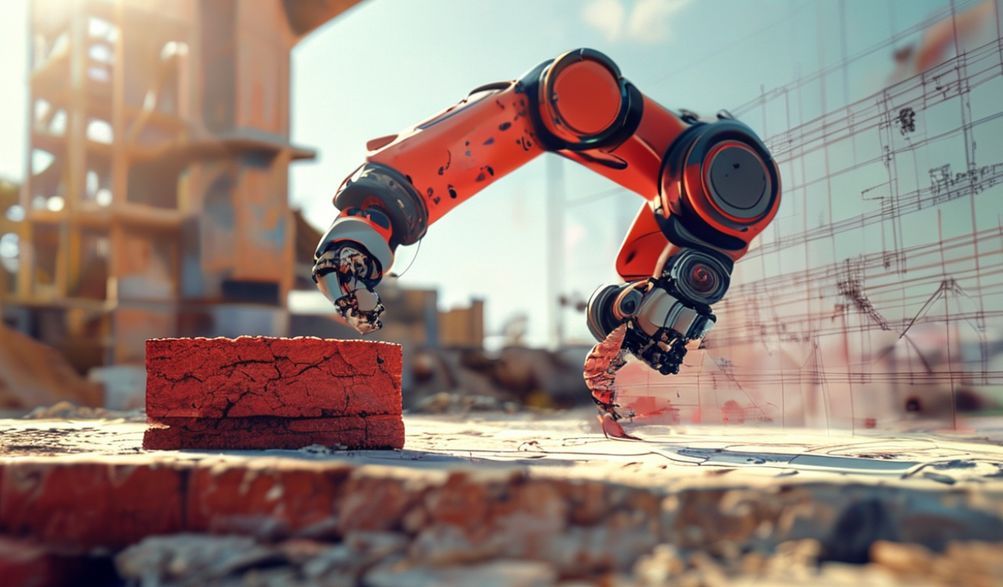
The Ultimate Guide to Brick and Block Laying Machines: Revolutionizing Modern Construction
Кіріспе
What’s the universal, age-old challenge in construction? It’s the relentless pursuit of speed, unwavering precision, and the ever-rising cost and scarcity of skilled labor. For centuries, the rhythm of the job site has been set by the trowel and the mason. But what if you could build walls exponentially faster, with perfect alignment every single time, while dramatically reducing the physical strain on your crew? This isn’t a futuristic fantasy; it’s the reality offered by automated masonry technology.
The industry is undergoing a seismic shift, transitioning from purely manual craftsmanship to a new era of mechanized precision. Brick and block laying machines are at the forefront of this revolution, promising to reshape how we think about building enclosures.
This comprehensive guide will serve as your definitive resource on brick and block laying machines. We will delve into what they are, explore the different types available, break down their tangible benefits, and outline the critical factors you must consider before investing. Our goal is to provide contractors, builders, and project managers with the expert insights needed to make informed, strategic decisions for their businesses. Drawing on years of industry analysis and consultations with leading equipment manufacturers and contractors, this guide cuts through the hype to deliver practical, trustworthy information.
What Are Brick and Block Laying Machines? (Defining the Technology)
At their core, brick and block laying machines are automated systems designed to perform the repetitive, physically demanding tasks of masonry construction. They represent a fusion of mechanical engineering, robotics, and software, bringing factory-like automation to the dynamic environment of the construction site.
Негізгі функция және негізгі операция
The fundamental principle is elegantly simple: automate the process of picking, applying mortar (buttering), and placing bricks or blocks with high precision.
- Процесс: A typical machine follows a programmed sequence. It picks a brick or block from a fed supply, applies a precise amount of mortar to the required surfaces, and then places it in its exact predetermined position on the wall.
- Негізгі құрамдас бөліктер: This process is enabled by several integrated systems:
- Robotic Arm or Gantry: The physical mechanism that handles the material. It offers multiple axes of movement for precise placement.
- Mortar Pump and Delivery System: Supplies and applies a consistent mortar bed or head joint, often with adjustable pressure and volume control.
- Material Handling Feeder: Keeps the machine supplied with bricks or blocks, which can be fed via conveyor, pallet, or magazine.
- Control System & Software: The “brain” of the operation. It runs the machine, often using CAD or BIM data to guide the wall layout, ensuring every unit is placed correctly.
A Brief Evolution: From Concept to Job Site
The dream of automated bricklaying is decades old, but only recent advancements in computing power, sensor technology, and durable robotics have made it viable for real-world job sites. Early attempts were often cumbersome and limited. The modern era was ushered in by pioneers like Construction Robotics with their SAM (Semi-Automated Mason) system, which proved the concept’s value. This was followed by more advanced, fully robotic systems like the Hadrian X from FBR (Fastbrick Robotics), which pushed the boundaries of speed and autonomy. Today, the technology is evolving rapidly, moving from novel prototypes to established tools for a growing segment of the industry.
Types of Brick and Block Laying Machines
Not all automated masonry machines are created equal. They fall into distinct categories, each suited for different project scales, budgets, and levels of automation.
Semi-Automatic Block Laying Machines
These machines bridge the gap between manual and fully automated work, focusing on augmenting the human mason rather than replacing them.
- Сипаттама: An operator, often a skilled mason, guides the machine. The system handles the heavy lifting and precise placement of large concrete blocks or bricks, while the operator controls the positioning, ensures alignment, and manages details like corner work or openings.
- Үздік: Medium-scale commercial projects, residential developments, and any operation where handling heavy concrete blocks is a primary source of fatigue and slowdown.
- Артықшылықтары мен кемшіліктері:
- Артықшылықтары: Lower initial investment than full robots, reduces physical strain significantly, increases productivity (often 2-3x manual output), allows for skilled human oversight.
- Кемшіліктері: Still requires a dedicated operator, speed is limited by human input, may not be as fast as fully autonomous systems on long, straight runs.
Fully Automatic Robotic Bricklayers
These represent the cutting edge, where the machine operates with a high degree of autonomy based on digital plans.
- Сипаттама: These are computer-programmed, self-contained systems. Once set up and fed with materials, they can lay bricks or blocks according to a digital model with minimal human intervention. Examples include the Hadrian X and advanced iterations of robotic arms from companies like ABBнемесеKUKA adapted for masonry.
- Үздік: Large-scale, repetitive construction such as apartment complexes, tract housing, and big-box commercial buildings where wall layouts are consistent.
- Артықшылықтары мен кемшіліктері:
- Артықшылықтары: Extremely high speed (potential to lay thousands of units per day), unparalleled consistency and precision, operates continuously without fatigue, can work in shifts.
- Кемшіліктері: Very high capital cost, requires significant technical expertise for programming and maintenance, less adaptable to last-minute design changes on-site, may struggle with highly complex, non-repetitive patterns.
On-Site Mobile Factories vs. Prefab Applications
The application of the technology also diverges into two main philosophies:
- On-Site Mobile Factories: These are machines like the Hadrian X, designed to travel to the job site and construct walls in place, just like a traditional crew but much faster. They bring the factory to the location.
- Prefab/Off-Site Applications: Here, robotic masonry systems are installed within a controlled factory environment. Walls or entire panels are constructed horizontally, then transported to the site for crane installation. This method maximizes the benefits of a controlled environment but requires a logistics chain.
Key Benefits of Adopting Automated Masonry Technology
The move to automation is driven by compelling, quantifiable advantages that address the core pain points of modern construction.
Жоғары жылдамдық және өнімділіктің артуы
This is the most headline-grabbing benefit. While a highly productive human crew might lay 300-500 bricks in a day, a fully robotic system can lay over 1,000 bricks per hour. For block work, the comparison is just as stark. This exponential increase in speed can compress project timelines by weeks or even months, allowing for faster project turnover and revenue generation.
Precision Engineering and Consistent Quality
Human masons are artists, but even the best can have variations. Machines eliminate this.
* Perfect Alignment: Every brick or block is placed according to a digital model, ensuring perfectly straight, plumb walls.
* Consistent Mortar Joints: The mortar pump applies the exact same amount every time, creating uniform joint lines and improving structural integrity.
* Reduced Material Waste: Precision placement means less dropped or broken material and less mortar waste from over-application.
Addressing Labor Shortages and Reducing Physical Strain
The construction industry faces a well-documented skilled labor crisis. Automated machines offer a powerful solution.
* Labor Multiplier: One machine, managed by a small crew, can output the work of several masons, allowing you to do more with fewer people.
* Ergonomics and Safety: They remove the most physically taxing tasks—lifting heavy blocks, constant bending, and repetitive motion. This leads to fewer workplace injuries, lower insurance costs, and a more sustainable career path for workers, who can transition into roles as machine operators and supervisors.
Long-Term Cost Efficiency and ROI Analysis
The upfront cost is significant, but the total cost of ownership tells a different story.
* Labor Cost Savings: The largest expense in masonry is labor. By drastically reducing labor hours per unit laid, the machine pays for itself over time.
* Time Savings: Faster completion means lower overhead costs, earlier occupancy, and the ability to take on more projects.
* Material Savings: Reduced waste directly improves the bottom line.
A thorough ROI analysis for a large-scale project often shows a payback period of a few years, after which the cost savings become pure profit.
Critical Considerations Before You Invest
Adopting this technology is a major strategic decision. A successful implementation requires careful planning and analysis.
Project Scope and Scale Analysis
Automation thrives on volume and repetition. Ask yourself:
* Is my project pipeline consistent enough to keep the machine busy?
* Are my typical projects large-scale with repetitive wall designs?
For a contractor specializing in custom, high-end homes with unique layouts, the ROI will be harder to achieve than for a developer building 200 identical townhomes.
Machine Specifications and Compatibility
Not every machine works with every material or design.
* Block/Brick Type & Size: Ensure the machine can handle the specific dimensions and weight of the units you use (e.g., standard clay brick vs. large-format CMU).
* Wall Design Complexity: Can it handle corners, openings (doors/windows), and varying coursing? Most machines require some manual intervention for complex details.
* Mortar Requirements: Is it compatible with standard site-mixed mortar, or does it require a specific pre-mix or adhesive?
Иелік құнының жалпы сомасы
Look beyond the sticker price. The true investment includes:
* Purchase price or lease payments
* Installation, setup, and calibration
* Comprehensive operator and technician training
* Ongoing software licenses and updates
* Regular maintenance and spare parts
* Operational costs (power, specialized mortar, etc.)
Operator Training and Technical Support
This technology shifts the required skill set from pure manual dexterity to technical and software proficiency.
* Training: Factor in the time and cost for your crew to become certified operators. This is a non-negotiable investment.
* Support: Reliable, responsive technical support from the manufacturer is critical. Downtime on an expensive machine is incredibly costly. Ensure they offer strong after-sales service.
Important: Always consult directly with manufacturers and financial advisors to conduct a detailed cost-benefit analysis for your specific business model. The numbers must work for your unique situation.
The Future of Construction with Robotic Masonry
The technology is not static; it’s a stepping stone to a more integrated, digital, and efficient construction future.
Integration with BIM and Digital Construction Workflows
The true power is unlocked when the machine is not a standalone tool but a node in a digital workflow. The ideal process is seamless:
1. Design in a BIM (Building Information Modeling) platform.
2. The BIM model feeds data directly to the machine’s control system.
3. The machine executes the physical build from the digital model.
This “digital twin” approach minimizes errors, ensures accuracy, and allows for real-time progress tracking.
Advancements in AI and Machine Learning
Future systems will move beyond simple pre-programmed repetition. We can expect:
* Adaptive Systems: Machines using computer vision to scan their work and adjust for minor imperfections in the substrate or materials in real-time.
* Problem-Solving: AI that can handle unexpected obstacles or interpret simpler design changes on the fly.
* Optimized Pathing: Machine learning algorithms that calculate the most efficient laying sequence to minimize cycle time.
Sustainability Implications
Automation can contribute to greener building practices.
* Қалдықтарды азайту: Precise material application minimizes excess mortar and broken units sent to landfill.
* Optimized Resource Use: Efficient building processes reduce overall energy consumption on-site.
* Potential for Alternative Materials: The controlled application could facilitate the use of new, more sustainable binding agents or recycled aggregate blocks.
Frequently Asked Questions (FAQ) About Brick Laying Machines
Q1: How much does a brick laying machine cost?
A: Costs vary dramatically. Semi-automatic block layers can start in the range of $150,000 to $400,000. Fully autonomous robotic bricklaying systems are major capital investments, often ranging from $500,000 to well over $2 million, depending on capabilities and configuration. Leasing options are becoming more common to mitigate upfront cost.
Q2: Can these machines lay any type of brick or block pattern?
A: Most current-generation machines excel at standard running bond and stack bond patterns for straight wall sections. Complex patterns like herringbone, intricate arches, or irregular stonework typically still require skilled manual labor. However, the technology is advancing, and some systems can be programmed for a variety of standard patterns.
Q3: What is the learning curve for operating one of these machines?
A: Manufacturers typically provide intensive training programs lasting from several days to a few weeks. The learning curve involves mastering the control software, basic troubleshooting, and machine maintenance rather than manual laying technique. A tech-savvy mindset is often more important than traditional masonry experience.
Q4: Are automated bricklayers replacing human masons?
A: A more accurate perspective is that they are transforming the role. They automate the repetitive, heavy-lifting aspects of the job. This shifts the skilled mason’s role towards higher-value tasks: supervising the machine, handling complex detailing and corners, performing quality control, and managing the overall construction process. It’s about augmentation, not replacement.
Q5: Where can I see a brick laying machine in operation?
A: The best places are major industry trade shows like World of Concreteнемесеbauma. Most leading manufacturers also have extensive demonstration videos on their websites and YouTube channels. For a serious evaluation, contact suppliers directly to inquire about live demonstrations at their facilities or, if possible, on an active job site.
Қорытынды
Brick and block laying machines are undeniably transformative, offering a powerful solution to the timeless challenges of construction speed, precision, and labor. They represent a fundamental shift towards a more efficient, data-driven, and sustainable building process.
For forward-thinking contractors and large-scale developers with the appropriate project volume, these machines are a strategic investment in future-proofing their business, offering a clear competitive advantage. For smaller outfits, staying informed on this rapidly evolving technology is crucial for understanding the changing landscape.
Ultimately, adopting this technology isn’t about removing the human element from construction. It’s about strategically augmenting unparalleled human skill and ingenuity with robotic precision and endurance. The goal is to build better, smarter, and more efficiently than ever before.
Ready to explore how automated masonry can fit into your operations? We recommend starting by contacting several reputable manufacturers for consultations, requesting detailed ROI projections based on your project history, and, if possible, witnessing a live demonstration to assess the technology firsthand for your specific needs.
<