The Cornerstone of Precision: Machine Integrity and Calibration
The block machine itself must serve as an unwavering foundation of accuracy. Any mechanical deviation will be directly replicated in every unit produced.
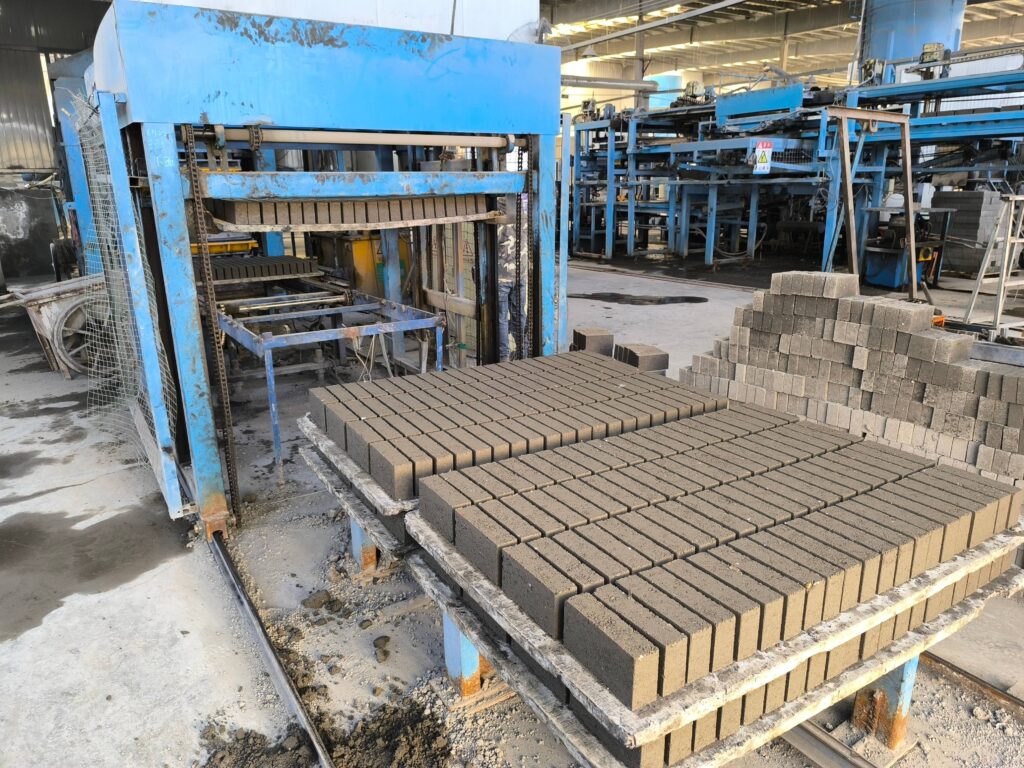
- Rigid Machine Frame and Structure: The entire frame must be robust and free from deflection under the immense cyclic loads of compaction. Periodically inspect the main frame, vibration table, and press head mounting points for signs of fatigue, cracking, or loosened bolts. A flexing frame introduces subtle variations in mold alignment and pressing force.
- Mold Assembly: The Heart of Dimensional Control: The mold is the literal blueprint for block size and requires meticulous care.
- Wear Management: Regularly measure the internal dimensions of mold cavities and the thickness of liners with precision calipers. Wear is inevitable but must be managed. Establish a maximum wear tolerance (e.g., 0.5 mm) and have a program for timely liner replacement or refurbishment.
- Fastener Integrity and Alignment: All bolts securing the mold box, liners, and cores must be torqued to specification and checked frequently. Vibration can loosen these fasteners, causing misalignment and dimensional drift. Ensure the mold assembly is square and perfectly aligned to the press head’s path of travel.
- Pallet System Uniformity: The pallet forms the bottom surface of the block. A collection of warped, bent, or uneven pallets is a primary cause of inconsistent block height and surface flatness.
- Implement a Pallet Management Program: Regularly inspect pallets, removing any that are damaged or exceed flatness tolerances. Use only pallets of identical, standardized thickness within a production run to prevent height variation.
II. Process Stability: Controlling the Variables of Production
Even a perfectly calibrated machine can produce inconsistent blocks if the production process is unstable. Consistency in operation is key.
- Consistent Feed and Compaction Cycle:
- Uniform Mold Filling: The feed system must deliver the same volume of mix to each cavity, every cycle. Check and adjust feed shoes, scrapers, and the feeder box to ensure they are not worn and are distributing material evenly. Incomplete filling leads to short blocks.
- Optimized and Stable Vibration: The vibration intensity and duration must be consistent. Monitor vibrator performance and ensure electrical supply (e.g., from frequency drives) is stable. Inconsistent vibration leads to variable compaction, which directly affects the final, post-demolding dimensions as the block settles.
- Repeatable Hydraulic Pressure: The hydraulic system must apply the exact same pressure profile each cycle. Fluctuations in pressure due to oil temperature changes, pump wear, or valve issues will cause differences in the degree of compaction and, consequently, block height and density.
- Mix Consistency as a Precursor: A critical, often overlooked factor. Variations in the concrete mix itself—especially in water content and workability—will cause the material to behave differently during compaction and curing.
- Strict Control of Water-Cement Ratio: As detailed in prior guides, use weight-based batching with moisture compensation. A wetter mix will compact and shrink differently than a drier one.
- Uniform Aggregate Grading: Changes in sand coarseness or aggregate size distribution alter the packing density of the mix, affecting how it consolidates under pressure.
III. Measurement, Monitoring, and Corrective Action
Consistency cannot be managed without measurement. A proactive quality control system is essential for early detection of drift.
- Implement a Statistical Process Control (SPC) Regime:
- Regular Sampling and Measurement: Do not rely on occasional checks. Establish a schedule (e.g., measure 5 blocks every hour) to record key dimensions: length, width, height, and thickness of face shells/webs.
- Use Control Charts: Plot the measurements on control charts (X-bar and R charts). This visually reveals whether the process is “in control” (variation is random and within limits) or “out of control” (showing a trend or shift that indicates a specific cause).
- Structured Response Protocol: When measurements show a trend outside acceptable tolerances, have a defined troubleshooting protocol.
- Height Variation: First check pallets, then hydraulic pressure and vibration consistency.
- Length/Width Variation: Immediately inspect the mold for wear, loose components, or misalignment.
- General Inconsistency: Audit the mix consistency and batching process.
Қорытынды
Achieving unwavering consistency in block size is a hallmark of advanced manufacturing discipline. It is a holistic endeavor that begins with the mechanical fidelity of the machine and mold, is sustained by the strict control of the production process and raw material inputs, and is governed by a data-driven system of measurement and feedback. For the manufacturer, this commitment delivers tangible commercial benefits: reduced waste, faster and more efficient on-site construction for clients, and a powerful reputation for reliability that commands market preference. By treating dimensional tolerance not as a fortunate outcome but as a managed variable, a block producer elevates its product from a common commodity to a precision-engineered building component.
FAQ
Q1: We just replaced our mold liners, but the block sizes are still inconsistent. What could be wrong?
A: New liners eliminate one variable. Now, investigate the production process. The most likely culprits are inconsistent compaction (check vibrators and hydraulic pressure stability) or variable mix quality (audit your batching and water control). Also, verify that the new liners were installed correctly and all fasteners are securely torqued.
Q2: What is an acceptable tolerance for block dimensions?
A: Acceptable tolerances are defined by international standards. For example, ASTM C90 specifies tolerances such as ±3 mm (±1/8 inch) in length and height, and ±2 mm in width for standard units. Your internal control limits should be tighter than the standard’s to ensure you always remain in compliance. Always refer to the relevant standard for your market.
Q3: Can environmental factors like temperature affect block size consistency?
A: Yes, indirectly. Significant temperature swings can affect the hydration rate of the cement and the viscosity of hydraulic oil. Hot weather can cause the mix to dry and stiffen faster, potentially affecting compaction. Cold weather can thicken hydraulic oil, slightly altering machine cycle timing and pressure. Maintaining a stable production environment as much as possible mitigates these effects.
Q4: How often should we perform dimensional checks on our blocks?
A: For active production, a structured, frequent sampling plan is superior to infrequent, large sample checks. Measuring 3-5 blocks every 1-2 hours provides real-time process feedback and allows for immediate correction. This is far more effective than measuring 30 blocks at the end of the day when an entire shift’s output may be off-spec.
Q5: Is manual measurement sufficient, or should we invest in automated laser gauging?
A: Manual measurement with calibrated calipers and height gauges is entirely sufficient and standard for most operations. The critical factor is the consistency and frequency of the manual checks. Automated laser systems are a significant investment that becomes justifiable for very high-volume production lines where 100% inspection or extremely rapid feedback is required. For most manufacturers, a rigorous manual SPC program is the optimal starting point.