
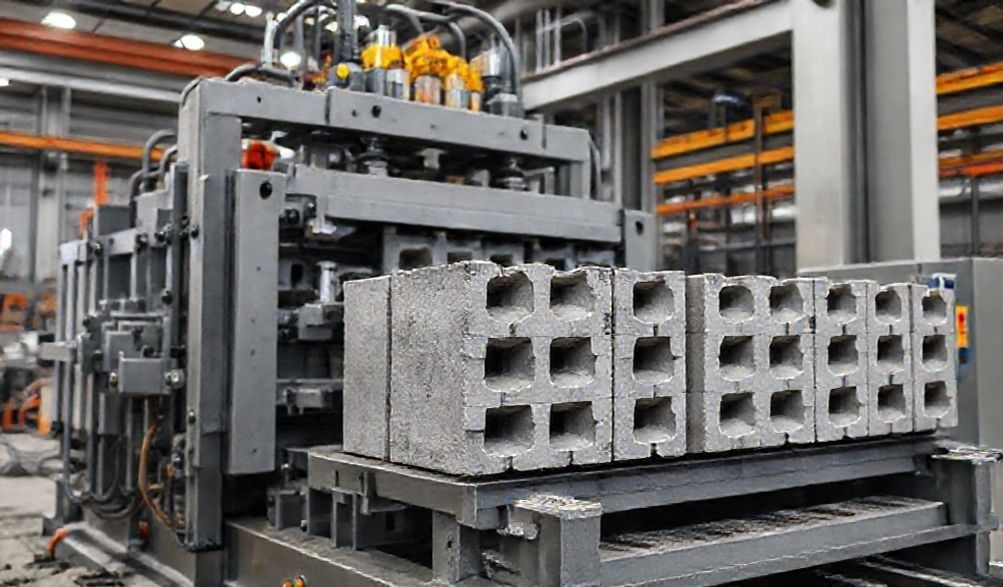
Сіздің блоктық машина өндірушілерге арналған жетілдірілген нұсқаулығыңыз: FUDA блок жасау машинасы зауытына назар аудару
Кіріспе
Дұрыс техниканы табу сіздің құрылыс жобаңыздың немесе өндірістік бизнесіңіздің ең қиын бөлігі болмауы керек. Алайда, сансыз кәсіпкерлер мен жоба менеджерлері үшін сенімді, тиімді және үнемді блок өндіру жабдықтарын табу маңызды кедергі болып табылады. Дұрыс емес таңдау жұмысты тоқтатуға, өнім сапасының тұрақсыздығына және пайданы азайтатын бюджеттен тыс шығындарға әкелуі мүмкін.
Бұл жерде блок машинасы өндірушісін таңдау сіз қабылдайтын ең маңызды бизнес шешімдердің біріне айналады. Дұрыс серіктес сізге тек машина сатпайды, сонымен қатар өнімділігіңіз, сапаңыз және ұзақ мерзімді өсуіңіз үшін технологиялық негізді қамтамасыз етеді.
Бұл жан-жақты нұсқаулық блок жасау машиналарын өндіру саласын түсіндіруге арналған. Біз сізді осы мамандандырылған саланы бағдарлауға мүмкіндік беретін біліммен қамтамасыз етеміз және бағалау үшін нақты критерийлер ұсынамыз. Практикалық іс-зерттеу ретінде, бізФУДА блок жасау машиналары зауытысаласында белгілі бір атаққа ие. Соңында сіз кез келген өндірушіні, соның ішінде FUDA-ны да, инженерлік сапа, қызмет және жалпы құндылықтың негізгі критерийлері бойынша бағалауға арналған сенімді құрылымға ие боласыз.
Блок жасау машиналары саласын түсіну
The block making machine industry is the backbone of modern construction material production. It’s a field where robust engineering meets precise manufacturing to transform raw concrete into the building blocks of our infrastructure. Understanding its fundamentals is your first step toward making an informed purchase.
Блок жасау машинасының түрлері және олардың қолданылуы
Block machines are not one-size-fits-all. They are categorized by their operation mode and mobility, each suited to different project scales and business models.
-
Стационарлық және мобильді блок машиналары:
- Стационарлық блоктық машиналар: These are high-output, fixed installations, typically used in large-scale brick yards and permanent factories. They are known for their superior production capacity, stability, and ability to integrate into fully automated production lines.
- Мобильді блоктық машиналар: Also known as egg-layers or mobile block makers, these are smaller, movable units ideal for on-site production. They reduce transport costs for large projects and are perfect for startups or businesses with multiple job sites.
-
Automation Levels:
- Қолмен жүйелер: Operated primarily by hand, suitable for very low-volume production or specific artisan products.
- Жартылай автоматты жүйелер: A balance of human operation and mechanical automation. Workers typically feed materials and remove finished blocks, while the machine handles molding and compaction. This offers a good middle ground in terms of cost and output.
- Толық автоматтандырылған жүйелер: These are complete, computer-controlled production lines. They automate batching, mixing, molding, curing, and stacking. They represent the highest initial investment but deliver maximum output, consistency, and labor efficiency.
-
Key Products: Modern machines can produce a vast array of concrete products:
- Hollow blocks and solid blocks
- Paving stones and interlocking bricks
- Curbstones and landscaping products
- Special shapes for roofing, partitions, and decoration
Core Technologies in Modern Block Manufacturing
The efficiency and quality of a block machine hinge on its core technologies.
- Vibration and Compression Systems: The heart of the machine. High-frequency, multidirectional vibration combined with powerful hydraulic pressure ensures the concrete mix is thoroughly compacted. This eliminates air pockets, resulting in dense, strong, and dimensionally accurate blocks with excellent surface finish.
- PLC Control Systems and Automation: The brain of the operation. Programmable Logic Controllers (PLCs) allow for precise control over every production parameter—vibration time, pressure, cycle time. Touchscreen interfaces make operation and troubleshooting more accessible, while automation ensures repeatable quality batch after batch.
- Hydraulic Systems and Mold Design: The muscle and the form. A robust, reliable hydraulic system provides the consistent power needed for compression. Meanwhile, precision-engineered molds, often made from high-grade alloy steel, define the block’s shape, texture, and dimensional tolerances. Quality here directly impacts product quality and mold lifespan.
Key Criteria for Choosing a Block Machine Manufacturer
Selecting a manufacturer is about assessing a long-term partner. Move beyond glossy brochures and focus on these tangible, critical factors.
Assessing Manufacturing Expertise and Technical Capability
A manufacturer’s own facility is a testament to the quality they will build into your machine.
- Factory Scale and R&D: Look for evidence of investment. A substantial factory with modern CNC machinery, welding robots, and a dedicated Research & Development department indicates a commitment to innovation and quality control.
- Component Quality: Ask specifically about the provenance of key parts. What grade of structural steel is used? Which brand of hydraulic pumps, valves, and PLCs are installed (e.g., Siemens, Schneider)? High-quality components reduce failure rates and extend machine life.
- International Compliance: Certifications like CE (for the European market) and ISO 9001 (Quality Management Systems) are not just stickers. They demonstrate that the manufacturer adheres to internationally recognized standards for safety, design, and production processes.
Evaluating Product Range and Customization Options
Your needs are unique. Your supplier should be able to accommodate them.
- Complete Solutions: The most capable manufacturers offer more than just a block machine. They can supply the entire production line: concrete mixers, batching plants, belt conveyors, block stackers, and pallet handling systems. This ensures compatibility and single-point accountability.
- Customization Power: Can they manufacture custom molds for your unique block design? Can they modify a standard machine’s output capacity or dimensions to fit your space? This flexibility is crucial for businesses aiming to differentiate their products or optimize their workflow.
Analyzing After-Sales Service and Support
The true test of a manufacturer begins after the sale. Inadequate support can turn a capital asset into a costly paperweight.
- Commissioning and Training: Do they provide engineers for on-site installation, commissioning, and comprehensive operator training? Proper training is vital for safety, efficiency, and basic maintenance.
- Warranty and Spare Parts: Scrutinize the warranty terms. Is there a global spare parts supply chain? How quickly can they ship critical components? A reliable parts inventory is a sign of a long-term commitment to their customers.
- Documentation: Request sample documentation. Operation manuals, electrical schematics, and hydraulic diagrams should be clear, detailed, and provided in your required language.
A Deep Dive into FUDA Block Making Machine Factory
As a case study, let’s apply our evaluation framework to the FUDA block making machine factory. This analysis is based on publicly available information and industry positioning, presented as a neutral examination.
Компания профилі және саладағы орны
The FUDA block making machine factory is based in China, a major global hub for construction machinery manufacturing. The company has established itself over years as a specialist in concrete block making equipment, catering to both domestic and international markets. Their stated mission typically revolves around providing cost-effective and durable machinery solutions to support construction and infrastructure development worldwide. Their scale of operations suggests a focus on serving a broad clientele, from medium-sized businesses to large-scale block producers.
FUDA’s Product Portfolio and Technological Features
FUDA’s product range appears comprehensive, covering the main categories discussed earlier:
- Flagship Models: These often include fully automatic block production lines with integrated color feeders and stackers, semi-automatic stationary machines, and mobile block making machines.
- Emphasized Technological Features: In their communications, FUDA often highlights:
- High-Production Output: Machines are rated for specific outputs (e.g., blocks per shift), appealing to buyers focused on capacity.
- Берік Құрылыс: Emphasis is placed on the use of heavy-duty steel plates and frames to ensure machine stability and longevity.
- Энергия тиімділігі: Some models are promoted with features designed to reduce power consumption, a key operational cost.
- PLC Control: Their automatic lines are equipped with PLC systems for ease of operation and consistent cycle times.
FUDA’s Approach to Quality and Customer Service
- Сапаны бақылау: The company references in-house quality inspection processes during manufacturing stages. As with any manufacturer, verifying this through client references or factory audits is crucial.
- After-Sales Structure: FUDA typically promotes a package that includes installation guidance (sometimes with supervisor dispatch for larger lines), operator training, and a warranty period. They maintain a supply of spare parts. The responsiveness and depth of this support network are factors best evaluated through direct inquiry and conversations with existing customers.
Making an Informed Decision: Beyond the Brochure
Armed with criteria and a sample analysis, your final step is rigorous due diligence.
The Importance of Factory Visits and Machine Trials
If possible, visit the factory. A virtual tour is a good alternative if travel isn’t feasible. Look for:
* Organization and cleanliness of the production floor.
* Quality of work-in-progress machines.
* Testing procedures for completed units.
* Crucially, ask for and contact 3-5 references from clients in your region or with similar needs. Ask about machine performance, reliability, and the manufacturer’s responsiveness to service requests.
Total Cost of Ownership (TCO) Analysis
Never decide on price alone. Calculate the TCO:
* Initial Price: The invoice cost.
* Operating Costs: Electrical consumption, wear parts (molds, liners), and required labor.
* Maintenance & Downtime Costs: Estimated cost of routine service and potential production losses from breakdowns.
* Expected Lifespan: A machine that costs 20% more but lasts 50% longer is a better investment.
Compare FUDA’s and other manufacturers’ quotes on this holistic TCO basis.
Questions to Ask Any Manufacturer (Including FUDA)
Prepare a checklist:
* “Can you provide a detailed list of all component brands (hydraulics, PLC, motors)?”
* “What is the exact warranty coverage and duration for different parts?”
* “What is your process for shipping and supplying spare parts to my country? What are typical lead times?”
* “Can you share CAD drawings or layout plans for the machine’s foundation?”
* “What is included in your standard training package, and is it conducted on-site?”
Жиі қойылатын сұрақтар (ЖҚС)
Q1: What is the average lead time for a block making machine from order to delivery?
A: Lead times vary significantly based on machine complexity and customization. For a standard model, expect 30-45 days for production. For fully customized or large automatic lines, 60-90 days is common. Always factor in shipping and customs clearance time for your destination.
Q2: Can block machine manufacturers like FUDA provide training for our operators?
A: Yes, reputable manufacturers should. Standard packages usually include on-site training for 1-2 weeks after installation, covering operation, daily maintenance, and basic troubleshooting. Confirm the specifics—duration, number of trainees, and training materials provided.
Q3: How do I ensure I get genuine spare parts for my machine in the future?
A: Purchase spare parts directly from the original manufacturer or their officially authorized distributor in your region. Request parts with original packaging and documentation. Using non-genuine parts often voids warranties and can lead to machine damage.
Q4: What are the most common maintenance issues with block machines, and how can they be prevented?
A: Common issues include hydraulic oil leaks (prevent with regular seal checks and clean oil), mold wear (prevent by ensuring proper concrete mix consistency and regular cleaning), and vibration motor issues (ensure proper lubrication and tightening). A strict, scheduled preventive maintenance plan is the best defense.
Q5: Is it better to buy a fully automatic or a semi-automatic block making machine?
A: It depends on your capital, labor costs, and target volume. Choose a толық автоматты машина if you have high, consistent demand, higher capital, and want to minimize labor and maximize output consistency. Choose a жартылай автоматты машина if your budget is lower, production volume is variable or moderate, and labor costs are manageable. It offers greater flexibility at a lower entry point.
Қорытынды
Choosing a block machine manufacturer is a strategic investment that requires careful analysis. We’ve outlined the journey: from understanding core technologies and machine types, to evaluating manufacturers on expertise, product quality, and—most importantly—long-term service support. Using a factory like FUDA as a case study provides a concrete example of how to apply these evaluation criteria.
Remember, while spotlighting a specific manufacturer is useful for illustration, your final decision must stem from a thorough, comparative process. Visit factories, talk to existing clients, and run the numbers on Total Cost of Ownership. Prioritize finding a reliable partner who will support your business for the next decade, not just a vendor who offers the lowest price today.
Your Next Step: Begin your shortlist. Contact 3-4 manufacturers, including FUDA, with your specific project requirements and the checklist of questions from this guide. Request detailed quotations, client references, and factory visit options. This proactive approach is the surest path to a successful partnership and a profitable block production operation.
<