
The Ultimate Guide to Sourcing High-Quality Block Machine Accessories from China
Кіріспе
In the global construction industry, productivity is measured in cubic meters per hour. At the heart of this output lies the humble block machine, a workhorse whose efficiency is only as good as its most vulnerable component. The global demand for reliable, cost-effective construction machinery is surging, and the pivot point for profitability often comes down to one critical decision: sourcing durable, high-performance block machine accessories.
China has cemented its role as the world’s manufacturing epicenter, not just for consumer goods but for the intricate, heavy-duty industrial parts that keep factories running. Its vast ecosystem offers unparalleled scale and specialization for block machine components. Yet, navigating this market requires more than a simple search; it demands expertise, strategy, and a discerning eye.
This guide is built on the principles of E-E-A-T (Experience, Expertise, Authoritativeness, Trustworthiness), distilling industry knowledge into actionable steps. Our goal is to move beyond generic advice and provide a concrete framework for procurement success.
This comprehensive guide will equip you with the knowledge to navigate the Chinese market, identify top-tier suppliers, and procure durable, cost-effective block machine accessories that enhance your operational efficiency.
Understanding Block Machine Accessories: Core Components for Optimal Performance
Before sourcing, you must understand what you’re buying. Block machine accessories are the consumable and wear parts that directly interact with raw materials and withstand immense stress. Their quality dictates everything from product consistency to machine lifespan.
Essential Wear Parts and Their Functions
Knowing the role of each component is the first step in prioritizing quality and identifying critical specifications.
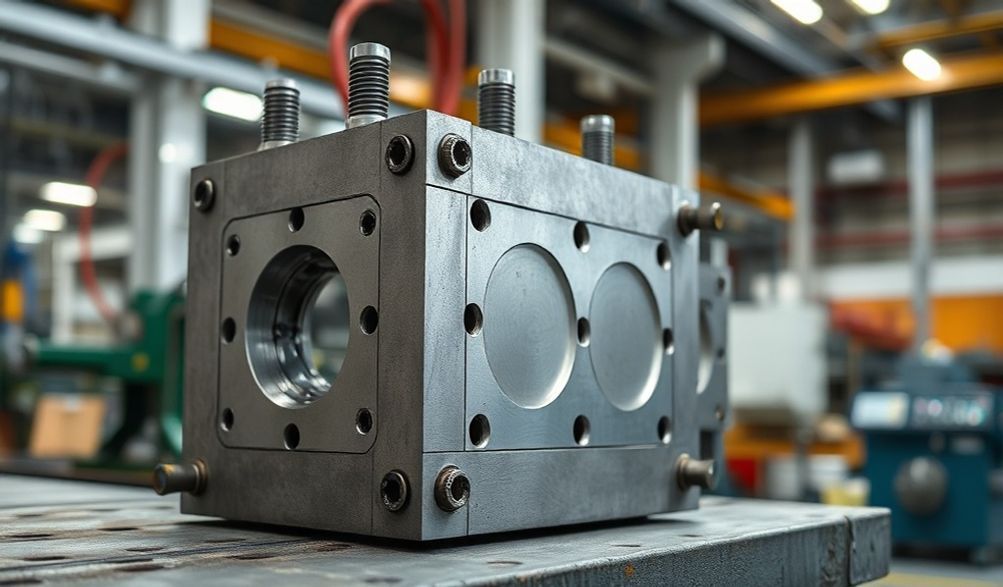
- Molds & Mold Liners: The Heart of Shape and Precision. These define the final block’s dimensions, texture, and structural integrity. Premium molds use specialized tool steels and precise machining to resist abrasion from concrete and maintain tolerances through thousands of cycles.
- Mixer Blades & Paddles: For Consistent Raw Material Homogenization. Worn blades lead to uneven mixing, causing weak spots and inconsistent curing in finished blocks. They must withstand constant abrasion from sand, aggregate, and cement.
- Hydraulic Cylinders, Seals, and Hoses: The Power System’s Lifeline. This system provides the immense pressure for compaction. Failure here—often due to substandard seals or hoses—results in complete machine downtime, fluid leaks, and loss of pressure.
- Conveyor Belts and Rollers: Ensuring Smooth Material Flow. They transport raw mix and finished blocks. Poor-quality belts wear quickly, causing misalignment and material spillage that disrupts the entire production rhythm.
- Vibration Motors and Plates: Key to Block Density and Strength. These components compact the concrete mix to eliminate air pockets. Inconsistent vibration leads to low-density blocks that fail to meet compressive strength standards.
The Impact of Accessory Quality on Machine Output and Longevity
The cost of a part is not its price tag, but its Жалпы меншіктің құны (ЖМҚ).
Inferior accessories create a cascade of problems:
- Increased Downtime: Frequent failures halt production. A broken hydraulic hose can stop a machine for hours; a cracked mold can stop it for days while waiting for a replacement.
- Poor Product Quality: Out-of-spec molds or weak vibration produce blocks that may be rejected on-site, leading to waste, reputational damage, and financial loss.
- Higher Maintenance Costs: Cheap parts wear faster, requiring more frequent changeovers and increasing labor costs. They can also cause secondary damage to more expensive machine frames and systems.
Conversely, premium accessories are a strategic investment:
- Maximized Uptime: Durable parts extend maintenance intervals, ensuring your machine earns revenue for more hours of the day.
- Consistent Compliance: High-quality parts ensure every block meets the required dimensional and strength specifications, project after project.
- Protected Capital Investment: Using parts that meet or exceed OEM standards protects your core machine investment from premature wear and catastrophic failure.
Why China is a Global Leader in Manufacturing Block Machine Accessories
China’s dominance isn’t accidental. It’s the result of decades of focused industrial development creating an ecosystem unmatched in scale and efficiency.
Scale, Specialization, and Supply Chain Integration
China’s manufacturing power is concentrated in specialized industrial clusters. For machinery and parts, clusters in provinces like Fujian, Shandong, and Guangdong host hundreds of interconnected factories.
This clustering creates powerful advantages:
- Deep Specialization: One factory may focus solely on CNC-machining mold cores, while its neighbor specializes in heat treatment. This focus hones expertise and drives innovation.
- Mature Supply Chains: Immediate access to raw material suppliers (specialized alloy steel, high-grade polymers for seals, industrial-grade rubber for belts) reduces lead times and costs.
- Competitive Pressure: The density of suppliers fosters competition on both price and quality, benefiting the informed buyer.
Technological Advancement and OEM Collaboration
The stereotype of Chinese manufacturing as purely low-tech is obsolete. Leading suppliers have heavily invested in advanced production technology.
- Advanced Manufacturing: Widespread use of CNC machining centers, laser cutting, and automated welding ensures precision. Advanced heat treatment processes (like induction hardening) are common to enhance part durability.
- OEM Experience: Many Chinese factories have a long history as original equipment manufacturers or aftermarket suppliers for international block machine brands. This experience has given them deep insight into Western engineering standards, material specifications, and quality expectations. They understand tolerances, load ratings, and performance requirements.
A Step-by-Step Framework for Vetting Chinese Suppliers (E-E-A-T Focus)
Finding a supplier is easy. Finding a сенімді серіктес requires a disciplined vetting process aligned with E-E-A-T principles.
Expertise Verification: Assessing Technical Capability
You need a supplier who speaks the language of engineering, not just commerce.
- Request Detailed Technical Data: Don’t accept vague promises. Ask for material test certificates (e.g., for steel grade), hardness reports (HRC), and dimensional drawings. A knowledgeable supplier will provide these readily.
- Test Customization Ability: Present a technical challenge. Can they reverse-engineer a worn part from photos and dimensions? Can they suggest a material upgrade for a specific application? Their response reveals their engineering depth.
- Ask for Project Evidence: Request case studies or references from clients with similar technical needs (e.g., producing high-density pavers or insulated blocks). This proves applied expertise.
Authoritativeness & Trustworthiness: Evaluating Business Credentials
Legitimacy is the foundation of trust. Verification is non-negotiable.
- Check Business Licenses: Use Chinese platforms like Tianyancha to verify their business registration, legal representative, registered capital, and years in operation. This confirms they are a real legal entity.
- Review International Certifications: ISO 9001:2015 for quality management systems is a strong baseline. For parts touching safety or sold in certain markets, CE белгісі (with supporting documentation) may be relevant.
- Analyze B2B Profiles Critically: On Alibaba or Made-in-China, look beyond the star rating. Read verified transaction reviews, especially those with photos. Be wary of suppliers with only generic, glowing testimonials. Look for responses to negative feedback—how a supplier handles problems is telling.
Experience in Action: The Critical Role of Factory Audits and Samples
Proof is in the production. First-hand verification separates the best from the rest.
- The Imperative of Samples: Never skip the sample order. Pay for pre-production samples to test in your own machine or lab. Check dimensions, material quality, fit, and function. This is your cheapest form of risk insurance.
- Conducting Effective Audits: If an in-person visit isn’t feasible, insist on a live video audit. Don’t accept a pre-recorded video. Ask to see:
- Active production lines for similar parts.
- Quality control stations with measuring equipment (calipers, CMMs if applicable).
- Raw material and finished goods warehouses.
- Their process for handling non-conforming parts.
Navigating Procurement: Logistics, Quality Control, and Communication
Once you’ve selected a supplier, clear processes prevent costly misunderstandings.
Incoterms Clarity: FOB, CIF, and EXW Explained for Machinery Parts
Defining responsibility is crucial for logistics and cost control.
- FOB (Free On Board) [Port]: You pay for the goods loaded on the ship. The supplier handles all costs and risks until that point. You control the main shipping and insurance. Most recommended for balance of control and cost.
- CIF (Cost, Insurance, and Freight) [Port]: The supplier arranges and pays for shipping and insurance to your destination port. Simpler for you, but you have less control over freight costs and carrier choice.
- EXW (Ex-Works): You take ownership at the supplier’s factory gate. You are responsible for all logistics, customs, and risks from that moment. Only use if you have a strong freight forwarder in China.
Implementing Rigorous Pre-Shipment Inspection (PSI)
Don’t trust, verify—before the goods leave the factory.
Hiring an independent third-party inspection company like SGS, Bureau Veritas, or Intertek is a wise investment for large orders. The inspector will visit the factory to:
* Verify quantity and check packaging for sea freight.
* Perform random sampling to check critical dimensions against your drawings.
* Inspect material and surface finish.
* Check for proper labeling and documentation.
The inspection report provides leverage to request corrections before shipment.
Ensuring Clear Technical Communication
Ambiguity is the enemy of quality.
- Use Detailed Drawings: Communicate with annotated technical drawings, not just photos or verbal descriptions. Specify dimensions, tolerances (±), material grades, surface treatments, and hardness requirements.
- Confirm in Writing: Summarize all agreed specifications, packaging, and labeling requirements in a Proforma Invoice (PI) or purchase order. This document becomes the contract.
- Keep Language Simple: Use clear, concise English. Avoid idioms. Confirm understanding by asking the supplier to repeat key points in their own words.
Common Pitfalls to Avoid When Sourcing from China
Learning from others’ mistakes is cheaper than making your own.
The False Economy of Choosing Price Over Value
The lowest quote often carries the highest hidden cost. A mold that costs 30% less but wears out three times faster is a net loss. It also risks causing unplanned downtime, which can cost thousands per hour in lost production. Calculate based on cost-per-cycle or cost-per-year, not just unit price.
Misunderstanding Material Specifications and Tolerances
“Hardened steel” is meaningless. You must specify the grade: Is it 40Cr for good wear resistance, H13 hot-work tool steel for high-temperature applications in pallet circulation, or something else? Similarly, a tolerance of ±0.5mm is vastly different from ±0.05mm. Vagueness invites substitution with inferior materials.
Overlooking After-Sales Support and Warranty Terms
The relationship doesn’t end at payment. What happens if a batch of parts is defective?
* Кепілдік: Ensure there is a clear, written warranty policy (e.g., 12 months against manufacturing defects). Understand the process for claims.
* Техникалық қолдау: Can they provide installation guidance or troubleshooting help?
* Қосалқы бөлшектердің қолжетімділігі: For custom parts, will they store drawings and molds to facilitate re-orders?
Жиі қойылатын сұрақтар (ЖҚС)
Q1: What are the most critical block machine accessories that require premium quality?
A: Prioritize molds/mold linersжәнеhydraulic components (cylinders, seals, valves). Molds directly define your product quality, while hydraulic failures cause immediate and total machine stoppage. Next, focus on vibration system partsжәнеmixer blades.
Q2: How can I verify if a Chinese supplier is a genuine manufacturer and not just a trading company?
A: Request a live video tour of the specific workshop producing your part. Ask to see raw material stock with mill certificates. Genuine manufacturers can discuss detailed production processes (e.g., “We use CNC grinding after heat treatment to ensure flatness”). Trading companies often deflect or provide staged tours.
Q3: What is the typical lead time for custom block machine accessories from China?
A: For standard catalog items, 15-30 days after order confirmation. For custom-made parts like large block molds, expect 30-60 days, accounting for material procurement, machining, heat treatment, and final QC. Always get a confirmed timeline in writing before paying a deposit.
Q4: Are there reliable B2B platforms for finding specialized block machine accessory suppliers?
A: Alibaba and Made-in-China are broad starting points. For deeper sourcing, investigate industry-specific exhibitions like the China International Building Materials Fair (CICBM) or search using Chinese industry terms via a translator. Often, the best specialized suppliers have less polished websites but superior technical capability.
Q5: What payment terms are safest when dealing with a new supplier?
A: A balanced approach is standard: 30% deposit via Telegraphic Transfer (T/T) after signing PI, 70% balance against copy of Bill of Lading. This shares the risk. For very large orders, consider a Letter of Credit (L/C), though it is more complex and costly. Avoid 100% upfront payments.
Қорытынды
Sourcing block machine accessories from China is a strategic endeavor that blends technical understanding with diligent process. It begins with knowing your components, leverages China’s unparalleled manufacturing ecosystem, and culminates in a rigorous, E-E-A-T-focused supplier vetting process.
The goal is not merely a transaction, but to build a partnership. The right Chinese supplier becomes more than a vendor; they become a reliable extension of your maintenance and operations team, contributing directly to your machine’s uptime and your bottom line.
Begin by applying this framework. Start small with sample orders to test quality and build trust. Invest time in clear communication and verification. By doing so, you transform global sourcing from a perceived risk into a definitive competitive advantage, securing the durable, high-performance parts that keep your production line moving forward.
<