Efficient Operation of Brick Manufacturing Machinery
Кіріспе
For equipment distributors and procurement specialists, the ability to articulate not just the specifications but the practical, day-to-day operational reality of brick-making machinery is a cornerstone of client success and satisfaction. A machine’s theoretical output is only realized through correct, safe, and systematic operation. This guide provides a comprehensive procedural framework for operating brick machinery, moving from foundational setup to cyclic production and critical shutdown protocols.
Foundational Pre-Operational Procedures: The Bedrock of Success
Operation begins long before the start button is pressed. Meticulous preparation is non-negotiable for safety, product quality, and machine longevity.
- Comprehensive Site and Machine Preparation
- Site Readiness: The production floor must be clean, level, and free of obstructions. Adequate space for raw material storage, mixing, brick curing, and machine maintenance access is essential. Lighting and ventilation must be sufficient.
- Machine Inspection (Daily Checklist): Operators must conduct a visual and functional inspection. This includes:
- Checking for and removing any foreign material in the mold cavity, feed hopper, and around the press head.
- Inspecting hydraulic hoses and electrical cables for wear, leaks, or damage.
- Verifying that all safety guards and interlocks are in place and functional.
- Ensuring the pallet circulation system (if automated) is clear and aligned.
- Lubrication: Greasing all nipples on guide rods, bearings, and other moving parts as specified in the manufacturer’s manual. This is a daily ritual to prevent metal-on-metal wear.
- Raw Material Readiness and Mix Design Verification
- The operator must confirm that a sufficient quantity of properly formulated raw material is available and homogenous. This involves:
- Moisture Check: Using a hand-squeeze test or moisture meter to verify the mix is at or near the Optimum Moisture Content (OMC). A mix that is too dry will not compact properly; too wet will stick and deform.
- Consistency Verification: Ensuring the aggregate-binder mix has been blended thoroughly to prevent segregation. The operator is the final quality gate before the mix enters the machine.
- The operator must confirm that a sufficient quantity of properly formulated raw material is available and homogenous. This involves:
- Machine Configuration and Parameter Setting
- For the specific product to be made, the operator must:
- Install and Secure the Correct Mold Set: Ensuring the mold box, head, and core rods (for hollow blocks) are correctly installed, aligned, and tightly clamped.
- Input Production Parameters: On the PLC/HMI touchscreen, select or enter the correct “recipe.” This program sets the key variables: feed drawer travel (material volume), vibration time and intensity, main compaction pressure and dwell time, and ejection stroke.
- Calibrate the Feeder: Perform a test cycle to ensure the feed drawer deposits the precise amount of material into the mold cavity, making micro-adjustments as necessary.
- For the specific product to be made, the operator must:
The Cyclic Operational Phase: Executing the Production Sequence
With preparation complete, the machine enters its repetitive production cycle. The operator’s role evolves from preparer to monitor and conductor.
- Initiating the Cycle and Monitoring Automation
- In semi-automatic mode, the operator initiates each cycle (often with a two-hand control for safety). In fully automatic mode, the operator starts the continuous cycle. The machine then executes a pre-programmed sequence:
- Тамақтандыру: The feed drawer moves over the empty mold, depositing a measured volume of material. The operator monitors for consistent fill and no blockages.
- Тығыздау: The press head descends. Vibration may activate to settle the material, followed by the main hydraulic pressure stroke. The operator observes pressure gauges or HMI readings to ensure parameters are met.
- Mold Release and Ejection: The mold box lifts or opens, and the ejection plate rises to push the newly formed “green” brick out of the mold.
- Palletization and Transfer: The brick is deposited onto a pallet. A transfer mechanism moves the loaded pallet out of the press station onto a conveyor or stack.
- In semi-automatic mode, the operator initiates each cycle (often with a two-hand control for safety). In fully automatic mode, the operator starts the continuous cycle. The machine then executes a pre-programmed sequence:
- The Critical Role of the Operator as Process Auditor
- Beyond button-pushing, the operator must continuously audit the process:
- Product Quality Spot-Checks: Periodically (e.g., every 30 minutes), measuring sample bricks for dimensional accuracy (length, width, height), checking weight for consistency, and visually inspecting for cracks, chips, or poor surface finish.
- Machine Performance Monitoring: Listening for unusual noises (knocking, grinding), watching for fluid leaks, and noting any hesitation or misalignment in the cycle.
- Material Replenishment: Ensuring the feed hopper is kept at an adequate level to prevent air pockets and inconsistent filling.
- Beyond button-pushing, the operator must continuously audit the process:
- Manual and Semi-Automatic Workflow Nuances
- In less automated setups, the operator’s physical tasks increase:
- Қолмен тамақтандыру: Scooping or shoveling mix into the feed chamber for each cycle.
- Паллеттерді өңдеу: Manually placing an empty pallet on the press table before each cycle and removing the loaded pallet after ejection.
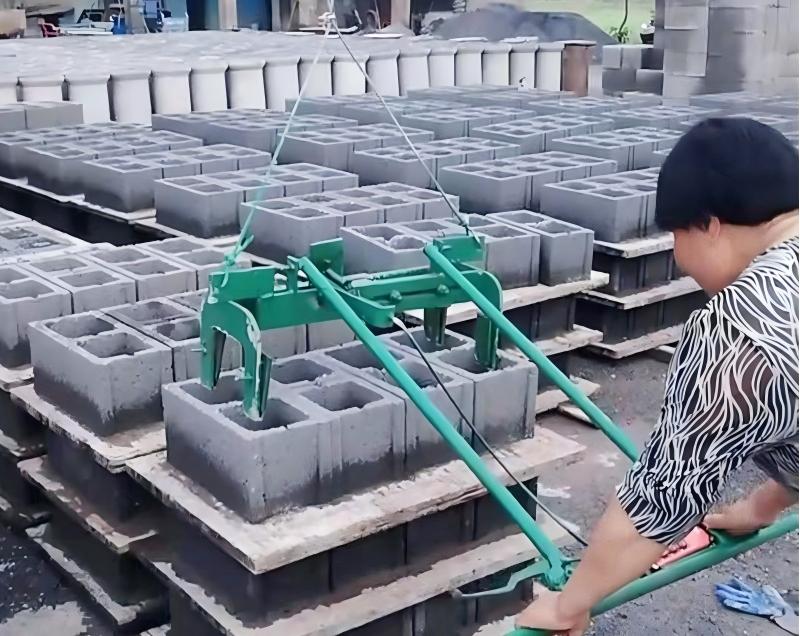
- Brick Removal and Stacking: Manually transferring green bricks from the pallet to a curing rack or yard. This highlights the labor-intensity these machines are designed to reduce.
- In less automated setups, the operator’s physical tasks increase:
Post-Cycle and Shutdown Protocols: Ensuring Longevity
Proper conclusion of a production run is as important as its start. A disciplined shutdown prevents issues for the next shift.
- Orderly Production Conclusion
- As the run finishes, the operator should plan to run the hopper nearly empty to minimize leftover material that may harden in the system.
- Comprehensive Cleaning and Purge Cycle
- This is the most critical post-operation task. The operator must:
- Clear the Hopper and Feeder: Remove all residual raw material.
- Execute a “No-Feed” Cycle: Run the machine several times without material to eject any compacted residue from the mold box and clean the press head.
- Detailed Mold Cleaning: Using non-metallic brushes and tools, carefully clean all surfaces of the mold, core rods, and ejection plate. Built-up material will cause sticking and product defects.
- Clean the Surrounding Area: Remove spillage from the machine and floor to maintain a safe working environment.
- This is the most critical post-operation task. The operator must:
- Proper Shutdown Sequence
- Following the manufacturer’s sequence: Place the machine in “manual” or “maintenance” mode, lower the press head to relieve pressure on the hydraulic system, turn off the main power switch, and engage lock-out/tag-out procedures if maintenance is to follow.
- Curing and Post-Production Handling
- The operator’s responsibility often extends to initial curing. This involves moving stacked green bricks to a protected curing area, where they are kept moist (often by covering with plastic sheeting or periodic water spraying) for a minimum period (e.g., 7 days) to allow cement hydration and strength development. Proper handling here prevents damage to the fragile green bricks.
Advanced Operational Considerations for Efficiency
- Data Logging and Process Optimization
- Modern machines record production data (cycles completed, average cycle time, alarm history). Savvy operators and plant managers review this data to identify bottlenecks, track efficiency, and plan preventative maintenance, transforming operation from a reactive to a proactive discipline.
- Troubleshooting Common In-Process Issues
- The operator is the first line of defense. Common issues and immediate checks include:
- Bricks Breaking on Ejection: Check for under-compaction, low moisture, or worn/dirty mold surfaces.
- Inconsistent Brick Height: Check feed volume calibration, material moisture consistency, and hydraulic pressure stability.
- Machine Stalling or Alarming: Consult the HMI alarm message; check for material jams, low hydraulic fluid, or sensor misalignment.
- The operator is the first line of defense. Common issues and immediate checks include:
Қорытынды
Operating a brick-making machine is a technical profession that blends mechanical oversight, material science, and disciplined procedure. For the distributor, conveying this operational complexity is key to setting client expectations and ensuring the machinery delivers on its promise. By providing clients with a clear framework encompassing rigorous pre-checks, vigilant in-cycle monitoring, and meticulous post-production care, dealers do more than sell a machine—they enable a sustainable production culture. This depth of support reduces costly downtime, enhances product quality, and builds client loyalty. Ultimately, the most successful distributors are those who equip their clients not only with hardware but with the operational knowledge to wield it effectively, turning a capital purchase into a thriving, productive enterprise.
Жиі қойылатын сұрақтар (ЖҚС)
Q1: What is the single most important daily maintenance task an operator must perform?
A: Without exception, thorough and meticulous cleaning of the mold system and feeding mechanism after each production run is paramount. Leftover material will harden, causing bricks to stick, leading to breakage, dimensional inaccuracy, and increased wear on the machine. A clean machine is the foundation of consistent production and longevity.
Q2: How does an operator know if the raw material mix has the correct moisture content?
A: Two primary methods:
- The “Hand-Squeeze” Test: A skilled operator takes a handful of mix and squeezes it firmly. It should form a coherent ball that holds its shape without crumbling (too dry) and without leaving excess moisture on the palm (too wet). It should break cleanly into a few pieces when poked.
- Moisture Meter: A more scientific approach using a probe-type meter provides a digital percentage readout, which should match the laboratory-determined Optimum Moisture Content for the specific mix design.
Q3: What safety protocols are absolutely non-negotiable during operation?
A:
- Lock-Out/Tag-Out (LOTO): Must be performed before any cleaning, adjustment, or maintenance where contact with moving parts is possible.
- Use of Safety Guards: Never operate with guards removed or safety interlocks bypassed.
- Proper Attire: Wear close-fitting clothing, safety glasses, hearing protection, and steel-toed boots.
- Two-Hand Operation on Semi-Automatics: Keeps hands away from the pressing area during the cycle cycle.
- Clear Communication: Especially in areas with pallet conveyors or forklift traffic.
Q4: Can operational parameters be adjusted “on the fly” to correct a quality issue?
A: Minor adjustments can be made during a run, but caution is advised. For example, if bricks are slightly underweight, the operator can incrementally increase the feed volume via the HMI. However, significant changes to pressure or vibration should be done cautiously, as they affect the entire production process. It is often better to stop, investigate the root cause (e.g., material change), adjust parameters, and then restart, checking new samples for conformity.
Q5: What basic records should an operator or supervisor maintain?
A: Essential records include:
- Daily Production Log: Quantity produced, by product type.
- Machine Checklist: Signed record of daily inspection, lubrication, and cleaning.
- Quality Control Log: Results of periodic brick dimensional and weight checks.
- Maintenance Log: Record of any issues, adjustments made, and parts replaced. This history is invaluable for troubleshooting and planning major servicing.