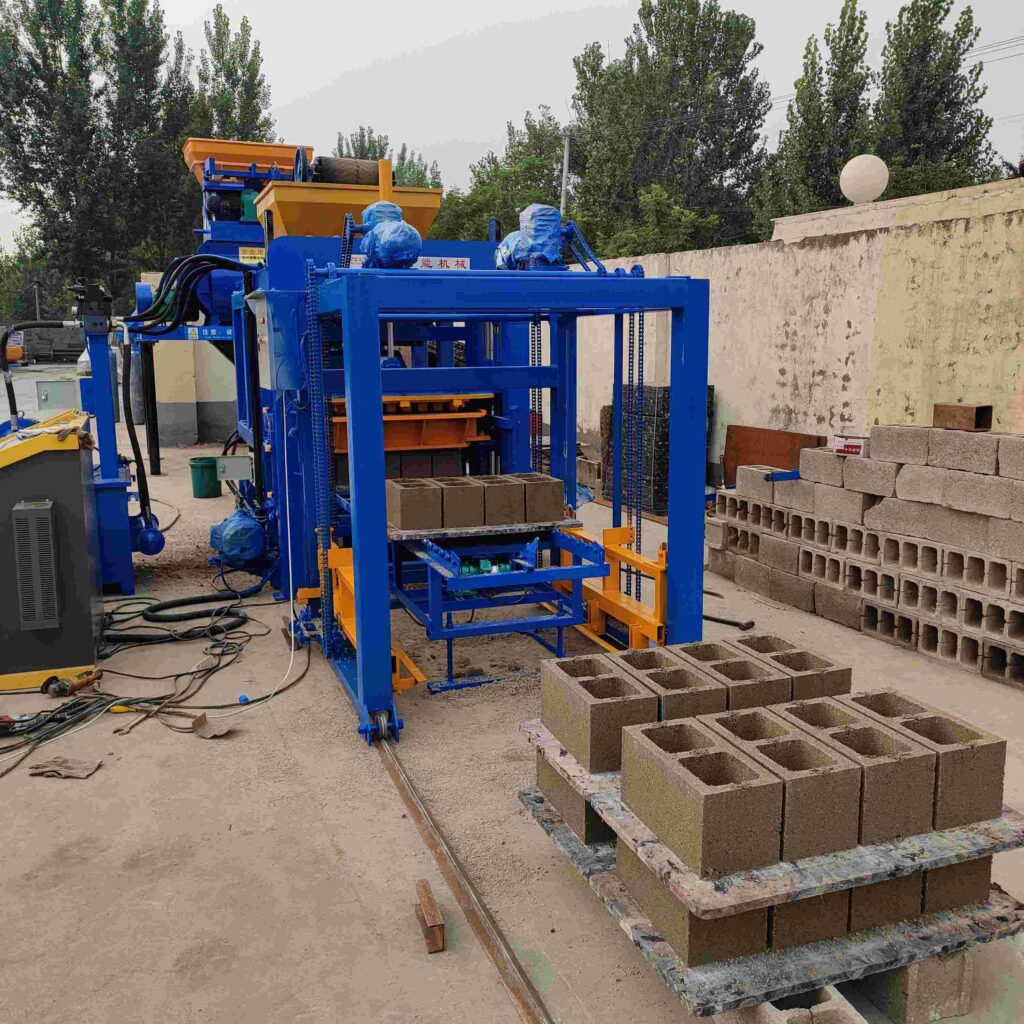
Жартылай автоматты және толық автоматты жүйелер арасындағы айырмашылық бизнес инвестициялары үшін іргелі шешім тармағын білдіреді. Дистрибьюторлар, дилерлер және сатып алу мамандары үшін бұл айырмашылықты түсіну тек сипаттамаларды салыстыру мәселесі ғана емес; бұл клиенттің операциялық мүмкіндіктерін, қаржылық шектеулерін және нарықтық амбицияларын сәйкес технологиялық шешіммен үйлестіруге бағытталған стратегиялық кеңес берудің өзегі болып табылады. Автоматтандырудың осы екі деңгейі арасындағы таңдау өндірістік кәсіпорынның еңбек моделін, ауқымын, тұрақтылығын және өсу жолын анықтайды.
I. Негізгі айырмашылықтар: Негізгі операциялық философия
Негізгі айырмашылық өндіріс циклін аяқтау және материал ағынын басқару үшін қажетті адамның араласу дәрежесінде жатыр.
А. Жартылай автоматты машина: Адам-машина ынтымақтастығы
Жартылай автоматтандырылған жүйеде машина негізгі, жоғары күшті пішіндеу процесін автоматтандырады, бірақ маңызды логистикалық функцияларды басқару үшін адам операторларына сүйенеді.
- Циклды бастау:Әдетте, оператор әрбір өндірістік циклді аяқ педалі немесе батырмасы арқылы бастайды.
- Автоматтандырылған негізгі процессІске қосылғаннан кейін машина алдын ала белгіленген тізбекті автоматты түрде орындайды: ол кіріктірілген бункерден аралас материалды алып, оны қалыпқа ауыстырады, тығыздау үшін діріл және гидравликалық қысымды қолданады және қалыпталған блокты шығару үшін қалыпты көтереді.
- Сынды қолмен араласу шараларыОператор бірнеше маңызды міндеттерге жауапты:
- Дайындалған материалды беруМашинаның бункеріне дұрыс бетон қоспасының үздіксіз жеткізілуін қамтамасыз ету, көбінесе қол арбасы немесе қарапайым конвейер арқылы жүзеге асырылады.
- Өнімді өңдеу:Жаңадан шығарылған "жасыл" блокты (паллетте немесе өндіріс бетінен) қолмен алып, қатайту аймағына тасымалдау.
- Паллеттерді басқару:Палеталық жүйелерде бос палеттерді машинаның кіріс желісіне қолмен қайтару.
- Негізгі сапаны тексеру:Блоктарды көзбен тексеру және араластыру немесе машина параметрлерін шағын реттеулер жасау.
B. Толық автоматты машина: Интеграцияланған жүйе автономдылығы
Толық автоматтандырылған жүйе өндіріс ағынында адамның араласуын азайтуға бағытталған, үздіксіз және үйлестірілген өндіріс желісін құрады.
- Бағдарламалық автономия:Бүкіл процесті орталық бағдарламаланатын логикалық басқаруыш (PLC) басқарады. Іске қосылғаннан кейін жүйе оператордың ең аз араласуымен жұмыс істейді.
- End-to-End Integration: Key processes are fully mechanized:
- Материалдарды өңдеу: Raw materials are often batched and mixed in an automated system that feeds the precise mix directly and continuously to the brick machine’s hopper via enclosed conveyors.
- Automated Production Cycle: The molding cycle (filling, compacting, ejecting) is entirely automatic and synchronized with material input.
- Product Logistics: Robotic arms, stackers, or sophisticated conveyor systems automatically transfer the green blocks onto curing racks or carts. Empty pallets are automatically cleaned, oiled, and returned to the start of the cycle.
- Curing Management: The system often integrates with automated curing systems (e.g., rack storage systems, chamber indexing) to create a seamless flow from production to curing.
II. Comparative Analysis: Key Differentiating Factors
The operational difference manifests in several concrete, measurable factors critical for business planning.
A. Labor Requirement and Skill Profile
- Жартылай автоматты: Requires a higher number of personnel per output unit. Labor is primarily physical (material handling, block removal) but requires attentiveness to cycle timing. Skill levels can be lower, with training focused on manual tasks and basic machine operation.
- Толық автоматты: Dramatically reduces direct labor count. Typically requires 1-3 highly skilled personnel per shift to monitor the PLC interface, perform quality control sampling, and conduct preventive maintenance. The labor cost shifts from unskilled physical labor to skilled technical supervision.
B. Production Output and Consistency
- Жартылай автоматты: Output is операторға тәуелді and variable. Production speed is limited by human efficiency in feeding and clearing the machine. Output can fluctuate based on operator fatigue, shift changes, or breaks. Realistic output is often 60-75% of the machine’s theoretical maximum cycle speed.
- Толық автоматты: Output is system-defined and highly consistent. The PLC maintains a constant, optimal cycle time 24/7 if required. Output achieves 85-95% of theoretical capacity, as it is not subject to human pacing. This guarantees predictable daily, weekly, and monthly production volumes.
C. Product Quality and Uniformity
- Жартылай автоматты: Quality is generally good but can exhibit minor variability. Factors like slightly inconsistent manual feeding or variations in how quickly a block is removed after ejection can lead to small differences in density or surface finish.
- Толық автоматты: Delivers exceptional, batch-to-batch consistency. Precise, computer-controlled metering of material, pressure, vibration time, and handling ensures each unit is virtually identical. This is critical for large projects where precise structural calculations and uniform aesthetics are paramount.
D. Capital Investment and Financial Structure
- Жартылай автоматты: Represents a moderate capital expenditure (CAPEX). The investment is primarily in the core machine itself. It offers a lower barrier to entry and a faster potential return on investment for a business starting or operating at a moderate scale.
- Толық автоматты: Demands a significantly higher CAPEX. The investment covers not just a more complex press, but the integrated material handling, robotics, and sophisticated control systems. It is a long-term strategic investment justified by volume, labor savings, and market positioning.
E. Operational Complexity and Support Needs
- Жартылай автоматты: Mechanically simpler. Troubleshooting often involves visible, mechanical, or basic hydraulic issues. Maintenance can frequently be performed by trained operators or local mechanics. Spare parts are generally less complex.
- Толық автоматты: Highly complex. Troubleshooting requires understanding PLC software, sensor networks, and advanced mechatronics. Maintenance demands specialized technicians. Dependence on proprietary software and specialized spare parts from the original manufacturer is higher, making the choice of supplier and their after-sales support capability absolutely critical.
III. Strategic Application and Market Alignment
Choosing between the two is a strategic business decision that must align with the client’s profile and goals.
A. Ideal Clientele for Semi-Automatic Systems
- Small to Medium Enterprises (SMEs): Businesses with limited initial capital and a focus on local or regional markets.
- Market Entrants & Entrepreneurs: Those testing a business model or building a customer base gradually.
- Markets with Low Labor Costs: Where the economic driver for full automation (labor savings) is less compelling.
- Operations Requiring Flexibility: Businesses that frequently change products (e.g., switching between blocks and pavers) may find the simpler, more hands-on semi-automatic system more adaptable for short runs.
B. Ideal Clientele for Fully Automatic Systems
- Large-Scale Industrial Producers: Suppliers to major infrastructure projects, national retailers, or housing developers requiring guaranteed, massive volume.
- Businesses in High Labor-Cost Regions: Where automating manual tasks provides a rapid and necessary return on investment.
- Clients Focused on Premium/Standardized Quality: Producers of certified blocks for structural applications or suppliers to markets with stringent, enforceable building codes.
- Investors with Significant Capital: Those looking to establish a market-leading position with a focus on operational efficiency and low per-unit production cost over the long term.
IV. The Role of the B2B Professional: Guiding the Decision
For distributors and dealers, the role is to facilitate an informed choice, not to push a predetermined option. This involves a consultative process:
- Қаржылық талдау Modeling CAPEX against projected labor savings, output value, and payback period for both options.
- Market Demand Assessment: Quantifying the client’s current and projected order book. Does it justify and require the output of a full line?
- Operational Readiness Evaluation: Assessing the client’s ability to recruit and retain the skilled technicians needed for a fully automatic system, or their access to reliable manual labor for a semi-automatic one.
- Infrastructure Check: Verifying that the client’s site has the stable, high-capacity power supply and space required for an integrated automatic line.
Қорытынды
The divergence between semi-automatic and fully automatic brick making machines represents a strategic fork in the road for manufacturing businesses. The semi-automatic path offers accessibility, flexibility, and lower initial risk, positioning itself as the engine of growth for the entrepreneurial and SME sector. The fully automatic path represents the pinnacle of industrial efficiency, pursuing scale, consistency, and minimal variable cost, suited for established players in high-volume markets.
For the B2B professional, expertise is demonstrated by moving beyond a simplistic “manual vs. automatic” narrative. It requires a nuanced understanding that the “semi-automatic” machine is not an inferior version of the “fully automatic,” but a distinct tool for a different business model. The most valuable service a distributor can provide is to meticulously align the client’s capital, labor landscape, market ambition, and operational DNA with the appropriate level of technological integration. By doing so, you ensure the chosen machine does not become a burdensome asset, but rather the perfectly calibrated catalyst for your client’s sustainable success and profitability.
Жиі қойылатын сұрақтар (ЖҚС)
Q1: Can a semi-automatic machine be upgraded to a fully automatic one later?
A: Generally, no, not through a simple upgrade kit. The fundamental design philosophies differ. A semi-automatic machine lacks the structural integration points, control system architecture, and often the mechanical robustness to seamlessly add robotic handling and full PLC orchestration. “Upgrading” typically means selling the semi-automatic machine and purchasing a new, designed-from-the-ground-up fully automatic system. However, some semi-automatic models can be enhanced with add-on automation (like an automatic feeder or a simple stacker), which improves efficiency but does not constitute full automation.
Q2: Which type offers a better return on investment (ROI)?
A: The ROI profile is different, not inherently better or worse. A жартылай автоматты машина often has a shorter ROI period due to its lower purchase price. It can become profitable quickly at a modest scale. A толық автоматты машина usually has a higher absolute ROI over its full lifespan due to vastly lower operating costs and higher output, but it requires a longer period to recoup the much larger initial investment. The “better” ROI depends on the client’s access to capital and their patience for a longer payoff horizon.
Q3: Is product quality drastically different between the two types?
A: The quality from a well-operated semi-automatic machine can be excellent and meet all common standards. The difference lies in consistency and repeatability. A fully automatic system eliminates human variables, ensuring that the 100,000th block is identical to the first. For most general construction, semi-automatic quality is sufficient. For precision-engineered projects or where a single client’s order spans multiple production runs over months, the guaranteed consistency of a full automatic becomes a major commercial advantage.
Q4: How significant is the difference in maintenance cost and complexity?
A: The difference is substantial. Жартылай автоматты машиналар have lower and more predictable maintenance costs, often manageable with in-house staff. Fully automatic systems have higher annual maintenance costs due to the complexity and number of components (robotics, sensors, advanced hydraulics). This maintenance often requires service contracts with specialized technicians, representing a higher, ongoing operational expense that must be factored into the TCO (Total Cost of Ownership).
Q5: For a business planning to operate 16 hours a day with two shifts, which type is more suitable?
A: Intensive multi-shift operation strongly favors a fully automatic system. The consistency and output guarantee are maintained regardless of shift changes or operator fatigue. The higher initial investment is justified by maximizing utilization. A semi-automatic machine running on two shifts will see output variations between shifts and incur higher labor costs (for two teams of manual handlers), eroding the economic benefits of extended operation.