
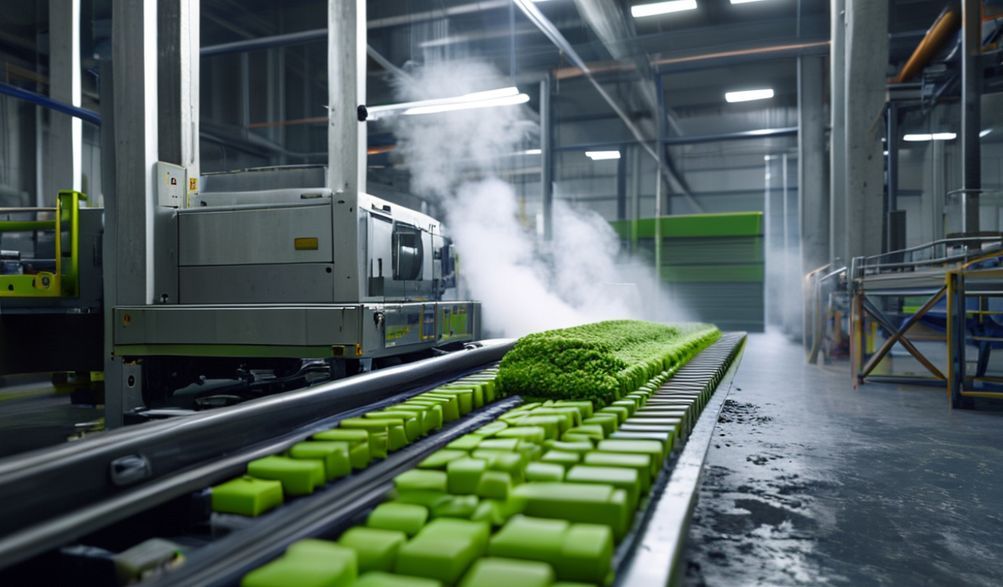
The Complete Guide to Starting & Running a Successful Machine Block Making Factory
Кіріспе
The global construction industry is a relentless engine of growth, demanding vast quantities of reliable, affordable, and durable materials. At the very foundation of this activity—literally and figuratively—lies the humble concrete block. From residential homes to towering skyscrapers and critical infrastructure, concrete masonry units (CMUs) are the indispensable building blocks of modern development. This sustained demand presents a significant and stable opportunity for astute entrepreneurs and investors.
This comprehensive guide is designed to be your definitive resource for navigating the journey of establishing and operating a profitable machine block making factory. Synthesizing decades of collective industry knowledge in engineering, manufacturing best practices, and market analysis, we aim to cut through the noise. Our purpose is to provide you with transparent, practical, and actionable information. Whether you are a seasoned engineer, a budding entrepreneur, or a strategic investor, this guide will equip you with the insights needed to make informed decisions, avoid costly pitfalls, and build a venture that stands the test of time. We will delve into everything from initial planning and machinery selection to the science of mix design and the nuances of building a trusted brand.
What is a Machine Block Making Factory? Core Concepts & Products
Before diving into the complexities, it’s crucial to establish a clear understanding of what a modern block manufacturing plant entails and what it produces.
Defining the Modern Block Manufacturing Plant
A machine block making factory is an industrial facility dedicated to the systematic production of concrete masonry units using specialized mechanized equipment. Gone are the days of purely manual labor; today’s plant leverages machinery to automate the processes of mixing, molding, compacting, and often curing concrete into precise, high-strength blocks. The core of this operation is the block making machine, which transforms a raw concrete mix into finished products with consistency, speed, and scale that manual methods cannot match.
Key Products of a Block Factory
A well-equipped factory can cater to diverse market needs by producing a variety of blocks:
- Стандартты қуыс блоктар: The most common product, featuring hollow cores that reduce weight, improve insulation, and allow for reinforcing steel and conduit.
- Қатты блоктар: Dense, heavy blocks used where high compressive strength, sound insulation, or sheer mass is required (e.g., load-bearing walls, foundations).
- Paving Blocks & Kerbstones: Used in hard landscaping for driveways, walkways, parking lots, and road edging. They are known for durability and aesthetic appeal.
- Біріктірілетін блоктар: Designed to fit together without mortar, popular for retaining walls, garden borders, and some construction systems.
- Custom-Designed Blocks: Specialty shapes for architectural features, ventilation, or specific construction systems.
The Role of Automation: From Manual to Fully Automatic Plants
Automation is the defining spectrum in this industry, directly impacting output, labor requirements, and capital investment.
- Қолмен/Жартылай автоматты машиналар: Require significant human intervention for feeding mix, demolding blocks, and transporting pallets. Suitable for very small-scale startups or markets with very low labor costs. Output is limited.
- Толық автоматты өсімдіктер: Represent the pinnacle of efficiency. These integrated systems feature automated batching, mixing, molding, curing (often via steam chambers), pallet circulation, and stacking. Controlled by PLCs, they require minimal manual labor and can operate 24/7, producing thousands of blocks per shift with remarkable consistency.
Critical Planning Steps Before Launching Your Factory
Success is forged in the planning stage. Rushing into equipment purchase without thorough groundwork is the most common and costly mistake.
Comprehensive Market Research and Feasibility Study
This is your business’s foundation. You must answer critical questions:
- Demand Analysis: What is the current and projected construction activity in your target region? Are there major infrastructure projects planned?
- Competitor Landscape: Who are your competitors? What is their capacity, product range, quality, and pricing? Identify gaps you can fill.
- Raw Material Sourcing: Where will you get cement, sand, and aggregates? Assess consistent availability, quality, and transportation costs.
- Customer Identification: Define your primary customers: large contractors, government tenders, retail building material stores, or direct to developers?
Strategic Business Plan Development
A robust business plan is your roadmap and is essential for securing financing. Key components include:
- Executive Summary: A concise overview of the entire venture.
- Financial Projections: Detailed breakdown of Capital Expenditure (CAPEX: land, machinery, shed) and Operational Expenditure (OPEX: raw materials, labor, utilities, marketing). Include cash flow forecasts and break-even analysis.
- Marketing & Sales Strategy: How you will attract and retain customers.
- Operational Plan: Day-to-day running procedures, management structure, and supply chain logistics.
Location, Land, and Layout (The 3 L’s)
The physical setup of your machine block making factory is a long-term strategic decision.
- Location Criteria: Prioritize proximity to your target market to minimize transportation costs. Also consider access to raw materials, reliable road networks for inbound/outbound logistics, and availability of utilities (stable electrical supply, water source).
- Land Requirements: A medium-scale plant typically needs 10,000 to 20,000 square feet. This must accommodate the production shed, raw material storage (covered and uncovered), curing area, finished goods yard, and office space.
- Layout Design: The plant layout must enable a smooth, linear workflow to minimize handling and bottlenecks. The classic sequence is: Raw Material Storage -> Batching/Mixing Area -> Machine & Molding Station -> Curing Area -> Testing & Cubing -> Dispatch Yard.
The Heart of the Operation: Block Making Machinery & Equipment
Your machinery is your most critical investment. Choosing correctly is paramount.
Types of Block Making Machines: A Detailed Comparison
- Стационарлық блоктық машиналар: Fixed in place, producing blocks on pallets that are then moved away for curing. They form the core of most factories.
- Статикалық машиналар: High-pressure vibration for dense blocks. Excellent for solid blocks, pavers, and kerbstones.
- Egg-Laying Machines: Produce blocks directly on the concrete floor, then “lay” them and move forward. Lower investment but slower and more labor-intensive for block collection.
- Толық автоматтандырылған желілер: Integrated systems with automatic pallet circulation, feeders, and stackers. The gold standard for high-volume production.
- Мобильді блоктық машиналар: Self-contained units that can produce blocks directly at a construction site, eliminating transport costs for the final product. Ideal for large, remote projects.
Essential Auxiliary Equipment for a Smooth Workflow
The block machine is just one piece of the puzzle. A efficient factory requires:
- Бетон араластырғыш: A forced-action pan mixer or planetary mixer is essential for producing a homogeneous, consistent mix.
- Конвейерлік белдіктер: To transport raw materials and mixed concrete to the machine hopper.
- Cement Silo: For bulk cement storage, ensuring supply and reducing bag-handling labor.
- Block Curing System: This can be a simple water spraying system or an advanced steam curing chamber that accelerates strength gain in hours.
- Материалдарды өңдеу: Forklifts, pallet cars, and bobcats for moving raw materials and finished blocks.
Selecting the Right Machine: Capacity, Automation, and Budget
Match your machine to your business plan:
1. Сыйымдылық: Calculate your target daily output. Machines are rated in “blocks per hour” (e.g., 1,000, 2,000, 10,000). Factor in an 8-hour operational day.
2. Автоматтандыру деңгейі: Balance your budget with available labor skills and desired output consistency. Semi-automatic is a common starting point.
3. Budget: Include not just the machine cost, but shipping, installation, and commissioning. Consider reputed brands known for after-sales service and spare part availability.
Raw Materials, Mix Design, and Production Process
Quality blocks begin with quality inputs and a scientifically sound process.
Sourcing Quality Raw Materials: Cement, Aggregates, and Water
- Цемент: Use a standard, reputable Portland cement (e.g., OPC 43 or 53 grade). Consistency in supplier is key.
- Агрегаттар: Sand should be coarse, clean, and free of silt or organic matter. Aggregates (crushed stone) should be hard and durable. Proper grading affects strength and mix efficiency.
- Су Must be clean and potable. Impurities can affect setting time and final strength.
- Admixtures: Plasticizers can improve workability and reduce water content, leading to higher early strength.
Mastering Concrete Mix Design for Optimal Blocks
The mix design formula (e.g., 1:4:8 for cement:sand:aggregate) determines the block’s compressive strength, weight, and cost.
* Күш A richer mix (more cement) yields higher strength but increases cost.
* Тұрақтылық: Once a design is proven through testing, it must be followed exactly for every batch to ensure uniform product quality. Even small deviations in water content can be detrimental.
The Step-by-Step Production Cycle
- Партиялау: Measuring out precise quantities of cement, sand, aggregate, and water.
- Араластыру: Blending materials thoroughly in the mixer to achieve a uniform, workable concrete.
- Қалыптау және Қысу: The mix is fed into the machine, vibrated under high pressure in molds to remove air voids and achieve density.
- Емдеу: The most critical phase. Fresh blocks are kept moist and at a controlled temperature for days (often 14-28 days) to allow the cement to fully hydrate and gain strength.
- Cubing/Palletizing: Cured blocks are stacked on wooden pallets or in cubes for stability.
- Storage & Dispatch: Blocks are stored in a dry area before being dispatched to customers.
Ensuring Quality Control & Building Trust in Your Brand
In construction, trust is your most valuable asset. It is built brick by brick through unwavering quality.
Implementing a Rigorous Quality Control Protocol
- Ішкі процесті тексерулер: Daily checks of raw material quality, mix consistency, wet block weight, and dimensions.
- Finished Product Testing: Regularly test sample blocks for Compressive Strength (the primary metric), water absorption, and density in accordance with standards like ASTM C90немесеIS 2185.
Proper Curing: The Key to Durable, High-Strength Blocks
A block gains most of its strength during curing. Inadequate curing is the leading cause of low-strength, crack-prone blocks. Methods include water sprinkling, steam curing, or covering with wet burlap. The goal is to prevent moisture loss.
Certifications, Standards, and Building Customer Confidence
Adhering to national or international standards isn’t just good practice—it’s a powerful marketing tool. Being able to provide test certificates from a recognized lab builds immense credibility with engineers, architects, and large contractors, allowing you to command a premium price.
The Business Side: Cost, Profitability, and Marketing
Turning a technically sound operation into a financially successful one requires sharp business acumen.
Breakdown of Investment and Operational Costs
| Cost Category | Examples |
| :— | :— |
| Capital Expenditure (CAPEX) | Land, Factory Shed, Block Making Machine, Mixer, Forklift, Office Setup. |
| Operational Expenditure (OPEX) | Raw Materials (Cement, Sand, Aggregate), Labor Wages, Electricity & Water, Fuel, Machine Maintenance, Marketing, Transportation. |
Revenue Streams and Profitability Analysis
- Pricing: Base your price on cost-plus-margin, but be aware of market rates. Value-added products (colored pavers, high-strength blocks) have higher margins.
- Profit Margins: Net profit margins typically range from 15% to 30%. Efficiency in production, direct sales to large buyers (cutting out middlemen), and low raw material waste are key to maximizing this.
- Diversification: Don’t rely on one product. Offer a range (hollow blocks, pavers, kerbs) to cater to different projects and smooth out demand cycles.
Effective Marketing Strategies for a Block Manufacturing Business
- B2B Networking: Actively engage with local contractors, builders, architects, and government tender agencies.
- Digital Presence: A simple, professional website with product specifications and contact details. Claim and optimize your Google Business Profile.
- Physical Marketing: Provide free samples to potential large clients. Use vehicle branding. Ensure your dispatch trucks are clean and branded.
- Сатылғаннан кейінгі қызмет: Reliable delivery timelines and addressing any customer concerns promptly builds long-term relationships.
Common Challenges & Solutions for Block Factory Owners
Forewarned is forearmed. Here’s how to tackle typical obstacles.
Technical and Operational Hurdles
- Block Breakage: Caused by improper mix (too dry/too wet), inadequate vibration, or premature handling. Solution: Optimize mix design and ensure proper curing before handling.
- Inconsistent Color: Variations in cement batch or sand color. Solution: Source materials from consistent suppliers and maintain precise batching.
- Машинаның тоқтап қалуы: Solution: Implement a preventive maintenance schedule and keep critical spare parts in stock.
Market and Financial Challenges
- Raw Material Price Volatility: Solution: Build good relationships with suppliers for better rates. Consider bulk purchasing during low-price periods if storage allows.
- Seasonal Demand: Construction often slows in monsoon/winter. Solution: Use slower periods for maintenance, inventory building, and marketing pushes.
- Cash Flow Management: Clients may delay payments. Solution: Maintain a cash reserve, offer small discounts for prompt payment, and conduct credit checks on new clients.
Sustainability and Environmental Considerations
Modern factories must be responsible. Implement dust control systems (fog cannons, enclosed conveyors), recycle water from the curing process, and explore using recycled aggregates. This not only protects the environment but also aligns with green building trends, opening new market opportunities.
Жиі қойылатын сұрақтар (ЖҚС)
Q1: What is the total investment required to start a medium-scale machine block making factory?
A: Investment varies widely based on location, automation, and machine origin. A realistic range for a semi-automatic to automatic plant with essential auxiliaries is between $80,000 and $300,000. This includes land, shed, machinery, and initial working capital.
Q2: What is the average profit margin in the concrete block manufacturing business?
A: After accounting for all costs, a well-managed factory can achieve net profit margins between 15% and 25%. Margins improve significantly with higher efficiency, direct sales, and production of value-added products like paving blocks.
Q3: How much land and manpower is needed for a block plant?
A: For a medium-scale operation, you will need approximately 10,000 to 20,000 sq. ft. of land. Manpower depends on automation: a semi-automatic plant may require 8-12 workers per shift, while a fully automatic line may need only 3-5 skilled operators and supervisors.
Q4: How do I choose between a stationary and a mobile block making machine?
A: Choose a stationary machine if you are setting up a fixed factory to supply a regional market. Choose a mobile machine if your business model is based on producing blocks directly at large, long-term construction sites, eliminating transport costs for the finished product.
Q5: What are the most common reasons for block cracking and how can it be prevented?
A: The most common causes are improper curing (allowing blocks to dry too quickly), incorrect water-cement ratio in the mix, and rough handling before sufficient strength is gained. Prevention lies in strict curing protocols (keeping blocks moist for at least 7 days), precise batching, and careful handling post-demolding.
Қорытынды
Establishing a successful machine block making factory is a multifaceted endeavor that blends technical precision with strategic business management. Success hinges not on any single factor, but on the synergy of meticulous planning, intelligent investment in the right machinery, an uncompromising commitment to quality control, and proactive market engagement. As this guide has outlined, it is a viable and profitable venture when grounded in expertise, authoritative manufacturing practices, and a trustworthy operational ethos.
Your next step is to act on this knowledge. Conduct deeper research specific to your locale, consult with reputable equipment suppliers, and engage with existing factory owners if possible. Begin with a solid, detailed business plan. The future of construction is robust, and with trends leaning towards automation, smart factories, and eco-friendly materials, the block manufacturing industry continues to offer a concrete opportunity for growth.
<