
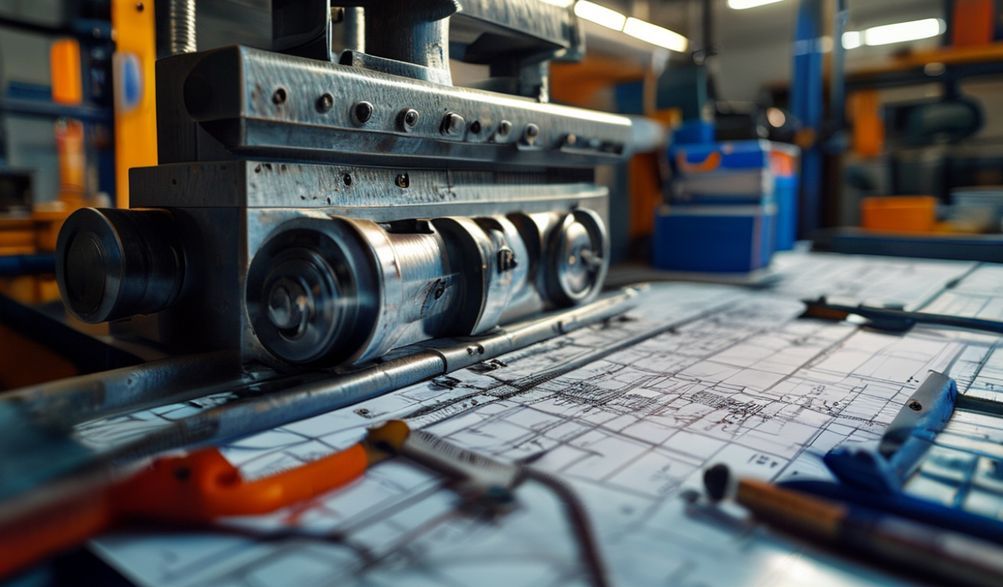
The Engineer’s Blueprint: A Comprehensive Guide to Manual Block Making Machine Design
Кіріспе
In an era of industrialized construction, the humble manual block making machine stands as a testament to simplicity, sustainability, and empowerment. For entrepreneurs in emerging economies, community-led building projects, and eco-conscious builders, these machines are more than tools—they are engines of local economic development and self-reliance. However, the bridge between a crude, ineffective press and a reliable, high-output machine lies in one critical element: intentional design.
Understanding the design of a manual block making machine is not about reinventing the wheel. It’s about applying proven mechanical principles to create a device that efficiently translates human effort into perfectly formed, structurally sound building blocks. This guide, distilled from professional experience in mechanical engineering and block production, serves as your master resource. We will deconstruct the machine’s anatomy, explain the non-negotiable physics at play, and provide a actionable framework for design. Whether you’re evaluating a commercial model, planning a modification, or embarking on a build-from-scratch project, this knowledge equips you with the technical competence to ensure success, safety, and longevity in your block production venture.
Core Principles of Manual Block Machine Design
Understanding Mechanical Advantage and Leverage
At its heart, a manual block machine is a sophisticated lever system. The core challenge is that compacting a semi-dry concrete mix into a dense block requires significant pressure—far more than a human can apply directly. The design’s genius is in its mechanical advantage (MA).
- The Physics: Mechanical Advantage is the ratio of output force (the force on the block) to input force (the operator’s effort). In a lever system, MA is determined by the ratio of the effort arm length to the load arm length.
- The Calculation: If an operator can comfortably apply 25 kg of force (≈ 245 N) on a handle, and the machine has a mechanical advantage of 10:1, the theoretical force applied to the block is 250 kg (≈ 2450 N). The key is to design a lever and pivot system that maximizes this ratio while maintaining a practical range of motion.
- The Goal: The design must achieve a consistent pressure (often targeting 2-4 MPa or 300-600 PSI) across the entire mold area to ensure uniform block density and strength.
Key Components and Their Functional Design
A reliable machine is the sum of its well-engineered parts. Each component has a specific, critical role.
-
Frame & Structure: The Machine’s Backbone
- Функция: To absorb all reaction forces during compaction without flexing, bending, or twisting.
- Design Focus: Material selection is paramount. Square or rectangular hollow steel sections (RHS/SHS) are preferred for their high strength-to-weight ratio and resistance to buckling. The design must include cross-bracing to eliminate torsional movement. Stability calculations should account for the dynamic load of the lever action plus the weight of the operator.
-
Mold Box & Pallet System: The Heart of Precision
- Функция: To give the block its shape and facilitate a smooth production cycle.
- Design Focus: Internal walls require a slight taper (1-3 degrees) for easy ejection. Material choice is critical: while mild steel is common, liners of hardened steel or alloy dramatically extend mold life. The pallet system—the plate the block forms on—must be precisely guided and robust enough to withstand repeated impact and moisture.
-
Compaction System: Where Force Meets Form
- Функция: To compress the raw mix into a solid, homogeneous mass.
- Design Focus: This includes the press head (which must match the mold interior dimensions exactly) and the method of compression. Some advanced manual designs incorporate a vibration mechanism (a small, hand-cranked eccentric weight) mounted to the mold table. This vibration settles the mix before the final press, removing air voids and significantly improving block strength and surface finish.
-
Ejection Mechanism: The Final Release
- Функция: To cleanly separate the finished block from the mold without damaging its edges.
- Design Focus: Typically a second lever or cam system that lifts the entire mold box vertically off the stationary block and pallet. The geometry must provide a smooth, controlled lift without jarring. The pivot points here are high-wear areas and demand durable bushings or bearings.
Step-by-Step Design Process and Technical Specifications
Phase 1: Defining Requirements and Output Goals
Begin with the end in mind. Your design is dictated by your product and production goals.
- Block Type: Will you produce solid blocks, hollow blocks (requiring core-former design), interlocking soil blocks (ISSB), or pavers? Each has unique mold and pressure requirements.
- Блок өлшемі: Determine standard dimensions (e.g., 4″, 6″, 8″ thick) or custom sizes. This sets the mold’s internal volume.
- Өндірістік қуат: A realistic target for a well-designed, manually operated machine is 80-120 blocks per hour for a skilled operator. The design must optimize цикл уақыты—the sequence of filling, compacting, and ejecting.
Phase 2: Detailed Engineering and Drafting
This is where the concept becomes a buildable plan.
- Create a Bill of Materials (BOM): List every component, its material specification, dimensions, and quantity.
- Develop Technical Drawings: Detailed sketches or CAD models are essential. They should include:
- An assembly drawing showing how all parts fit together.
- Detailed part drawings for fabrication, especially for the mold box, press head, and lever arms.
- Critical Specifications to Detail:
- Optimum Pressure Range: Design your lever system to deliver 3-4 MPa for standard cement blocks. Lower pressure (1-2 MPa) may suffice for soil-cement blocks.
- Cycle Time Analysis: Map the operator’s movements. The goal is a fluid, non-fatiguing motion with minimal wasted movement.
- Ergonomics and Safety: Design handle heights for a comfortable standing position. Incorporate safety guards where fingers could be pinched (e.g., pivot points, mold closure). The machine’s base must be wide enough to prevent tipping during operation.
Phase 3: Material Selection and Fabrication Techniques
The right materials, assembled correctly, define durability.
- Фрейм: Use minimum 3mm thick RHS (e.g., 50mm x 50mm) for the main structure.
- Қалып Қорабы: 5-8mm thick mild steel plate is standard. For longevity, consider 5mm hardened steel liners bolted into a mild steel outer casing.
- Pivot Points: Use machined steel pins with oil-impregnated bronze bushings or sealed ball bearings. Simple holes drilled through steel will wear rapidly, causing slop and loss of efficiency.
- Fabrication: Specify full-penetration welds for high-stress joints (like lever arm attachments). Grind welds smooth in areas of contact or movement. Precision in aligning the mold, press head, and ejection mechanism is non-negotiable.
Optimizing for Different Block Types and Mix Designs
Designing Molds for Versatility
Your machine’s value multiplies with its adaptability. Consider a modular mold system.
- Solid/Hollow Blocks: Design a base mold box that can accept different internal inserts for core formers (for hollow blocks) or dividers (for multiple pavers).
- Interlocking Blocks (ISSB): The mold design is more complex, featuring a top and bottom interlock pattern. Precision is key to ensure blocks from different batches fit together perfectly.
- Тас жол тақталары: Often require a “striking off” plate to level excess mix before compaction. Mold design focuses on easy release of intricate patterns.
Adjusting Machine Parameters for Mix Proportions
A perfect machine can produce poor blocks with the wrong mix. The design must accommodate variability.
- Aggregate Size: A mix with large aggregate may require a taller fill box and more vigorous vibration to ensure proper settlement before the final press.
- Moisture Content: The ideal mix is semi-dry. A design with a good vibration system can handle slightly drier mixes, which actually lead to stronger blocks and faster curing.
- Adjustability: Some advanced designs allow for minor adjustments to the press head’s final stopping position, letting the operator fine-tune block height based on the specific mix being used.
Maintenance, Troubleshooting, and Durability Design
Designing for Longevity and Easy Maintenance
A great design anticipates wear and simplifies service.
- Incorporate Grease Nipples: At every pivot point and bushing to ensure easy lubrication.
- Use Replaceable Wear Parts: Design the mold with bolt-in wear plates. When the interior surface eventually wears, you replace a plate, not the entire mold box.
- Accessibility: Ensure that all bolts, pins, and moving parts are accessible with standard tools. Avoid designs that require complete disassembly for routine maintenance.
Common Design Flaws and How to Avoid Them
- Flaw 1: Frame Flex. A frame that bends absorbs compaction energy, reducing block density.
- Solution: Over-engineer the frame with sufficient bracing. Use stiffer steel sections.
- Flaw 2: Pivot Point Failure. Using simple drilled holes without bushings leads to rapid ovalization and machine slop.
- Solution: Always specify hardened steel pins and proper bushings or bearings.
- Flaw 3: Inadequate Ejection Mechanism. A jerky or misaligned ejection system chips block corners.
- Solution: Design a guided, cam-driven lift that ensures perfectly vertical separation.
- Flaw 4: Poor Ergonomics. A machine that is too tall, low, or requires awkward force application will cause operator fatigue and limit output.
- Solution: Model the operating cycle with human factors in mind. Test handle positions with users of different heights.
FAQ: Manual Block Making Machine Design
Q1: What is the most critical factor in designing a strong manual block press?
A: Without a doubt, it is achieving sufficient and consistent compaction pressure. This hinges on two equally important sub-factors: a lever system with an adequate mechanical advantage (typically 10:1 or higher) and an extremely rigid frame that transfers all that force directly to the block mix without flexing or absorbing the energy.
Q2: Can I use standard mild steel for the entire machine?
A: You can, but you shouldn’t for all parts. Mild steel (like A36/ST37) is perfectly suitable for the main frame and structural components. However, for high-wear areas—specifically the interior surfaces of the mold box, the face of the press head, and all pivot pins—upgrading to hardened steel, high-carbon steel, or alloy steel will prevent rapid deformation and abrasion, extending the machine’s service life by years.
Q3: How do I determine the right lever length and pivot position for my design?
A: This requires a basic force diagram and calculation. Start with your target compaction force (e.g., 2500 N). Estimate the comfortable input force an operator can apply (e.g., 250 N). The mechanical advantage needed is 2500/250 = 10. This means the effort arm (from operator’s hand to pivot) must be 10 times longer than the load arm (from pivot to press head). The final design must also ensure the lever’s full range of motion is practical and ergonomic for the operator.
Q4: Is it necessary to include a vibration mechanism in a manual design?
A: While not absolutely necessary, it is highly recommended for producing commercial-quality blocks. A simple, mechanically driven vibration table (activated by a separate hand lever or integrated into the press motion) ensures the mix is densely packed into all corners of the mold before final compression. This results in blocks with higher strength, better dimensional consistency, and a superior surface finish with fewer voids.
Q5: Where can I find reliable engineering plans or CAD models for a manual block machine?
A: Seek out plans from reputable appropriate technology organizations like Practical Action, UN-Habitat (which publishes designs for CINVA Ram-style presses), or engineering universities with development programs. Be wary of unvetted plans from general DIY websites. Established machinery manufacturers’ brochures and cutaway diagrams can also provide valuable insights into professional design principles.
Қорытынды
Designing an effective manual block making machine is a profound exercise in applied mechanical engineering. It demands a respect for material strength, a focus on human factors, and a deep understanding of the concrete compaction process. This guide has provided a professional framework—from core physics to fabrication details—grounded in real-world experience.
By following this principled approach, you move beyond creating a mere tool. You build a reliable asset. A well-designed machine empowers individuals and communities, turning local materials into durable shelter and infrastructure. It fosters entrepreneurship, reduces construction costs, and promotes ecological building practices. In the end, the most successful designs are those that masterfully balance three elements: simplicity for ease of use, robustness for longevity, and ergonomics for the operator’s well-being. With this blueprint in hand, you are equipped to contribute to that legacy of sustainable, human-centered innovation.
<