
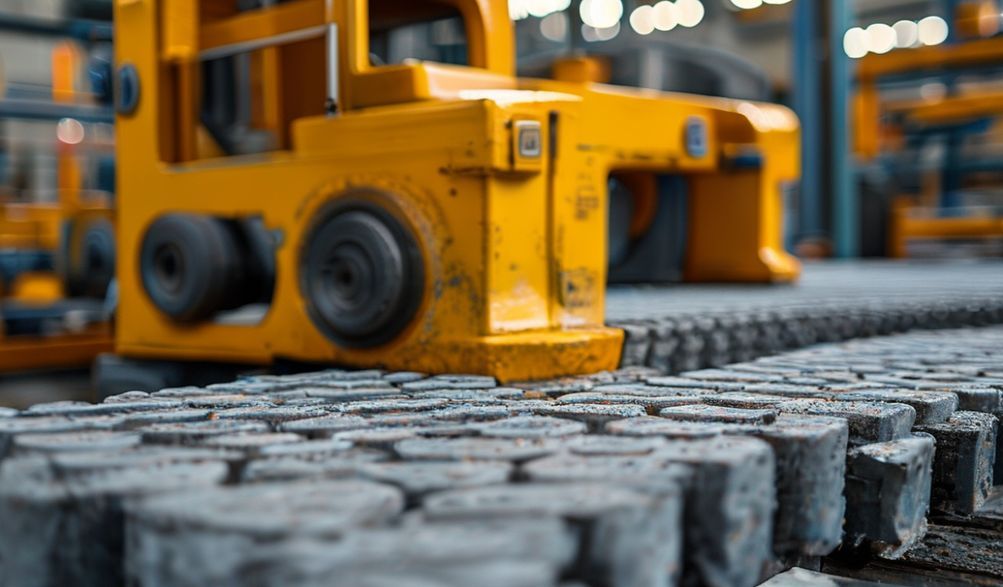
Understanding the Cost of a Semi-Automatic Concrete Block Making Machine: A Comprehensive Guide by FUDA Factory
For the entrepreneur or construction business owner eyeing the block production industry, a critical question looms large: how do you make an initial investment that doesn’t cripple your cash flow but still sets you up for long-term, sustainable profit? The allure of producing your own concrete blocks is clear—control over supply, quality, and margins. Yet, the path is often clouded by uncertain pricing and hidden costs.
So, what does a semi-automatic concrete block making machine шын мәнінде cost? The truth is, the price tag you see in a casual online search is just the tip of the iceberg. The real cost is a composite of the machine, its setup, its operation, and the long-term partnership you forge with its manufacturer.
At FUDA Factory, we bring decades of hands-on experience to this discussion. We have designed, manufactured, and supported thousands of these machines for clients across the globe. Our expertise tells us that an informed buyer doesn’t just look for the cheapest option; they analyze value, calculate true ROI, and invest in reliability. As an established leader in block making machinery, our goal here is to provide authoritative, transparent guidance. This article will move beyond a simple price list. We will dissect the factors that influence cost, unveil the often-overlooked expenses, provide a framework for calculating your return, and guide you in selecting the right model for your specific business needs.
Жартылай автоматты бетон блок жасау машинасы дегеніміз не?
Before diving into costs, it’s essential to understand what you’re investing in. A semi-automatic concrete block making machine represents the optimal middle ground in block production technology, offering a balance of efficiency, affordability, and control.
Defining the Technology: Balance of Automation and Manual Control
In a semi-automatic system, the core, power-intensive cycle of compressing concrete into a mold is fully automated. This is driven by a robust hydraulic system and controlled by a Programmable Logic Controller (PLC), ensuring consistent pressure, vibration, and curing time for every block. This automation guarantees product uniformity and strength.
Where the “semi” comes in is in the loading and unloading phases. Typically, raw materials (a mix of sand, cement, gravel, and water) are manually fed into the machine’s hopper, often with the aid of a conveyor or mixer. Once the blocks are formed and ejected, operators manually remove them from the production pallet and stack them for curing. This design brilliantly leverages automation for quality and manual labor for flexibility and cost-saving.
- Contrast with Manual Machines: Purely manual machines require significantly more labor for every step, resulting in much lower output and higher physical strain, making them unsuitable for commercial production.
- Contrast with Fully Automatic Machines: Fully automatic lines feature robotic material handling, stacking, and curing, minimizing labor but requiring a substantially higher capital investment and more complex maintenance. They are ideal for very large-scale, high-volume production facilities.
Идеалды қолдану жағдайлары мен нысаналы пайдаланушылар
This hybrid technology makes the semi-automatic block maker uniquely suited for several scenarios:
* Шағын және орта көлемдегі блок жасау алаңдары Businesses aiming for daily production outputs that are substantial but don’t justify a multi-million dollar fully automatic plant.
* Entrepreneurs Starting a Block Production Business: It is the most recommended entry-point machine due to its manageable investment and simpler operational learning curve.
* Construction Companies Aiming for Self-Supply: Companies can produce blocks for their own projects, ensuring supply chain control and reducing material costs.
* Projects in Regions with Readily Available Labor: In markets where labor costs are reasonable, the semi-automatic model maximizes local employment while keeping machinery costs efficient.
Key Factors Influencing the Machine Cost
The price variation between different semi-automatic machines isn’t arbitrary. It’s directly tied to the specifications, quality, and support bundled into the unit. Understanding these factors will help you decipher quotations and compare value, not just price.
Негізгі машина сипаттамалары мен сыйымдылығы
- Сағатына блоктар (СБ): This is the primary driver of cost. A machine like the FUDA QMJ4-45C, producing ~1800-2200 standard hollow blocks (400x200x200mm) per 8-hour shift, sits at a different price point than a larger model capable of 5000+ blocks per shift. Higher output requires a more powerful motor, a larger hydraulic system, and a sturdier frame.
- Блок өлшемі мен түрі: The ability to produce diverse products adds value and cost. A basic machine for standard hollow blocks is one thing. If you need to produce interlocking blocks, pavers, curbstones, or solid blocks, you require different molds. Each precision mold set is an additional investment. The machine’s versatility in accommodating these molds also influences its base design and price.
- Машина моделі мен өлшемі: The physical dimensions and model series dictate capacity. Compare a 4-block-per-cycle model to an 8-block-per-cycle model. The latter will have a larger table, more vibration motors, and greater hydraulic capacity, commanding a higher price.
Компоненттер мен құрылымның сапасы
This is where “cheap” machines often cut corners, leading to higher long-term costs.
* Фрейм құрылымы: The machine’s skeleton must withstand constant vibration and pressure. High-quality, thick steel plate welded with precision ensures longevity and stability. Inferior frames can warp, leading to misalignment and poor block quality.
* Гидравликалық жүйе: The heart of the machine. The quality of the hydraulic pump, valves, cylinders, and hoses determines efficiency, noise levels, and maintenance frequency. Reputable brands use reliable components from known suppliers.
* Electrical System & PLC: A reliable PLC ensures consistent cycle times and easy operation. The quality of switches, sensors, and wiring dictates safety and uptime. Waterproof, dust-proof electrical cabinets are a sign of a well-engineered machine.
* Mold Material and Precision: Molds made from high-strength, heat-treated alloy steel last exponentially longer than ordinary steel molds. Precision machining ensures smooth block ejection, perfect dimensions, and a professional finish on your blocks.
Brand Value & Manufacturer Support
When you buy from an established manufacturer like FUDA Factory, part of your investment is in peace of mind. The premium reflects:
* Дәлелденген жетістіктер: Decades of R&D and thousands of successful installations globally.
* Standardized Quality Control: Every machine undergoes rigorous testing before shipment.
* Embedded Expertise: The design incorporates lessons learned from countless real-world applications, making the machine more robust and user-friendly.
Breaking Down the Cost Structure: From Sticker Price to Setup
Let’s move from factors to actual figures. It’s crucial to view the purchase as a project cost, not just a machine cost.
The Base Machine Price Range
Important Disclaimer: The following range is a rough, indicative estimate based on global market observations for standard semi-automatic machines. The actual cost for your specific configuration from FUDA can vary significantly. A detailed, formal quotation is non-negotiable.
A typical semi-automatic concrete block making machine can have a base price range of approximately $10,000 to $35,000 or more. This variance depends entirely on the factors above—capacity, component quality, and brand. A entry-level, lower-capacity model will be at the lower end, while a high-output, heavy-duty model with premium components will command a price at the higher end.
Essential Ancillary Equipment & Initial Costs
The machine alone cannot produce blocks. Budget for these essential startup items:
* Concrete Pan Mixer or Hopper Feeder: A mixer is needed to prepare a consistent, homogenous concrete mix. A 500L mixer is a common starting point.
* Белтті конвейер: To transport mixed concrete to the machine’s hopper, reducing manual labor.
* Starter Set of Molds: Your quotation should include at least one mold (e.g., for standard hollow blocks). Additional molds for other block types are extra.
* Pallets: You will need a stock of steel or wooden pallets on which the blocks are formed. These are consumables and require an initial batch.
* Foundation & Installation: The machine needs a level, reinforced concrete foundation. Factor in local labor and material costs for this.
* Initial Spare Parts Kit: A basic kit of common wear-and-tear items (seals, gaskets, filters) is wise to have on hand from day one.
“Hidden” Operational & Long-Term Costs
These ongoing expenses directly impact your profitability:
* Shipping, Customs, and Logistics: FOB (Free On Board) price means the cost at our factory port. You must budget for sea/air freight, insurance, customs clearance, duties/taxes, and inland transportation to your site. This can add 15-40%+ to the machine cost.
* Commissioning Fees: While FUDA provides remote guidance, you may need to hire a local technician or agent for on-site assembly and calibration.
* Еңбек шығындары: Typically, 2-4 operators are needed per shift for material handling, feeding, and block removal/stacking.
* Техникалық қызмет көрсету шығындары: Regular replacement of hydraulic oil, filters, and occasional spare parts like vibration motor bearings or hydraulic seals.
* Utility Costs: Primarily electricity consumption from the main motor, hydraulic pump, and vibration motors.
Analyzing Return on Investment (ROI) and Value
Now, let’s turn cost into opportunity. A semi-automatic machine is an investment, and its value is measured by its return.
How to Calculate Your Potential ROI
A simplified ROI framework can guide your business plan:
(Annual Revenue from Blocks Sold – Annual Operational Costs) / Total Initial Investment
Factors affecting revenue:
* Local Market Block Price: Research the selling price per block in your area.
* Өндірістік тиімділік: Your actual output per day (factoring in setup, breaks, maintenance).
* Plant Utilization Rate: How many days per month/year will you operate? A 70-80% utilization is a strong target.
Example (Simplified):
* Investment (Machine, Setup, Ancillaries): $30,000
* Daily Output: 2000 blocks
* Selling Price/Block: $0.50
* Operational Cost/Block (Labor, Raw Materials, Utilities, Maintenance): $0.30
* Daily Profit: 2000 blocks * ($0.50 – $0.30) = $400
* Annual Profit (at 300 operating days): $400 * 300 = $120,000
* Simple Payback Period: $30,000 / $400 = ~75 operating days.
The FUDA Value Proposition: More Than Just a Machine
Your investment with FUDA extends beyond steel and hydraulics. We provide a business solution:
* Біліктілік We offer project layout consultation and workflow design to optimize your small factory setup for efficiency.
* Authoritativeness & Trust: Our comprehensive after-sales support includes detailed installation manuals, step-by-step video guides, and 24/7 online technical support for remote troubleshooting.
* Тәжірибе: We provide full operation and maintenance training materials, drawing from our vast experience with clients in diverse markets.
* Reliable Partnership: You gain access to a guaranteed supply of high-quality, perfectly compatible spare parts and molds, ensuring your production line’s longevity.
How to Choose the Right Semi-Automatic Machine for Your Budget
Selecting the correct model is a strategic decision that aligns your budget with your business ambition.
Assessing Your Business Needs and Market
Answer these questions first:
1. What is your projected daily/monthly block demand? (Be realistic about your sales pipeline).
2. What is your available space, labor force, and total capital?
3. What are the quality standards and prevailing block types in your local market? (Producing what sells).
Navigating the Purchase Process
- Request a Formal, Detailed Quotation: Always ask for a breakdown that specifies FOB price, CIF (Cost, Insurance, Freight) price to your nearest port, model number, included accessories, and exclusions.
- Ask Critical Questions:
- “What is the warranty period and what does it cover?”
- “What is the lead time for spare parts?”
- “Can I see video testimonials or contact a reference client in a similar market?”
- Verify Credibility: Research the manufacturer’s history, online presence, and if possible, plan a visit to an existing installation.
Жиі қойылатын сұрақтар (ЖҚС)
Q1: What is the exact price of a FUDA semi-automatic block making machine?
A: We cannot provide a single exact price online as it depends on the specific model, configuration (mixer, conveyor, molds), and shipping terms. Please contact our sales team with your production requirements for a precise, customized quotation.
Q2: Is a semi-automatic machine profitable for a beginner?
A: Absolutely. It is often the most recommended starting point due to its lower entry cost, simpler operation and maintenance, and strong profitability in markets with reasonable labor costs. We can help you create a basic business model to forecast your earnings.
Q3: What is the typical lead time from order to delivery?
A: For standard models, production typically takes 15-25 working days after order confirmation and deposit. Shipping time then depends on the destination and method (sea freight is common), which can add several more weeks.
Q4: What kind of after-sales service does FUDA provide?
A: We provide comprehensive support: detailed installation manuals & engineering drawings, step-by-step video guides, 24/7 online technical support via WhatsApp/Email, and a standard warranty (e.g., 12 months for core parts). Our goal is to ensure you are successfully producing blocks.
Q5: Can the machine be upgraded later?
A: While the core machine structure is fixed, you can significantly expand your business by adding more molds for new block types and increasing your operational shifts. For large capacity jumps, a new machine may be the next step, but your FUDA semi-automatic machine provides the perfect foundation to grow from.
Қорытынды
The true “cost” of a semi-automatic concrete block making machine is a multifaceted investment. It encompasses the initial purchase price, the essential setup components, the ongoing operational expenses, and—critically—the value of the manufacturer’s expertise and support you choose to partner with.
At FUDA Factory, our commitment is to provide more than just machinery; we deliver profitable, sustainable business solutions. Our decades of experience, authoritative technical guidance, and trustworthy partnership are designed to de-risk your investment and pave your way to success in the block production industry.
Ready to get a transparent, detailed cost breakdown for your specific project? Contact FUDA’s expert team today for a free consultation and a personalized quotation tailored to your local market and business goals.
<