
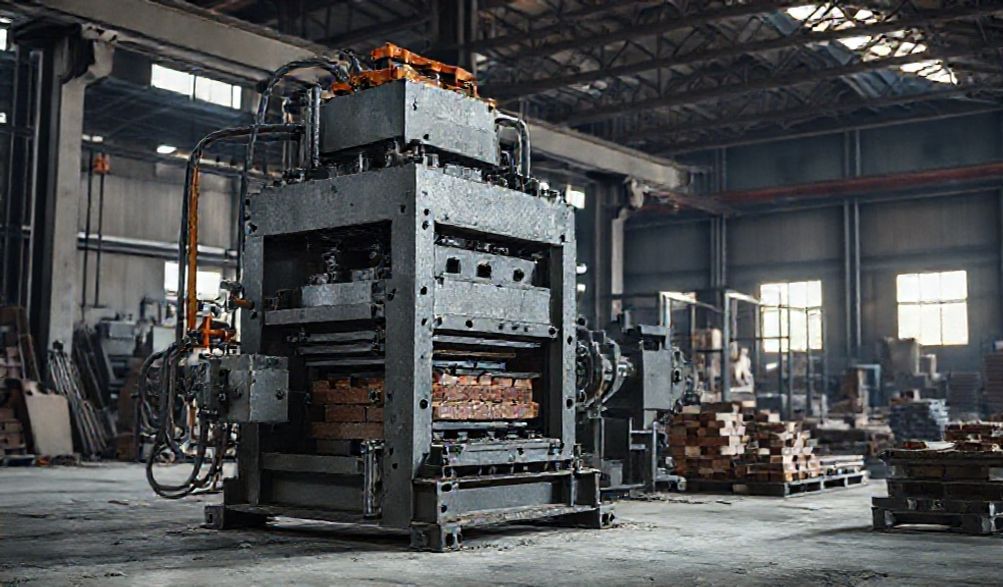
The Ultimate Guide to Brick Making Machines in Turkey: Quality, Cost & Top Manufacturers
Кіріспе
Turkey isn’t just a bridge between continents; it’s a powerhouse of industrial production. A compelling statistic from the Turkish Exporters Assembly (TIM) reveals that the country’s machinery exports have consistently grown, with the construction machinery sector becoming a significant contributor to a multi-billion dollar export economy. This growth is no accident, especially in the niche of brick and block making machinery.
If you’re searching for “brick making machine turkey,” your core intent is clear: to cut through the noise and find a reliable, cost-effective manufacturing partner. This guide is designed to be your definitive resource. Compiled from industry insights, technical specifications, and market analysis, it aims to transform you from a curious buyer into an informed decision-maker. We prioritize accuracy and encourage you to use this information as a foundation for your own direct verification with manufacturers.
Келесі бөлімдерде сіз мыналарды білесіз:
* Why Turkey has emerged as a global hub for this specific machinery.
* The types of machines available and which might suit your project.
* How to critically assess manufacturers beyond a glossy brochure.
* A realistic overview of the procurement process, from inquiry to installation.
* Practical answers to the most pressing questions international buyers have.
Why Turkey is a Global Hub for Brick Making Machinery
Turkey’s rise as a preferred source for brick making machinery isn’t a fleeting trend. It’s the result of deep-seated industrial strengths and strategic advantages that directly benefit global buyers looking for durability, innovation, and value.
A Legacy of Manufacturing and Metallurgy Expertise
Turkey’s industrial backbone is strong, rooted in centuries of metallurgy and decades of focused development in heavy industry.
* The country is a major producer of high-quality steel, the primary raw material for robust machinery frames and components.
* This domestic access to materials allows manufacturers to control quality from the foundry up, ensuring better weld integrity, structural stability, and longevity of the final machine.
* A skilled engineering workforce, trained in both traditional craftsmanship and modern CAD/CAM technologies, translates this material advantage into precision-engineered equipment.
Strategic Location: Bridging Europe and Asia
Geography is a formidable asset. Turkey’s unique position facilitates seamless trade.
* For European, African, and Middle Eastern buyers, shipping logistics are often simpler and more cost-effective than sourcing from East Asia.
* The well-developed port infrastructure in cities like Istanbul, Mersin, and Izmir ensures efficient handling of heavy machinery.
* This logistical ease translates to shorter lead times, reduced shipping costs, and easier coordination for post-sale technical support visits.
Competitive Advantage: Quality Meets Value
This is where the Turkish value proposition shines brightest. Turkish manufacturers have successfully carved out a middle ground in the global market.
* Compared to European (e.g., German, Italian) machines: Turkish offerings provide a significantly more accessible price point while maintaining a high standard of engineering, often using the same premium European components (Siemens PLCs, Schneider electrics, Bosch Rexroth hydraulics).
* Compared to Chinese machines: While some entry-level Chinese machines may have a lower initial cost, Turkish machinery is generally perceived as offering superior build quality, better after-sales support, and greater durability—justifying a moderate price premium for long-term operational reliability.
* This balance offers buyers a “sweet spot”—investing in equipment that is both capital-efficient and built to last, minimizing total cost of ownership.
Types of Brick Making Machines Manufactured in Turkey
The Turkish industry caters to every segment of the market, from backyard workshops to fully automated industrial plants. Understanding the categories is your first step.
Толық автоматты блок жасау машиналары
These are the flagships of production, designed for maximum output with minimal manual intervention.
* They feature complete pallet circulation systems, where concrete is poured, vibrated, compacted, and cured in a continuous cycle.
* Controlled by advanced Programmable Logic Controllers (PLCs) with touch-screen interfaces, they allow for precise adjustment of vibration frequency, hydraulic pressure, and cycle time.
* Robotic handling systems for stacking and feeding pallets are common, pushing output potential to tens of thousands of standard blocks per day.
* Ideal for large-scale construction projects, block yards supplying regional markets, and government infrastructure initiatives.
Semi-Automatic and Manual Concrete Block Machines
This category offers the flexibility and lower capital investment crucial for small-to-medium enterprises (SMEs) and startups.
* Egg-Laying Machines: Mobile machines that produce and deposit blocks directly onto the ground. They are versatile, easy to operate, and perfect for on-site production.
* Статикалық блоктық машиналар: Stationary machines that produce blocks on a pallet, which is then moved manually or with a forklift to a curing area. They offer higher product density and quality than egg-layers.
* These machines often use a single vibrator motor and simpler hydraulic systems, making them easier to maintain and repair locally.
Specialized Machinery: Pavers, Kerbstones, and Interlocking Blocks
Turkish manufacturers excel in niche markets, producing machines for high-value concrete products.
* Paver Making Machines: Engineered for high precision and fine surface finishes, often with multi-layer coloring capabilities.
* Kerbstone Machines: Built to handle the large, heavy molds required for road edging with consistent density.
* Interlocking Block Machines: Designed to produce the complex shapes of interlocking bricks used in landscaping and paving, requiring precise alignment and strength.
Complementary Equipment: Crushers, Mixers, and Batching Plants
A key strength is the ability to provide complete, integrated solutions.
* Leading manufacturers don’t just sell the block machine; they can supply the entire production line.
* This includes pan mixers for consistent concrete, concrete batching plants for automated material dosing, and even crushers for producing recycled aggregate.
* Sourcing from a single supplier ensures compatibility between components, simplifies warranty claims, and provides a single point of contact for technical support.
Key Considerations When Choosing a Turkish Manufacturer
The quality of the machine is only as good as the company behind it. Here are critical factors to evaluate, drawn from industry experience.
Assessing Manufacturing Quality and Standards
Don’t just take specifications at face value. Dig deeper.
* Component Brands: Ask for a detailed list of key components. Reputable manufacturers openly specify brands for critical parts like hydraulic pumps, control panels, and vibration motors.
* Құрылыс сапасы: Request high-resolution photos or videos of the production floor and assembly process. Look for clean welding, organized wiring harnesses, and robust frame construction.
* International Certifications: While not a sole guarantee, certifications like CE (for the European market) and ISO 9001 (Quality Management) indicate a commitment to standardized manufacturing processes and safety.
After-Sales Support, Warranty, and Spare Parts
This is arguably the most important differentiator between a good purchase and a costly mistake.
* Warranty: Understand exactly what is covered (parts, labor, shipping) and for how long. A standard warranty is typically 12 months for parts, but terms can vary.
* Spare Parts Guarantee: A trustworthy company guarantees the availability of spare parts for a minimum period (e.g., 10 years). Ask for a parts catalog and pricing.
* Support Structure: What happens when the machine stops? Do they offer real-time online support (WhatsApp, TeamViewer), detailed PDF manuals in your language, and video tutorials? Will they dispatch a technician if needed, and what are the associated costs?
Verifying Company Credentials and References
Conduct your due diligence as you would with any major business partner.
* Official Registration: Verify the company’s standing with the local Chamber of Commerce and Industry.
* Factory Visit: If possible, visit the factory. If not, insist on a comprehensive live virtual tour via video call—don’t settle for a pre-recorded marketing video.
* Client References: Ask for contact information for 2-3 international clients who have purchased similar equipment. A credible manufacturer will provide these. Reach out and ask about their experience with machine performance, reliability, and the company’s responsiveness to issues.
Understanding Total Cost: Beyond the Machine Price
The quoted machine price is just the starting point. A comprehensive budget must include:
* Price Terms: Is the quote FOB (Free On Board, you pay shipping/insurance) or CIF (Cost, Insurance & Freight to your nearest port)? This makes a huge difference.
* Shipping & Logistics: Costs for sea freight, port handling, and inland transportation to your site.
* Орнату және іске қосу: Factor in costs for the manufacturer’s technicians to travel, install, and commission the machine. This is highly recommended for first-time buyers.
* Import Duties & Taxes: Research the customs regulations and tariffs in your country for importing industrial machinery.
Spotlight: Leading Brick Making Machine Manufacturers in Turkey
Intro Note: The following highlights the types of manufacturers operating in Turkey’s brick making machinery sector, based on export volume, industry presence, and product range. This is for informational purposes to illustrate the market landscape. We strongly recommend independent due diligence, factory visits, and reference checks before engaging with any supplier.
Established Industrial Conglomerates
These are large Turkish holdings with dedicated construction machinery divisions.
* They benefit from substantial in-house R&D departments, extensive testing facilities, and vertically integrated production (casting, machining, assembly).
* Their strength lies in supplying complete turnkey plants for mega-projects and offering robust, high-output fully automatic lines with global brand recognition.
* They typically have established international dealer networks or regional offices.
Specialized Mid-Size Machinery Producers
These companies are the backbone of the industry, often family-owned with decades of experience.
* They frequently specialize in specific machine types—for example, becoming renowned for exceptionally durable stationary block makers or highly precise paver machines.
* Their advantage is agility, deep product expertise, and often a more personalized approach to customer service and customization.
* They are excellent partners for businesses seeking reliable, proven technology without the overhead of a massive conglomerate.
Innovative and Technology-Focused Firms
A newer wave of manufacturers is pushing the envelope on smart manufacturing.
* They invest heavily in automation, integrating IoT (Internet of Things) sensors for predictive maintenance, energy-efficient servo-hydraulic systems, and advanced software for production data analytics.
* Their machines may offer features like remote diagnostics, production reporting via cloud platforms, and enhanced user interfaces.
* These firms are ideal for buyers looking to future-proof their investment and maximize operational efficiency through technology.
The Procurement Process: From Inquiry to Installation
Navigating the purchase of heavy machinery internationally can be daunting. A structured approach is key.
How to Prepare an Effective Request for Quotation (RFQ)
A vague inquiry gets a vague quote. Be specific. Your RFQ should include:
* Қажетті нәтиже: Target production capacity per 8-hour shift (e.g., 10,000 standard blocks).
* Блок түрлері мен өлшемдері: List all products (hollow block, solid brick, paver size, etc.).
* Автоматтандыру деңгейі: Fully automatic, semi-automatic, or manual.
* Қуат көзі: Voltage and phase (e.g., 380V, 3-phase, 50Hz).
* Шикізаттар: Specify the type of aggregate (crushed stone, sand, potential for fly ash) you plan to use.
* Site Conditions: Available space and layout.
Navigating Communication, Negotiation, and Contracts
Clarity prevents costly misunderstandings.
* Technical Specifications: Ensure the final, paid proforma invoice lists every technical detail, model number of components, and promised performance metrics.
* Payment Terms: Common terms are 30-50% advance payment via T/T (Telegraphic Transfer), with the balance paid against shipping documents. A Letter of Credit (L/C) offers more security but is more complex.
* Incoterms: Agree on and understand the chosen Incoterm (e.g., FOB Izmir, CIF Durban) as it defines risk and cost responsibilities.
Logistics, Shipping, and Customs Clearance
Your manufacturer should guide you, but you need your own agent.
* Freight Forwarder: Hire a reliable freight forwarder in Turkey or your country to handle bookings, documentation, and customs brokerage.
* Essential Docs: You will need the Commercial Invoice, Packing List, Bill of Lading, and Certificate of Origin (often provided by the Chamber of Commerce).
* Customs Clearance: Your local agent will use these documents, along with any permits, to clear the machine through your port.
Installation, Commissioning, and Operator Training
The process isn’t over when the machine arrives at your factory.
* Planning: Schedule the installation visit with the manufacturer’s technicians well in advance. Ensure your foundation is ready and power is connected.
* Commissioning: This is when the machine is assembled, tested with actual materials, and fine-tuned to produce quality blocks. Plan for this to take several days to a week.
* Structured Training: Insist on formal, hands-on training for your operators and maintenance staff. Record the sessions for future reference. A common challenge is knowledge loss when the trained operator leaves; comprehensive documentation is the solution.
Frequently Asked Questions (FAQ) About Brick Making Machines in Turkey
Q1: What is the average price range for a brick making machine from Turkey?
A: Prices vary dramatically based on type and automation. A small, manual or egg-laying machine can start from $15,000 – $30,000. A mid-range semi-automatic stationary machine may range from $50,000 – $120,000. Large, fully automatic production lines with pallet circulators and robotics can range from $200,000 to over $1,000,000. Always request a detailed, itemized quotation.
Q2: How does Turkish brick machine quality compare to Chinese or German machines?
A: Turkish machinery generally occupies a strategic middle ground. It typically offers better structural quality, more reliable components, and stronger after-sales support than entry-level Chinese machines, at a higher but reasonable price. Compared to premium German engineering, Turkish machines provide excellent value, matching performance in many applications at a significantly lower capital investment, though may differ in extreme precision or niche high-tech features.
Q3: Can I get a complete turnkey plant solution from Turkish manufacturers?
A: Absolutely. Many leading Turkish manufacturers specialize in turnkey projects. They can handle plant layout design, supply all machinery (from crusher and mixer to the block maker and stacker), supervise installation and commissioning, and provide comprehensive training. This single-source responsibility is a major advantage.
Q4: What after-sales services can I expect from a reputable Turkish company?
A: You should expect: 1) Detailed operation and maintenance manuals (in English or your language), 2) Remote support via phone, email, and video calls, 3) A readily available spare parts inventory with a published price list, 4) Warranty coverage for defective parts, and 5) The option to contract for on-site service engineer visits (at a cost).
Q5: Are the machines adaptable to produce different block sizes and shapes?
A: Yes, versatility is a key feature. Most machines use a standard mold system. To change the product, you change the mold. The process can take from 30 minutes to a few hours depending on the machine. When ordering, you specify your primary mold, and you can purchase additional molds for other products. Discuss mold changeover procedures and the cost of extra molds during negotiations.
Қорытынды
Turkey has firmly established itself as a premier global source for brick making machinery by merging a legacy of industrial craftsmanship with modern engineering and strategic value. The journey to selecting the right partner, however, requires moving beyond price comparisons to a holistic evaluation of quality, support, and total lifecycle cost.
The final, expert recommendation is this: Prioritize the partner as much as the product. The initial machine price is just one line item. The real investment is in a partnership that will support your production for the next decade. Engage deeply—prepare clear specifications, conduct virtual factory tours, speak to past clients, and scrutinize after-sales promises.
Begin your search by shortlisting 3-5 manufacturers with proven export experience to your region. Prepare your project specifications with clarity and request comprehensive quotations that include full technical details, warranty terms, and a clear breakdown of all associated costs. Investing time in this thorough research is the most crucial step you can take to ensure a successful and profitable brick production business.
<