
Цемент-құмды қуыс блок жасау машиналары туралы жан-жақты нұсқаулық (2026)
Кіріспе
Ғаламдық құрылыс ландшафты қолжетімді және берік материалдарға деген үздіксіз сұраныспен сипатталады. Қалалық биік ғимараттардан бастап ауылдық тұрғын үй жобаларына дейін, тиімді және сенімді құрылыс құрамдастарына деген қажеттілік әмбебап болып табылады. Бұл сұраныстың өзегінде қарапайым қуыс бетон блоктары жатыр — ол заманауи қалау өнерінің негізгі тасы ретінде беріктігі, жылу оқшаулауы және қолжетімділігі үшін бағаланған. Дегенмен, блоктарды қолмен дайындаудың дәстүрлі әдісі дамуға елеусіз қалып отыр. Өлшем мен беріктіктегі тұрақсыздық, еңбек сыйымдылығының жоғарылығы және өндірісті тиімді масштабтау мүмкіндігінің болмауы қолмен жүргізілетін жұмыстарға кедергі келтіріп, жобалар мен кәсіпорындар үшін тұйықталулар тудырады.
Цемент-құмды кеуекті блок жасау машинасы: шикізатты дәлдікпен құрылыс блоктарына ерекше тиімділікпен айналдыратын инженерлік шешім. Кәсіпкерлер, мердігерлер және құрылыс фирмалары үшін дұрыс машинаны сатып алу тек сатып алу ғана емес; бұл өнімділікті, пайда маржасын және бәсекелестік артықшылығын анықтайтын стратегиялық шешім.
Санат эволюциясын және машина өнімділік деректерін жылдар бойы бақылау негізінде, бұл нұсқаулық маркетинг шуынан арылу үшін жасалған. Біздің мақсатымыз - жан-жақты, техникалық және терең практикалық шолу ұсыну. Біз санаттың негізгі стандарттарына сілтеме жасаймыз және сатуға емес, білім беруге баса назар аудара отырып, сенімді, хабардар инвестициялық шешім қабылдау үшін қажет бейтарап біліммен сізді қуаттаймыз. Осы түсінікті негізден бастап құрайық.
Цемент-құмды кеуекті блок жасау машинасы дегеніміз не?
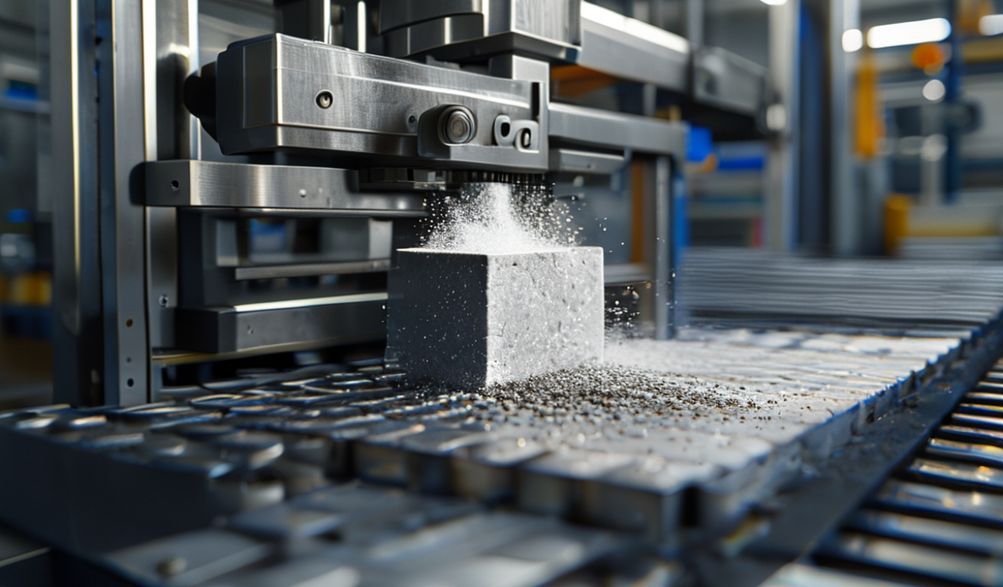
Оның негізінде, цемент-құмды кеуекті блок жасау машинасы - бұл кеуекті бетон блоктарын өндіруді автоматтандыру және стандарттау үшін арнайы жасалған өнеркәсіптік жабдық. Ол қолмен тығыздалатын блоктардың сапасының өзгергіштігін тұрақты, жоғары өнімді өндіріс процесімен алмастырады, әр блоктың дәл өлшемдік және беріктік сипаттамаларына сәйкес келуін қамтамасыз етеді.
Негізгі функция және шығыс
Машинаның негізгі функциясы - мұқият өлшенген цемент, құм және агрегаттар қоспасын қалыпқа тығыздап, ішінде белгілі бір қуыстары бар блок түзу. Бұл қуыстар салмақты және материалды тұтынуды азайтып, жылу оқшаулау қасиеттерін жақсартады. Соңғы өнім – стандартталған қуыс блок – тұрғын үй, коммерциялық және өнеркәсіптік жобалардағы көптеген жүк көтеретін және жүк көтермейтін қабырғалар, бөліктер мен қоршауларды салудың негізгі бірлігі болып табылады.
Негізгі компоненттер және олардың жұмыс істеу тәсілі
Негізгі құрамдас бөліктерді түсіну процесті түсінікті етеді:
- Хоппер:Шикізаттардың (цемент, құм, толықтауыш) кіру нүктесі.
- Миксер:Құрғақ материалдарды біртекті жартылай құрғақ қоспаны қалыптастыру үшін су қосылмас бұрын араластырады.
- Конвейер жүйесі:Араласқан материалды қалыптау аймағына тасымалдайды (автоматты машиналарда жиі кездеседі).
- Қалып Қорабы:Машинаның жүрегі. Бұл қатайған болат қалып блоктың пішіні мен өлшемін анықтайды. Оған шикі қоспа толтырылады.
- Діріл және Сығу Жүйесі:Бір уақытта жоғары жиілікті діріл қоспаны бекітіп, ауа қапшықтарын жояды, ал гидравликалық немесе механикалық прес үлкен қысым түсіреді. Бұл қосарлы әрекет блоктардың жоғары тығыздығы мен қысу беріктігіне қол жеткізу үшін өте маңызды.
- Паллет бергіш және жинағыш:Жаңадан қалыптасқан блоктар үшін бос паллеталарды орналастырып, дайын блоктарды қатаю үшін үйіп қояды.
- Басқару панелі:Пайдаланушы интерфейсі жартылай автоматты модельдердегі қарапайым тетіктерден толық автоматты жүйелердегі бағдарламаланатын логикалық басқаруыштарға (PLC) дейін.
In essence, the machine orchestrates a cycle: Feed -> Mix -> Transport -> Mold (Vibrate & Compress) -> Eject -> Cure.
Types of Cement Sand Hollow Block Making Machines
Choosing the right type of machine is your first critical decision. They are broadly categorized by operation, capacity, and output.
By Operation Mechanism
-
Қолмен/Жартылай автоматты машиналар:
- Үздік: Startups, small-scale projects, and regions with low labor costs.
- Операция: Require significant manual intervention for feeding materials, operating levers for compression, and removing finished blocks. They are often egg-laying or stationary types.
- Артықшылықтары: Very low initial investment, simple maintenance, and low power consumption.
- Кемшіліктері: Labor-intensive, lower output (100-500 blocks per 8-hour shift), and more dependent on operator skill for consistency.
-
Толық автоматты машиналар:
- Үздік: Large-scale block yards, factories supplying construction projects, and businesses focused on high-volume production.
- Операция: Computer-controlled with automated material batching, mixing, molding, and block stacking. The entire cycle is sequential and requires minimal manual labor.
- Артықшылықтары: Very high output (thousands of blocks per hour), exceptional consistency, and optimized labor costs.
- Кемшіліктері: High capital investment, require stable power supply, and more complex maintenance.
-
Мобильді блоктық машиналар:
- Үздік: Large, remote project sites (e.g., dam construction, remote housing developments).
- Операция: Mounted on a trailer or truck bed, these machines produce blocks directly on-site using locally sourced materials.
- Артықшылықтары: Eliminates transport costs for finished blocks, ideal for mega-projects.
- Кемшіліктері: Output is typically lower than stationary automatic plants, and setup logistics are more complex.
By Production Capacity (Blocks Per Hour)
- Small-scale (< 500 blocks/hr): Ideal for community-level projects or very small businesses. Often semi-automatic.
- Medium-scale (500 – 2000 blocks/hr): The sweet spot for growing block manufacturing businesses and contractors. Can be robust semi-automatic or entry-level automatic machines.
- Large-scale / Industrial (> 2000 blocks/hr): Fully automatic production lines. These are capital-intensive factories designed to supply entire regions or major cities.
By Block Type and Size
Machines are often defined by their mold compatibility. A single machine can frequently produce multiple block types by changing the mold box.
* Стандартты қуыс блоктар: Sizes like 4-inch, 6-inch, and 8-inch are most common.
* Біріктірілетін блоктар: Designed to lock together without mortar, speeding up construction.
* Paving Slabs, Curbs, and Solid Blocks: Many machines offer accessory molds for diversified product lines.
Сатып алмас бұрын ескеруге болатын маңызды факторлар
This is where due diligence separates a successful investment from an expensive mistake. Look beyond the brochure.
Assessing Your Production Needs & Budget
Begin with a clear business plan:
* Projected Daily/Weekly Demand: How many blocks do you need to sell or use?
* Available Capital: Be realistic about upfront investment. Remember to budget for installation, power connection, and raw material inventory.
* ROI Timeline: Calculate based on local block prices, production costs, and your target output. A slightly more expensive, reliable machine with higher output may pay for itself faster than a cheap, problematic one.
Машина сипаттамаларына тереңірек үңілу
- Қуат көзі: Electric motors are cleaner and cheaper to run in areas with stable grid power. Diesel engines offer independence from the grid, crucial for areas with frequent outages, but have higher fuel and maintenance costs. Hybrid systems offer a compromise.
- Қысым және діріл жүйесі: This is the engine of quality. Hydraulic systems provide immense, controllable pressure for superior strength. Vibration motors should be powerful and well-mounted to ensure even compaction throughout the mold. Ask for the vibration frequency (Hz) and compressive force (tons) specifications.
- Автоматтандыру деңгейі: Balance your labor availability and cost against the machine’s price. An automatic machine saves on long-term wages but requires a higher initial outlay.
- Mold Quality & Customization: Molds made from hardened, high-chrome steel last exponentially longer than mild steel molds, saving on frequent replacement costs. Check if the supplier offers custom mold fabrication for niche products.
Supplier Evaluation (A Key E-E-A-T Section)
The machine is only as good as the company behind it. This is paramount.
- Manufacturer Reputation: Research their history. How long have they been in business? Look for customer testimonials, case studies, and industry certifications. A manufacturer that also uses its own machines is a strong positive signal.
- Сатылғаннан кейінгі қызмет: This is non-negotiable. A cheap machine with no support is a liability. Confirm:
- Кепілдік мерзімі және қамту аясы: What is included? What voids it?
- Қосалқы бөлшектердің қолжетімділігі: Are parts stocked locally or must they be shipped from overseas, causing weeks of downtime?
- Техникалық қолдау: Is there a local service engineer? Is phone/online support available?
- Орнату және оқыту: Will they send a technician to set up the machine and train your operators? Proper training is critical for safety and optimal production.
- Requesting References & Visiting Facilities: Ask for contact details of past customers in a similar climate or market. If geographically feasible, visit the manufacturer’s facility or a local installation to see the machine in operation.
The Operational Process: From Raw Material to Finished Block
A great machine with poor raw materials or process will produce poor blocks. Master the process.
Optimal Raw Material Mix Design
The recipe is fundamental. A typical mix for hollow blocks might be:
* Цемент: 1 part (The binder. Use a reputable brand of OPC or PPC).
* Құм 6-8 parts (Should be clean, sharp, and well-graded. River sand or crushed stone sand).
* Жиынтық: 2-3 parts (Stone chips or stone dust (0-6mm) to fill voids and add density).
* Су Approximately 0.5-0.6 parts by weight of cement. The mix should be semi-dry—it holds its shape when squeezed in your hand but crumbles when dropped. Too much water weakens the block.
Кәсіби кеңес: Always conduct small trial batches with your local materials to fine-tune the ratio for strength and workability.
Step-by-Step Production Cycle
- Тамақтандыру және араластыру: Raw materials are batched by weight or volume and fed into the mixer. Water is added gradually to achieve the perfect semi-dry consistency.
- Қалыптау/Тығыздау The mix is fed into the mold box. The machine simultaneously vibrates and applies high pressure for 5-15 seconds.
- Атқылау: The freshly formed, green block is ejected onto a wooden or steel pallet. It is now self-supporting but has very little strength.
- Емдеу: This is where the block gains its strength. Cement hydrates over time, requiring moisture.
- Steam Curing: Blocks are placed in a chamber and exposed to steam (60-80°C) for 8-12 hours. This accelerates strength gain, allowing blocks to be sold or used within 24 hours.
- Water Curing: Blocks are stacked and kept wet by sprinkling for 14-28 days.
- Natural Curing: Simply storing blocks in a shaded, humid environment for 28 days.
- Palletizing/Storage: After initial curing, blocks are stacked on pallets and stored in a dry area until needed.
Essential Maintenance for Longevity
Treat your machine like the asset it is.
* Күнделікті Clean all mix residue, check hydraulic oil levels, inspect mold box for wear or damage, and lubricate all moving parts as per the manual.
* Апталық: Tighten all bolts and nuts (vibration loosens them), check vibration motor mounts, and inspect electrical connections.
* Ай сайын: Change hydraulic oil filters, perform a thorough inspection of wear parts like mold liners, pressure heads, and conveyor belts.
Advantages of Using a Professional Block Making Machine
The benefits extend far beyond simple automation.
Quality and Consistency
Machines produce blocks with uniform dimensions, smooth faces, and consistent density. This translates to predictable сығым бергіштігі (often between 3.5 MPa to 15+ MPa), ensuring compliance with local building codes, reducing mortar usage, and resulting in straighter, stronger walls.
Economic Benefits
- Шығындардың тиімділігі: While the per-block material cost is fixed, the machine drastically reduces the production cost per block at scale, maximizing your margin.
- High Productivity & Speed: One machine can outperform dozens of manual laborers, enabling you to meet large orders and tight project deadlines.
- Еңбек үнемдеу Automating the most strenuous tasks reduces your reliance on skilled manual labor and lowers long-term wage bills.
- Waste Reduction: Precise mixing and molding minimize material spillage and rejected blocks.
Versatility and Sustainability
You can adapt the raw material mix to utilize locally available sand and aggregates, and even incorporate industrial by-products like ұшқын күлі (which can replace a portion of the cement, reducing cost and the carbon footprint). This promotes a more sustainable, circular economy in construction.
Жиі қойылатын сұрақтар (ЖҚС)
Q1: What is the average cost range for a cement sand hollow block making machine?
A: Prices vary dramatically. A small manual machine can start around $3,000 – $8,000. A semi-automatic stationary machine may range from $15,000 – $50,000. A fully automatic production line can cost anywhere from $70,000 to over $300,000. The price is driven by capacity, level of automation, brand reputation, and quality of components.
Q2: What is the typical compressive strength of blocks produced by these machines?
A: Strength depends heavily on your mix design (cement ratio, water-cement ratio) and the machine’s compaction force. Standard hollow blocks for general construction typically range from 3.5 MPa to 7 MPa. With optimized mixes and high-pressure machines, producing blocks with 10 MPa to 15 MPa strength for load-bearing applications is common.
Q3: Can I use other materials besides cement and sand?
A: Absolutely. Fly ash is a popular partial cement replacement. Stone dustнемесеquarry dust is an excellent fine aggregate. Some machines can also process materials like crushed glass or certain types of slag. Always test new mix designs thoroughly.
Q4: How much space and what kind of foundation is required for setup?
A: A small semi-automatic machine might need a 50-100 sq. m covered shed with a level, reinforced concrete floor (at least 150mm thick). A large automatic plant, including raw material storage, production area, and curing yard, can require 1,000-5,000 sq. m of total space. Always follow the manufacturer’s foundation specifications.
Q5: What are the most common operational challenges and how can I avoid them?
A:
* Block Breakage: Caused by improper mix (too dry/too wet), insufficient vibration/pressure, or rough handling during green state. Fix your mix and process.
* Poor Surface Finish: Often due to worn-out mold liners or insufficient release agent. Maintain your molds.
* Machine Jams: Usually from overfilling the mold, foreign objects in the mix, or misaligned parts. Follow operating procedures and conduct preventative maintenance.
Қорытынды
Investing in a cement sand hollow block making machine is a transformative decision that can propel a construction business into profitability or ensure the timely, cost-effective completion of major projects. It represents a shift from artisanal effort to industrial precision. As we’ve outlined, success hinges not just on selecting a machine with the right specifications, but on partnering with a reputable supplier who stands behind their product with robust training and support.
Remember, the cheapest machine often carries the highest long-term cost in downtime and repairs. Prioritize total cost of ownership, demand clarity on after-sales service, and use this guide as a foundational checklist. Your final call to action is this: consult with multiple suppliers, ask the hard questions about service and parts, and if possible, request a material test or witness a production run. Empower yourself with knowledge, and you’ll build a foundation for success that’s as solid as the blocks your new machine will produce.
<