
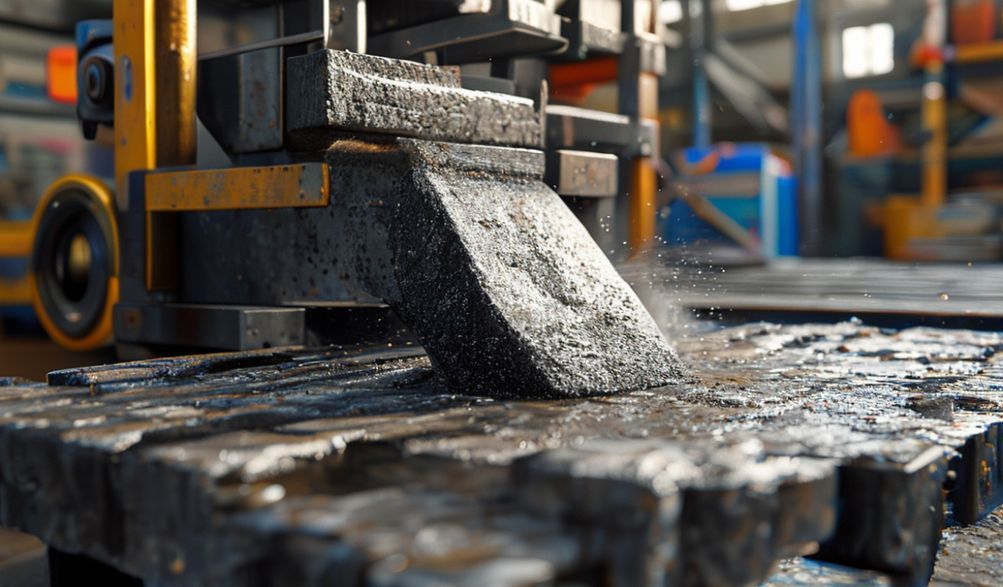
Цемент блоктарын жасауға арналған машинаны таңдаудың жан-жақты нұсқаулығы
Кіріспе
Жаһалдық құрылыс саласы қарапайым және уақытсыз қажеттілікке негізделеді: қол жетімді, берік және сенімді құрылыс материалдары. Қарапайым үйлерден бастап биік коммерциялық ғимараттарға дейінгі сансыз құрылымдардың өзегінде қарапайым цемент блоктары жатыр. Олардың жан-жақтылығы мен беріктігі бәсекеге тұрарлық емес. Дегенмен, құрылысшылар, подрядчиктер және кәсіпкерлер үшін осы блоктарды табу маңызды шешім табуға мәжбүр етеді. Қолмен өндіру еңбек сыйымдылығы жоғары, сапасы тұрақсыз және өнімділігі төмен процесс болса, дайын блоктарды сатып алу материалдық және тасымалдау шығындарының жоғарылығынан пайда нормасын төмендете алады.
Бұл аралықты толтыратын, бақылауды, тиімділікті және масштабтау мүмкіндігін ұсынатын шешім бар: арнайы инвестициялауцемент блоктарын жасауға арналған машинаБұл жай ғана жабдық сатып алу емес; бұл сіздің жобаңыз немесе бизнесіңіз үшін стратегиялық актив иелену. Бұл жан-жақты нұсқаулық салалық білім, техникалық сипаттамаларды терең зерттеу және практикалық операциялық түсініктер негізінде жасалған. Біздің мақсатымыз - сізді қызығушылық танытқан зерттеушіден, жобаңыздың ауқымына, бюджетіне және ұзақ мерзімді амбицияларыңызға дәл сәйкес келетін тамаша машинаны таңдауға құқылы ақпаратталған сатып алушыға айналдыру.
Осы нұсқаулықтың соңында сіз түсінесіз:
* ӘртүрліЦемент блоктарын жасау машиналарының түрлеріжәне олардың қолданылуы.
*негізгі факторларСатып алмас бұрын мұқият тексеру.
* The tangible benefits and applications for various users.
* Негізгіoperational and maintenance tipsұзақ мерзімділікті қамтамасыз ету үшін.
* How to navigate the market and ask the right questions.
Сіздің табысыңыздың негізін салайық.
Цемент блоктарын жасау машиналарын түсіну
Цемент блоктарын жасау машинасы дегеніміз не?
A cement block making machine is a purpose-built device that automates the process of forming precise, high-density blocks from a mixture of cement, aggregates (like sand or crushed stone), and water. The core principle revolves around compaction and vibration. By subjecting the raw mix to intense, controlled vibrations within a mold, the machine removes air pockets and compresses the material, resulting in a uniformly solid and strong block.
Дизайн әртүрлі болса да, көптеген машиналар мына негізгі компоненттерді бөліседі:
* Хоппер: The entry point for the raw concrete mix.
* Mold (or Die): The cavity that defines the block’s shape and size (hollow, solid, paving, etc.).
* Діріл жүйесі: Typically powered by electric motors, this is the heart of the machine, ensuring proper compaction.
* Гидравликалық жүйе: In semi- and fully-automatic models, hydraulics provide the powerful pressure needed for ejection and pallet movement.
* Басқару панелі: Houses the controls for the vibration, hydraulic cycles, and, in advanced models, programmable logic for automation.
Types of Machines for Making Cement Blocks
Choosing the right type is your first major decision. The spectrum ranges from simple human-powered units to fully automated production lines.
-
Қолдан жасалған блок жасау машиналары:
- Операция: Entirely human-powered. The operator manually fills the mold, engages a lever to apply pressure, and then releases the block onto the ground.
- Үшін Қолайлы: Ultra-small-scale projects, DIY enthusiasts, or startups testing the waters with minimal capital.
- Артықшылықтары: Very low cost, no electricity required, simple to understand.
- Кемшіліктері: Extremely labor-intensive, low output (50-100 blocks per day), quality heavily depends on operator consistency.
-
Жартылай автоматты блок жасау машиналары:
- Операция: Strikes a balance. The operator feeds the mix and may initiate the cycle, but core functions like vibration, compaction, and block ejection are powered (by electricity or diesel). Blocks are often retrieved manually for curing.
- Үшін Қолайлы: Small to medium-sized businesses, contractors building multiple houses, or block supply startups with steady demand.
- Артықшылықтары: Good balance of output and cost, significantly less labor than manual machines, consistent quality, often mobile.
- Кемшіліктері: Requires a power source, still needs several operators for optimal output.
-
Толық автоматты блок жасау машиналары:
- Операция: Represents the pinnacle of automation. From raw material feeding and mixing to compaction, curing, and even block stacking, the process is controlled by a Programmable Logic Controller (PLC). Human intervention is primarily for monitoring and maintenance.
- Үшін Қолайлы: Large-scale block supply businesses, industrial construction projects, and government housing initiatives.
- Артықшылықтары: Very high, consistent output (thousands of blocks per shift), minimal labor requirements, superior consistency and quality.
- Кемшіліктері: High initial investment, requires significant space and stable three-phase power, complex maintenance.
-
Mobile vs. Stationary Block Machines:
- Ұялы машиналар: Often mounted on a trailer or wheels. Perfect for contractors who need to produce blocks directly on a construction site, eliminating transport costs for finished blocks.
- Стационарлық машиналар: Set up in a fixed location, like a factory or yard. Typically more robust, powerful, and suited for high-volume, continuous production for a supply business.
Common Block Types and Sizes Produced
A major advantage of owning a machine is versatility. With interchangeable molds, a single machine can be a multi-product factory.
* Қуыс блоктар: The standard for wall construction, offering excellent strength-to-weight ratio and insulation.
* Қатты блоктар: Used for foundations, load-bearing walls, and paving bases where maximum density is required.
* Тротуар плиткасы мен араласқан тротуар тақталары:Жолдарға, жаяу жүру жолдарына және алаңдарға арналған.
* Біріктірілетін блоктар: Designed to lock together without mortar, speeding up construction for retaining walls and some structures.
* Curbs, Grass Pavers, and Specialty Shapes: Many machines can produce landscape and civil engineering products.
Key Factors to Consider When Choosing Your Machine
Project Scale & Required Output (Blocks Per Hour/Day)
This is the most critical question. Your machine must match your ambition.
* Small Project (Single Home, Extension): A manual or small semi-automatic machine (output: 200-500 blocks per day) may suffice.
* Medium-Scale (Multiple Homes, Small Business): A robust semi-automatic machine (output: 800-2000 blocks per day) is ideal.
* Large-Scale (Housing Development, Supply Business): A fully automatic line or high-capacity stationary machine (output: 3000+ blocks per day) is necessary.
* Өзіңнен сұра: “What is my peak demand? Am I fulfilling a specific contract or building for an ongoing market?”
Available Budget and Investment Analysis
Costs vary astronomically, so clarity is key.
* Cost Ranges (Approximate):
* Manual Machines: $1,000 – $4,000
* Semi-Automatic Machines: $5,000 – $30,000
* Fully Automatic Machines: $30,000 – $150,000+
* ROI Analysis: Look beyond the sticker price. Calculate:
* Savings: Reduced labor vs. manual production, lower per-block cost vs. buying pre-made.
* Revenue: If selling blocks, what is the market price in your area? How quickly can you meet demand?
* A slightly more expensive, reliable machine that runs daily will pay for itself faster than a cheap one plagued by downtime.
Power Source and Operational Requirements
Your local infrastructure dictates your choice.
* Электрлік: Clean, quiet, and efficient, but requires reliable grid power (often three-phase for larger models).
* Дизель: Powerful and independent of the electrical grid, ideal for remote sites. However, it’s noisier, has higher fuel costs, and produces emissions.
* Нұсқаулық: No power needed, but severely limits output and scale.
* Consider: Is your workshop or site prone to blackouts? Is fuel readily available?
Machine Features and Build Quality
This is where you assess long-term value. Never compromise on core components.
* Діріл жүйесі: Look for a system with dual, high-frequency vibration motors. This ensures even compaction throughout the mold for uniform block strength.
* Гидравликалық қысым: Essential for semi- and fully-auto machines. A robust, well-sealed hydraulic system ensures smooth operation and the ability to produce dense, complex blocks.
* Frame and Mold Material: The frame should be made of heavy-duty, reinforced steel. Molds must be precision-engineered from hardened steel to resist wear and maintain dimensional accuracy over thousands of cycles.
* After-Sales Support (The Critical E-E-A-T Factor): This can make or break your investment. A reputable supplier offers:
* A clear, comprehensive warranty.
* Ready availability of spare parts (molds, vibration motors, hydraulic seals).
* Access to technical support, either remotely or on-site.
* Provision of operational and maintenance training.
Top Applications and Benefits of Using a Block Making Machine
For Construction Companies and Contractors
- On-Demand Production: Make blocks exactly when and where you need them, eliminating supply chain delays.
- Slash Transport Costs: Produce on-site, especially with a mobile machine. You transport raw materials (cement, aggregate) instead of heavy, finished blocks.
- Total Quality Control: You govern the mix design, ensuring every block meets your specific strength and durability standards.
- Schedule Mastery: Become independent of external suppliers, giving you full control over your project timeline.
For Entrepreneurs and Small Business Owners
- Start a Supply Business: Tap into the constant local demand for construction materials. Supply individual homeowners, small contractors, and retail outlets.
- Жұмыс орнын құру: Operate a machine that requires a small team, contributing to local job creation.
- Build a Brand: Produce specialized or higher-quality blocks to differentiate yourself in the market.
For Sustainable and Community Projects
- Use Local Materials: Source aggregates locally, reducing the carbon footprint and supporting the local economy.
- Produce Eco-Blocks: Experiment with mix designs that incorporate industrial by-products like fly ash or recycled crushed concrete.
- Community-Led Housing: Empower community cooperatives to produce their own affordable building materials for housing initiatives.
Tangible Benefits Summary
- Шығындардың тиімділігі: Drastically reduces per-block cost over time.
- Consistent High Quality: Automated processes yield uniform, high-strength blocks every cycle.
- High Production Speed: Outproduces manual labor by orders of magnitude.
- Operational Flexibility: Produce a variety of block types on demand.
- Reduced Material Waste: Precise mixing and compaction minimize spillage and rejected blocks.
Operational Guide and Maintenance Tips
Setting Up for Success: Site and Foundation
A proper setup prevents a multitude of problems.
* Ғарыш: Ensure ample space not just for the machine, but for raw material storage, block curing, and finished product inventory.
* Foundation: Stationary machines, especially automatic ones, require a level, reinforced concrete foundation to absorb vibrations and prevent misalignment. Follow the manufacturer’s specifications exactly.
The Production Process: Step-by-Step
- Шикізатты дайындау: Achieve the correct mix ratio (e.g., 1 part cement, 3-6 parts aggregate). Consistency in mix and moisture content is paramount.
- Тамақтандыру: The prepared mix is loaded into the machine’s hopper.
- Қысу/Дірілдеу: The mix is fed into the mold and subjected to intense vibration under pressure for a set duration.
- Атқылау және Бекіту: The freshly formed “green” block is ejected onto a pallet or the ground. It must then be cured—kept moist under plastic sheeting or in a curing chamber for several days to reach its full strength.
- Storage: Once cured, blocks are stacked and stored for use or sale.
Essential Maintenance for Longevity
Proactive care is cheap; reactive repair is expensive.
* Daily/Weekly: Clean all concrete residue from the mold, hopper, and frame. Lubricate all moving parts as per the manual. Check and tighten bolts and nuts.
* Monthly/Quarterly: Inspect vibration motors for loose mounts. Check hydraulic hoses for leaks and fluid levels. Examine the mold for signs of excessive wear or damage.
* Safety First: Always lock out/tag out the power source before performing any maintenance. Wear appropriate PPE (gloves, safety glasses).
Жиі кездесетін мәселелерді шешу
| Issue | Possible Cause | Suggested Solution |
| :— | :— | :— |
| Blocks breaking easily | Insufficient vibration/compaction; Wrong water-cement ratio (too wet or dry); Inadequate curing. | Increase vibration time; Adjust mix to a stiffer consistency; Ensure proper 7-day moist curing. |
| Blocks sticking in mold | Worn or damaged mold; Insufficient release agent; Mix too wet. | Inspect and repair/replace mold; Apply a recommended mold oil; Reduce water in mix. |
| Uneven block height/density | Uneven feeding of mix; Unlevel machine or foundation; Worn vibration motors. | Ensure consistent feed; Re-level the machine; Check and replace vibration motors if faulty. |
| Machine vibrating excessively | Loose bolts on motors or frame; Foundation not solid. | Tighten all bolts and mounts; Reinforce the foundation. |
FAQ: Your Questions About Cement Block Machines Answered
Q1: What is the average cost of a machine for making cement blocks?
A: There is no single “average” due to the vast range. Prices can start around $1,000 for a basic manual press and exceed $100,000 for a high-output fully automatic production line. The most meaningful approach is to define your required output and block types first, then budget for a reliable machine in that category.
Q2: Can one machine produce different block types?
A: Yes, absolutely. This is a key feature. Most machines operate with interchangeable molds. You can purchase additional molds for hollow blocks, solid blocks, pavers, etc., allowing one machine to produce a full product line. Always confirm mold compatibility and cost with the supplier.
Q3: What is the typical lifespan of a block making machine?
A: With proper maintenance and reasonable usage, a well-built machine can last 10 to 20 years or more. The lifespan is directly tied to build quality (steel thickness, component grade), adherence to maintenance schedules, and production intensity (running 24/7 will naturally reduce lifespan compared to single-shift operation).
Q4: Do I need special training to operate a semi- or fully-automatic machine?
A: Yes, basic operational training is crucial and non-negotiable. It ensures operator safety, maximizes production efficiency, and teaches essential daily maintenance to protect your investment. A reputable supplier should provide this training, either at their facility, yours, or via comprehensive manuals and videos.
Q5: Where can I buy a reliable cement block making machine?
A: Research is key. Look for established manufacturers with a proven track record. Attend industry trade shows, check for international quality certifications (like CE or ISO), and read customer reviews and case studies. Crucially, ask for references and, if possible, visit an existing customer’s operation to see the machine running. Never choose a supplier on price alone; the cost of poor after-sales support will far outweigh any initial savings.
Қорытынды
Дұрыс таңдау жасауцемент блоктарын жасауға арналған машина is a journey from assessing your needs to understanding the technology and finally making a strategic investment. We’ve explored the spectrum from simple manual presses to sophisticated automated plants, highlighted the critical factors of output, budget, and build quality, and underscored the transformative benefits—from cost savings and quality control to business creation.
This guide serves as your foundational blueprint. It empowers you to move forward with confidence, asking informed questions and evaluating options not as a novice, but as a savvy buyer. Investing in the right equipment is more than a purchase; it’s a commitment to efficiency, quality, and growth for your construction projects or business venture.
Ready to take the next step? Use this knowledge as your filter. Contact several reputable suppliers with your specific output and block type requirements. Request detailed quotations that include delivery, training, and warranty terms. Ask pointed questions about after-sales service and spare parts availability. Don’t hesitate to ask for client references. Your perfect block-making partner is out there—go find them and build your future, one block at a time.
<