
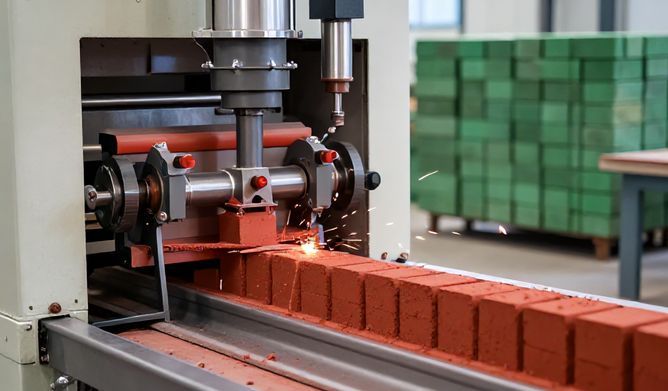
Керамикалық кірпіш жасау машиналарының жан-жақты нұсқаулығы: Түрлері, Өндіріс процесі және Таңдау жолдары
For millennia, bricks have formed the literal and figurative bedrock of human civilization. From ancient ziggurats to modern skyscrapers, their durability and versatility are unmatched. Today, the humble clay brick is no longer solely the product of backbreaking manual labor. The advent of the саздан кірпіш жасау машинасы has revolutionized the industry, transforming production from a craft into a precise, efficient, and scalable engineering process. Whether you’re an entrepreneur eyeing a manufacturing startup, a construction company looking to vertically integrate, or a project manager seeking to understand the supply chain, navigating the world of brick-making machinery is crucial.
This comprehensive guide is built on industry expertise, mechanical engineering principles, and practical operational knowledge. We’ve distilled complex information into a clear, actionable resource you can trust. You will learn about the different types of machines, the step-by-step production process, and the critical factors to consider when making an investment. Our goal is to equip you with the knowledge to make an informed decision, optimize your operations, and understand the engineering behind every brick.
Саман кірпіш жасау машиналарын түсіну
Before diving into specifications and suppliers, it’s essential to grasp what these machines are and how they fundamentally operate.
Саман кірпіш жасау машинасы деген не?
At its core, a clay brick making machine is a piece of industrial equipment designed to automate the forming of raw clay into solid, standardized bricks. It replaces the traditional manual processes of molding, slapping, and cutting with a mechanized system that ensures consistency, speed, and quality.
The evolution has been significant:
* Қолмен қалыптау: Labor-intensive, low-output, highly variable brick quality.
* Simple Mechanical Presses: Introduced leverage and basic mechanics for better consistency.
* Modern Automated Systems: Integrate material feeding, mixing, extrusion, cutting, and sometimes stacking with computer-controlled precision, producing thousands of uniform bricks per hour.
Негізгі құрамдас бөліктер және олардың жұмыс істеу принципі
While designs vary, most modern clay brick machines share key components that work in a synchronized sequence:
- Feeder/Hopper: The starting point where raw, prepared clay is loaded into the machine. In automated lines, this is often a conveyor-fed system.
- Mixer/Pugmill: This chamber contains rotating shafts with blades. It performs the critical final mixing and “pugging” of the clay, ensuring a homogeneous moisture content and plasticity while removing large air pockets.
- Extrusion Auger (or “Worm”): The heart of an extrusion machine. This large, threaded screw rotates inside a barrel, forcefully conveying the pugged clay forward. The action compacts the clay and builds up the necessary pressure.
- Molding Die and Cutter: The compacted clay is forced through a die—a metal plate with a profile that shapes the clay column into the desired brick form (solid, hollow, etc.). Immediately after extrusion, a cutting mechanism (wires or blades) slices the continuous column into individual, wet bricks.
- Automation & Control System: This includes hydraulic power packs, motors, PLCs (Programmable Logic Controllers), and sensors. They manage the machine’s power, pressure, cycle times, and sequencing, allowing for precise operation and adjustments.
Негізгі Қағидат: The process primarily relies on гидравлық қысымжәнеmechanical force. Hydraulic systems provide the immense, controlled power needed for compaction, while the mechanical auger and drives handle the material movement. The removal of air (especially in vacuum models) is key to producing strong, crack-resistant bricks.
Types of Clay Brick Making Machines
The market offers a range of machines categorized by their level of automation and the core technology they use. Choosing the right type is your first major decision.
By Automation Level
| Automation Level | Key Characteristics | Ideal For |
| :— | :— | :— |
| Қолмен басқарылатын машиналар | Operated entirely by human labor (filling, lever pressing, brick removal). Very low output (200-500 bricks/day). | Small-scale, rural projects with very low capital and high labor availability. Artisanal or specialty brick production. |
| Жартылай автоматты машиналар | Mechanizes the critical forming and pressing action, but requires manual loading of clay and removal of green bricks. A balanced choice. | Small to medium-sized businesses (SMEs). Offers a significant productivity boost over manual methods without the full cost of full automation. |
| Fully Automatic Machines | Integrated systems with auto-feeders, conveyors, stackers, and PLC controls. Minimal human intervention required for monitoring. | Large-scale commercial brick plants, industrial construction projects, and manufacturers supplying to major distributors. Prioritizes high, consistent output. |
By Production Process & Technology
This classification is about the core method used to form the brick.
-
Extrusion Machines (The Most Common):
- Олар қалай жұмыс істейді: Pugged clay is forced by a rotating auger through a shaped die, creating a continuous column of clay which is then wire-cut into individual bricks. Think of it like a giant, high-pressure pasta maker.
- Шығару: Excellent for high-volume production of standard bricks.
- Кірпіш түрлері: Perfect for producing solid, perforated, and hollow bricks. The die design dictates the final brick profile.
-
Гидравлик пресс станоктары:
- Олар қалай жұмыс істейді: Clay is fed into a mold, and a hydraulic ram applies extreme vertical pressure (often hundreds of tons) to compact the clay into a very dense form.
- Шығару: Typically lower output than extrusion but produces superior brick density.
- Кірпіш түрлері: Ideal for high-strength engineering bricks, paving bricks (pavers), and fire-resistant bricks where extreme density and low porosity are required.
-
Vacuum Extruders (The Quality Standard):
- Олар қалай жұмыс істейді: This is an enhanced extrusion machine. Before the final extrusion stage, the clay passes through a vacuum chamber. A pump removes entrapped air from the clay mixture.
- Critical Benefit: Removing air bubbles prevents laminations, cracks, and explosions during the firing process. It significantly increases the brick’s green strength (before drying) and final compressive strength, making it the industry benchmark for quality production.
The Clay Brick Manufacturing Process: Step-by-Step
A brick making machine is central to this process, but it’s part of a larger system. Understanding the full workflow demonstrates holistic industry knowledge and helps in planning a complete operation.
Stage 1: Raw Material Preparation
The machine is only as good as the clay you feed it. This stage is critical for quality control.
* Clay Selection & Testing (Expertise Signal): Not all soil is suitable. Ideal brick clay has a mix of plasticity (to bind), silica (for structure), and fluxes (to aid firing). In practice, operators often conduct simple field tests, but for professional projects, laboratory soil testing (for shrinkage, plasticity index, mineral content) is recommended.
* Crushing, Grinding, and Screening: Raw clay is broken down, ground to a fine consistency, and screened to remove stones and oversized particles, ensuring a uniform feed for the machine.
* Кайта қыздыру: Water is added to achieve the optimal moisture content (typically 15-25%). This is done in a tempering pit or a pugmill, allowing the clay to achieve uniform plasticity, which is essential for smooth extrusion and proper bonding.
Stage 2: Forming and Molding
This is the primary domain of the brick making machine.
* The tempered clay is fed into the machine’s hopper.
* It enters the pugmill for final mixing and de-airing (if a vacuum extruder).
* The auger forces the clay through the die, forming a continuous column shaped like the brick’s profile.
* A cutter (often a series of taut wires on a frame) automatically slices the column into individual “green” bricks. The spacing of the cuts determines the brick’s length.
Stage 3: Drying and Curing
- Why it’s Critical: Green bricks contain 15-25% moisture. If fired immediately, the rapid steam generation would cause them to explode. Drying removes most of this moisture slowly and evenly to prevent cracking.
- Methods:
- Natural Drying: Bricks are stacked in open air under sheds for several weeks. Weather-dependent and space-intensive.
- Artificial (Chamber) Drying: Bricks are moved into controlled drying chambers with regulated heat, humidity, and airflow. This reduces drying time to 24-48 hours and is standard in modern plants.
Stage 4: Firing/Burning (Kiln)
This final stage, while separate from the brick-making machine, gives bricks their permanent strength and color.
* The dried bricks are loaded into a kiln and fired at temperatures between 900°C and 1200°C.
* The heat causes vitrification—the clay particles fuse together, creating a hard, ceramic bond.
* Common Kiln Types:TheHoffman Kiln (a continuous, rectangular ring kiln) and the more modern Tunnel Kiln (where bricks move on carts through a long, heated tunnel) are industry standards for large-scale production.
Key Factors to Consider When Choosing a Machine
This is where your research becomes actionable. Making the right choice involves an honest assessment of your needs and a careful evaluation of the equipment.
Өндірістік қажеттіліктеріңізді бағалау
- Шығу қабілеті:Қажетті мөлшеріңізді есептеңізсағатына немесе 8 сағаттық ауысымдағы кірпіштер. Be realistic about current demand and future growth. A machine running at 80% capacity is more sustainable than one constantly at 110%.
- Brick Type & Variety: Will you produce only standard solid bricks, or do you need hollow blocks, pavers, or interlocking bricks? Each may require different dies or even a different machine type (e.g., hydraulic press for pavers).
- Site Practicalities: Measure your available space for the machine, drying area, and raw material storage. Check your power supply (3-phase industrial power is often required for larger machines) and water availability.
Машинаның сипаттамалары мен ерекшеліктері
- Motor Power & Pressure: A more powerful motor and higher hydraulic pressure generally indicate a machine capable of handling tougher clays and producing denser bricks. Compare these specs across models.
- Құрылыс сапасы: Inspect the frame (heavy-duty steel is best), the auger shaft (hardened steel for wear resistance), and the die (high-quality, machined steel). Robust construction minimizes vibration, wear, and downtime.
- Automation & Controls: Evaluate the user interface. Are controls intuitive? Does the PLC allow for easy adjustment of speed, pressure, and cut length? Good automation improves consistency and reduces operator error.
- Ease of Maintenance & Parts: This is a trustworthiness cornerstone. Ask: Are lubrication points accessible? How is the die changed? Most importantly, what is the availability and cost of spare parts (augers, liners, seals, hydraulic components)? A reliable supplier will have a clear parts inventory and support system.
Supplier and Cost Considerations
- Supplier Reputation (E-E-A-T for Them): Research the manufacturer/supplier. How long have they been in business? Can they provide references or case studies? The quality of their after-sales service, technical support, and training is often more valuable than a slight discount on the initial price.
- Иеліктің жалпы құны (TCO): Look beyond the sticker price.
- Initial Machine Cost
- Installation & Commissioning Fees
- Energy Consumption (a significant ongoing cost)
- Routine Maintenance & Spare Parts
- Cost of Operator Training
- Warranty & Training: A comprehensive warranty (1-2 years on major components) is a sign of confidence. Insist on on-site installation and training for your operators—it is crucial for safety, efficiency, and machine longevity.
Benefits and Challenges of Automated Brick Production
A balanced perspective is key to setting realistic expectations.
Major Advantages
- Increased Productivity & Consistency: Machines produce thousands of uniform bricks per shift, a feat impossible with manual labor. Every brick meets the same dimensional standard.
- Еңбек шығындары мен жүктеменің төмендеуі: Automation minimizes the number of workers needed for forming and reduces physically demanding tasks, improving worker safety and well-being.
- Enhanced Brick Quality: Precise control over pressure, moisture, and extrusion results in bricks with higher сығым бергіштігі, better shape, and fewer defects, commanding a better market price.
- Дизайн икемділігі With interchangeable dies, a single machine can produce a variety of brick profiles (perforated, textured, etc.) to meet different architectural and structural needs.
Potential Challenges and Solutions
- High Initial Investment: Solution: Conduct a thorough Инвестициялық қайтарым (ROI) analysis. Factor in labor savings, increased output, and higher brick quality. Financing options may be available.
- Technical Skill Requirement: Solution: Invest in the supplier’s training program. Develop simple, clear Standard Operating Procedures (SOPs) and maintenance checklists for your team.
- Raw Material Dependence: Solution: Establish strict quality control for your incoming clay. Consistent raw material is essential for consistent machine performance and brick quality.
- Энергия тұтынуы: Solution: Factor energy costs into your TCO calculations. Modern machines are increasingly designed for energy efficiency. Consider this during the selection process.
Жиі қойылатын сұрақтар (ЖҚС)
Q: What is the average production capacity of a standard clay brick making machine?
A: There is no single “standard.” Capacity ranges dramatically:
* Manual/Small Semi-Auto: 1,000 – 5,000 bricks per 8-hour shift.
* Medium Semi/Fully Automatic: 8,000 – 20,000 bricks per shift.
* Large Fully Automatic Lines: 30,000 – 50,000+ bricks per shift.
Always base your decision on the specific model’s rated capacity and your verified needs.
Q: Can one machine produce different types and sizes of bricks?
A: Yes, but with a caveat. By changing the extrusion die and cutter setting, a single machine can produce different profiles (e.g., solid to hollow). However, this changeover requires downtime, technical skill, and the purchase of additional die sets. It’s not an instantaneous switch.
Q: What is the approximate cost range for a clay brick making machine?
A: Prices vary enormously based on automation, capacity, and technology.
* Basic Manual/Semi-Automatic: $5,000 – $25,000
* Semi-Automatic/Vacuum Extruders: $25,000 – $80,000
* Fully Automatic Production Lines: $100,000 – $300,000+
Crucially, you must obtain detailed quotes from multiple reputable suppliers based on your specific requirements.
Q: How important is the quality of clay? What properties should it have?
A: It is the most critical factor outside the machine itself. Suitable clay must have:
* Пластикалық: To hold its shape when formed.
* Workable Drying Shrinkage: Excessive shrinkage causes cracking.
* Appropriate Mineral Composition: A mix of clay, silt, and sand.
For any serious venture, professional soil testing is a non-negotiable upfront investment to avoid costly production failures.
Q: What are the essential maintenance routines for these machines?
A: Preventive maintenance is cheaper than repairs. Key routines include:
* Күнделікті Clean clay residue from the die, hopper, and cutter. Check for loose bolts or parts.
* Апталық: Lubricate all moving parts (bearings, guides) as per the manual. Check hydraulic oil levels and for leaks.
* Ай сайын: Inspect the extrusion auger and liner for wear. Check wire tension on cutters. Clean or replace filters.
* As Needed: Keep a log and replace worn components (seals, wires, die plates) promptly to maintain brick quality.
Қорытынды
Choosing and operating a clay brick making machine is a significant decision that hinges on understanding your production goals, the available technology, and the full manufacturing process. We’ve explored the spectrum from manual to fully automatic systems, detailed the crucial extrusion and hydraulic press technologies, and walked through the journey of clay from raw material to a fired brick.
The path to success is built on trustworthiness and expertise: partner with a reputable supplier known for strong after-sales support, invest comprehensively in operator training, and never underestimate the importance of raw material quality. Remember, the right machine is not just a purchase; it’s a long-term investment in the foundation of your project or business.
Your Next Step:
* If you’re ready to buy: Compile your detailed requirements (capacity, brick type, power, budget) and contact several trusted suppliers for consultations and factory demonstrations.
* If you’re still researching: Deepen your knowledge by investigating specific machine models, reading case studies, and perhaps visiting an operational brick plant.
With proper planning and the right machinery, you lay the strongest possible foundation for a successful and sustainable brick manufacturing operation.