
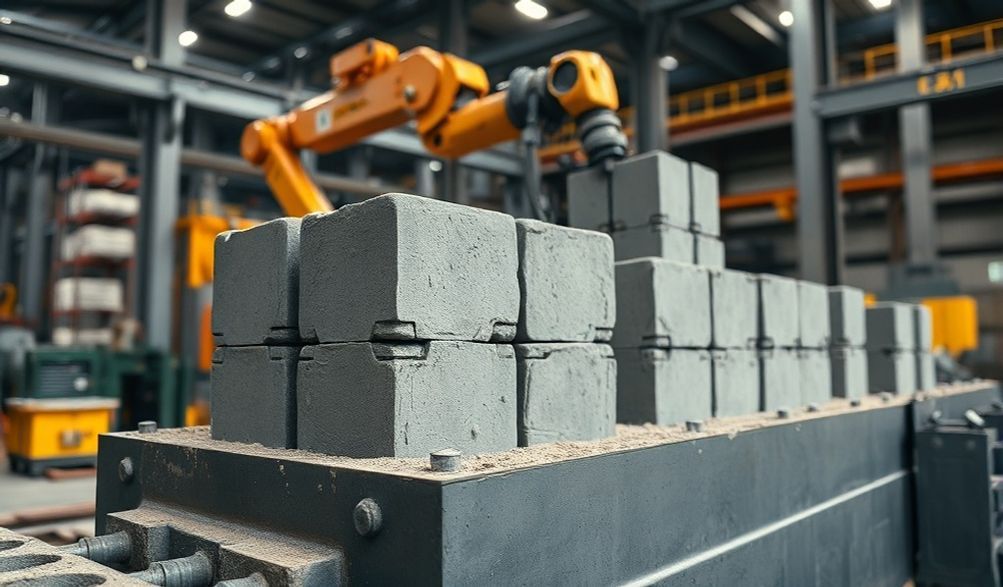
The Ultimate Guide to Concrete Block Machinery: Types, Selection, and Best Practices
Look around any modern construction site, urban street, or residential landscape, and you’ll see the fundamental building block of our world—quite literally. Concrete blocks are the unsung heroes of construction, forming the sturdy backbones of foundations, the aesthetic faces of walls, and the durable surfaces of pavements. However, behind this ubiquity lies a critical challenge: producing these blocks consistently, efficiently, and at scale is nearly impossible through manual labor alone. This is where concrete block machinery transforms the industry, turning raw materials into precision-engineered components that build our future.
For business owners, project managers, and entrepreneurs, selecting the right machinery is a pivotal decision that dictates productivity, product quality, and long-term profitability. This comprehensive guide serves as your expert resource. We will demystify how these machines work, explore the different types available, provide a framework for selecting the right equipment, and outline essential best practices for operation and maintenance. Our goal is to equip you with the knowledge to make a confident, informed investment that forms the foundation of your success.
Understanding Concrete Block Machinery: Core Concepts and Components
Before diving into types and selection, it’s crucial to understand what concrete block machinery does and the key components that make it work. At its core, this machinery automates and perfects the process of transforming a loose, wet concrete mix into a dense, high-strength, and dimensionally accurate block.
How Does a Concrete Block Machine Work?
The production process is a cycle of precision, often summarized in these key stages:
- Араластыру: Precisely measured raw materials—cement, aggregates (sand, gravel), and water—are blended into a homogeneous, semi-dry concrete mix. The consistency is critical; it must be wet enough to bind but dry enough to hold its shape immediately after molding.
- Қалыптау: The mix is fed into a mold box (or “mold”) on the machine. This mold defines the block’s shape, whether it’s a standard hollow block, a solid paver, or a specialty interlocking design.
- Ығыстыру: This is the heart of the process. The machine employs two primary forces:
- Діріл: High-frequency vibration is applied to the mold. This causes the concrete particles to settle densely, eliminating air pockets and ensuring uniform strength.
- Гидравликалық қысым: Simultaneously or subsequently, a hydraulic ram applies immense pressure from the top, further consolidating the mix into a rigid form.
- Бөлшектеу/Шығару: The compacted block is then stripped from the mold. In advanced machines, the mold lifts vertically while the block remains on a pallet below, ensuring the delicate green (uncured) block is not damaged.
- Емдеу: The ejected blocks on their pallets are transferred to a curing area. Here, they gain strength through controlled hydration, often in steam chambers (kilns) to accelerate the process.
- Паллеттеу және сақтау: After sufficient curing, blocks are depalletized, stacked, and prepared for shipment or storage.
This cycle repeats continuously, with fully automatic machines performing these steps in a seamless, synchronized sequence.
Essential Components of a Block Production Line
A reliable machine is the sum of its robust parts. Understanding these components helps in evaluating quality.
- Миксер: The starting point. Pan or planetary mixers ensure a consistent, uniform blend of all raw materials.
- Конвейер жүйесі: Transports the mixed concrete to the hopper of the block-making machine, maintaining a steady material supply.
- Block Mold & Mold Box: The tool that defines your product. Made from hardened steel, it must withstand immense pressure and abrasion. Interchangeable molds allow one machine to produce different block types.
- Діріл жүйесі: Comprising a vibration table and powerful motors. The frequency and amplitude are adjustable to optimize compaction for different mix designs.
- Гидравлик қуат блогы: The machine’s muscle. It includes pumps, valves, cylinders, and a fluid reservoir. A reliable, leak-free hydraulic system is non-negotiable for consistent pressure and smooth operation.
- Басқару панелі: The machine’s brain. Modern panels feature PLC (Programmable Logic Controller) systems and touchscreen interfaces for setting cycle times, vibration duration, and pressure, and for monitoring diagnostics.
- Pallet Feeder & Circulation System: Automatically feeds empty pallets into the machine and removes loaded ones, essential for continuous production.
Қорытынды: The durability and precision of these components directly dictate the machine’s uptime, output quality, and total lifespan. Never compromise on core component quality for a lower upfront price.
Types of Concrete Block Machinery: Choosing the Right Fit
The market offers a spectrum of machinery, from simple to sophisticated. Your choice should be dictated by your production goals, budget, and labor availability.
Қолмен, жартылай автоматты және толық автоматты машиналар
-
Қол машиналары: Operated primarily by human labor for feeding, molding, and demolding.
- Инвестиция: Very low upfront cost.
- Шығару:Төмен (мысалы, 8 сағаттық ауысымда 500-1000 блок).
- ЕңбекЖоғары, физикалық түрде қарқынды.
- Үшін Қолайлы: Micro-enterprises, very small-scale projects, or markets with extremely low labor costs where automation isn’t yet justified.
-
Жартылай автоматты машиналар: Mechanize the core processes (vibration, compaction, demolding) but require manual feeding of raw material and removal of finished blocks.
- Инвестиция: Moderate.
- Шығару: Medium (e.g., 2,000 – 6,000 blocks per shift).
- Еңбек Moderate, less physically demanding but still required.
- Үшін Қолайлы: Small to medium-sized businesses (SMEs) looking to scale up from manual production with a manageable investment.
-
Толық автоматты машиналар: Complete, computer-controlled production lines with automated material handling, mixing, block making, pallet feeding, and stacking.
- Инвестиция: High.
- Шығару: High to very high (e.g., 10,000 – 30,000+ blocks per shift).
- Еңбек Minimal, primarily for supervision, quality checks, and maintenance.
- Үшін Қолайлы: Large-scale manufacturing plants, high-volume contractors, and businesses focused on maximizing output and consistency while minimizing labor costs.
Stationary vs. Mobile Block Machines
- Стационарлық өсімдіктер: These are fixed installations, typically the choice for dedicated block manufacturing facilities. They are designed for maximum output and can be integrated with extensive curing racks, conveyor systems, and batching plants.
- Мобильді блоктық машиналар: Mounted on a trailer or truck bed, these machines can be driven directly to a construction site.
- Негізгі артықшылық: They produce blocks on-demand, right where they are needed, dramatically reducing transport costs for the finished blocks.
- Қарастыру: Output is generally lower than large stationary plants, and they require a stable, prepared site with access to raw materials and power.
Specialized Machinery for Different Block Types
While many machines are versatile with mold changes, some are optimized for specific products:
- Hollow Block Machines: The most common type, designed to produce lightweight, insulating blocks with high void space.
- Paving Stone & Interlocking Block Machines: Feature specialized vibration systems to produce extremely dense, high-strength, and aesthetically finished pavers for driveways and walkways.
- Solid Block Machines: For producing fully solid, high-mass blocks used where maximum load-bearing or density is required.
- Specialty Machines: For products like curbstones, retaining wall units, or custom architectural shapes. These often involve different molding and handling mechanisms.
Key Factors for Selecting Your Concrete Block Machinery
Making the right investment requires a clear assessment of your needs and the market landscape.
Өндірістік талаптарыңызды бағалау
Answer these questions before speaking to any supplier:
- What is my target daily or shift output? Be realistic about current demand and growth projections.
- What block types and sizes will I produce? List your primary products and any future variants. Check local building code standards (like ASTM C90 in the U.S.) for required dimensions and strengths.
- What is my available factory space? Include not only the machine footprint but also space for raw material storage, curing, and finished goods.
- What utilities are available? Check your electrical supply (voltage, phase) and compressed air availability. High-power machines may require utility upgrades.
Quality, Durability, and Manufacturer Reputation
This is where due diligence pays long-term dividends.
- Құрылыс: Look for machines with heavy-duty, welded steel frames and reinforced structures. They must absorb constant vibration without stress fatigue.
- Critical Components: Investigate the brand of the hydraulic system, electrical components (like Siemens, Schneider), and PLC. Reputable sub-components signal a quality build.
- Manufacturer Track Record: Research how long the manufacturer has been in business. Request customer references and, if possible, visit an existing installation. A reputable supplier will have a network of service agents or provide comprehensive training.
Cost Analysis: Investment vs. Return on Investment (ROI)
Look beyond the sticker price to the Total Cost of Ownership (TCO):
- Upfront Cost: The purchase price of the machine, molds, and any auxiliary equipment (mixer, pallets).
- Операциялық шығындар:
- Energy consumption.
- Labor costs (higher for manual/semi-auto).
- Routine maintenance and spare parts.
- Cost of raw materials.
- Calculating ROI: Estimate your revenue per block. Based on your output capacity, project how long it will take for the machine’s gross profit to cover the total investment. A slightly more expensive, more reliable machine with lower downtime often has a better ROI than a cheaper, problematic one.
Operation, Maintenance, and Safety Best Practices
Owning the machine is only the beginning. Proper operation and care are what ensure longevity and profitability.
Daily and Periodic Maintenance Checklists
Daily (Before/After Shift):
* Clean the machine thoroughly, removing all concrete buildup.
* Check hydraulic oil levels and look for leaks.
* Inspect mold liners and wear parts for damage.
* Lubricate all moving parts as per the manual.
* Ensure the vibration motors are secure.
Weekly/Monthly:
* Check and tighten all bolts and nuts, especially on the vibration table.
* Inspect electrical connections for tightness.
* Change hydraulic filters as recommended.
* Calibrate the control system sensors.
Optimizing Raw Material Input for Quality Blocks
The machine can only be as good as the mix it receives.
- Consistency is Key: Use a consistent source and grade of cement, sand, and aggregate. Variations in particle size or moisture content will affect block quality and machine performance.
- Ideal Ratios: A common starting mix for hollow blocks is a 1:6:4 ratio (cement:sand:aggregate), but this must be optimized locally. The water-cement ratio is critical; too much water weakens the block and causes sticking in the mold.
- Additives: Consider using plasticizers to improve workability without excess water, or additives like fly ash (a sustainable byproduct) to enhance certain properties.
Critical Safety Protocols for Operators
Concrete block machinery involves heavy weights, high pressure, and moving parts. Safety cannot be an afterthought.
- Mandatory PPE: Safety glasses, hearing protection (vibration is loud), steel-toed boots, and gloves.
- Lockout-Tagout (LOTO): A mandatory procedure during any maintenance or clearing of jams. The machine must be powered off and locked in the off position to prevent accidental startup.
- Training: Operators must be thoroughly trained on all machine functions, emergency stops, and safe material handling procedures for heavy pallets and blocks.
The Future of Concrete Block Production
The industry is evolving towards greater efficiency, intelligence, and sustainability.
Trends in Automation and Smart Technology
- IoT & Predictive Maintenance: Sensors on motors, hydraulics, and vibrators can monitor temperature, vibration, and pressure. Data is sent to the cloud, where algorithms predict failures before they happen, scheduling maintenance to avoid costly downtime.
- Centralized Monitoring: Plant managers can monitor production rates, machine status, and energy consumption from a dashboard on their phone or computer.
- Robotic Palletizing: Advanced systems use robotic arms to stack finished blocks with precision, further reducing labor and improving workplace safety.
Sustainability in Block Manufacturing
- Green Materials: Modern machinery is designed to handle mixes with high percentages of recycled content like fly ash, slag, or crushed recycled concrete. This reduces landfill waste and the carbon footprint of each block.
- Энергия тиімділігі: Newer drives and hydraulic systems are designed to consume less power per block produced.
- Product Innovation: Machinery is adapting to produce advanced blocks, such as insulated concrete forms (ICFs) or lightweight aerated blocks, which contribute to more energy-efficient buildings.
Жиі қойылатын сұрақтар (ЖҚС)
Q1: What is the average production capacity of a standard automatic block machine?
Capacity varies widely. A mid-range fully automatic machine can produce between 8,000 to 15,000 standard hollow blocks (e.g., 8x8x16 inches) in an 8-hour shift. High-end plants can exceed 30,000.
Q2: How much space do I need to set up a small-scale block manufacturing plant?
For a semi-automatic operation, a minimum of 5,000 to 10,000 square feet is recommended. This should accommodate the machine, raw material storage, a curing area (which is significant), and space for finished blocks.
Q3: What is the typical lead time for receiving machinery after ordering?
For standard models, expect 8 to 14 weeks for manufacturing, testing, and sea freight from international suppliers. Complex custom lines or local availability can alter this timeline. Always confirm with your supplier.
Q4: Can one machine produce multiple block sizes and types?
Yes, through interchangeable molds. However, changing molds requires time (from 30 minutes to several hours), so production planning in “batches” of the same block type is most efficient to maximize output.
Q5: What are the most common operational issues and how can I troubleshoot them?
* Blocks sticking in mold: Usually caused by an overly wet mix, insufficient vibration, or a worn/damaged mold. Adjust mix consistency and check mold condition.
* Poor surface finish: Often due to a lack of lubrication on mold surfaces or a coarse aggregate mix. Ensure proper mold release agent is used.
* Low compression strength: Typically a raw material issue—incorrect cement ratio, too much water, or inadequate compaction. Review your mix design and machine compaction settings.
Q6: Is operator training provided by the machinery supplier?
Any reputable supplier will include comprehensive operator and maintenance training, either at their facility, your site, or via video. This is a critical part of the purchase and should never be waived. Confirm the duration and details of training in your contract.
Қорытынды
Selecting and operating concrete block machinery is a significant undertaking that forms the bedrock of a successful construction materials business. We’ve explored the journey from understanding the core mechanics of block production to navigating the different types of machinery—from manual to fully automatic. We’ve outlined a framework for selection based on your specific production needs, quality considerations, and financial analysis, and emphasized the non-negotiable importance of maintenance and safety protocols.
Investing in the right equipment is a strategic decision that will impact your productivity, product quality, and profitability for years, if not decades. As you move forward, conduct thorough research, request live demonstrations from multiple suppliers, and speak directly to their existing customers. The knowledge you’ve gained here is your first step toward building a resilient and competitive operation.
With the right machinery as your partner, you are well-positioned to lay a strong, enduring foundation in the ever-growing construction market.
<