
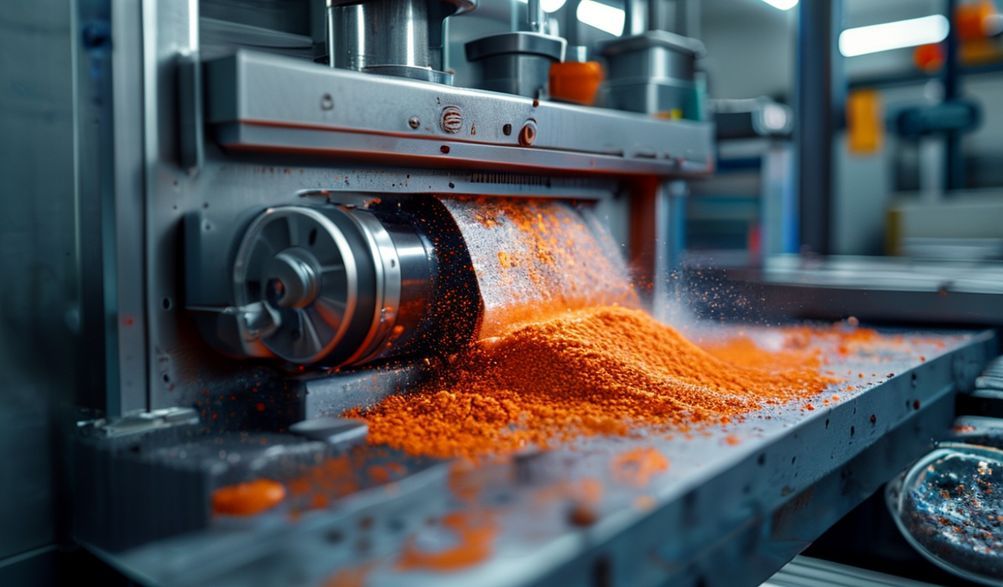
Интерлоктық блок жасау машиналарының жетілдірілген нұсқаулығы: Түрлері, артықшылықтары және қалай таңдау керек
Кіріспе
Жыл сайын жаһандық құрылыс саласы миллиардалар шаршы метр қатты жабындарды төсеп, қалалық жаяу жолдардан бастап коммерциялық алаңдарға дейінгі заманауи инфрақұрылымның негізін құрайтын тіреспе бетон плиталарын пайдаланады. Дегенмен, ондаған жылдар бойы келісімшартшылар мен кәсіпкерлер үш тұрақты мәселеге тап болды: сатып алынған блоктардың қымбат құны мен сапасының тұрақсыздығы, дәстүрлі құрылыс алаңындағы құйма әдісінің еңбек сыйымдылығы мен баяулығы, түс пен дизайнға қойылатын нақты жоба талаптарын тез қанағаттандыра алмау.
Интерлоктық блок жасау машинасына кіріңіз - бұл тас төсеудің экономикасы мен логистикасын қайта анықтаған түрлендіргіш жабдық. Ол жай ғана прес емес, сонымен қатар шикі, арзан материалдарды жоғары құнды, дәлдікпен жасалған құрылыс өнімдеріне айналдыратын толық өндірістік жүйе. Бұл нұсқаулық саладағы жылдар бойы жиналған тәжірибелер, техникалық талдаулар және табысты зауыт иелерімен болған әңгімелер негізінде жасалған. Біздің мақсатымыз - бұл техниканы түсіндіру, яғни кәсіпкерлерге, мердігерлерге және өндіруші болмақ болғандарға сенімді инвестициялық шешім қабылдау үшін жан-жақты, сарапшылық ресурс ұсыну.
Осы нұсқаулықтың соңында сіз түсінесіз:
* Осы машиналардың негізгі жұмыс істеу принциптері мен шығыстары.
* Қолмен, жартылай автоматты және толық автоматты модельдер арасындағы негізгі айырмашылықтар.
* ROI-ны қамтамасыз ететін нақты экономикалық және сапалық артықшылықтар.
* Сатып алмас бұрын бағалау үшін факторлардың егжей-тегжейлі тізімі.
* The essential steps of the production process.
What is an Interlock Block Making Machine? (Core Expertise)
At its core, an interlock block making machine is a purpose-built device that automates and industrializes the production of concrete paving blocks. It replaces inconsistent manual labor with mechanized precision, ensuring every block meets exact dimensional and strength specifications.
Definition and Basic Working Principle
An interlock block machine is a static or mobile press that uses vibration, hydraulic pressure, or a combination of both to compact a semi-dry concrete mix into a steel mold (die). The resulting block is ejected, ready for curing. The “interlocking” design refers to the block’s shaped edges, which fit snugly with neighboring blocks without the need for mortar, creating a flexible, durable paved surface.
The production cycle, in essence, follows a logical flow:
1. Хоппер: The prepared concrete mix is loaded.
2. Mix Feeding: The mix is measured and transferred to the mold cavity.
3. Mold Cavity: The mix is filled into the specific pattern mold.
4. Compression/Vibration: The key stage where pressure is applied, densifying the mix.
5. Атқылау: The freshly formed block is pushed out onto a pallet or conveyor.
6. Емдеу: The block is moved to a curing area to gain strength over time.
The End Product: Types of Interlock Blocks Produced
The versatility of these machines lies in their interchangeable molds. Beyond standard rectangles, they can produce a wide array of patterns that enhance aesthetics and functionality:
* Common Patterns: Zigzag, Cobble, Weave, Fan, Circle, and I-Shape.
* Functional Products: Kerbstones (curbs), garden edging, grass grids for permeable paving, and even hollow blocks for lightweight construction.
This product flexibility allows a single machine to serve multiple market segments—residential driveways, public parks, road shoulders, and commercial parking lots.
Types of Interlock Block Making Machines (Technical Authority)
Choosing the right type of machine is the most critical decision, as it directly dictates your production scale, labor model, and capital investment. The market offers a spectrum from simple human-powered units to fully robotic plants.
Manual / Hand-Operated Machines
These are the most basic entry-level machines, requiring significant physical effort to operate a lever or handle that applies pressure to the mix in a fixed mold.
- Шығару: Typically 300-800 blocks per 8-hour shift, depending on worker stamina.
- Артықшылықтары:
- Very low initial investment cost.
- Minimal maintenance; no electricity or engine required.
- Түсіну және пайдалану оңай.
- Кемшіліктері:
- Өте еңбек сыйымды және физикалық талаптары жоғары.
- Low output limits business scalability.
- Product consistency heavily depends on the operator’s skill and effort.
- Мақсатты аудитория: Ideal for micro-enterprises, community-based projects in areas with no power, or for testing a market with minimal risk.
Жартылай автоматты машиналар
This category strikes the optimal balance for most small to medium-sized businesses. The operator is responsible for feeding the mix and initiating the cycle, but the machine automates the pressing and ejection process, often with a mechanical or hydraulic system.
- Шығару: Ranges from 1,500 to 5,000 blocks per 8-hour shift.
- Артықшылықтары:
- Excellent balance between cost, output, and automation.
- Significantly less physically demanding than manual machines.
- Good product consistency due to mechanized pressure.
- Can often be operated on a single-phase or three-phase power connection.
- Кемшіліктері:
- Still requires consistent manual feeding.
- Output is limited by the operator’s pace.
- Мақсатты аудитория: Small to medium block manufacturing businesses, contractors looking to produce for their own projects, and entrepreneurs entering the industry with a clear demand forecast.
Fully Automatic Machines (Stationary & Mobile)
These are the pinnacle of production efficiency. Computer-controlled (often via PLC), they automate the entire process from material feeding and pressing to block ejection and stacking. Labor is primarily for supervision, maintenance, and pallet handling.
- Шығару: Can range from 8,000 to over 30,000 blocks per 8-hour shift.
- Артықшылықтары:
- Maximum output and operational efficiency.
- Exceptional product consistency and quality.
- Dramatically reduced direct labor costs per block.
- Can integrate with automatic pallet feeders and stackers.
- Кемшіліктері:
- Жоғары капиталдық инвестиция.
- Complex maintenance requiring technical skill.
- Requires reliable three-phase power or a powerful diesel generator.
- Мақсатты аудитория: Large-scale block manufacturers supplying regionally, major construction companies, and municipal bodies.
Stationary Plant Machines
Designed for fixed factory installations. They are often part of a production line with conveyor belts, mixers, and automated curing systems. They offer the highest possible output for a dedicated manufacturing facility.
Мобильды блок жасау машиналары
A game-changer for large infrastructure projects. These are fully automatic machines mounted on a trailer. Their key advantage is the ability to produce blocks directly on the project site, eliminating the massive cost and logistics of transporting finished blocks. This makes them ideal for road projects, remote developments, or any situation where transport costs exceed 30-40% of the block’s value.
Key Benefits of Using an Interlock Block Machine (Experience & Value)
Investing in this machinery is not just about making blocks; it’s about building a competitive, profitable business. The advantages are both economic and qualitative.
Economic and Operational Advantages
- High Profit Margins & ROI: The raw materials (cement, sand, aggregate) are inexpensive and locally sourced. The machine transforms them into a high-value finished product. Industry practice shows that with efficient operation, the gross margin on interlocking blocks can be substantial, often allowing a machine to pay for itself within a year.
- Exceptional Production Speed & Efficiency: Compare a semi-automatic machine producing 3,000 blocks a day to a team of workers manually casting a few hundred. The machine not only wins on volume but also frees up capital by turning over inventory rapidly.
- Low Labor Dependency: While manual machines replace few workers, semi- and fully-automatic models drastically reduce reliance on large, skilled labor crews. This cuts wage bills, simplifies management, and reduces vulnerability to labor shortages.
Quality and Versatility Benefits
- Superior Product Consistency & Strength: Machine compaction, whether by high-frequency vibration or hydraulic pressure, achieves uniform density. This results in consistently high compressive strength—often reaching M35 (35 MPa) or M40+—far exceeding what is possible with manual tamping. Stronger blocks mean longer-lasting pavements and fewer customer complaints.
- Design Flexibility: Changing a mold to produce a different block pattern can take as little as 30 minutes on a well-designed machine. This allows a single production line to respond quickly to changing market trends or specific client requests, maximizing asset utilization.
- Материалдық тиімділік: The precise measurement and compaction minimize waste spillage and produce blocks with tight dimensional tolerances. This means you get more saleable product from every ton of raw material.
Critical Factors to Consider Before Buying (Expert Guidance)
A successful purchase is based on aligning machine capabilities with your specific business reality, not just buying the biggest or cheapest option.
Assessing Your Business Needs
- Production Requirement: Be realistic. Calculate your current and projected daily/annual need in blocks. A machine operating at 50% capacity is inefficient, while one at 110% capacity will break down. Consider future growth, but buy for the next 2-3 years.
- Available Space: You need space for the machine itself, raw material storage (sand, aggregate, cement), a curing area (which requires significant square footage for 2-3 weeks of production), and finished goods storage. A lack of space is a common bottleneck.
- Local Market Demand: What block patterns, thicknesses, and colors are popular in your region? Invest in molds for products that sell. A fancy pattern with no local demand is a sunk cost.
Машинаның сипаттамалары мен ерекшеліктері
This is where technical expertise matters most.
Cycle Time and Output Capacity
This is the machine’s heartbeat. Cycle time is the seconds it takes to produce one batch of blocks (e.g., a 4-block mold with a 15-second cycle). Don’t just believe the brochure’s “max output”; ask for the practical, sustained output under normal working conditions.
Pressure Type: Vibratory vs. Hydraulic Press
- Vibratory: Uses high-frequency vibration to settle the mix. It’s effective and often less expensive. However, the finish can be slightly more porous, and it can be noisier.
- Гидравлик пресс: Applies direct, high-tonnage pressure (e.g., 150+ tons). This creates a denser, smoother-faced block with sharper edges, often preferred for high-end projects. It generally operates more quietly. The trade-off is a higher initial cost and more complex maintenance.
Mold System
Check the number of cavities (blocks per cycle), the quality of the hardened steel, and—critically—how easy it is to change molds. A complicated, hour-long changeover process kills productivity in a multi-product business.
Қуат қажеттіліктері
Ensure your facility has the correct electrical supply (typically robust three-phase power for automatic machines). For areas with unreliable grids, a diesel-engine-driven machine might be a safer, though more expensive-to-run, option.
Automation Level
For semi- and fully-auto machines, consider features like PLC control panels for easy operation, automatic pallet feeders, and brick stackers. Each addition increases cost but also boosts output and reduces labor.
Supplier and Support Evaluation (Trustworthiness)
The machine is only as good as the company behind it. This is a long-term partnership.
* Reputation & Longevity: Research the manufacturer. How long have they been in business? Do they specialize in block-making equipment?
* Сатылғаннан кейінгі қызмет: Will they send a technician to install and commission the machine? Do they provide comprehensive operator training? What is their spare parts availability and response time for breakdowns? A cheap machine with no local support can become a very expensive paperweight.
* Кепілдік: A standard warranty is 12 months on parts, but terms vary. Read them carefully.
* Due Diligence: Always ask for and contact customer references. If possible, visit an existing installation to see the machine running and speak directly to the owner.
The Production Process: From Raw Material to Finished Block (Practical Expertise)
Understanding the full process is key to optimizing your investment.
Шикізатты дайындау
The machine cannot compensate for poor-quality mix. A consistent, well-graded semi-dry concrete mix is essential.
* Араластыру дизайны: A typical ratio is 1 part cement, 3 parts sand, and 3 parts coarse aggregate (6-8mm). The exact ratio is adjusted based on local material properties and desired strength. Pigments (iron oxide) are added at this stage for colored blocks.
* Moisture Content: This is critical. The mix must be just wet enough to bind under pressure but dry enough that the freshly ejected block holds its shape. Operators report that a moisture content of around 5-7% is often the “sweet spot.”
The Machine Operation Cycle (Semi-Auto Example)
- The prepared mix is fed into the machine’s hopper.
- The operator initiates the cycle (via button or lever).
- The feed drawer moves, distributing a measured amount of mix into the mold cavity.
- The mold vibrates or is hydraulically pressed to compact the mix.
- The pressing head retracts, and the mold table rises to eject the block onto a waiting pallet.
- The operator removes the full pallet and replaces it with an empty one, repeating the process.
Curing and Quality Assurance
Freshly ejected blocks have only “green strength.” They gain their structural strength through hydration over 14 to 21 days of proper water curing (spraying or immersion). Skipping proper curing is the most common mistake, resulting in weak, crumbly blocks. Basic quality tests include checking for consistent color and dimensions and, eventually, performing compression tests on sample blocks.
FAQ: Your Interlock Machine Questions Answered
Q1: What is the average cost range for an interlock block machine?
A: Prices vary dramatically. A basic manual machine can start from a few thousand dollars. A quality semi-automatic machine typically ranges from $15,000 to $50,000. Fully automatic stationary or mobile plants can range from $60,000 to well over $200,000, depending on capacity and automation features.
Q2: What is the typical payback period on this investment?
A: For a well-managed operation, the payback period can be between 6 to 18 months. Key factors are the machine’s purchase price, your actual production volume, the local selling price of blocks, and your control over operational costs like raw materials and labor.
Q3: Can I use local raw materials, or do I need special mixes?
A: This is a major advantage. These machines are designed to use well-graded, clean local sand, standard aggregates, and ordinary Portland cement. You do not need expensive imported materials, which keeps your input costs low and predictable.
Q4: What maintenance does the machine require?
A: Regular maintenance is non-negotiable for longevity.
* Күнделікті Thorough cleaning of all mix contact points to prevent concrete buildup.
* Апталық: Checking and tightening bolts, lubricating all moving parts as per the manual.
* Periodic: Changing hydraulic oil and filters, inspecting and replacing wear parts like mold liners and pressure shoes.
Q5: Is operating the machine technically difficult?
A: Semi-automatic machines have a straightforward learning curve, and most operators become proficient within a week of training. Fully automatic machines with PLC controls require more technical understanding for operation and troubleshooting, which is why supplier-provided training is essential.
Қорытынды
An interlock block making machine is more than a piece of equipment; it’s a strategic asset that can elevate a construction business from a manual service provider to a scalable manufacturing enterprise. It addresses the core challenges of cost, quality, and speed in the hardscaping market.
The final, most crucial piece of advice is this: prioritize your specific business needs and the reputation of your supplier over the allure of the lowest upfront price. This is a long-term investment. Conduct thorough due diligence, request live demonstrations, and run your own financial projections based on realistic, local data.
Take the next step in your research. Contact several reputable manufacturers with your production requirements and request detailed quotations. Ask for customer references and visit a working plant if you can. The right machine, chosen with care, will lay the foundation for years of profitable growth.
Looking ahead, the industry continues to evolve with trends like the production of permeable blocks for sustainable drainage and the integration of IoT sensors for predictive maintenance, making this an ever-more sophisticated and valuable field.
<