
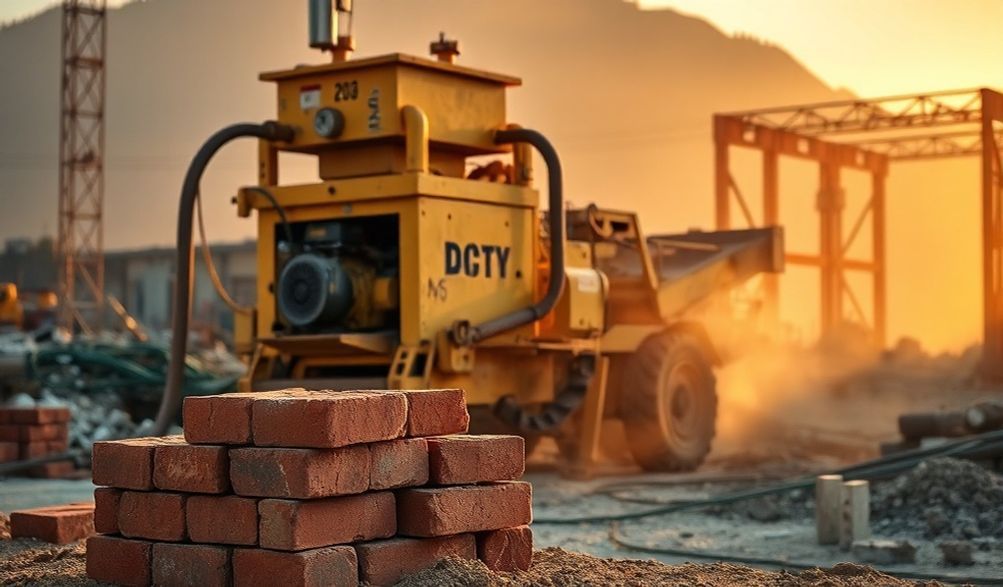
The Complete Guide to Small Brick Diesel Machines: Powering Your Construction Dreams
Кіріспе
In the world of construction and small-scale manufacturing, the demand for reliable, portable, and cost-effective machinery is paramount. For entrepreneurs, builders, and DIY enthusiasts involved in brick production, a small brick diesel machine represents more than just equipment—it’s a gateway to independence and productivity. These robust machines liberate you from the constraints of grid power, delivering the relentless torque needed for consistent, high-quality brick, block, or paver production anywhere, anytime.
Navigating the purchase, operation, and upkeep of such a machine, however, can be daunting. Missteps can lead to downtime, poor-quality output, and sunk costs. This comprehensive guide is crafted from years of hands-on industry experience to provide you with a thorough, trustworthy, and actionable resource. We will demystify the selection process, delve into operational best practices, and outline essential maintenance routines to ensure your machine delivers maximum return on investment and stands the test of time. Let’s build a solid foundation of knowledge.
1. Understanding Small Brick Diesel Machines
1.1. What is a Small Brick Diesel Machine?
A small brick diesel machine is a compact, mobile brick-making press powered by an integrated diesel engine. Its core function is to compress raw materials—such as soil, cement, sand, or fly ash—into solid, uniform building units using significant mechanical force. Unlike electric models, its diesel heart provides unparalleled mobility and power resilience, making it the workhorse of choice for remote sites, start-up yards, and projects where electrical infrastructure is unreliable or non-existent.
1.2. Key Components and How They Work
Understanding the machine’s anatomy is key to operating and maintaining it effectively.
-
The Diesel Engine: The powerhouse. Typically ranging from 8 to 20 horsepower (HP), it converts diesel fuel into rotational energy. Key considerations include:
- Power (HP): Determines the machine’s capability. More HP allows for higher compression and faster cycles.
- Fuel Efficiency: Diesel engines excel in fuel economy under heavy, continuous load.
- Cooling System: Usually air-cooled for simplicity, but some larger models may be liquid-cooled for sustained operation.
-
Сығымдау жүйесі: This is where the magic happens. It can be:
- Механикалық: Uses a lever and cam system to apply pressure. Simple and robust.
- Гидравликалық: Uses a hydraulic pump and cylinder for smoother, more controllable, and often greater pressure. The system forces the raw material into a mold under high tonnage (e.g., 15-30 tons).
-
The Frame and Chassis: The machine’s skeleton. Look for heavy-duty, welded steel construction. A rigid frame ensures stability during operation, prevents misalignment, and absorbs vibration, directly impacting the machine’s longevity.
-
Vibration System (if applicable): Common in machines designed for hollow blocks or pavers. An eccentric weight attached to the engine or a separate vibrator motor packs the material tightly into the mold, eliminating air pockets and creating a denser, stronger block.
1.3. Types of Bricks and Blocks Produced
The versatility of these machines lies in interchangeable molds. With one machine base, you can produce:
* Қатты кірпіштер: Standard building bricks.
* Қуыс блоктар: Lightweight, insulating blocks for walls.
* Құлыптасқан тақташалар: For pathways, driveways, and landscaping.
* Curb Stones & Specialty Shapes: For edging and decorative purposes.
2. Advantages of Choosing a Diesel-Powered Brick Machine
2.1. Power and Performance
Diesel engines generate high torque at low RPMs. This characteristic is perfect for the high-pressure, high-resistance task of compressing brick material, resulting in denser, stronger bricks with excellent structural integrity right out of the mold.
2.2. Fuel Efficiency and Operational Cost
Diesel contains more energy per liter than gasoline and is more efficient under constant load. For long-duration brick-making sessions, the cost per brick in fuel is typically lower than the equivalent cost of grid electricity, especially when considering the high amperage draw of electric compressors.
2.3. Independence and Mobility
This is the defining advantage. You are not tethered to a power pole. Set up production in a field, a rural village, or a new development site without three-phase power connections. Most models are mounted on wheels or trailers, allowing easy movement between job sites.
2.4. Durability and Longevity
Diesel engines are built for endurance. With fewer ignition components and sturdier internal parts, they withstand continuous heavy-duty use better than most gasoline engines. A well-maintained diesel brick machine can serve reliably for decades.
3. Critical Factors for Selection and Purchase
3.1. Assessing Your Production Needs
Өзіңнен сұра:
* What is my target output (bricks per day or week)?
* What types of bricks/blocks will I produce most often?
* Is this for a specific project or an ongoing business?
Your answers will determine the required machine capacity and features.
3.2. Machine Specifications to Scrutinize
- Engine Brand and Power: Opt for engines from reputable manufacturers (e.g., Lister, Changchai, Jiangdong) for which spare parts are globally available. Match the HP to your production goals.
- Қысым сыйымдылығы: Measured in tons. Higher tonnage (e.g., 20+ tons) generally produces stronger bricks, especially for soil-cement mixes.
- Құрылыс сапасы: Inspect weld seams (should be clean and continuous), steel thickness (minimum 6-8mm for key stress points), and the quality of bolts and fittings.
- Mold Quality and Availability: Molds should be made from hardened steel for wear resistance. Confirm the supplier can provide additional or custom molds.
3.3. Supplier Evaluation and Due Diligence
Your supplier is as important as the machine.
* Research: Look for established companies with a physical address.
* Warranty & Service: What is covered and for how long? Is technical support available?
* Қосалқы бөлшектер: Request a parts catalog. Are critical spares (like molds, seals, shafts) in stock?
* References: Ask for contact information of previous customers, preferably in your region.
3.4. Budgeting: Initial Cost vs. Total Cost of Ownership
The purchase price is just the start. Factor in:
* Shipping and import duties.
* Initial setup and potential foundation work.
* Cost of auxiliary equipment (mixer, wheelbarrows).
* Ongoing costs for fuel, oil, filters, and spare parts.
4. Safe Operation and Best Practices
4.1. Pre-Operational Checks and Setup
Conduct this daily ritual:
* Check engine oil, coolant, and fuel levels.
* Inspect hydraulic fluid for level and contamination.
* Look for loose bolts, especially on the mold and frame.
* Ensure the mold is clean, properly aligned, and securely fastened.
* Position the machine on a level, stable surface.
4.2. Raw Material Preparation
This is the most critical factor for quality bricks. The mix must be consistent.
* Screening: Remove stones and debris from soil.
* Араластыру: Achieve a homogeneous blend of soil/sand/aggregate and binder (usually 5-10% cement for stabilized earth).
* Ылғалдылық мөлшері: The “goldilocks” zone. Too dry, and bricks crumble; too wet, and they deform. A good test: a handful of mix squeezed should form a ball that doesn’t crumble or drip water.
4.3. Step-by-Step Operational Procedure
- Start-Up: Allow the diesel engine to idle for 2-3 minutes to warm up.
- Тамақтандыру: Place the correct amount of prepared mix into the mold chamber. Avoid overfilling.
- Сығу Engage the lever or hydraulic control to apply pressure. Hold for a few seconds as specified in the manual.
- Атқылау: Release pressure and open the mold to eject the green brick.
- Емдеу: Gently transfer the brick to a curing area. Keep it moist and under shade for at least 7-14 days for proper strength development.
4.4. Essential Safety Protocols
- PPE is Non-Negotiable: Wear safety glasses, steel-toe boots, and heavy-duty gloves.
- Clear the Area: Keep bystanders, especially children, at a safe distance.
- Never Reach Into Moving Parts: Use tools to clear jams, only after the machine is completely off.
- Refueling Safety: Refuel in a well-ventilated area with the engine off and cool. No open flames.
5. Essential Maintenance for Longevity and Reliability
5.1. Daily and Weekly Maintenance Routines
- Күнделікті Clean excess material from the mold, frame, and vibration table. Wipe down the engine.
- Апталық: Check and tighten all bolts and nuts. Lubricate all pivot points and linkages with grease.
5.2. Diesel Engine-Specific Care
- Oil Changes: Follow the manufacturer’s schedule (typically every 100-150 hours). Use the recommended grade (e.g., 15W-40 CD/SF).
- Filter Changes: Replace air, fuel, and oil filters at prescribed intervals. A clogged air filter is a primary cause of engine power loss and wear.
- Cooling System: Keep cooling fins (air-cooled) clean and free of debris. Check coolant levels (liquid-cooled) regularly.
- Fuel System: Use clean, quality diesel. Drain the water separator/fuel filter bowl regularly.
5.3. Hydraulic and Mechanical System Maintenance
- Hydraulic Fluid: Check for level and clarity. Change fluid and filter annually or per operating hours. Watch for leaks.
- Lubrication: Grease all bearings, guide rods, and the compression cam shaft frequently to prevent wear and ensure smooth operation.
5.4. Troubleshooting Common Issues
- Bricks Breaking: Usually caused by incorrect moisture content, insufficient compression pressure, or a worn mold.
- Poor Compression/Weak Bricks: Check hydraulic pressure, engine power, and material mix.
- Engine Won’t Start: Check fuel supply, bleed air from fuel lines, inspect the battery (if electric start), and ensure the decompression lever is correctly used.
- Hydraulic Leaks: Identify the source (hose, fitting, cylinder seal) and repair immediately.
6. Maximizing Profitability and Project Success
6.1. Optimizing Production Workflow
Design your yard logically:
* Material Storage -> Mixing Station -> Machine -> Curing Area -> Storage.
Minimize the distance the raw mix and green bricks need to travel. A simple conveyor or trolley system can drastically increase output.
6.2. Calculating Your Return on Investment (ROI)
- Cost per Brick: Add up all costs (raw materials, fuel, labor, machine depreciation, maintenance) for a production cycle.
- Divide by the number of bricks produced.
- Compare to the local selling price of similar bricks.
- Determine Break-Even: Divide your total investment by your profit per brick. This shows how many bricks you need to sell to recover your initial outlay.
6.3. Scaling Your Business
Once your first machine is running profitably:
* Consider adding a second machine for increased capacity.
* Invest in a pan mixer for faster, more consistent material preparation.
* Expand your product line with new molds to capture different market segments (e.g., pavers for landscaping contracts).
Жиі қойылатын сұрақтар (ЖҚС)
Q1: What is the average production output of a small brick diesel machine?
* A: Output varies significantly by model, brick size, and operator speed. A typical range is between 300 to 1,500 bricks per 8-hour shift. Always verify the “bricks per hour” specification with your supplier for your specific mold type.
Q2: Can I use local soil with these machines?
* A: Absolutely. Many machines are ideal for Compressed Stabilized Earth Blocks (CSEB). However, soil testing is highly recommended. A good mix typically requires a balance of clay, silt, and sand, often stabilized with 5-10% cement for durability and water resistance.
Q3: How much fuel does a typical machine consume?
* A: Fuel consumption depends on engine size and workload. A 10-12 HP engine under continuous operation typically uses 1.5 to 2.5 liters of diesel per hour. Proper maintenance and avoiding unnecessary idling optimize efficiency.
Q4: What are the most common maintenance mistakes to avoid?
* A: The top three are: 1) Using incorrect or substandard engine oil or hydraulic fluid, 2) Neglecting air and fuel filter changes, which rapidly accelerates engine wear, and 3) Operating with a dirty or misaligned mold, sacrificing brick quality and stressing the machine.
Q5: Are spare parts readily available?
* A: This is a crucial pre-purchase question. For the engine, choose a model with a widespread service network. For machine-specific parts (molds, hydraulic seals, shafts), ensure your supplier provides detailed part diagrams and can ship spares to your location within a reasonable timeframe.
Қорытынды
Инвестицияға салуsmall brick diesel machine is a significant step toward self-reliance, business growth, and tangible contribution to the built environment. Its true value extends beyond the bricks it produces—it lies in the empowerment, flexibility, and opportunity it creates. Your success hinges on three pillars: informed selection of a quality machine matched precisely to your needs, disciplined operation grounded in safety and material science, and proactive maintenance that treats care as a crucial investment, not an optional cost.
By adhering to the expert guidance outlined above—grounded in real-world experience and a commitment to quality—you transform your machine from a simple tool into a reliable, profitable asset for years to come. Start by thoroughly researching reputable suppliers, ask detailed, probing questions, and never underestimate the importance of perfecting your raw material mix. Your journey to building something lasting, literally and figuratively, begins with this solid foundation.
<