
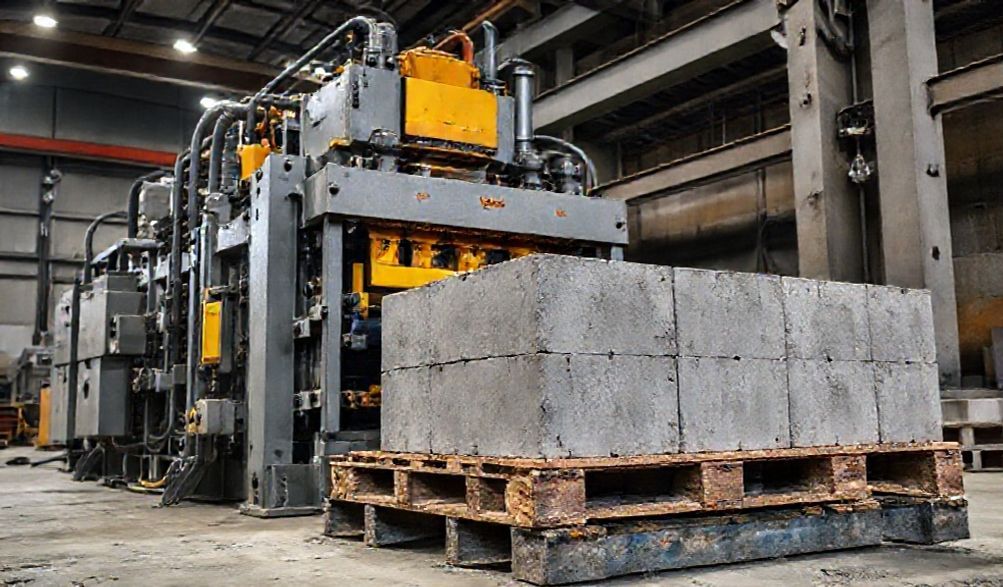
The Ultimate Guide to the QT5-15 Automatic Cement Brick Block Making Machine
Кіріспе
The global construction industry is in a constant race: to build more, build faster, and build more sustainably, all while managing costs. At the heart of this challenge lies the demand for affordable, durable, and reliable building materials. Enter automated block making machinery—a technological leap that transforms raw materials into precise construction components with remarkable efficiency. For entrepreneurs and project managers seeking the sweet spot between high output and manageable investment, one model consistently stands out: the QT5-15 automatic cement brick block making machine.
This machine is not just a piece of equipment; it’s a complete production system designed for profitability and consistency. As a flagship model in its class, the QT5-15 is renowned for its robust automation, impressive versatility, and proven reliability in markets worldwide.
This guide serves as your comprehensive, unbiased resource. Drawing on industry experience, deep technical analysis, and practical operational insights, we will dissect every aspect of the QT5-15. Whether you are a budding entrepreneur, a construction professional, or a procurement manager for a large-scale project, this article promises a clear understanding of the machine’s capabilities, costs, and ideal applications.
You will learn its detailed specifications, how it turns cement and aggregate into solid profit, what to look for when buying one, and how to calculate your potential return on investment. Let’s build a foundation of knowledge.
What is the QT5-15 Automatic Block Making Machine?
At its core, the QT5-15 is a stationary, fully automatic machine that manufactures high-density cement-based blocks through a process of controlled vibration and hydraulic pressure. It integrates feeding, mixing, molding, and stacking into one synchronized operation, minimizing manual intervention and maximizing output consistency.
Негізгі функциясы және дизайн философиясы
The primary function of the QT5-15 is to automate the production of precast concrete products. Its design philosophy centers on durability, user-friendliness, and efficiency. Unlike manual or semi-automatic machines, it features a closed-loop system:
* Автоматты материал беру: A hopper receives pre-mixed concrete.
* Precise Molding: The mix is conveyed to a mold cavity.
* Жоғары қысыммен тығыздау: Simultaneous vibration and hydraulic pressure compact the material.
* Automated Ejection & Stacking: The freshly formed block is ejected onto a pallet and automatically stacked for curing.
This integrated design ensures a seamless workflow from raw material to finished, palletized product, ready for the curing yard.
Decoding the Model Name: QT5-15 Specifications
The model name “QT5-15” is a code that reveals its key capability:
* QT: Denotes the series type, commonly associated with stationary, automatic block makers.
* 5: Often references the pressure system or a generational design code.
* 15: The most critical number—it indicates the machine’s theoretical output in pieces per cycle for a standard 400x200x200mm hollow block. One cycle is approximately 15 seconds.
Негізгі техникалық сипаттамалар:
* Қуат қажеттілігі: ~37 kW (depending on configuration)
* Цикл уақыты: ~15-20 seconds
* Қалыптың көпқырлылығы: Can be customized for various block sizes and types.
* Стандартты паллет өлшемі: 1100×540 mm
* Machine Dimensions (approx.): 6500x3300x3200 mm (LxWxH)
* Машинаның салмағы: ~10-12 Tons
* Басқару жүйесі: Programmable Logic Controller (PLC) with color touch screen.
Негізгі ерекшеліктері мен технологиялық артықшылықтары
The QT5-15’s popularity is built on a suite of features that deliver tangible advantages over less automated alternatives.
Full-Automatic Operation & PLC Control System
This is the cornerstone of its efficiency. Once initiated, the PLC controls the entire production sequence:
* Orchestrates the precise timing of the feed, vibration, compaction, and ejection.
* Allows operators to input parameters for different products via a user-friendly interface.
* Ensures every block is produced with identical pressure and vibration time, guaranteeing uniform quality.
* Drastically reduces labor costs and skill dependency—typically requiring only 1-2 workers for oversight and pallet handling.
Robust Construction and High-Pressure Vibration
Durability is non-negotiable in block making. The QT5-15 is built for a long service life:
* Ауыр жүкке арналған боламалы каркас: Welded from reinforced steel to withstand constant vibration and load.
* Quality Hydraulic System: Provides the steady, powerful pressure needed for high-density blocks. Brand-name components (like Schneider or Siemens) are a key quality indicator.
* Dual Vibration Motors: Mounted on the mold table, these powerful motors, combined with hydraulic pressure, force air out and particles together, creating blocks with high compressive strength and excellent surface finish.
Versatility in Production
By simply changing the mold, the QT5-15 becomes a multi-product factory:
* Ұялы блоктар (various sizes)
* Solid Cement Bricks
* Ілмекше тақташалар for landscaping
* Curbs and Kerbstones
* Designer Blocks
This flexibility allows a business to adapt to market demands and diversify its product line without major new investments.
Efficiency and Output Capacity
The “15-second cycle” translates into real-world output:
* Theoretical: 15 blocks/cycle * 240 cycles/hour = 3,600 blocks/hour (for standard block).
* Practical Daily Output: Accounting for mold changes, breaks, and maintenance, a realistic 8-hour shift can produce 18,000 to 22,000 pieces of standard hollow blocks.
Factors influencing output: Raw material quality and consistency, operator efficiency in handling pallets, and machine maintenance all play a role in achieving optimal production numbers.
Primary Applications and Ideal Use Cases
For Construction Material Manufacturers & SMEs
The QT5-15 is the ideal workhorse for small-to-medium enterprises aiming to supply the local construction market. Its output is sufficient to serve multiple housing projects, retailers, or individual builders, providing a scalable business model with a manageable initial investment.
Large-Scale Infrastructure and Housing Projects
For developers undertaking large housing colonies, commercial complexes, or government infrastructure projects, installing a QT5-15 on-site can be a game-changer. It ensures a consistent, on-demand supply of blocks, reduces logistics costs and dependencies, and provides greater control over quality and schedule.
Waste Utilization and Eco-Friendly Production
A significant advantage is its ability to use industrial by-products as raw materials. The machine can effectively produce high-quality blocks using:
* Ұшқан күл (from coal-fired power plants)
* Slag (from steel production)
* Crushed construction waste
This not only reduces material costs but also contributes to sustainable, eco-friendly construction practices, which is an increasingly marketable benefit.
Операциялық жұмыс процесі: Шикізаттан дайын блокқа дейін
Raw Material Requirements and Mix Ratio
Consistent blocks start with a consistent mix. A typical recipe for a strong block (7.5 MPa or higher) includes:
* Цемент: 10-15% (Portland cement acts as the binder).
* Агрегаттар: 60-70% (A mix of fine sand and coarse aggregate like 3-8mm crushed stone).
* Fly Ash (optional): 15-25% (Can replace part of the cement).
* Су 5-8% (Critical for hydration; moisture content must be precise).
Key Notes: The aggregate must be clean and dry. The mix should be semi-dry (low slump), holding its shape when squeezed in hand—a crucial requirement for the molding process.
Step-by-Step Production Process
- Тамақтандыру және араластыру: Pre-batched raw materials are mixed in a pan or planetary mixer (auxiliary equipment) to a homogeneous, semi-dry consistency and conveyed to the machine’s feed hopper.
- Қалыптау және Қысу: The PLC opens the hopper gate, feeding material into the mold box. The hydraulic head descends, and powerful vibration motors activate, compacting the material under high pressure for a set duration.
- Кептіру және Қалыптан Шығару: The hydraulic head retracts, and the mold box rises, leaving the compacted block on the pallet below. The block, still on its pallet, is transferred to the stacking area.
- Stacking & Transport: An automatic stacker lifts the pallet of fresh blocks and places it onto a curing rack or trolley. These racks are then moved to a curing area (often a steam chamber or covered yard) for the cement to fully hydrate and gain strength.
Essential Auxiliary Equipment
The QT5-15 is the core, but a full production line requires support:
* Бетон араластырғыш: A compulsory item for consistent batch mixing.
* Белтті конвейер: Transfers mixed material to the machine hopper.
* Cement Silo: For bulk cement storage (optional but highly efficient).
* Brick Forklift or Pallet Truck: For moving heavy racks of blocks.
* Curing Racks/Trolleys: To hold blocks during the critical curing period.
Cost-Benefit and ROI Analysis
Initial Investment Breakdown
The total setup cost extends beyond the machine price:
* QT5-15 Machine: $45,000 – $65,000+ (varies by supplier, configuration, and shipping terms).
* Shipping & Installation: $5,000 – $15,000 (depending on destination and local rigging).
* Көмекші жабдықтар: $15,000 – $30,000 (mixer, conveyor, racks, forklift).
* Саңырауқұлақтар: $1,500 – $4,000 each (multiple molds are needed for product variety).
* Spare Parts Kit: A prudent initial purchase.
Operational Costs vs. Labor Savings
- Costs: Electricity (~$15-$25 per 8-hour shift), routine maintenance, raw materials (largest ongoing cost), and 1-2 operators’ wages.
- Savings: The primary saving is labor. A comparable semi-automatic line might require 6-8 workers. The QT5-15 automates the most labor-intensive steps, slashing payroll and improving safety.
Calculating Potential Return on Investment (ROI)
Disclaimer: The following is a simplified illustrative model. Actual numbers vary widely by region, material costs, and block selling price.
- Daily Revenue: 20,000 blocks/day * $0.50 per block selling price = $10,000.
- Daily Operational Cost: Raw materials ($3,500) + Labor ($80) + Electricity ($20) + Misc. ($100) = ~$3,700.
- Daily Gross Profit: $10,000 – $3,700 = $6,300.
- ROI Timeline: Total Investment: $100,000 / $6,300 daily profit ≈ 16 working days to break even on the operational margin. Factoring in non-production days, market fluctuations, and initial ramp-up, a realistic ROI period for the capital investment is often between 6 to 18 months.
Critical Buying Considerations and Supplier Selection
How to Evaluate Machine Quality
Don’t just buy from a brochure. Inspect or request detailed evidence of:
* Steel Thickness: Frame and key components should use thick, reinforced steel plate.
* Component Brands: Hydraulic pumps, valves, PLC, and vibration motors from reputable international brands (e.g., Siemens, Schneider, SEW) indicate quality and ease of future repair.
* Welding & Finishing: Smooth, clean welds and proper rust-prevention paint show manufacturing care.
* Manufacturer Reputation: How long have they been in business? Do they specialize in block making machines?
Кейінгі сату қызметінің маңыздылығы
The machine’s lifetime value depends heavily on post-purchase support. Prioritize suppliers who offer:
* Comprehensive Warranty (typically 12 months on core parts).
* Availability of Spare Parts with a clear parts catalog.
* Detailed Manuals & Video Guides in your language.
* Remote & On-Site Technical Support.
Questions to Ask Your Supplier
- What is the exact warranty coverage and duration?
- Do you provide installation supervision and operator training?
- What is the lead time from payment to delivery?
- Can you provide contact information for 2-3 previous clients in my region?
- What is the list of recommended spare parts for the first year?
- How do you handle technical support requests?
Maintenance and Troubleshooting Basics
Daily, Weekly, and Monthly Maintenance Schedule
- Күнделікті Clean the machine, especially the mold area and feed hopper. Check hydraulic oil levels and for any leaks. Inspect electrical connections.
- Апталық: Lubricate all guide rails, bearings, and moving parts as per the manual. Check and tighten all bolts and nuts.
- Ай сайын: Change hydraulic oil filters. Inspect vibration motors and hydraulic hoses for wear. Perform a full system check.
Common Operational Issues and Solutions
- Blocks Breaking During Demolding: Usually caused by incorrect mix (too dry/too wet), insufficient vibration time, or worn mold liners. Adjust the water ratio and check compaction settings.
- Surface Defects or Rough Edges: Often due to a dirty or damaged mold, or low material feed. Clean the mold thoroughly and ensure the hopper is adequately filled.
- Inconsistent Block Height/Density: Check the hydraulic pressure settings and the consistency of the raw material feed. Calibrate the feed system.
- Machine Not Cycling: First, check the PLC for error codes. Verify safety sensors (like pallet-in-place sensors) are not obstructed or faulty.
Frequently Asked Questions About the QT5-15 Machine
Q1: What is the production capacity of the QT5-15 per 8-hour day?
A: Under good operating conditions, you can expect between 18,000 to 22,000 pieces of standard 400x200x200mm hollow blocks in an 8-hour shift.
Q2: What is the approximate price range for a QT5-15 machine?
A: The machine itself typically ranges from $45,000 to $65,000 USD FOB (Free on Board), depending on the manufacturer, component brands, and specific configuration. The total landed cost with auxiliary equipment will be higher.
Q3: How many workers are needed to operate this “automatic” machine?
A: Typically, 1-2 workers are sufficient. One oversees the PLC and monitors the process, while another manages the movement of full and empty pallets with a forklift.
Q4: What is the compressive strength of the blocks produced?
A: With a proper cement mix (e.g., 10-15% cement), blocks can easily achieve 7.5 MPa to 10 MPa (over 1000 PSI) after 28 days of curing, suitable for load-bearing construction.
Q5: Can it use raw materials other than cement, like clay or soil?
A: No. The QT5-15 is designed for cement-based (concrete) products. It requires cement as a binder. For clay bricks, a completely different type of machine (extrusion or firing-based) is needed.
Q6: How much factory space is required for installation?
A: You need a minimum covered area of about 10m x 15m (150 sq m) for the machine and immediate operation. Additional open space for raw material storage and a large curing yard (500+ sq m) is essential.
Q7: What is the typical warranty period offered?
A: Reputable manufacturers usually offer a 12-month warranty on the core machinery (excluding wear parts like mold liners), covering defects in material and workmanship.
Қорытынды
TheQT5-15 automatic cement brick block making machine represents a powerful and pragmatic solution for entering the construction materials market or scaling up existing production. It successfully balances high output with a manageable scale of investment, all while delivering the consistency and quality that modern construction demands. Its versatility and ability to utilize industrial by-products further enhance its appeal in a cost-conscious and eco-aware world.
This guide has armed you with the technical knowledge, operational insights, and critical buying criteria needed to make an informed decision. Remember, your long-term success hinges not just on the machine, but on the partner you choose. Prioritize suppliers with proven manufacturing expertise and an unwavering commitment to after-sales service. Conduct thorough due diligence, request client references, and ensure proper training for your team.
Use this comprehensive resource as your foundation. Now, take the next step: engage with multiple suppliers, ask the hard questions outlined here, and move confidently toward an investment that can build the foundation for your business’s future growth.
<