
Foundational Requirements: The Performance Mandate
Foundation blocks must satisfy a stringent set of performance criteria that exceed those for above-grade walls.
- Жоғары Қысу беріктігі: They must support the dead load of the entire structure above and any live loads (furniture, occupants, snow) without crushing. This demands a significantly higher minimum compressive strength compared to partition or veneer blocks.
- Moisture and Water Resistance: Foundations are in constant contact with soil moisture and are vulnerable to hydrostatic pressure. Blocks must have low water absorption to prevent seepage, resist freeze-thaw damage in cold climates, and inhibit mold growth.
- Durability and Chemical Resistance: They must withstand the chemical and physical environment of the soil, including potential exposure to sulfates and other corrosive elements.
- Structural Integrity and Bonding: The block design must facilitate a strong, monolithic bond with mortar and, if used, with vertical and horizontal reinforcement (rebar and grout).
II. Prime Candidate: High-Strength, Dense Aggregate Block
The unequivocal best choice for most foundation applications is a high-strength, normal weight concrete block manufactured with dense aggregates (e.g., crushed stone, gravel).
A. Key Advantages and Specifications
- Superior Load-Bearing Capacity: These blocks are produced to meet or exceed high compressive strength standards, typically categorized as Type I Moisture-Controlled blocks in many regions. They are often specified with a minimum net compressive strength of 2,000 psi (13.8 MPa) or higher for foundation walls.
- Low Permeability: The dense aggregate mix and high-pressure manufacturing process result in a low void ratio, intrinsically reducing water absorption. This density is their primary defense against moisture ingress.
- Дәлелденген Өнімділік: They are the standard specified in countless building codes for residential and commercial below-grade construction due to their predictable engineering properties and long history of reliable performance.
B. Optimal Design Features
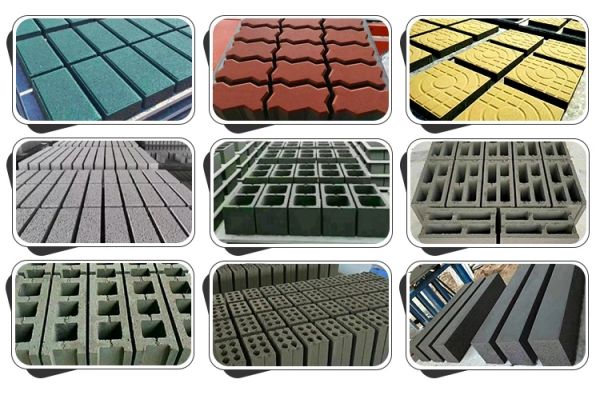
- Hollow Core Design: While solid blocks exist, the standard hollow-core design is preferred for foundations. The cavities allow for the placement of vertical steel rebar and the filling with high-slump concrete grout, creating a reinforced concrete column within the block wall. This grouted and reinforced masonry system provides tremendous lateral and compressive strength.
- Full Mortar Bedding: Foundation blocks should be laid in a full bed of Type M or Type S mortar, which is stronger and more moisture-resistant than Type N mortar used above grade.
III. Specialized Considerations and Alternative Scenarios
While dense aggregate blocks are the standard, specific conditions may warrant specialized solutions.
A. The Role of Lightweight Blocks
Blocks made with expanded clay, shale, or slate (lightweight aggregate) have excellent thermal insulation and fire resistance. However, for primary load-bearing foundations:
- They are generally not recommended unless specifically engineered and proven for the application. Their lower density can correlate to lower compressive strength and potentially higher moisture absorption if not meticulously manufactured.
- Potential Hybrid Use: In some cases, a dense aggregate block is used for the below-grade portion (for strength and moisture resistance), while a lightweight block is used for the above-grade portion (for insulation). This requires careful detailing at the grade level.
B. Surface Treatments and Integral Additives
- Integral Water-Repellents: Some blocks are manufactured with admixtures that chemically reduce water absorption. These can provide an added layer of protection, though they do not replace the need for proper external waterproofing membranes.
- Surface Coatings: Applied post-installation, parge coatings and specialized paints can enhance water resistance but are considered secondary lines of defense.
C. The Critical Importance of Complementary Systems
No block is an island. The best foundation block’s performance is unlocked only with proper ancillary systems:
- External Waterproofing: A rated damp-proofing or waterproofing membrane applied to the exterior face of the foundation wall is a mandatory code requirement in most jurisdictions.
- Proper Drainage: A perforated drain pipe (footing drain) at the base of the foundation, surrounded by gravel, is essential to relieve hydrostatic pressure.
- Adequate Curing: Blocks must be installed and cured correctly, protecting green mortar from rain and freezing temperatures.
Қорытынды
For building foundations, the “best” block is defined by a uncompromising commitment to strength, density, and moisture resistance. High-strength, normal weight concrete masonry units, designed for full grouting and reinforcement, represent the industry benchmark for safe, durable, and code-compliant below-grade construction. As a key link in the supply chain, your role extends beyond logistics to technical guidance. By directing clients toward these superior products and emphasizing the necessity of a complete system—integrating the correct block, mortar, reinforcement, grout, and external waterproofing—you provide indispensable value. This ensures that the foundations built with your materials are not just a base, but a permanent, load-bearing asset that secures the integrity of the entire structure for decades to come.
FAQ
Q1: Can we use the same blocks for the foundation and the above-ground walls to simplify ordering?
A: While possible, it is not optimal. It often forces you to use an over-specified (and potentially more expensive) foundation-grade block for the entire structure, or risk using an under-specified block in the foundation. The best practice is to specify high-strength, moisture-controlled blocks for the foundation and potentially a different, cost-effective or insulating block for above-grade walls, ensuring each zone gets the most appropriate product.
Q2: How can we visually or simply verify if a block is suitable for foundation work?
A: First, always check the manufacturer’s specification sheet for net compressive strength and moisture absorption ratings. Physically, a dense aggregate block will feel notably heavier than a lightweight block of the same size. The surface should be hard and dense; striking two blocks together should produce a sharp, ringing sound, not a dull thud.
Q3: Are there specific standards or codes we should reference when procuring foundation blocks?
A: Yes. In North America, refer to ASTM C90 (“Standard Specification for Loadbearing Concrete Masonry Units”), which defines requirements for compressive strength, absorption, and moisture content. The International Building Code (IBC) and local building codes will specify minimum strength requirements for foundation walls based on soil conditions, wall height, and the structure above.
Q4: Is a solid concrete block better than a hollow one for foundations?
A: Not necessarily. The hollow core is a feature, not a flaw. It allows for reinforcement and grouting, creating a composite structure that is stronger in many ways than a solid, un-reinforced block. Solid blocks are heavier, more material-intensive, and do not readily allow for internal reinforcement, making them less common and often less effective for engineered foundation walls.
Q5: Do foundation blocks require any special handling or storage on-site?
A: Absolutely. They must be stored off the ground on pallets and covered to prevent absorption of ground moisture and saturation from rain. Installing blocks that are already waterlogged compromises the mortar bond and introduces excess moisture into the foundation system from the very beginning. Keep them dry until the moment they are laid.
