
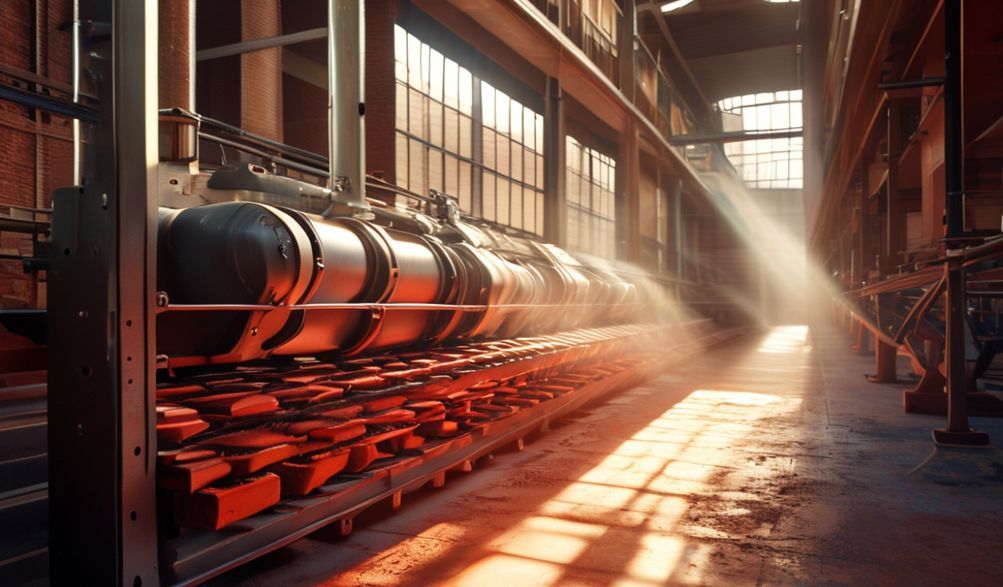
Үндістанда (2026) кірпіш жасау машинасын сатып алудың жан-жақты нұсқаулығыңыз
Кіріспе
Үндістанның құрылыс секторы жай ғана өсуде емес, төңкеріс жасауда. Инфрақұрылым жобалары, тұрғын үй жобалары және қалалық даму күшейген сайын, қарапайым кірпіш осы өсудің негізгі құрылыс блогы болып қала береді. Дегенмен, оны жасау әдісі тез өзгеруде. Еңбек сыйымды қол еңбегі арқылы өндірудің ауқым мен сапаға қойылатын қос талаптарды қанағаттандыратын кездері өтті. Бүгінгі таңда механикаландыруға бағытталған ақылды инвестициялар басым.
Кәсіпкерлер, мердігерлер және кәсіпкерлер үшін бұл алтын мүмкіндік болып табылады. Дегенмен, дұрыс кірпіш жасау машинасын таңдау жолы қиындықтарға толы. Нарық нұсқаларға толы – ұшқыл күлден бастап сазға дейін, қолмен жұмыс істейтіннен толық автоматтандырылғанға дейін. Техникалық терминдер, кең баға айырмашылықтары және сатып алудан кейінгі қолдау мәселелері қызықты инвестицияны қиын жұмбаққа айналдыруы мүмкін.
Бұл нұсқаулық сіздің шешуші шешіміңіз. Біз күрделі салалық деректерді, өндірушілердің түсініктемелерін және тәжірибе арқылы қол жеткізілген білімді бірыңғай, жан-жақты ресурсқа біріктірдік. Біздің мақсатымыз қарапайым: сізге пайдалы және ұзақ мерзімді инвестиция жасау үшін қажетті нақтылық пен сенімділікпен қаруландыру. Бұл сіздің Үндістанның кірпіш жасау машиналарының жарқын және күрделі нарығын басқаруға арналған сарапшылық жол картаңыз болып табылады.
Кірпіш жасау машиналарын түсіну: Түрлері мен технологиялары
Бағалар мен жеткізушілерге кіріспес бұрын, сіздің нені сатып алатыныңызды түсіну өте маңызды. «Дұрыс» машина толығымен сіз өндіргіңіз келетін кірпіш түріне және сіздің операцияңызға сәйкес келетін технологияға байланысты.
Ұшқан күлден кірпіш жасау машиналары
Қатаң экологиялық саясат пен тұрақты құрылыс үшін қысым арқасында ұшқын күл кірпіш машиналары өте танымал болды. Олар жылу электр станцияларының қалдық өнімі болып табылатын ұшқын күлді, сондай-ақ цемент, әк және гипсті пайдаланады.
- Процесс:Бұл машиналар әдетте гидравликалық қысым мен дірілді пайдаланып, қоспаны жоғары тығыздықты кірпіштерге сығады.
- Негізгі артықшылықтар:
- Экологиялық таза:Өнеркәсіптік қалдықтарды пайдаланады, қоқыс алаңдарына түсетін жүкті азайтады.
- Жоғары беріктік:Жақсы сығымдау беріктігі мен біркелкі өлшемі бар кірпіштер өндіреді.
- Мемлекеттік ынталандыру шаралары:Жасыл бастамалар аясында субсидияларға жиі құқылы.
- Жылтырақ аяқтау:Сылақты аз қажет етеді, құрылыс шығындарын үнемдейді.
Саман кірпіш жасау машиналары (Автоматты және жартылай автоматты)
Жақсы сапалы сазды топырағы мол аймақтар үшін дәстүрлі саз кірпіш өндірісі әлі де үстемдік етеді. Заманауи машиналар қалыптау, кесу және сығымдау сияқты ежелгі процестерді автоматтандырды.
- Толық автоматты:Бұл өндіріс желілері сазды дайындаудан бастап, экструзия, кесу және жинауға дейінгі барлық процестерді қамтиды. Олар ірі көлемді және жоғары өнімді фабрикалар үшін тамаша.
- Жартылай автоматты:Қол жетімді орташа шешім. Олар құю және престеу сияқты маңызды процестерді механикаландырады, бірақ шикізатты жүктеу немесе дайын кірпішті алу үшін қолмен жұмыс қажет болуы мүмкін. Орташа кәсіпорындар үшін тамаша.
Бетон блок жасау машиналары
Егер сіздің бизнес-жоспарыңыз өнім қатарларын алуан түрлендіруді қамтитын болса, бетон блок машиналары бәсекеге тұрарлық емес жан-жақтылықты ұсынады. Олар ауыстырылатын қалыптар арқылы бір негізгі машинадан кең ассортименттегі өнімдерді шығара алады.
- Өнімдер:Қуыс блоктар, қатты блоктар, тротуар плиткалары, бордюр тастар және ландшафттық дизайнға арналған тіреспе блоктар.
- Технология:Олар негізінен жоғары жиілікті діріл және қысу арқылы жұмыс істейді, өте берік, жүк көтеретін блоктарды өндіру үшін. Олар стационарлық немесе мобильді (жұмыртқалайтын типтегі) болуы мүмкін.
Негізгі жұмыс принциптері
Түрлері әртүрлі болса да, қазіргі кірпіш машиналарының көпшілігі осы негізгі қағидаттардың үйлесіміне сүйенеді.
- Гидравликалық қысым:Қуатты, бақыланатын қысу туралы ойланыңыз. Гидравликалық жүйелер шикізатты тығыз, қатты кірпішке дейін сығу үшін қажетті үлкен күшті қамтамасыз етеді. Бұл ұшқыл күл және көптеген бетон блоктарын жасайтын машиналар үшін негізгі болып табылады.
- Діріл:Жоғары жиілікті діріл қоспаны біркелкі таратып, ауа қабаттарын жояды, нәтижесінде тығыз, берік дайын өнім алынады. Бұл бетон блоктарды дайындау үшін өте маңызды.
- Сығу және Қысу:Саман кірпіш машиналары көбінесе экструдерді пайдаланады — бұл камера ішіндегі алып бұранда, ол сазды сығып, үздіксіз баған түрінде шығарып, содан кейін оны сыммен кесіп жеке кірпіштерге айналдырады.
Үндістанда кірпіш жасау машинасын сатып алмас бұрынғы маңызды факторлар
A strategic purchase begins with an internal audit. Answering these questions will define your search parameters.
Assessing Your Production Needs (Capacity & Output)
Capacity is the first number any supplier will ask for. Don’t guess.
- Calculate Your Requirement: Estimate current and future project demands. How many bricks do you need per day? (e.g., 10,000 bricks per 8-hour shift).
- Machine Capacity: Machines are rated in Bricks Per Hour (BPH) or Blocks Per Hour. Always factor in operational efficiency—a 2000 BPH machine might yield 1600-1800 BPH in real-world conditions.
- Scale Guide:
- Шағын/Стартап: 1000 – 3000 BPH (Manual or Semi-Automatic)
- Medium-Scale/Expanding: 3000 – 8000 BPH (Semi-Automatic or Basic Automatic)
- Large-Scale/Industrial: 8000+ BPH (Fully Automatic Production Lines)
Brick Type and Raw Material Availability
Your local resources should dictate your machine type, not the other way around.
- Conduct a thorough analysis of locally available raw materials.
- Is there a reliable, affordable source of fly ash from a nearby power plant?
- What is the quality and composition of your local soil for clay bricks?
- Are sand and aggregates readily available for concrete blocks?
- Кәсіби кеңес: Get your raw materials tested. Soil quality, in particular, can make or break a clay brick business.
Automation Level: Manual, Semi-Automatic, or Fully Automatic?
This is a fundamental cost-versus-control decision.
| Feature | Manual / Basic | Semi-Automatic | Fully Automatic |
| :— | :— | :— | :— |
| Бастапқы инвестиция | Lowest | Moderate | Highest |
| Labor Requirement | High | Medium | Low |
| Шығарылымның тұрақтылығы | Variable (skill-dependent) | Good | Excellent & Uniform |
| Operational Complexity | Simple | Moderate | Complex (requires trained operators) |
| Ең Қолайлы | Rural areas, very low volume, startups | Growing businesses, balanced investment | Large factories, high-volume contracts, minimal labor dependency |
Power Requirements and Plant Setup
The machine is just one part of the ecosystem.
- Қуат: Confirm your electrical supply. Smaller machines may run on a single-phase connection, but most industrial-grade machines require a stable three-phase power supply.
- Ғарыш: You need space for:
- The machine itself.
- Raw material storage (covered area).
- Drying and curing yards (often the largest area).
- Finished product storage.
- Емдеу: Especially for fly ash and concrete bricks, proper curing (steam or water) is essential for strength development. Plan for this infrastructure.
Navigating the Indian Market: Suppliers, Prices, and Quality
India is a manufacturing hub for brick making machines, but quality varies dramatically.
Major Manufacturing Hubs in India
Knowing where to look can streamline your search.
- Coimbatore: Often called the “Engineering Hub,” renowned for robust industrial machinery and a high concentration of quality manufacturers.
- Ahmedabad & Rajkot (Gujarat): Strong in foundry and machine building, offering a competitive market for both standard and customized solutions.
- Delhi NCR (Faridabad, Noida): A major market for suppliers catering to north Indian industries, with easy access to a wide client base.
- Hyderabad & Chennai: Growing centers with strong regional influence in the south.
Price Range Breakdown (2026 Estimates)
Prices are indicative and vary based on configuration, brand of components (e.g., Siemens vs. local PLCs), and negotiation. Always get a detailed quote.
| Machine Type | Automation Level | Approximate Price Range (₹) | Key Determinants |
| :— | :— | :— | :— |
| Fly Ash Brick | Manual | 2 – 5 Lakhs | Size, single/three-phase |
| | Semi-Automatic | 8 – 20 Lakhs | Capacity, hydraulic system quality |
| | Fully Automatic | 25 Lakhs – 1 Crore+ | Automation level, output (BPH), pallet size |
| Concrete Block | Semi-Automatic (Egg-Laying) | 10 – 25 Lakhs | Mobility, number of molds |
| | Fully Automatic (Stationary) | 30 Lakhs – 1.5 Crores+ | Complexity, pallet circulation system |
| Clay Brick | Semi-Automatic Extruder | 15 – 40 Lakhs | Extruder capacity, mixer inclusion |
| | Full Plant (Auto) | 75 Lakhs – 2.5 Crores+ | Degree of automation, from preparation to stacking |
How to Evaluate a Supplier’s Credibility
This step is non-negotiable. Your supplier is a long-term partner.
- Experience & Expertise:
- How many years have they been in business?
- Ask for a client list and speak to references, especially those with similar machines.
- Do they have in-house R&D or just assemble bought parts?
- Сенімділік:
- Look for relevant certifications: ISO 9001 (Quality Management) is a good baseline.
- Check for membership in industry associations like CIIнемесеASSOCHAM.
- Trustworthiness – The Factory Visit is Key:
- Never buy blind. Visit the manufacturing unit.
- Inspect the build quality: thickness of steel frames, quality of welding, brands of hydraulic pumps, motors, and PLCs.
- Scrutinize the warranty certificateжәнеafter-sales service contract. What is covered? What is the response time?
- Be wary of suppliers who avoid giving customer contacts or factory visits.
The Total Cost of Ownership: Beyond the Sticker Price
The cheapest machine can become the most expensive asset you own.
Initial Investment vs. Long-Term Value
A machine built with inferior steel, low-grade hydraulics, or copied electrical panels will have:
* Higher breakdown frequency.
* Shorter operational life.
* Costly, hard-to-find spare parts.
* Poor energy efficiency, raising your per-brick cost.
Invest in quality engineering. It pays back in uptime, consistency, and longevity.
The Crucial Role of After-Sales Service
The sale is the beginning of the relationship.
* Қосалқы бөлшектердің қолжетімділігі: Are common wear-and-tear parts readily available locally or from the supplier?
* Technical Training: Will the supplier provide comprehensive training for your operators and mechanics?
* Қызмет желісі: Do they have service engineers stationed in your region? What is their guaranteed response time for a breakdown?
Operational Costs Breakdown
Factor these into your profitability model:
* Еңбек Wages for operators, helpers, and maintenance staff.
* Қуат: Electricity consumption of the main machine, mixer, conveyor, etc.
* Шикізаттар: Cost of fly ash, cement, clay, sand, aggregates.
* Maintenance: ~2-5% of the machine’s cost annually for routine upkeep and parts replacement.
Step-by-Step Buying Process and Negotiation Tips
Follow this structured approach to avoid pitfalls.
Step 1: Define Your Specifications Clearly
Create a detailed checklist from the factors above: Required BPH, brick type, automation level, power supply, and available space.
Step 2: Shortlist Reputable Suppliers
Use online B2B portals, industry directories, and trade shows (like IIMF). Seek referrals from other brick manufacturers. Aim for a shortlist of 3-5 credible suppliers.
Step 3: Request Detailed Quotations & Demos
- Ask for a comprehensive quotation including GST, installation charges, and training costs.
- Insist on a live demonstration, either at their facility or via detailed video, producing bricks from the raw materials you specify.
Step 4: Final Evaluation and Negotiation
- Compare quotes line-by-line, not just the bottom line.
- Negotiation levers: Ask for a discount on upfront payment, request essential accessories (like a few extra molds) to be included, or negotiate better warranty terms.
- The Purchase Agreement: Ensure every promise—capacity, power consumption, warranty terms, service response time—is documented in the final agreement before any payment.
Жиі қойылатын сұрақтар (ЖҚС)
Q1: What is the average price of a brick making machine in India?
A: There’s no single “average” price. Manual machines can start from ₹2-3 lakhs, while high-capacity, fully automatic fly ash or concrete block production lines can range from ₹50 lakhs to well over ₹1.5 crores. The final price is a function of type, automation, capacity, and component quality.
Q2: Which is more profitable: fly ash or clay brick machines?
A: Profitability is location-specific. Fly ash bricks benefit from government incentives, lower raw material cost (using waste), and growing market acceptance. Clay bricks may have entrenched demand in certain regions. Analyze your local material costs, brick pricing, and any available subsidies to run the numbers for both.
Q3: Can I get a loan or government subsidy for this machinery?
A: Yes, several options exist. MSME loans from banks are common. Government schemes like the Prime Minister’s Employment Generation Programme (PMEGP) offer subsidies. Many states have specific subsidies for eco-friendly units using fly ash. Your first point of contact should be your local District Industries Centre (DIC) and nationalized banks.
Q4: What is the typical warranty and what does it cover?
A: A reputable supplier typically offers a 1 to 3-year warranty on the machine’s core components, such as the hydraulic power pack, mainframe, and motors. Electronics (PLC) may have a separate warranty. Crucially, the warranty must explicitly state what is covered and what is considered “wear and tear.” Get this in writing.
Q5: How do I ensure the machine’s quality before delivery?
A: Conduct a Pre-Dispatch Inspection (PDI) at the supplier’s factory. Check the material certificates for steel, verify the brands of installed components (hydraulic pumps, motors, PLCs), inspect weld quality and paint finish, and witness a final test run. This is your last chance to catch issues before installation.
Қорытынды
Choosing the right brick making machine is a strategic decision that goes far beyond a simple equipment purchase. It’s an investment in the foundation of your business’s productivity and profitability for the next decade. The key lies in meticulous planning—understanding your needs, researching the market, and performing rigorous due diligence on suppliers.
Remember, you are not just buying a machine; you are entering a partnership. Prioritize suppliers who demonstrate Тәжірибе, Біліктілік, Сенімділік және Сенімділік (E-E-A-T). A slightly higher initial investment in a quality machine backed by reliable after-sales service will yield a far greater return on investment than a cheap, unsupported alternative.
Ready to take the next step? Use the checklist and evaluation criteria from this guide as your blueprint. Approach shortlisted suppliers with confidence, ask the hard questions, and never compromise on a factory visit. For a high-stakes investment, consider engaging an independent industrial consultant to guide you through the final selection and negotiation process. Your future in the construction industry is being built, one brick at a time.
<