
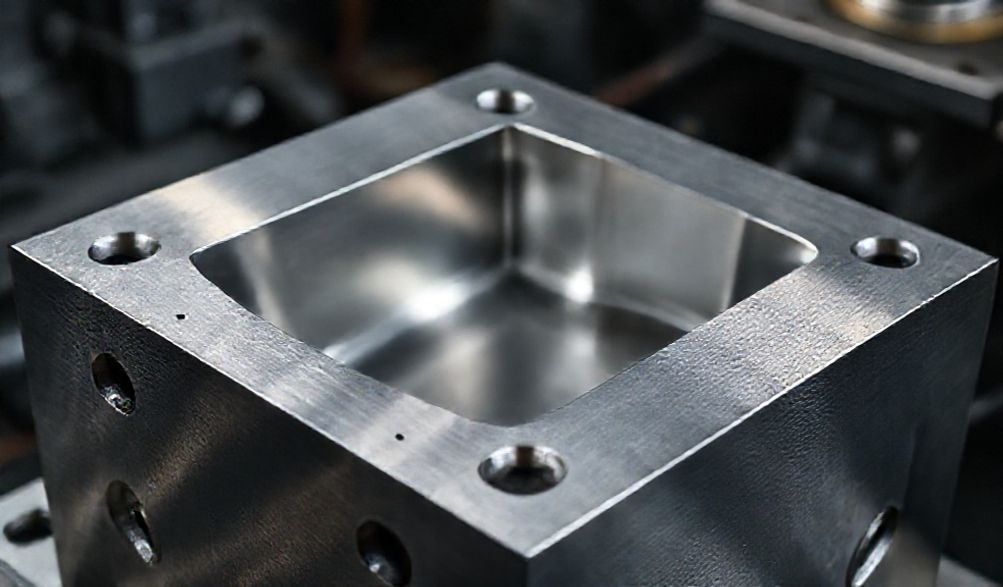
Your Ultimate Guide to Choosing a Cement Block Machine Mold Factory
Кіріспе
In the world of concrete block manufacturing, the machine is only as good as the mold that shapes it. While block machines capture the spotlight, it is the precision, durability, and engineering of the mold that ultimately dictates product quality, production efficiency, and long-term profitability. Choosing the right cement block machine mold factory is not a simple procurement task—it’s a critical strategic partnership.
This guide is crafted for business owners, plant managers, and procurement specialists who understand that the foundation of their output lies in the tools that form it. Drawing from industry engineering principles, material science, and decades of collective best practices, we will move beyond basic supplier checklists. Here, you will gain a comprehensive understanding of the core capabilities that separate leading mold factories from the rest, learn how to vet partners with a discerning eye, and discover how a true factory partner adds value far beyond the initial sale. Let’s build your knowledge from the ground up.
Блок өндірудегі дәл қалыптардың шешуші рөлі
Think of the mold as the heart of your block machine. It’s the component that directly interfaces with the raw concrete mix under immense pressure, repeatedly, cycle after cycle. Its quality is non-negotiable, and its impact is felt across your entire operation.
- Product Consistency: Every block that leaves your plant is a testament to your brand. A high-precision mold ensures dimensional accuracy (critical for laying speed and mortar use), consistent weight, and a superior surface finish. Inconsistent molds lead to blocks that don’t stack correctly, increasing waste and frustrating your customers on the job site.
- Өндірістік тиімділік: Mold performance directly affects your line’s uptime and speed. A well-designed mold with optimal draft angles and surface finish allows for smooth, rapid demolding. High-wear-resistant materials minimize deformation and abrasion, extending the time between maintenance cycles and keeping your production schedule on track.
- Long-Term Profitability: The initial cost of a mold is just one part of the equation. A premium mold, engineered from superior materials, will withstand millions of cycles. This translates to a lower cost-per-block produced, drastically reduced frequency of costly replacements, and minimal unplanned downtime. Investing in quality upfront is a direct investment in your bottom line.
Core Capabilities of a Leading Mold Factory
A leading factory distinguishes itself through a fusion of advanced engineering, material mastery, and rigorous processes. These are the pillars to look for.
Advanced Engineering and Design Expertise
The journey of a world-class mold begins long before the first piece of steel is cut. Top factories employ dedicated engineering teams utilizing 3D CAD (Computer-Aided Design) and CAM (Computer-Aided Manufacturing) software. This allows for:
- Precision Modeling: Creating exact digital twins of the most complex block profiles, including interlocking, split, and decorative designs.
- Simulation and Analysis: Using Finite Element Analysis (FEA) to simulate stress, pressure, and wear patterns during the compaction and demolding processes. This virtual testing identifies potential failure points before manufacturing begins.
- Design for Manufacturability (DFM): Engineering molds that are not only functional but also optimized for efficient, precise, and cost-effective production.
- Custom Design Collaboration: The ability to translate your unique block design—from architectural specialties to innovative landscaping units—into a reliable, high-performance mold is a hallmark of true expertise.
Mastery of Materials and Metallurgy
The choice of steel and its treatment is what separates a durable workhorse from a short-lived component. Leading factories are transparent about their metallurgy.
- Материалды таңдау: Common high-performance choices include:
- High-Chrome Alloy Steel (e.g., D2, D3): Excellent abrasion resistance and good toughness, a standard for high-volume production.
- Through-Hardened Tool Steel: Offers superior uniform hardness for extended life in abrasive environments.
- Critical Properties: Engineers balance:
- Hardness (measured in HRC – Rockwell C): For resistance to wear from sand and aggregate.
- Toughness: To withstand impact and cyclic loading without cracking.
- Heat Treatment: This is where science turns good steel into a great mold. Precise quenching and tempering processes are controlled to achieve the exact microstructure that delivers the promised hardness and toughness throughout the mold’s core, not just on the surface.
State-of-the-Art Manufacturing and QC Processes
Precision engineering demands precision manufacturing. Look for factories that invest in modern, computer-controlled machinery and a culture of quality control.
- Дәлдікпен өңдеу: CNC (Computer Numerical Control) milling, turning, and grinding ensure that every cavity, every pin, and every plate is produced to microscopic tolerances, often within ±0.05mm.
- Multi-Stage Quality Control: The mold should be verified at every step.
- Dimensional inspection with coordinate measuring machines (CMM).
- Hardness testing at multiple points to verify heat treatment uniformity.
- Surface finish inspection to ensure smooth demolding.
- Стандарттарды ұстану: A factory operating under a recognized quality management system like ISO 9001 demonstrates a commitment to consistent, documented processes.
R&D and Innovation Focus
The best factories don’t just manufacture; they innovate. An active R&D department focuses on:
- Advanced Coatings: Investigating PVD (Physical Vapor Deposition) or other surface treatments to further reduce friction and wear.
- Material Composites: Testing new steel alloys or material inserts for specific high-wear areas.
- Design Optimization: Continuously refining internal geometries and drainage to improve compaction density and release characteristics.
How to Vet and Select Your Mold Factory Partner
Armed with knowledge of their capabilities, you can now systematically evaluate potential partners.
Key Evaluation Criteria Checklist
Use this as your due diligence framework:
- Proven Industry Experience: How many years has the factory been specializing in block machine molds? Can they provide a client portfolio or case studies? Longevity often correlates with solved problems and refined processes.
- Technical Specifications & Transparency: Demand detailed material data sheets, certified hardness reports (e.g., HRC 58-62), and clear tolerance specifications. Vague promises like “high-quality steel” are a red flag.
- Production Capacity & Lead Times: Can they handle your order volume—whether it’s a single replacement or a full plant set? Are their quoted lead times realistic and backed by a production schedule?
- After-Sales Support Structure: What is the explicit warranty period and what does it cover? Is technical assistance available? How quickly can they supply critical spare parts like wear plates or liners?
Essential Questions to Ask Potential Suppliers
- “Can you provide certified mill test reports for the specific steel batch used for my molds?”
- “What is your standard heat treatment process, and how do you verify hardness consistency across the entire mold?”
- “Do you offer a wear-life guarantee in terms of production cycles, and what are the defined operating conditions for that guarantee?”
- “What is your process for ensuring compatibility with my specific block machine model (e.g., Zenith, Hess, Poyatos)?”
- “Can you share the QC inspection report from a previous, similar order?”
- “What is your protocol for handling a defect or performance issue discovered after delivery?”
Red Flags and Warning Signs
- Unwillingness to Share Technical Data: Avoidance of detailed specifications or test reports.
- “One-Size-Fits-All” Mentality: Lack of custom design capability or inability to discuss machine-specific adaptations.
- Poor Communication: Slow, untechnical responses during the quoting phase often predict poor support later.
- Significantly Lower Prices: While cost is a factor, a price far below market average almost always indicates inferior materials, skipped heat treatment, or poor machining tolerances.
- No Physical Factory Tour or Video: A reputable factory is usually proud to showcase its facilities. Hesitation here can be telling.
Beyond the Mold: The Factory as a Strategic Partner
The most valuable factories transcend the role of vendor to become true partners in your success.
- Техникалық кеңес беру: Their engineers can advise on optimizing your block design for better structural performance, aesthetics, or production efficiency based on their vast experience across global markets.
- Machine Compatibility Guidance: They ensure the mold’s mounting system, feed box interface, and stripper head design are perfectly tailored to your machine, preventing installation headaches and suboptimal performance.
- Maintenance and Operation Training: They provide detailed manuals and can offer training on proper installation, daily maintenance, cleaning procedures, and wear inspection. This knowledge is crucial for maximizing your mold’s lifespan. For example, in a high-volume plant, training that reduces demolding time by just 5% can save dozens of production hours per month.
Жиі қойылатын сұрақтар (ЖҚС)
Q1: What is the typical lifespan of a high-quality cement block mold?
A: Lifespan is measured in production cycles, not just time. A high-quality mold from a reputable factory, used under normal conditions with proper maintenance, can last between 800,000 to 2 million cycles or more. Key factors influencing lifespan include the abrasiveness of the concrete mix (e.g., high recycled content), production frequency (allowing for proper cleaning), and the hardness/quality of the steel.
Q2: Can a factory create custom molds for unique block designs?
A: Absolutely. This is a core service of leading factories. The process is collaborative: you provide drawings or a sample of your unique block (e.g., a special architectural fascia or interlocking landscaping unit). Their engineering team will then analyze it for manufacturability, suggest any necessary draft angle adjustments for demolding, create a 3D model for your approval, and often produce a prototype for testing before full-scale manufacturing.
Q3: How does the hardness of the mold steel affect performance?
A: Hardness (HRC) is primarily for abrasion resistance—resisting the grinding wear from sand and aggregate. However, if a steel is too hard, it can become brittle and prone to cracking under the cyclic impact of compaction. Leading factories expertly balance these properties. They select steels that can be heat-treated to a high hardness (e.g., HRC 58-62) while retaining sufficient core toughness through precise tempering to handle the operational stresses.
Q4: What after-sales support should I expect from a reputable factory?
A: Expect a clear, written warranty (typically 6-12 months against manufacturing defects), comprehensive operation and maintenance manuals, and access to responsive technical support for troubleshooting. A true partner will also have a system for supplying genuine, perfectly fitted spare wear parts quickly to minimize your downtime.
Q5: Are there different mold types for different block machines (stationary vs. mobile)?
A: Yes, fundamentally. Stationary plant machines (like egg-layers or large stationary presses) use robust, often multi-cavity pallet-based mold systems designed for very high-volume output. Mobile machines (like block paving machines) require more compact, integrated mold assemblies that are part of the machine’s moving frame. Compatibility is critical. Always provide your machine’s exact make and model to the factory to ensure the mold design matches the machine’s vibration system, pressure, and pallet size.
Қорытынды
Selecting your cement block machine mold factory is one of the most consequential decisions you will make for your manufacturing operation. It is a choice that reverberates through your product quality, your daily production efficiency, and your annual financial performance. By prioritizing factories that demonstrate deep engineering expertise, transparent material and process controls, and a genuine commitment to partnership, you invest in more than a tool—you invest in the reliability and reputation of your business.
In an industry that literally builds the foundations of our infrastructure, there is no substitute for quality. Choose a partner who shares that conviction, and build with confidence.
<